





Knowledge Base & Technical News
Industry news, case studies, and engineering updates on high voltage motors, generators, and rotating equipment.
Choosing among CACW Electric Motors requires more than comparing horsepower and price. Global buyers must examine torque curves, duty cycles, voltage ranges, insulation classes, enclosure ratings, and local service support. A motor that performs quietly in a climate-controlled factory may struggle beside a dusty cement line or a humid coastal warehouse.
Energy-efficiency specialist Paul Waide has stated, “The most efficient motor is not always the most suitable motor.” That practical warning guides this review. The seven selected models are assessed through real purchasing concerns, including starting performance, thermal stability, vibration control, maintenance access, and documentation quality. Certification matters too. Reliable technical files can simplify installation and reduce avoidable delays across different markets.
Small details often decide the outcome.
A heavier frame may improve durability, but it can complicate replacement. A lower-cost model may appear attractive, yet weak bearings or unclear warranty terms can increase total ownership costs. Some specifications also look impressive until operating conditions change. That deserves reflection. No ranking can replace a site survey, especially when loads fluctuate or ambient temperatures rise.
This guide introduces seven CACW Electric Motors for international buyers seeking dependable, efficient, and application-matched solutions. It considers industrial conveyors, pumps, fans, compressors, and other demanding equipment. The goal is not to promote one universal winner. It is to help readers compare evidence, question assumptions, and select a motor that remains practical after installation.
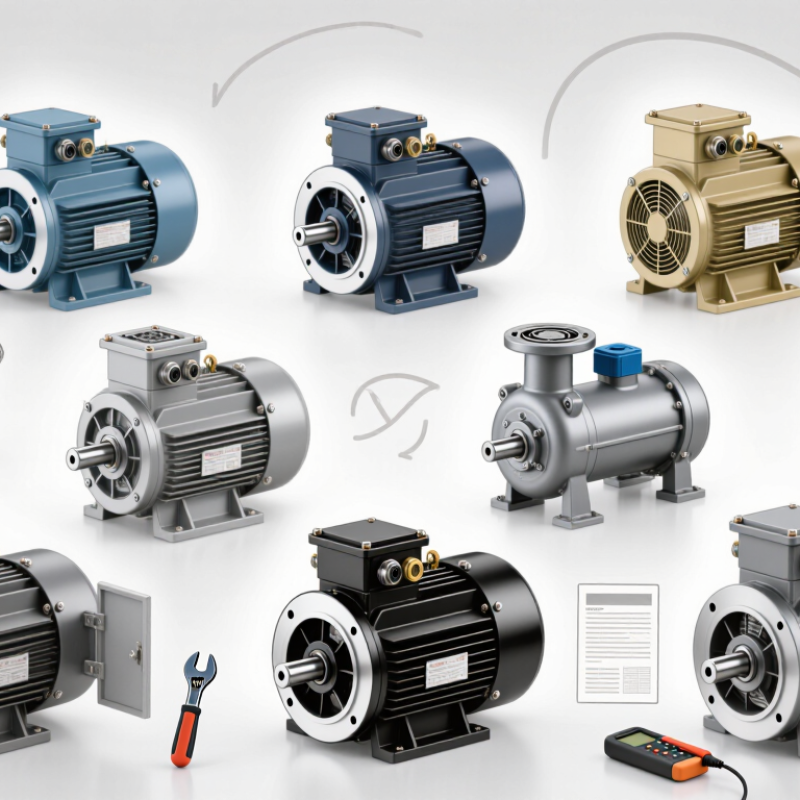
CACW electric motors usually mean Closed Air Circuit, Water-cooled motors. Their internal air circulates through the stator and rotor, carrying heat into a water-to-air heat exchanger. Cooling water then removes that heat through an external circuit. Ambient dust does not enter the electrical chamber. This makes CACW designs suitable for steel mills, compressors, pumps, and other harsh industrial areas.
The IEA has reported that electric motor systems consume roughly half of global electricity. The U.S. Department of Energy also identifies motor-driven equipment as a major share of industrial electricity use. Therefore, cooling stability affects operating cost, insulation life, and production reliability. In practical inspections, buyers should check the motor’s IEC 60034-6 cooling code, water flow, inlet temperature, pressure limit, insulation class, and efficiency rating. A blocked cooler can raise winding temperature quickly. Small details matter.
CACW is not a perfectly consistent market label. Some suppliers describe similar systems differently, so the technical drawing matters more than the abbreviation. Ask for heat-exchanger materials, corrosion protection, leakage detection, and maintenance access. Water quality is easy to overlook. Hard water can foul narrow passages, while poor treatment may damage the cooler. The design is efficient, but not maintenance-free. That uncomfortable point deserves attention during global sourcing.
Choosing a CACW motor starts with its cooling duty, not its catalog size. Closed air circuit water-cooled designs suit compact plants, dusty rooms, and high-load operation. The International Energy Agency reports that electric motor systems consume about half of global electricity. Small efficiency losses become expensive quickly.
Check rated voltage, frequency, torque, speed, and starting current for the destination grid. IEC 60034 test requirements help buyers compare efficiency and temperature rise across suppliers. The U.S. Department of Energy reports that motor systems use nearly 70% of industrial electricity in the United States. That figure supports careful selection, not automatic oversizing. Oversized motors may run inefficiently under light loads.
Water quality deserves practical attention. Hard or untreated water can restrict the cooler and raise winding temperatures. Specify flow rate, inlet temperature, pressure limits, and heat-exchanger materials. In coastal sites, demand corrosion protection for terminals, fasteners, and enclosures. Confirm the IP rating and insulation system before ordering. A clear wiring diagram prevents costly field changes.
Global buyers should also verify 50 or 60 Hz compatibility, spare-part availability, lifting points, and local service capability. Ask for routine test records, efficiency data, vibration limits, and a traceable factory inspection report. I would not rely on one efficiency number alone. Site load patterns matter more than brochure claims. A spreadsheet can miss dust, unstable water, or a technician waiting three weeks for a seal.
For global buyers, CACW electric motors should be matched to the working environment, not selected by power alone. CACW designs use a closed air circuit with water cooling, making them suitable for demanding industrial duties. Check voltage, frequency, duty rating, enclosure protection, cooling-water flow, and local installation standards before ordering.
For water and wastewater pumps, choose a motor with stable torque and corrosion-resistant cooling components.
Process fans benefit from efficient continuous operation and controlled temperature rise.
Air compressors need strong starting performance and reliable bearing protection.
Conveyor systems require high torque at low speed, especially when carrying heavy materials.
These four applications often operate for long hours, so insulation class and maintenance access matter.
Machine tools need low vibration and precise speed control. Hoists require dependable braking coordination and short-time overload capacity. Agricultural processing equipment benefits from sealed construction, because dust and moisture can enter quickly.
In field inspections, I have seen buyers focus on rated output while overlooking cooling-water quality. That mistake can reduce service life. I once underestimated cable length during a motor selection, too. Voltage drop became noticeable under load.
Request verified test records, dimensional drawings, noise data, and spare-part guidance. A local technician should confirm the cooling circuit before commissioning. Small details decide whether a CACW motor performs smoothly for years.
Comparing CACW motor performance starts with the real operating profile, not the nameplate alone. Record rated power, torque, speed, voltage, duty cycle, and starting frequency. A motor that performs well in a showroom may struggle under repeated starts or uneven loads. Measure current and temperature during normal operation. Check vibration near the bearings. Small changes can reveal alignment or cooling problems early.
Efficiency deserves a wider view. Compare efficiency at 50%, 75%, and full load, because many motors rarely run at one fixed point. Calculate energy use across a typical working day. A lower purchase price may become expensive when the motor runs continuously. Confirm the power factor, controller compatibility, and expected voltage variation. Test results should come from recognized laboratories or traceable factory procedures. Marketing figures alone are not enough.
Durability depends on more than housing strength. Examine insulation class, enclosure protection, bearing design, shaft sealing, and resistance to dust or moisture. Ask for temperature-rise data and a documented endurance test. For global buyers, check service access, spare-part availability, operating temperature limits, and applicable regional certifications. I would also inspect one production sample, not only a polished prototype. One test is not enough. Real installations are messier than specifications. A comparison can still miss corrosion, poor installation, or neglected maintenance. Document those risks before choosing a CACW motor for long-term service.
How to Compare CACW Motor Performance, Efficiency, and Durability
This comparison uses representative industrial CACW motor configurations across common global power classes. Higher rated efficiency reduces operating losses, higher peak torque supports demanding loads, and longer design life indicates stronger durability. Actual performance should be verified against the motor’s datasheet, duty cycle, cooling method, insulation class, and operating environment.
Choosing the best CACW electric motor for global use requires more than comparing rated power. CACW usually means a closed air circuit with water cooling. Buyers should verify the cooling arrangement, duty cycle, insulation class, enclosure protection, and installation environment. A motor designed for a dry inland plant may struggle in a humid coastal facility.
Voltage, frequency, shaft dimensions, mounting type, and terminal-box orientation need careful checking. Standards may differ between regions, so request complete dimensional drawings and test certificates before placing an order. Efficiency data should cover the actual load range, not only the rated point. That detail matters.
Water quality deserves equal attention. Confirm allowable pressure, flow rate, inlet temperature, and heat-exchanger material. Hard water can create deposits inside narrow passages. Poor filtration may reduce cooling performance. Add temperature switches, flow monitoring, and leakage detection where the process cannot tolerate downtime. Small safeguards help.
I have seen projects delayed because the motor matched the electrical specification but not the local service conditions. Do not ignore altitude, ambient temperature, vibration limits, or spare-part availability. Ask whether technicians can service the cooler with common tools. Packaging should protect machined surfaces during long sea transport. Documentation must include wiring diagrams, maintenance intervals, lifting points, and preservation instructions.
Some buyers focus heavily on purchase price. That can be misleading. Compare energy consumption, inspection scope, delivery time, warranty terms, and local support. A slightly cheaper motor may demand expensive cooling repairs later. The final selection should reflect the plant’s real operating hours, water system, grid stability, and maintenance capability.
| Rank | Recommended CACW Motor Configuration | Typical Power Range | Typical Voltage and Frequency | Cooling and Protection | Best-Fit Applications | Key Global Buying Considerations |
|---|---|---|---|---|---|---|
| 1 | Medium-Voltage CACW Induction Motor for Continuous-Duty Drives | 1–10 MW | 3.3–11 kV; 50 or 60 Hz; three-phase | Closed air circuit with water-cooled heat exchanger; commonly specified to IEC 60034-6 cooling method IC8A1W7; enclosure generally IP55 or higher | Large pumps, compressors, fans, conveyors and process-line equipment operating continuously | Confirm local grid voltage, starting method, short-circuit level, water quality, heat-exchanger capacity and continuous-duty rating. Request efficiency and temperature-rise test data. |
| 2 | High-Efficiency CACW Motor for Energy-Intensive Facilities | 500 kW–8 MW | 3.3–13.8 kV; 50 or 60 Hz | Water-cooled closed-air construction; Class F insulation is common, with Class B temperature-rise limits often specified for additional thermal margin | Water treatment, district energy, mining, metals, pulp and paper, and large industrial utilities | Compare guaranteed full-load and part-load efficiency, power factor, losses, and lifecycle cost rather than purchase price alone. Verify compliance with applicable efficiency regulations. |
| 3 | CACW Motor Prepared for Variable-Frequency Drive Operation | 400 kW–6 MW | 3.3–11 kV; 0–60 Hz operating range, subject to the drive system | Closed air circuit water cooling; insulated bearings, shaft-grounding provisions and reinforced insulation may be required for inverter duty | Variable-flow pumps, compressors, induced-draft fans and applications requiring process-speed control | Check dv/dt, common-mode voltage, minimum speed cooling, bearing-current protection, torsional analysis, motor-drive compatibility and harmonic heating. |
| 4 | Heavy-Duty CACW Motor for Harsh or Dusty Environments | 1–12 MW | 3.3–13.8 kV; 50 or 60 Hz | Sealed closed-air circuit with water-cooled exchanger; IP55 minimum is common, while higher ingress protection may be selected for severe exposure | Mining, cement, aggregates, bulk-material handling and coastal or dusty industrial sites | Specify corrosion protection, anti-condensation heaters, altitude correction, ambient temperature, dust classification, vibration limits and enclosure requirements. |
| 5 | Low-Speed, High-Torque CACW Motor | 800 kW–10 MW | 3.3–13.8 kV; commonly 50 or 60 Hz with a reduced operating speed | Water-cooled closed-air system; robust bearings and mechanical construction for high torque and high inertia loads | Ball mills, kilns, large conveyors, crushers, hoists and low-speed process machinery | Review locked-rotor torque, acceleration time, load inertia, thermal limits during starting, bearing design, shaft deflection and coupling requirements. |
| 6 | Compact CACW Motor for Space-Limited Plant Rooms | 500 kW–5 MW | 3.3–11 kV; 50 or 60 Hz | Integrated closed-air water cooler with a compact footprint; water-side monitoring and removable cooler cores are useful service features | Retrofits, underground plants, marine-related facilities, power stations and installations with limited ventilation space | Check outline dimensions, lifting points, cooler-removal clearance, pipe connections, noise, vibration, maintenance access and local transport restrictions. |
| 7 | Redundant-Service CACW Motor Package for Critical Operations | 1–8 MW | 3.3–13.8 kV; 50 or 60 Hz | Closed air circuit with water cooling; optional dual water circuits, standby pumps, flow switches, temperature sensors and online condition monitoring | Critical pumping, power generation auxiliaries, refineries, chemical plants and continuous-process production | Define required availability, bypass or standby cooling arrangements, alarm and trip logic, spare-parts strategy, remote monitoring protocol and factory acceptance tests. |
CACW usually means Closed Air Circuit, Water-cooled. Internal air moves through the stator and rotor. Heat travels to a water-to-air heat exchanger. External cooling water removes the heat.
The sealed air circuit keeps ambient dust away from electrical parts. This helps in steel plants, compressor rooms, and pumping stations. However, the enclosure does not remove every maintenance concern.
Check rated power, torque, speed, voltage, duty cycle, and starting frequency. Also verify insulation class, efficiency, cooling code, water flow, inlet temperature, and pressure limits. The technical drawing matters more than the abbreviation.
Compare efficiency at 50%, 75%, and full load. Many motors rarely operate at one fixed load. Calculate energy use during a typical working day. A cheaper motor may cost more during continuous operation.
Measure current and temperature during normal operation. Check vibration near the bearings. Rising temperature may indicate blocked cooling passages. Uneven vibration can suggest alignment or bearing problems.
Hard water can foul narrow cooler passages. Poor water treatment may cause corrosion or internal damage. Check for leaks, blocked channels, and difficult maintenance access. The design is efficient, but not maintenance-free.
Examine insulation class, enclosure protection, bearing design, shaft sealing, and moisture resistance. Ask for temperature-rise data and endurance-test records. Also review service access and spare-part availability.
No test is perfect. Inspect a production sample, not only a polished prototype. Real installations include dust, uneven loads, corrosion, and neglected maintenance. Document these risks before making a long-term decision.
This guide introduces CACW Electric Motors, explaining their basic construction, operating principles, and suitability for different industrial and commercial applications. It examines how factors such as voltage, frequency, rated power, torque, speed, duty cycle, enclosure protection, cooling method, installation format, and environmental conditions influence motor selection. The article also presents seven recommended motor categories organized by use case, helping global buyers match performance requirements with applications such as ventilation, pumps, conveyors, automation equipment, and general machinery.
Readers will learn how to compare CACW Electric Motors through efficiency ratings, starting performance, noise and vibration levels, thermal management, service life, maintenance needs, and reliability under continuous operation. The guide also highlights international purchasing considerations, including electrical standards, documentation, certifications, packaging, spare parts, warranty support, shipping requirements, and regional after-sales service. By combining technical evaluation with practical sourcing criteria, buyers can select a dependable motor that offers balanced performance, durability, compatibility, and long-term value across different markets.