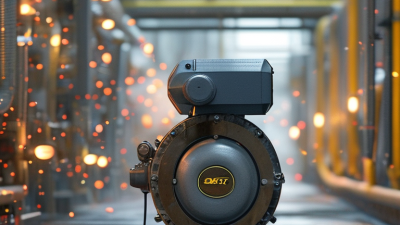
7 Best Hazardous Area Motors for Global Buyers
Hazardous Area Motors operate where a small ignition source can create severe consequences. Refineries, grain terminals, paint plants, and chemical warehouses may contain flammable gases, vapors, dust, or fibers. In these environments, a motor’s enclosure, temperature class, protection method, and certification matter as much as its efficiency.
The International Energy Agency has estimated that electric motor systems consume roughly 46% of global electricity. Industrial applications represent the largest share. This makes motor selection an energy decision, not only a safety decision. The U.S. Department of Energy’s Motor Systems Market Assessment also emphasizes the importance of properly sized motors, efficient controls, and lifecycle maintenance. A motor that starts smoothly, runs cool, and resists dust ingress can reduce both operating losses and unplanned shutdowns.
This guide examines seven Hazardous Area Motors for global buyers, using practical criteria from IEC 60079, IECEx certification practices, ATEX requirements, and North American hazardous-location principles. We consider explosion-protection methods, gas and dust group ratings, temperature limits, ingress protection, voltage flexibility, service access, and supplier documentation. Certification must match the installation. Close is not enough.
Real sites are rarely perfect. Ambient temperatures change, cable glands age, and ventilation may be weaker than the design suggests. A catalogue rating can hide those details. Therefore, the “best” motor depends on the zone, duty cycle, starting load, maintenance capability, and local approval route. The following comparison offers a practical starting point, not a universal verdict. Always verify the certificate, nameplate, and installation conditions with a qualified engineer before purchase.
Read more »






 By:Amelia
- September 17, 2026
By:Amelia
- September 17, 2026
 By:Charlotte
- September 9, 2026
By:Charlotte
- September 9, 2026
 By:Ethan
- September 9, 2026
By:Ethan
- September 9, 2026