




High Voltage Stator Core Flux Testing & Diagnostic Solutions
Comprehensive Technical Evaluation of Interlaminar Insulation Integrity, Core Loss Diagnostics, and Thermal Hotspot Mitigation for Global High Voltage Motors & Industrial Generators.
Engineering Deep Dive
The Critical Role of Core Flux Testing in High Voltage Rotating Equipment Asset Management
In high-voltage (HV) induction motors, salient pole synchronous generators, and heavy-duty rotary frequency converters, the magnetic stator core serves as the vital backbone of electromechanical power conversion. Composed of thousands of thin, insulated electrical silicon steel laminations (typically 0.35mm to 0.50mm in thickness), the stator core is designed to channel alternating magnetic flux with minimal energy dissipation. However, under years of severe thermal cycling, mechanical stress, electromagnetic forces, or accidental mechanical contact during rotor insertion, the micro-thin interlaminar insulation coating (such as C-5 or C-6 organic/inorganic varnish) can degrade or short-circuit.
When short circuits occur between adjacent laminations, closed electrical loops are established across the magnetic path. The main alternating flux induces high eddy currents within these shorted paths, creating severe localized heating known as stator core hotspots. Left undetected, localized temperatures can quickly climb beyond 200°C, rapidly cooking the surrounding ground-wall insulation of stator coils and culminating in catastrophic phase-to-ground or phase-to-phase failures. Core Flux Testing (frequently designated as Ring Flux Testing, Rated-Flux Testing, or Core Loss Measurement) is the primary non-destructive testing (NDT) protocol utilized by lead reliability engineers to assess lamination integrity, verify core efficiency, and prevent multi-million-dollar unscheduled plant shutdowns.
Why Global Technical Procurement Teams Demand Core Flux Validation
For global asset owners in power generation, offshore oil & gas, petrochemical processing, and heavy marine propulsion, a stator core failure represents far more than a simple rewinding job—it can require total core restacking or complete motor replacement, leading to months of lost production. Implementing rigorous Core Flux Testing during major overhaul turnarounds or factory acceptance testing (FAT) ensures verifiable operational reliability and verifies that iron loss (W/kg) aligns with original equipment design specifications.
Comparative Analysis: High-Flux Loop (Ring) Testing vs. Low-Flux El-CID Testing
Procurement teams and engineering managers evaluating diagnostic procedures for high voltage electrical machines frequently encounter two primary methodologies: High-Flux Ring Excitation Testing and Low-Flux Electromagnetic Core Imperfection Detection (El-CID). Understanding the physical mechanisms and operational trade-offs between these approaches is essential for specifying the correct scope of work.
| Diagnostic Parameter | High-Flux Loop / Ring Testing (Full-Flux) | Low-Flux El-CID Testing (4% Rated Flux) |
|---|---|---|
| Operating Flux Density | Near rated operating flux: 1.0 to 1.5 Tesla (typically 80%–100% rated B-field) | Low excitation flux: 0.03 to 0.05 Tesla (~4% of rated operational flux) |
| Thermal Hotspot Verification | Direct real-time thermal imaging using calibrated High-Resolution FLIR Infrared Cameras | Calculated indirectly via magnetic pickup coil (Chattock coil) signal processing |
| Stress Simulation | Subject core to full thermal, magnetic, and mechanical expansion stresses | Measures low-energy fault currents without heating or stressing core assembly |
| Power & Cable Setup | Requires high-kVA single-phase excitation power supply & heavy power cables | Requires low power supply (single 110V/230V mains unit); highly portable |
| Iron Loss Quantization | Measures true real power core losses ($W/kg$) under full AC magnetic flux excitation | Does not directly yield core power loss ($W/kg$) values |
| Ideal Industry Application | Workshop overhauls, major plant turnarounds, validation post-burnout or mechanical strike | Routine fast site screening where high power excitation is unavailable |
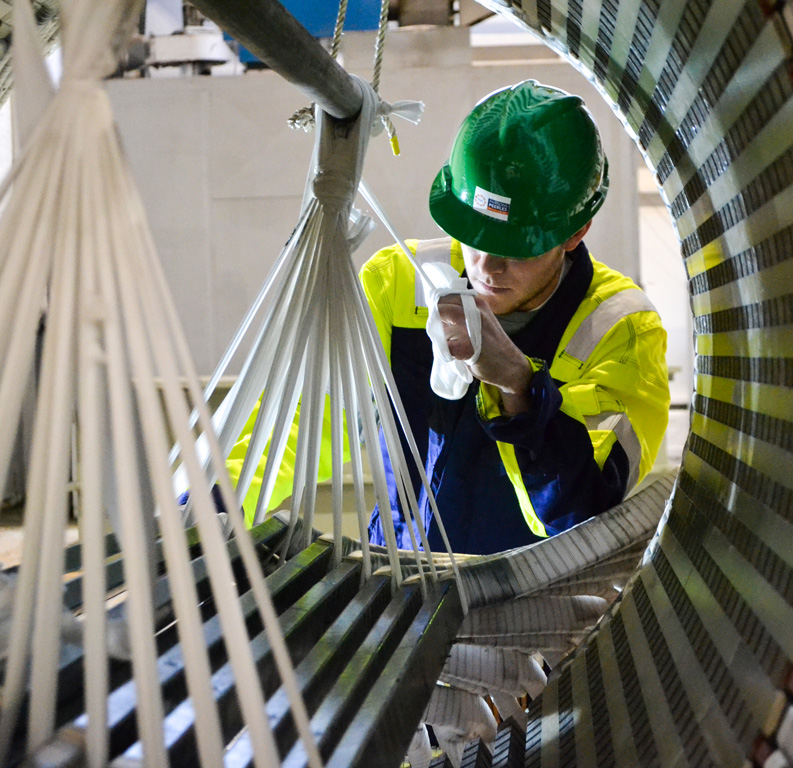
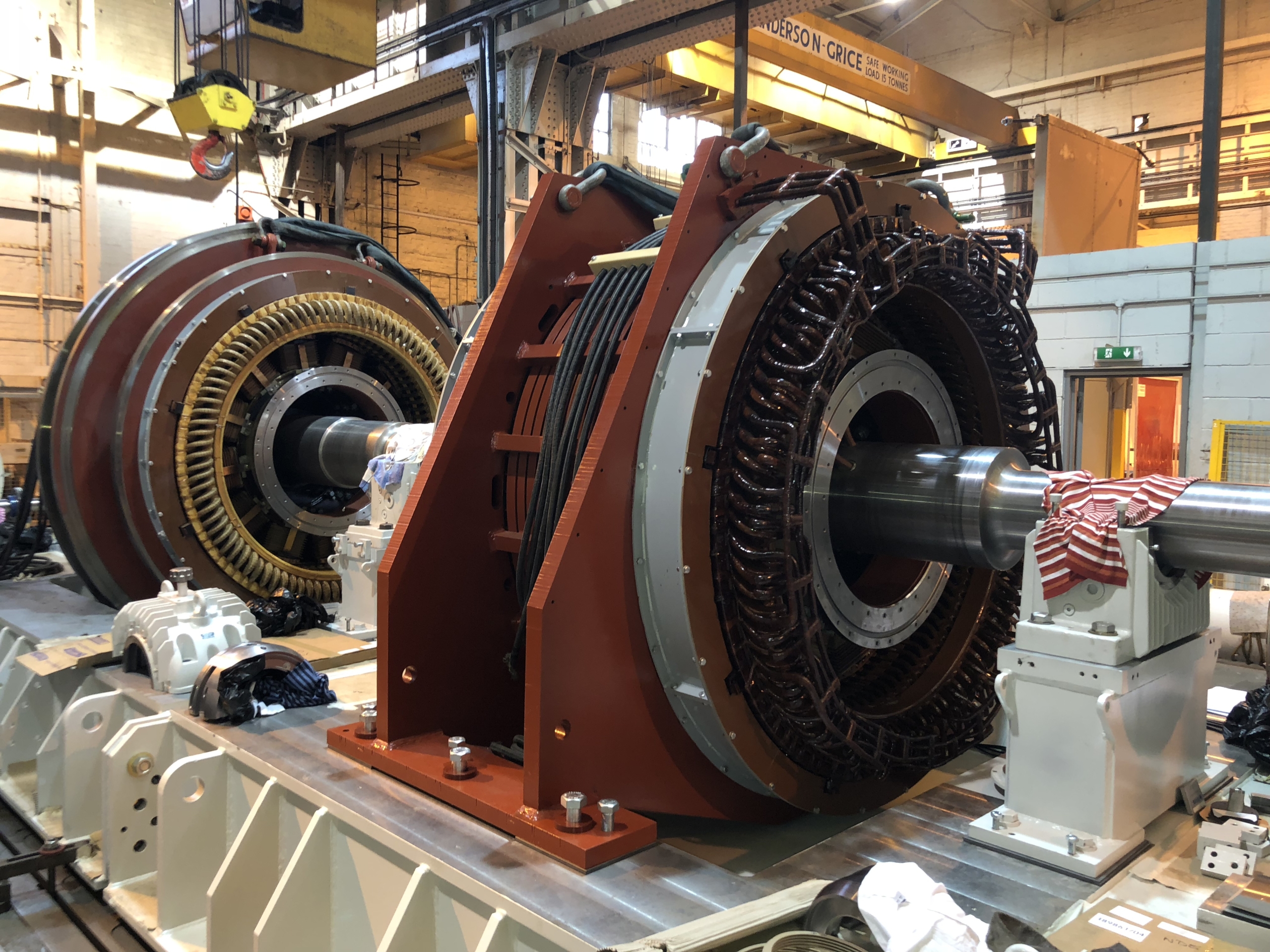
At TDC Parsons Peebles, our engineering division operates high-capacity excitation power transformers capable of driving full-scale high-flux ring tests across machines ranging from compact 3.3kV high-voltage induction motors to massive 200 MVA salient pole synchronous generators. By energizing a temporary excitation winding wrapped around the stator core frame, we establish an toroidal magnetic flux circulating through the back-iron and teeth. Concurrently, precision power analyzers record total active power input ($kW$), magnetizing current ($A$), and core loss ($W/kg$). Simultaneously, our certified diagnostic engineers scan the bore using high-definition thermal imaging cameras to pinpoint localized hot spots down to individual lamination tooth tips.
Solutions Overview
Core Flux Diagnostics & Stator Rehabilitation Product Suite
Selecting the appropriate core testing protocol depends on operational criticality, history of electrical faults, and whether diagnostic assessment is conducted in-situ or within a specialist electrical repair facility. TDC Parsons Peebles provides an integrated ecosystem of stator core evaluation and repair capabilities tailored to high-reliability industries.
1. Full-Flux Stator Ring Excitation Systems
Designed for workshop and site-based major overhaul verification. Uses engineered flexible power conductors wrapped through the stator bore to induce up to 1.5 Tesla flux density. Coupled with multichannel digital wattmeters and thermal imaging, this service provides definitive verification of core health per IEEE 56 and EASA AR100 guidelines.
2. Precision Core Loss Measurement & Benchmarking
Measures real core losses ($W/kg$) at calibrated flux densities. Evaluates whether historical thermal aging, chemical exposure, or past rewinds have caused widespread insulation degradation. Enables asset managers to make data-driven decisions on restacking versus targeted spot repair.
3. In-Situ Lamination Repair & Chemical Re-insulation
Where thermal hotspots are detected (typically $\Delta T > 5^\circ\text{C}$ above mean core temperature), our specialist technicians execute localized mechanical un-burring, chemical micro-etching, and high-dielectric inter-laminar varnish injection to restore insulation integrity without requiring a full core restack.
4. Full Stator Core Re-stacking & Laser-Cut Re-lamination
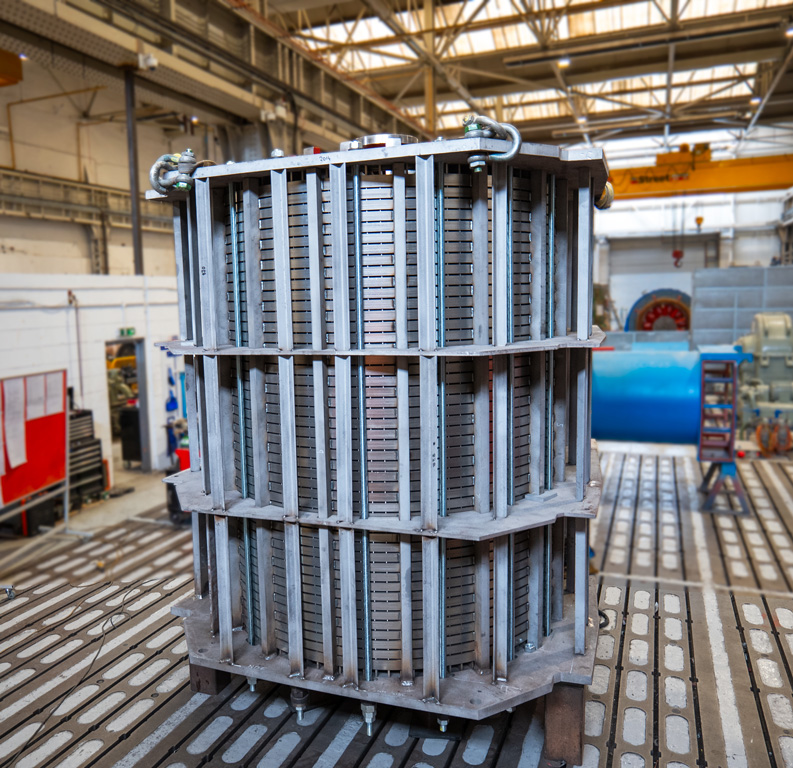
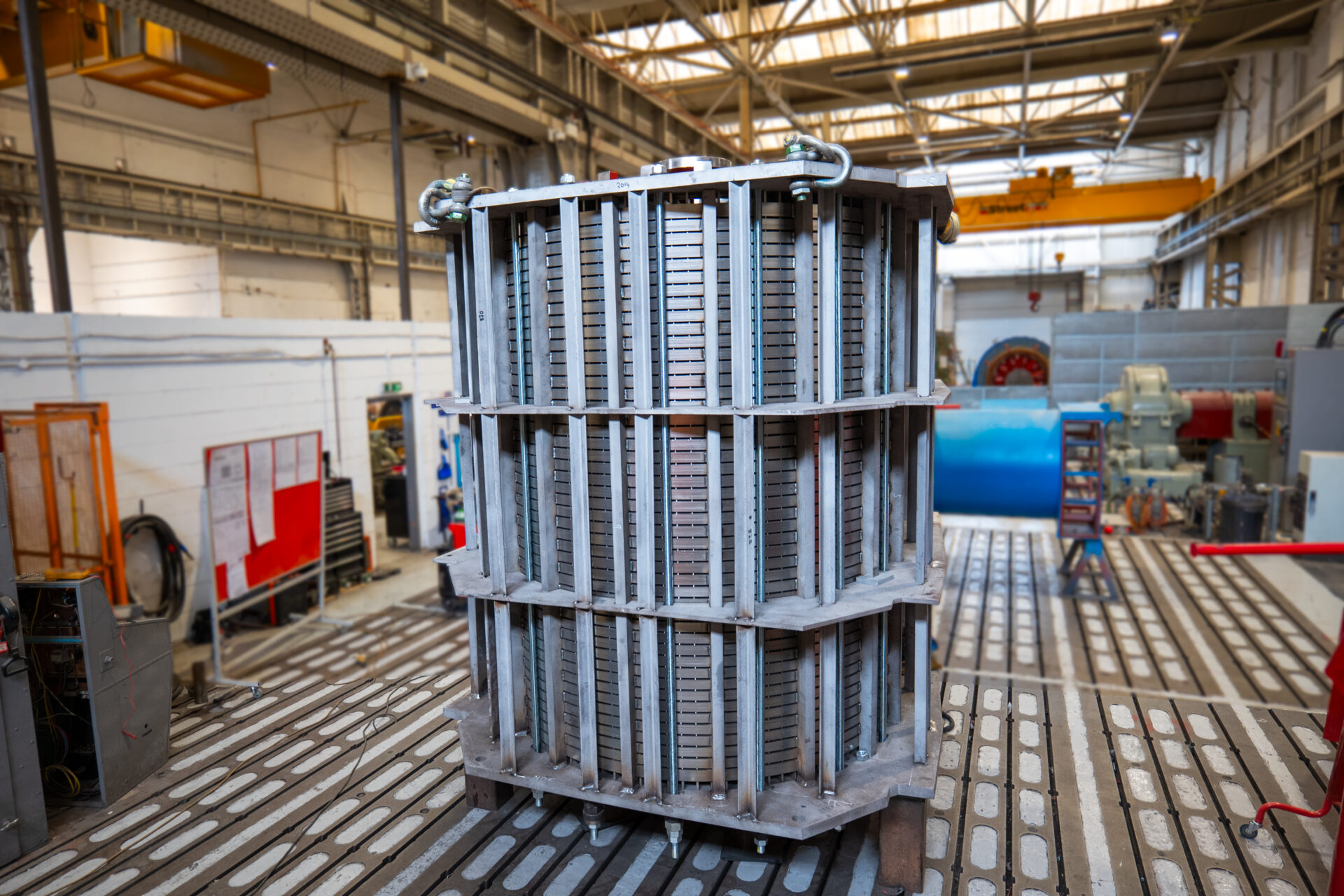
When core damage is extensive or thermal hotspots indicate widespread shorting, TDC Parsons Peebles manufactures replacement stator laminations using premium low-loss silicon steel. We execute precision core un-stacking, keybar alignment, and automated pressure-clamping in our Rosyth Dockyard and Birmingham engineering facilities.
Strategic Industry Insights
Future Procurement Trends & Technological Evolution in Core Diagnostics (2025–2035)
As global energy infrastructure transitions toward higher electrification, renewable integration, and continuous industrial automation, the role of electrical machine diagnostics is undergoing a fundamental shift. Global procurement directors, maintenance engineers, and asset managers are moving away from reactive "break-fix" cycles toward predictive, data-driven lifecycle management.
1. Integration of AI-Driven Thermal & Electromagnetic Data Integration
Future core testing contracts increasingly require the capture of high-density spatial data during core flux testing. By pairing thermal imaging video streams with digital current-voltage phase waveforms, AI algorithms automatically map the precise 3D coordinate of interlaminar short circuits within the stator core volume. Procurement specifications now routinely demand digital twin baseline reports for all newly manufactured or rewound machines.
2. Shift Toward Energy-Efficiency Verification ($IE3$ & $IE4$ Standards)
With strict international efficiency mandates (such as IEC 60034-30-1), core loss accounts for a substantial percentage of total machine losses, particularly under continuous un-throttled operation. Global buyers are prioritizing diagnostic vendors who can prove that post-repair core losses do not exceed original factory tolerances. A core flux test performed before and after stator coil stripping ensures that thermal stripping procedures have not compromised the interlaminar varnish.
3. Robotic In-Situ Bore Inspection Systems
In large turbogenerators and critical marine propulsion motors, removing the heavy rotor for stator inspection entails significant time, cost, and operational risk. The industry is rapidly adopting automated bore crawlers equipped with micro-El-CID sensors and compact thermal cameras. These robotic crawlers traverse the air gap with the rotor in place, providing early anomaly detection during brief maintenance outages.
4. Focus on Scope 3 Decarbonization and Circular Economy
Procurement mandates across Europe, North America, and Asia increasingly favor machine refurbishment over total replacement. A comprehensive core flux test provides the empirical baseline necessary to justify extending the operational lifecycle of a 30-year-old generator by 15 to 20 years through targeted core re-varnishing and high-voltage coil rewinding, preventing hundreds of metric tons of embodied carbon emissions associated with new steel smelting and manufacturing.
Knowledge Hub
Frequently Asked Questions by Global Engineering & Procurement Teams
Enterprise Distinction
Why Global Industry Leaders Trust TDC Parsons Peebles for Core Diagnostics & Machine Manufacturing
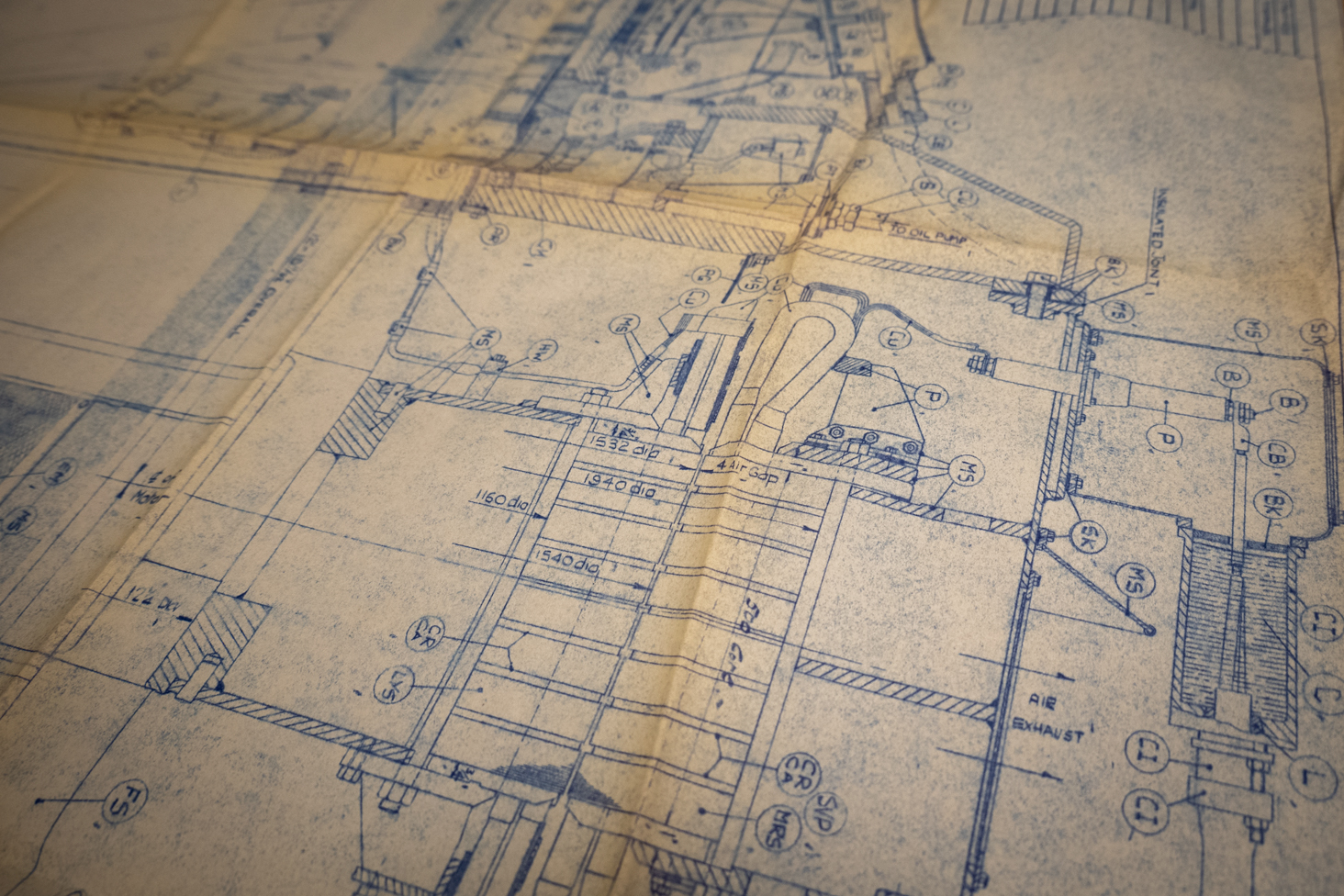
Selecting a core flux testing provider requires placing absolute confidence in their technical competence, diagnostic precision, and underlying manufacturing capability. With an unbroken engineering heritage dating back to 1896, TDC Parsons Peebles combines over 128 years of electrical machine manufacturing experience with world-class testing infrastructure.
128+ Years of UK Engineering Legacy
Founded over a century ago, TDC Parsons Peebles has manufactured and serviced over 12,000 high-voltage machines operating in the most severe industrial environments globally, including offshore North Sea energy hubs, heavy steel mills, and critical defence facilities.
Rosyth Dockyard & Birmingham Facilities
Our extensive UK workshop facilities feature heavy crane lifting capacity (up to 40+ tonnes), high-voltage testing bays, VPI (Vacuum Pressure Impregnation) plants, and specialized core stacking tables, allowing us to manage the largest industrial motors and turbogenerators.
Hazardous Area & Ex Credentials (SGS Baseefa)
We are globally recognized experts in hazardous area motor design and repair, holding full ATEX and IECEx accreditations for Ex ec, Ex p, and Ex e apparatus issued by SGS Baseefa. Core flux testing on hazardous area equipment is conducted under rigorous quality controls.
Drop-In Replacement Engineering Superiority
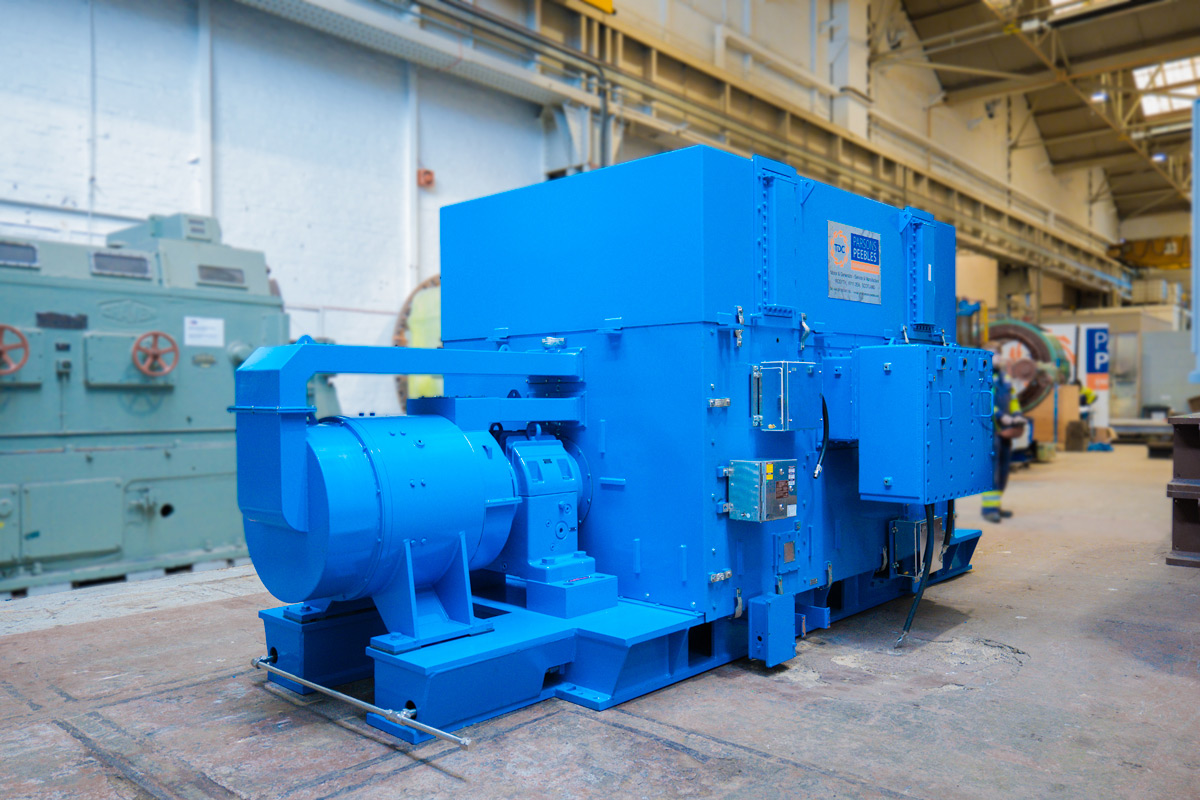
When core degradation renders legacy machines irreparable, our engineering team reverse-engineers the original mechanical footprint, shaft height, terminal box orientations, and electrical parameters to supply 100% drop-in replacement motors and generators.
Our commitment to total quality management is validated by international accreditations and membership in leading technical associations: