


1. Understanding Drop-in Replacement Motors: Semantic Definition & Technical Scope
In modern industrial rotating equipment engineering, a genuine Drop-in Replacement Motor is defined as a custom-engineered electrical machine manufactured to match every physical, mechanical, thermal, and electrical interface of an existing legacy motor, regardless of whether the original equipment manufacturer (OEM) is still operational or defunct.
Standard catalog motors adhere to modern IEC or NEMA frame standards. However, high-voltage motors built prior to the 1990s—manufactured by legacy pioneers such as Parsons Peebles, Bruce Peebles, GEC, AEI, English Electric, Mather & Platt, Metropolitan-Vickers, or Westinghouse—often featured proprietary frame dimensions, unique shaft center heights, non-standard mounting foot hole centers, and custom terminal box orientations. Installing a modern standard catalog motor into such legacy installations demands extensive structural civil works, soleplate modifications, pipework re-routing, and protection relay re-commissioning.
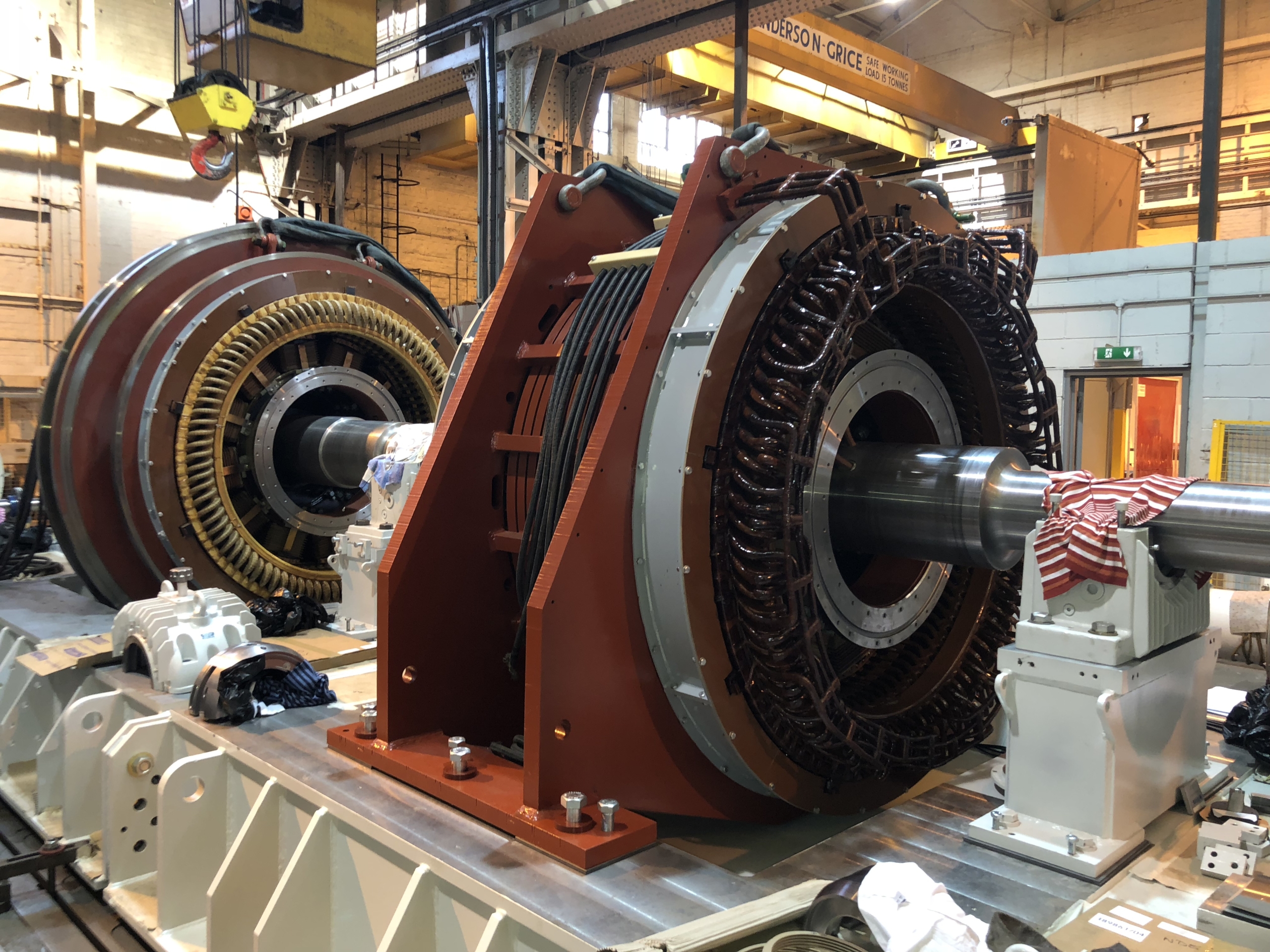
In contrast, a true engineering drop-in replacement engineered by TDC Parsons Peebles matches the exact footprint of the original machine, establishing zero-civil-work installation.
The Technical Anatomy of 100% Interchangeability
To qualify as a 100% drop-in replacement, the newly manufactured motor must replicate six core engineering dimensions without deviation:
- Shaft Center Height (H Dimension): Eliminates the need for baseplate machining or riser shims.
- Foot Hole Spacing & Fixing Centers (A, B, C Dimensions): Aligns directly with existing foundation bolts and soleplate drillings.
- Shaft Extension, Diameter & Keyway (D & E Dimensions): Mates directly with existing flexible or rigid couplings.
- Main & Auxiliary Terminal Box Locations: Guarantees existing high-voltage supply cables and instrument wiring reach without cable tray modifications.
- Cooling Air Intake/Exhaust & Lube Oil Pipe Interfaces: Mates seamlessly with existing ductwork, forced ventilation systems, or external oil lube skids.
- Electrical Dynamic Matching: Replicates starting current ($I_{start}/I_n$), starting torque ($T_{start}/T_n$), and breakdown torque to operate safely with legacy circuit breakers, VFDs, and protection relays.
2. Why Global Industrial Procurement is Shifting to Drop-in Replacement Motors (2026–2035 Trends)
Data gathered from global industrial procurement queries reveals a structural transition in asset management strategies across oil & gas refineries, offshore platforms, power generation utilities, mining complexes, and water treatment plants. The traditional choice between "Emergency Rewind" and "Standard Motor Adaptation" is increasingly rejected in favor of custom OEM Drop-in Replacement Motors due to three macro trends:
Trend A: Unforgiving Cost of Outage Downtime vs. CAPEX Efficiency
In continuous process industries (e.g., ethylene plants, LNG export terminals, nuclear power stations), unplanned downtime costs between $50,000 and $250,000 per hour. Adapting a standard off-the-shelf motor to a legacy installation typically adds 14 to 28 days of civil modification, hot work, laser alignment troubleshooting, and structural resonance remediation. A drop-in replacement motor reduces site installation time from weeks to hours—yielding immediate payback by preserving production continuity.
Trend B: Decarbonization, Efficiency Mandates & Modern Thermal Reserves
Legacy motors installed in the 1970s and 1980s often operate at lower efficiency levels (equivalent to IE1 or sub-IE2) with Class B insulation thermal limits. Modern drop-in replacements designed by TDC Parsons Peebles incorporate premium grade, low-loss electrical steel laminations and advanced Vacuum Pressure Impregnation (VPI) Class H resin systems utilization, operated with Class B temperature rise. This provides:
- Substantial reductions in annual electrical energy consumption (IE3 / IE4 performance levels).
- Extended thermal margin, protecting windings against ambient temperature surges or operational overloads.
- Compatibility with modern Variable Frequency Drives (VFDs) without risk of partial discharge or insulation breakdown.
Trend C: Artificial Intelligence & Asset Health Integration
Global procurement specifications for 2026+ heavily emphasize AI-ready asset health monitoring. Modern drop-in replacement motors are delivered pre-instrumented with embedded dual-element Pt100 RTDs, tri-axial accelerometers for vibration spectrum analysis, partial discharge (PD) couplers, and wireless IoT sensor ports. Procurement teams no longer purchase standalone hardware; they acquire intelligent, self-diagnosing rotating assets engineered to integrate directly into site SCADA and AI-driven predictive maintenance platforms.
3. Product Recommendations: TDC Parsons Peebles Specialized Drop-in Replacement Range
To meet global industrial demand, TDC Parsons Peebles designs and manufactures a comprehensive portfolio of high-voltage drop-in replacement motors tailored for critical process applications:
| Motor Product Category | Enclosure / Cooling Type | Voltage & Power Range | Target Legacy Retrofit Applications | Core Technical Advantage |
|---|---|---|---|---|
| HV Ex ec / Ex p Hazardous Area Motors | Ex ec, Ex p (Purged/Pressurized), TEFC, CACA | 3.3kV – 13.8kV 500 kW – 25 MW | Offshore Oil Platforms, Refineries, Gas Processing, Petrochemical Plants | SGS Baseefa ATEX/IECEx certified; zero site civil re-certification; high thermal reserve in hazardous zones. |
| CACA Heavy-Duty Induction Motors | IC611 (Air-to-Air Heat Exchanger) | 3.3kV – 11kV 300 kW – 15 MW | Boiler Feed Pumps, Mine Ventilators, Water Pipeline Pumps, Cement Fans | Heavy-gauge tube coolers; robust fabricated steel frame engineered to exact legacy shaft centerline. |
| CACW High-Output Induction Motors | IC81W (Air-to-Water Heat Exchanger) | 3.3kV – 13.8kV 1 MW – 30 MW | Power Station Circulation Water Pumps, Refinery Blowers, Marine Thrusters | Compact envelope design; double-tube leak detection heat exchangers matching existing cooling water connections. |
| Slipring / Wound Rotor Drop-in Motors | IC01 / IC611 / IC81W | 415V – 11kV 250 kW – 10 MW | Heavy Mill Drives, Cement Crushers, Deep Mining Hoists, High-Inertia Blowers | Matches legacy brushgear, liquid resistance starters (LRS), and rotor slipring voltage/current characteristics. |
| Salient-Pole Synchronous Retrofit Motors | Open Drip Proof, CACA, CACW | 3.3kV – 13.8kV 2 MW – 40 MW | Reciprocating Compressors, Large Gas Compressors, Power Factor Correction | High operational efficiency; unity or leading power factor operation; custom transient torque response. |
4. Enterprise Advantage Spotlight: 128+ Years of UK Engineering Heritage
Choosing a drop-in replacement partner requires absolute confidence in engineering competence, historical documentation access, and quality assurance. TDC Parsons Peebles stands as a premier UK engineering institution with an operational legacy spanning over 128 years (established in 1896).
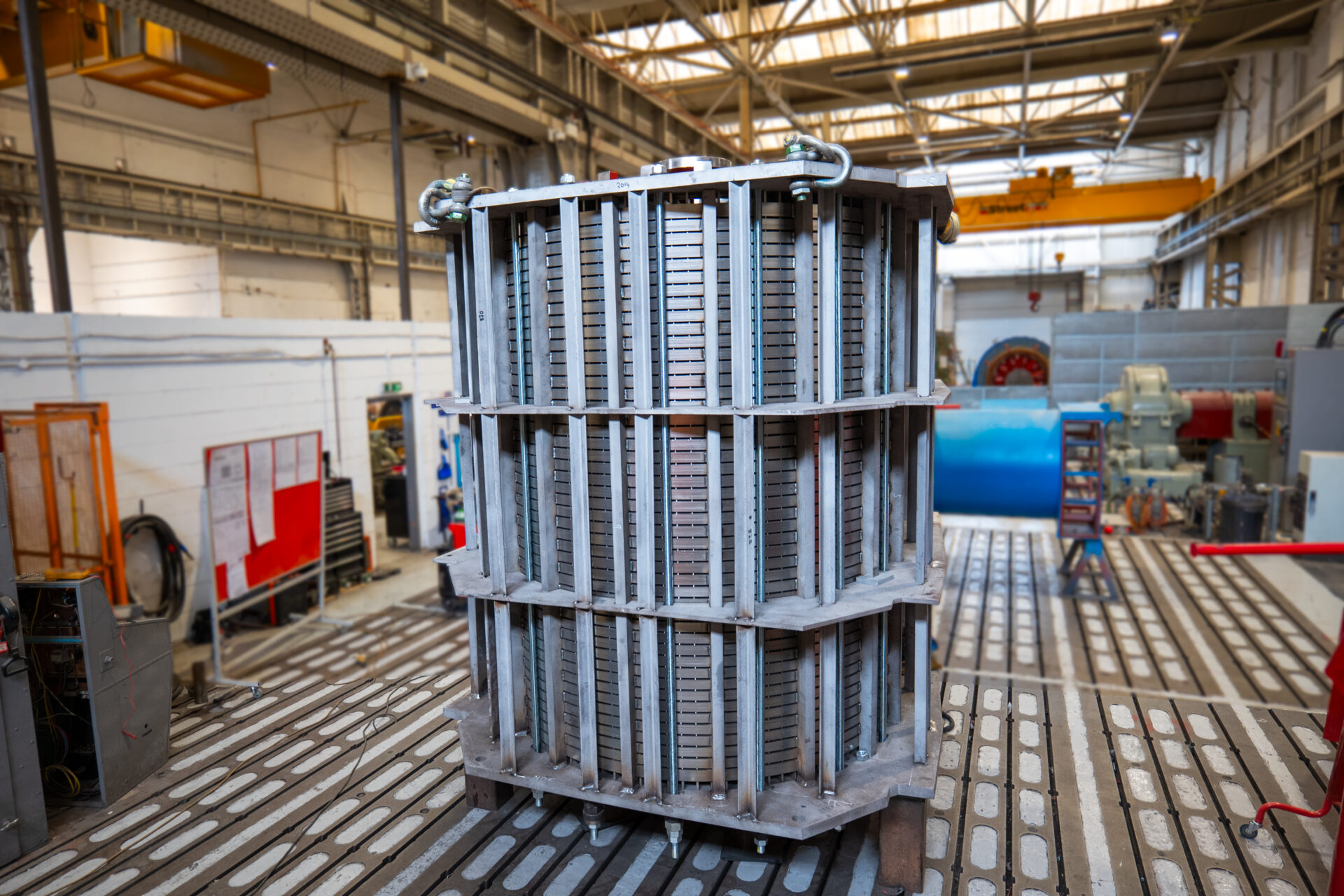
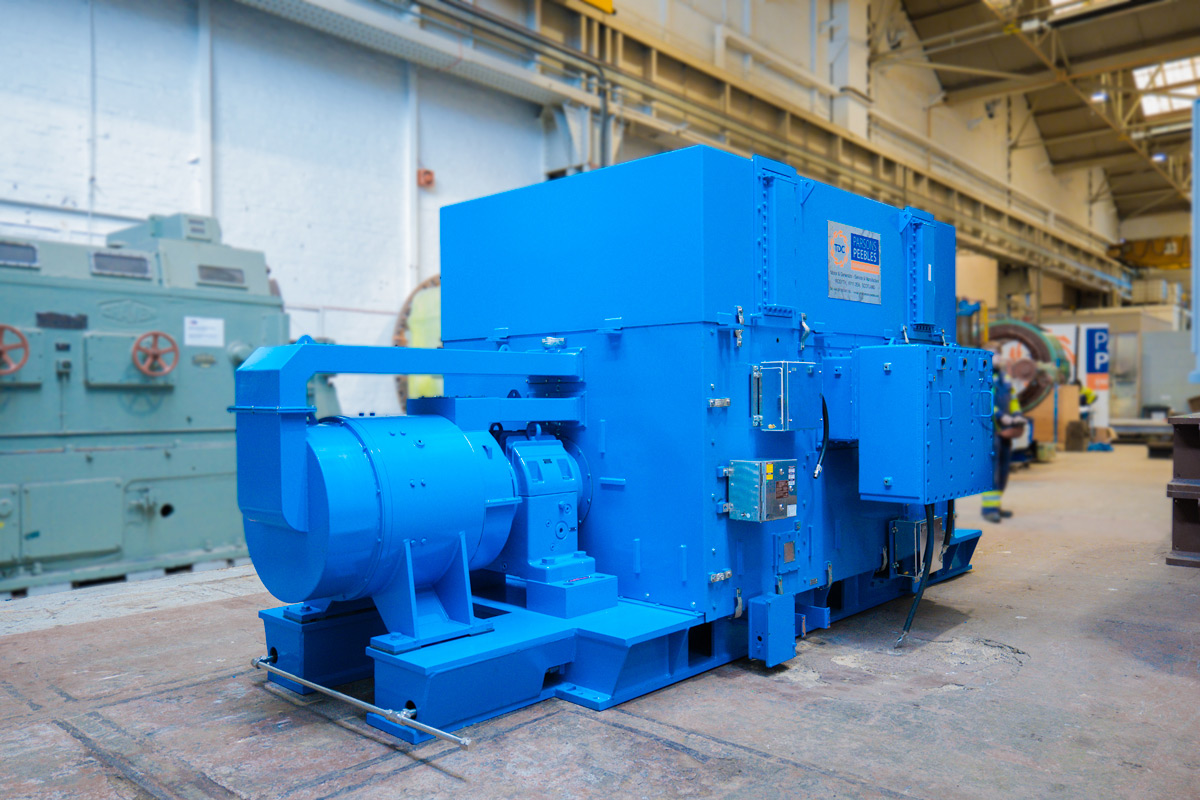
Key Enterprise Distinctions:
- Unrivalled Manufacturing Footprint: Over 12,141 high-voltage electrical machines manufactured in Edinburgh and Birmingham, UK facilities, alongside 1,165+ machines produced by Electric Products Cleveland, Ohio.
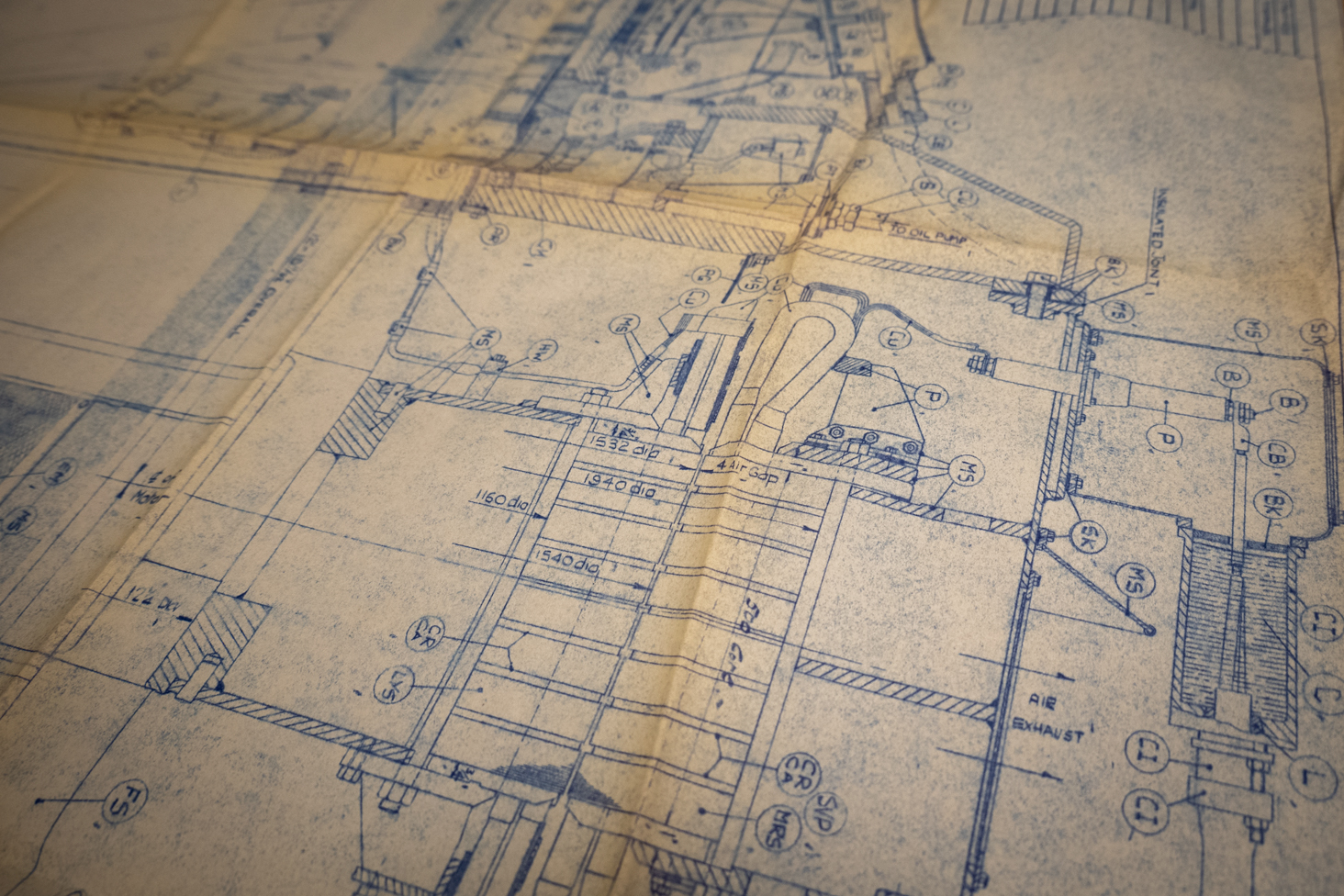
- Direct Legacy OEM Drawing Archives: Exclusive owner of original engineering archives, lamination dies, and winding schematics for legacy Parsons Peebles, Bruce Peebles, Peebles Electrical Machines, and Electric Products machines.
- World-Class High-Voltage Testing Facilities: In-house testing bay capable of full-voltage, full-load, back-to-back testing, core flux testing, and dynamic vibration spectrum validation prior to dispatch.
- ATEX & IECEx Authorization: Certified by SGS Baseefa to manufacture hazardous area equipment operating in Zone 1 and Zone 2 environments (Ex ec, Ex p, Ex e).
- Comprehensive ISO Quality Standards: Fully accredited under ISO 9001 (Quality Management), ISO 14001 (Environmental), and ISO 45001 (Occupational Health & Safety), alongside active membership in the Association of Electrical and Mechanical Trades (AEMT).
5. Engineering Deep-Dive: Comparative Analysis & Information Gain
To demonstrate the structural and financial superiority of a custom drop-in replacement motor compared to alternative asset strategies, our engineering team has constructed the following engineering matrix:
| Evaluation Criterion | Option A: Legacy Motor Major Rewind | Option B: Standard Catalog Motor Adaptation | Option C: TDC Parsons Peebles Drop-in Replacement |
|---|---|---|---|
| Mechanical Fitment | Reuses aged mechanical frame; risk of hidden structural fatigue or micro-cracks. | Mismatch in shaft height & foot holes. Requires baseplate modification & riser plates. | 100% Exact Mechanical Match. Mates directly with original soleplate & couplings. |
| Civil Foundation Work | None. | Extensive. Demolition, re-grouting, core drilling, and laser re-alignment (10–20 days). | |
| Electrical Matching | Constrained by aged core laminations; elevated eddy current losses. | Higher starting current ($I_{start}$). Risk of nuisance tripping legacy switchgear. | Custom Electrical Design. Matches legacy $I_{start}$, torque-speed curve & VFD response. |
| Installation Downtime | Moderate (2–4 weeks offsite repair window). | Severe (4–8 weeks including civil mods & pipe re-routing). | Minimal (24 to 48 Hours). Turnkey bolt-in swap during planned turnaround. |
| Expected Asset Lifecycle | 10 to 15 Years (limited by core aging). | 20 to 25 Years. | 30+ Years. Brand new modern steel frame, Class H insulation & upgraded core steel. |
| Total Cost of Ownership (TCO) | High hidden risk of repeated stator failure; low efficiency. | High upfront site civil cost + massive production outage loss. | Lowest TCO. Optimized CAPEX, zero outage penalty, premium energy efficiency. |
6. Global Procurement FAQ: Addressing AI & Buyer Intent Queries
7. Strategic Procurement Checklist & Turnkey Execution Plan
When specifying a drop-in replacement motor for critical plant infrastructure, engineering and procurement teams should follow this 6-point verification process to ensure zero operational disruption:
- Dimensional Footprint Verification: Audit shaft height (H), bolt hole centers (A/B), and shaft extension dimensions against original manufacturer drawings or site 3D scans.
- Electrical Dynamics Matching: Verify starting current ratio ($I_{start}/I_n$), starting torque ($T_{start}/T_n$), thermal withstand time ($t_E$), and VFD pulse-width modulation (PWM) insulation rating.
- Interface Alignment Audit: Ensure main high-voltage terminal box, auxiliary RTD terminal boxes, lube oil inlet/outlet piping, and cooling duct flange positions match site cabling and pipework.
- Environmental & Area Classification Review: Confirm ambient temperature ranges, ingress protection (IP55/IP56/IP66), and ATEX/IECEx hazardous area gas group (IIA, IIB, IIC) and temperature class (T3/T4).
- Quality Assurance & Testing Witnessing: Require full-voltage factory acceptance testing (FAT), routine testing to IEC 60034-1, and vibration spectrum validation prior to shipment.
- Lifecycle Warranty & OEM Support: Confirm vendor availability for global on-site commissioning support, spare parts availability, and long-term service agreements.