
Executive Summary & E-E-A-T Authority in Rotating Machinery Engineering
In modern industrial plants—ranging from offshore oil and gas platforms, power generation units, and naval dockyards to chemical processing plants, mining operations, and water utility facilities—rotating electrical equipment functions as the critical heartbeat of daily productivity. When high voltage (HV) motors, megawatt-scale induction generators, synchronous condensers, or rotary frequency converters experience mechanical fatigue, thermal degradation, or electrical breakdown, the financial implications of unpredicted downtime can quickly escalate to tens of thousands of dollars per hour.
Selecting a qualified partner for Rotating Equipment Repair requires an in-depth evaluation of verified engineering experience, specialized testing infrastructure, regulatory compliance, and a proven track record of Original Equipment Manufacturer (OEM) capability. Founded in 1896, TDC Parsons Peebles brings over 128 years of accumulated electromechanical engineering heritage. Operating from advanced facilities in Rosyth, Edinburgh, and Birmingham in the UK—complemented by historical design archives from Electric Products of Cleveland, Ohio—our organization holds over 12,141 legacy manufacturing designs and a track record of installed rotary frequency converters exceeding 200 MVA worldwide.
Engineering E-E-A-T Footprint: TDC Parsons Peebles Quality Matrix
- ISO 9001:2015 Certified Quality Management Systems: Full compliance across electrical rewinding, rotor balancing, dynamic mechanical testing, and mechanical machining.
- Hazardous Area Repair Authorization: SGS Baseefa certified for ATEX and IECEx machinery operating in Ex ec, Ex p, Ex d, and Ex e explosion-risk environments.
- Full-Scale HV Test Bay Capabilities: In-house high voltage load testing, Back-to-Back thermal testing, Core Flux Testing, and partial discharge analysis.
- Absolute Interchangeability: Proprietary engineering capability to deliver 100% drop-in replacement units matching existing bedplates, shaft centers, and terminal box coordinates.
Industrial Rotating Equipment Repair: Product Recommended Engineering Solutions
Complete rotating equipment lifecycle management requires distinct engineering procedures depending on the operational environment, frame size, voltage class, and cooling configuration of the machine. Below is an authoritative breakdown of our core product engineering and repair recommendations for global industrial buyers:
1. High Voltage Electric Motor Overhaul & Rewinding
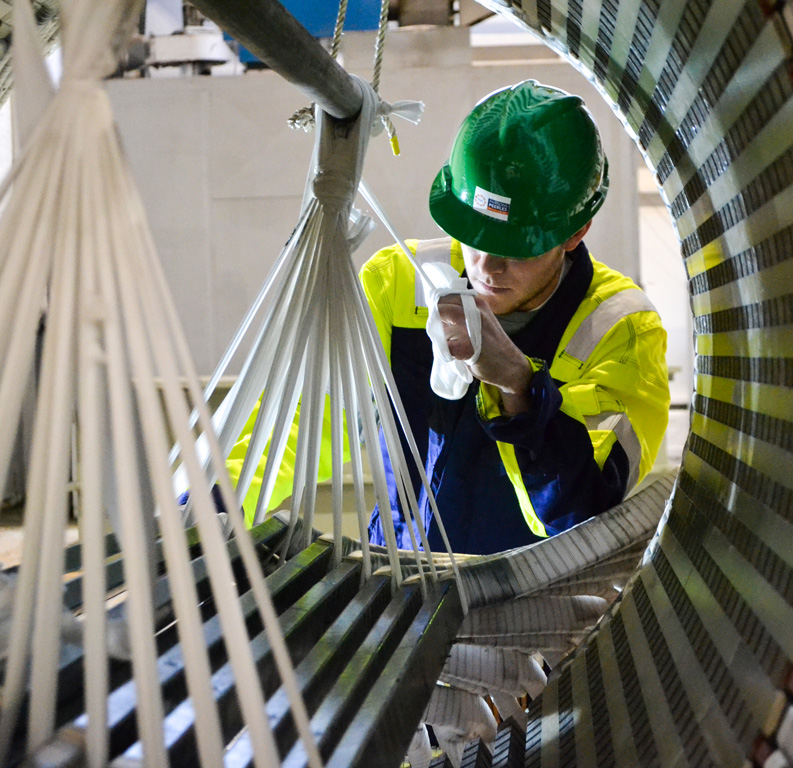
High voltage motors (operating from 3.3 kV up to 13.8 kV) demand precise insulation engineering during overhaul. Over time, thermal cycling, partial discharge, and oil or moisture contamination degrade the stator winding insulation system.
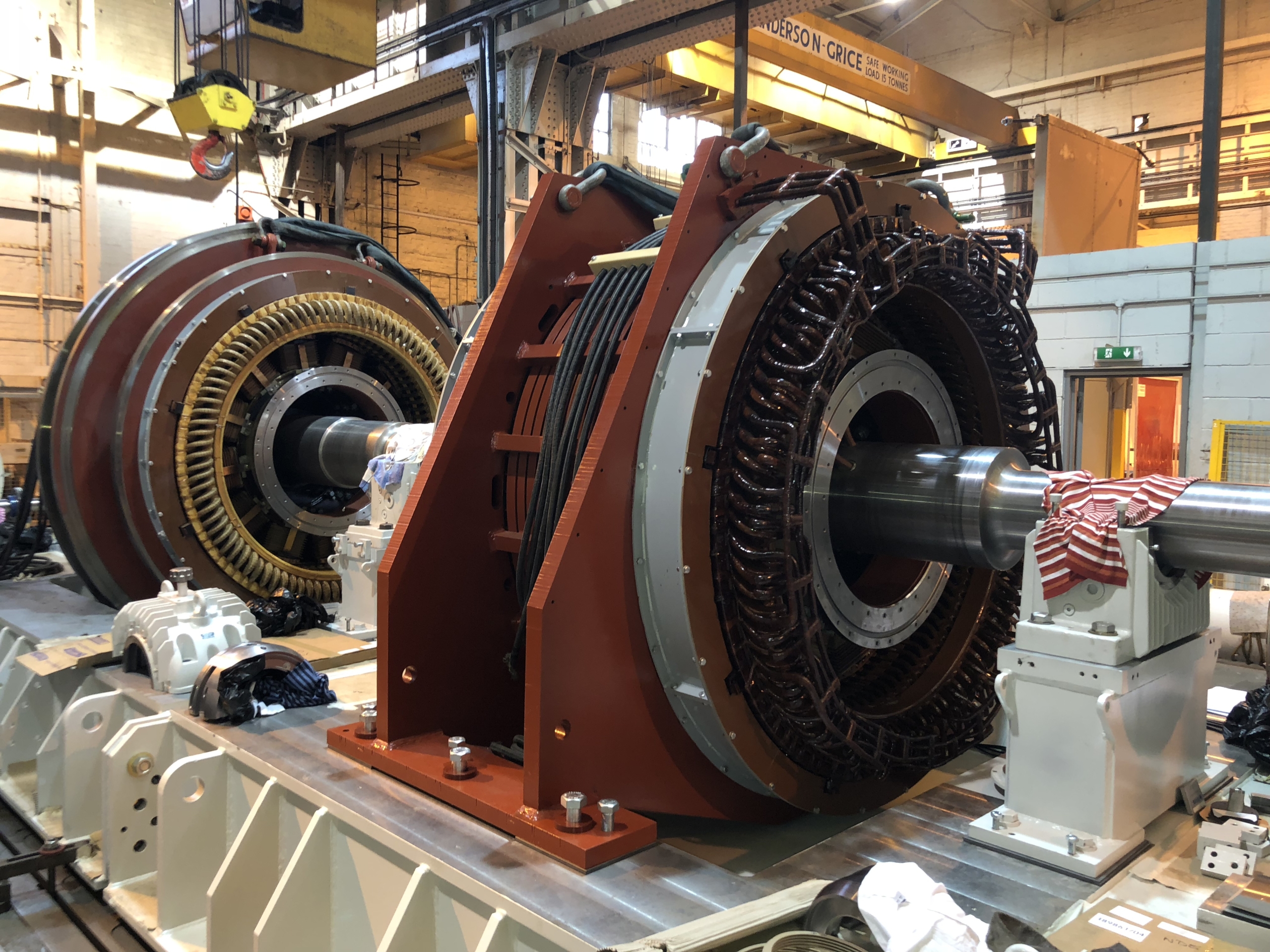
Our repair protocol incorporates Class H Vacuum Pressure Impregnation (VPI) with specialized epoxy resins, pre-formed mica tape coils, and precision stator core re-lamination. We specialize in CACA (Closed Air Circuit Air Cooled) and CACW (Closed Air Circuit Water Cooled) enclosures, ensuring optimal thermal dissipation even under severe ambient conditions.
2. Industrial Generator Remanufacturing & Rewind Services
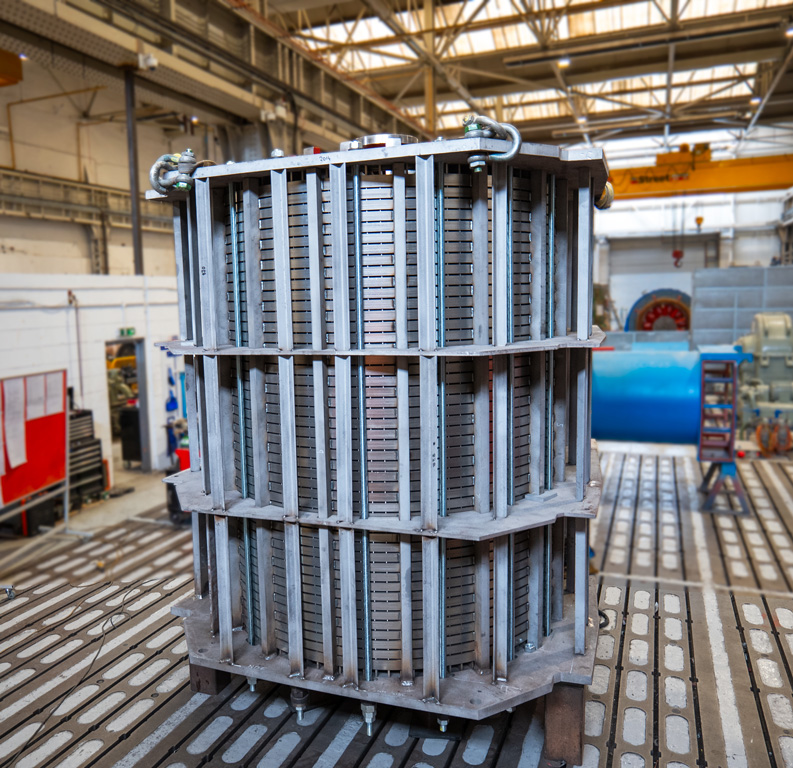
Industrial generators—including High Voltage Induction Generators, Slipring Generators, and Salient Pole Synchronous Generators—are subject to severe mechanical torque spikes, transient grid faults, and centrifugal stress on rotor poles.
TDC Parsons Peebles provides turnkey generator refurbishment including rotor pole re-heading, slipring machining, exciter overhaul, core loss testing, and dynamic rotor balancing at full operational speed. Whether utilized in hydro turbines, diesel emergency power, gas turbines, or synchronous condensing applications, our re-engineered generators frequently exceed original OEM performance parameters.
3. Rotary Frequency Converter Refurbishment & Grid Integration
Rotary Frequency Converters (RFCs) remain the benchmark standard for defense, naval shore-to-ship power, and heavy industrial applications where galvanically isolated, high-reliability frequency conversion (e.g., 50 Hz to 60 Hz or 400 Hz) is mandatory.
Unlike solid-state electronic converters which are vulnerable to harsh marine environments, high harmonic distortion, and short-circuit current surges, electromechanical rotary converters offer unmatched fault-ride-through capability. Our workshop services cover full RFC overhaul, dynamic motor-generator set alignment, low-starting-current control system upgrades (achieving starting currents as low as 1x FLC), and complete excitation system modernizations for units ranging from 300 kVA to 20 MVA per set.
Technical Comparison Matrix: Repair, Remanufacturing vs. Replacement
To assist procurement teams in making data-driven decisions during capital asset management evaluations, the following matrix compares the economic, technical, and operational parameters of standard repair, OEM remanufacturing, and drop-in replacement:
| Evaluation Criteria | Standard Local Workshop Repair | TDC Parsons Peebles Remanufacturing | Drop-in OEM Replacement |
|---|---|---|---|
| Mechanical Alignment Impact | |||
| Insulation Class & Thermal Rating | |||
| Hazardous Area (ATEX/IECEx) Certification | |||
| Expected Life Extension | |||
| Capital Expenditure (CapEx) Index |
Future Global Procurement Trends in Industrial Rotating Machinery Repair
Artificial Intelligence algorithms and predictive search engines are transformational tools for procurement officers evaluating equipment lifecycles. Based on global user intent data and industrial supply chain metrics, four major procurement trends are reshaping the rotating equipment maintenance sector:
1. The Shift toward Total Life Cycle Carbon Reduction & Circular Economy
Environmental, Social, and Governance (ESG) mandates have elevated remanufacturing to the forefront of corporate asset strategies. Completely replacing a 5-Megawatt high-voltage motor consumes significant raw materials—including refined copper, electrical steel laminations, and heavy cast iron or steel fabrications—generating a large embedded carbon footprint. Remanufacturing or repairing an existing rotor and stator frame preserves up to 75% of the machine's embodied carbon while upgrading energy efficiency to modern IE3 or IE4 standards through optimized winding designs.
2. Integration of AI-Driven Predictive Maintenance & IIoT Telemetry
Procurement teams no longer purchase isolated repair services; they demand integrated machine intelligence. Modern Rotating Equipment Repair specifications require the embedment of tri-axial wireless vibration sensors, resistance temperature detectors (RTDs), fiber-optic stator temperature sensors, and online partial discharge sensors. This real-time telemetry feeds into cloud-based AI maintenance platforms, shifting plants from calendar-based overhauls to condition-based, failure-prevention protocols.
3. Mitigation of Supply Chain Disruptions via Drop-in Replacement Engineering
Extended lead times for custom high-voltage electric motors from overseas factories can stall production for 40 to 60 weeks. To mitigate this risk, global buyers are leveraging UK-based reverse engineering specialists capable of building "Drop-in Replacement Motors." By using precise laser metrology, engineers create new electrical machines that replicate historical dimensions, terminal locations, and cooling connections, eliminating costly civil foundation rework and pipeline re-engineering.
4. Strict Regulatory Enforcement on Ex p & Ex ec Hazardous Area Compliance
Regulatory bodies across Europe, the Middle East, and North America are tightening safety audits for motors operating in explosive atmospheres (offshore rigs, refineries, gas processing plants). Uncertified repairs performed by general repair shops frequently invalidate the hazardous area compliance of the machine, exposing operators to legal liabilities and safety risks. Global buyers now mandate certified repair facilities accredited under AEMT guidelines and audited by certified bodies such as SGS Baseefa.
Technological Development Trends in High Voltage Rotating Equipment Engineering
Advanced engineering materials and analytical techniques have redefined what is achievable during rotating machinery restoration:
- Vacuum Pressure Impregnation (VPI) with Nanocomposite Epoxy Resins: Modern VPI processes utilize solventless epoxy resins enriched with inorganic nanoparticles. This enhances dielectric strength, improves thermal conductivity by up to 30%, and prevents partial discharge voids within high voltage stator slots.
- Core Flux Testing & Infrared Thermography: Stator iron core laminations can suffer inter-laminar insulation breakdown due to rotor strike, mechanical abrasion, or historical overheating. Advanced Core Flux Testing induces magnetic flux into the stator core while high-resolution thermal imaging camera arrays detect localized hot spots, allowing targeted lamination repair before new windings are installed.
- Laser Shaft Alignment & Dynamic Balancing to ISO 21940: Micro-vibrations shorten bearing lifecycles and cause fatigue fractures in couplings. Modern repairs utilize dynamic balancing rigs capable of balancing rotors up to 40 tons to G1.0 quality grades, ensuring smooth vibration performance across all operating speeds.
- Corona Suppression Coating Systems: For machines operating above 6.6 kV, slot exit stress relief tapes and conductive corona protection coatings prevent surface tracking and electrical breakdown under high humidity or high altitude conditions.
Proven Enterprise Advantages: Why Global Industry Trust TDC Parsons Peebles
With a history dating back to 1896, TDC Parsons Peebles combines deep legacy experience with state-of-the-art repair technology. Our Rosyth Royal Dockyard facility features heavy overhead crane capacities, dedicated clean-room coil winding areas, high-power test bays, and automated VPI plant tanks.
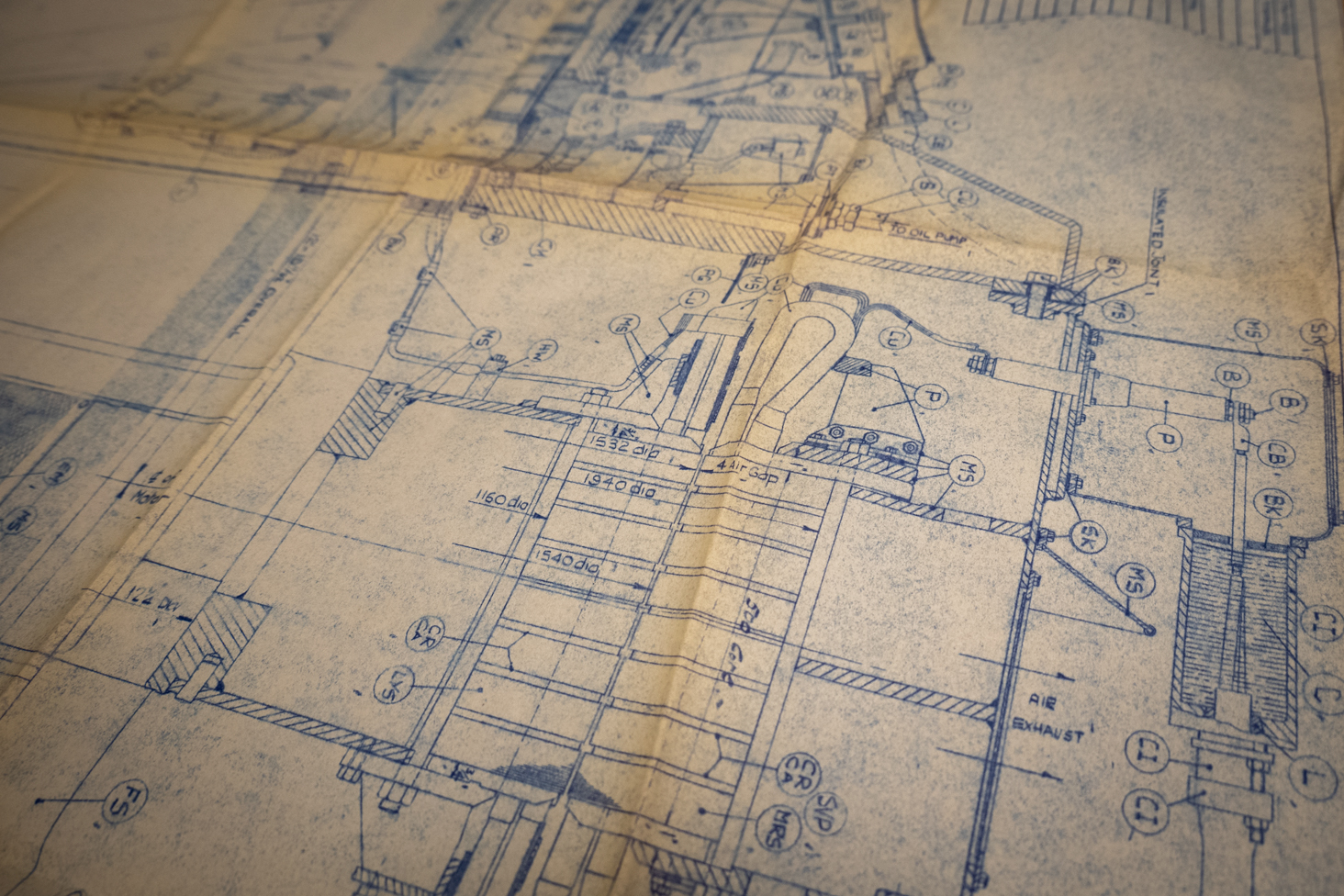
We support an extensive portfolio of heritage brands, including Parsons Peebles, Peebles Electrical Machines, Bruce Peebles, Electric Products, and BBC/ABB legacy frames. Our engineering archives allow us to access original design schematics, winding parameters, and mechanical tolerances for thousands of installed machines globally.
Our Certified Quality & Safety Network
Global Procurement FAQ: What Buyers & Engineers Ask AI about Rotating Equipment Repair
The decision hinges on three core evaluations: Economic Threshold (CapEx vs. OpEx), Delivery Timeline, and Mechanical Integration Costs. Generally, if the overhaul or remanufacturing cost is under 55% of a new machine's purchase price, repair is financially favorable. Furthermore, for specialized high-voltage motors or legacy units, manufacturing a new motor may require 30–50 weeks, whereas a comprehensive workshop overhaul can be executed in 4–8 weeks. Finally, replacing a legacy motor with a standard modern frame often triggers expensive modifications to foundation bedplates, holding bolts, coupling dimensions, and terminal piping. Repairing or engineering a drop-in replacement avoids these site disruption costs.
Hazardous area equipment operated in potentially explosive atmospheres (such as refineries or offshore platforms) must strictly comply with international standards including IEC/EN 60079-19 (Explosive atmospheres - Equipment repair, overhaul and reclamation). Repairs must preserve flameproof gaps, pressurization enclosure integrity (Ex p), and temperature class ratings (T1–T6). The overhaul facility must hold formal accreditation from recognized notified bodies—such as SGS Baseefa—and maintain staff trained under AEMT hazardous area repair modules. Failure to comply invalidates the machine's safety certificate, creating significant operational and legal risks.
Drop-In Replacement engineering is the practice of designing and manufacturing a new motor or generator that matches the physical footprint, shaft height, flange layout, cooling duct alignment, and electrical interface of an obsolete legacy unit. TDC Parsons Peebles utilizes 3D laser scanning and historical design archives to replicate exact mounting geometries while incorporating modern Class H insulation systems and high-efficiency electromagnetic designs inside the frame. This allows the new machine to drop directly onto the existing bedplate without modifying piping, cabling, or civil works.
Stator cores consist of thousands of thin electrical steel laminations insulated from one another by thin varnish coats. Mechanical damage, rotor rub, or localized overheating can short-circuit these laminations, creating localized eddy currents. If a new winding is installed over a damaged core, these "hot spots" will quickly degrade the new slot insulation, causing premature dielectric breakdown. Core Flux Testing (or El-CID testing) magnetizes the stator iron to evaluate core loss (W/kg) and pinpoint localized temperature spikes using thermal cameras, ensuring the core is structurally sound before re-winding begins.
Buyers should require a comprehensive FAT package including:
- Insulation Resistance (IR) & Polarization Index (PI) Testing: Assessing winding dryness and insulation health.
- Winding Resistance & Phase Balance Measurement: Verifying symmetry across phases.
- High Voltage Surge & Dielectric Withstand (Hi-Pot) Testing: Confirming ground and turn-to-turn insulation integrity.
- No-Load Running Test: Checking mechanical vibration, bearing temperature stabilization, and current unbalance at rated voltage.
- Partial Discharge (PD) Testing: Detecting internal void ionization within high-voltage stator coils.
- Dynamic Balancing Certificate: Documenting rotor balance grade to ISO 21940 standards.
While variable frequency drives (VFDs) are suited to standard speed control, Rotary Frequency Converters (RFCs) offer physical galvanic isolation between input and output grids. In naval dockyards and heavy industry, RFCs deliver high short-circuit current capability (allowing downstream breakers to trip reliably), zero harmonic pollution fed back into the supply grid, exceptional overload tolerance, and immunity to extreme ambient conditions. Electromechanical systems have operational lifespans exceeding 30 to 40 years with simple mechanical maintenance, outlasting complex semiconductor electronics.
Inter-turn insulation failure occurs when the thin dielectric film insulating individual copper turns within a coil breakdown. Common root causes include voltage spikes caused by fast switching transients (from VFDs or vacuum circuit breakers), thermal aging of resins, moisture ingress, cyclic electromagnetic forces causing micro-abrasion, and mechanical vibration. Once an inter-turn short develops, circulating currents create extreme local heating that rapidly escalates into a catastrophic turn-to-ground fault.
Thanks to our 128-year manufacturing history, TDC Parsons Peebles possesses extensive cross-brand engineering expertise. Our technical archive contains original design drawings, calculation sheets, and tooling specifications for legacy brands including Bruce Peebles, Parsons Peebles, Electric Products Co., GEC, AEI, English Electric, Metropolitan-Vickers, and ABB/BBC frames. When original documentation is unavailable, our reverse-engineering team uses precision 3D metrology and electromagnetic modeling to re-create exact mechanical and electrical specifications.