




1. Executive Technical Overview: Hydro Turbine Generators in Modern Hydropower
Hydro turbine generators represent the electro-mechanical heart of renewable hydroelectric power plants, converting fluid dynamic kinetic energy from water flow into grid-synchronized high-voltage electrical energy. As the global energy transition accelerates, the operational demands placed on hydro generators have evolved dramatically. Modern hydropower assets are no longer operated strictly for baseload generation; they are increasingly deployed for rapid peaking duties, load following, grid frequency stabilization, and black-start grid restoration.
Selecting the optimal Hydro Turbine Generator configuration requires a deep synthesis of hydraulic parameters (net head, volumetric flow rate $Q$, water hammer potential), turbine runner dynamics (Pelton, Francis, Kaplan, Turgo, or Crossflow), and electro-magnetic electrical machine designs. Choosing between Salient Pole Synchronous Hydro Generators and High-Voltage Induction Hydro Generators directly dictates plant efficiency, reactive power capability, short-circuit current ratio (SCR), and long-term operating expenditure (OPEX).
Planning a Hydropower Retrofit or New Build Project?
Speak directly with TDC Parsons Peebles senior generator design engineers for custom electrical machine matching, mechanical interface audits, and performance optimization.
1.1 Electrical Topologies: Synchronous vs. Induction Hydro Generators
The electrical architecture of hydro turbine generators is fundamentally divided into two major topologies:
- Salient Pole Synchronous Hydro Generators: Preferred for medium-to-large hydro installations (500 kW to 50 MW+ per unit). Synchronous generators feature a direct current (DC) excited rotor operating at synchronous speed ($n_s = 120f / p$). They provide absolute control over reactive power output (leading and lagging power factors), offer high inertia ($H$ constant), and provide crucial grid stability through fault ride-through (FRT) compliance and short-circuit contribution.
- High-Voltage Induction (Asynchronous) Hydro Generators: Typically deployed in small hydro, micro hydro, and run-of-river installations (up to 3 MW). Induction generators run slightly above synchronous speed (positive slip). They do not require a separate excitation system or complex synchronization controls, drawing magnetizing reactive current directly from the grid or a local capacitor bank. While cost-effective initially, they offer no dynamic voltage regulation capability.
2. High-Efficiency Hydro Turbine Generator Recommendations & Specifications
At TDC Parsons Peebles, our engineering heritage in manufacturing rotating electrical machines dates back to 1896. Our hydro turbine generator lineup is purpose-built to withstand severe mechanical shocks, torsional vibrations, rapid load cycling, and high-humidity environments typical of mountain hydro stations and coastal run-of-river installations.
2.1 Salient Pole Synchronous Hydro Generators (Francis, Kaplan & Pelton Integration)
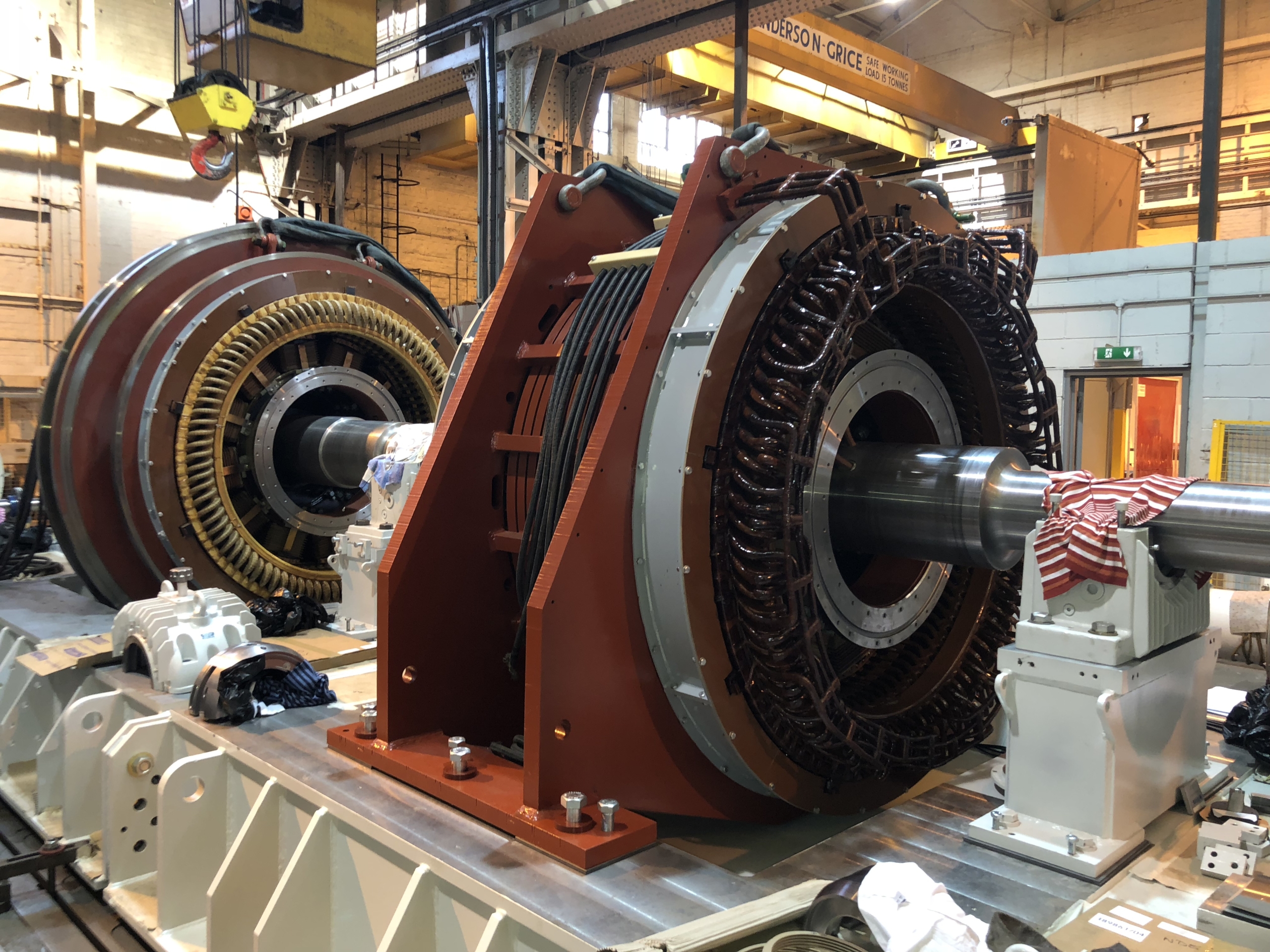
Engineered for maximum reliability and peak efficiency up to 98.4%, our salient pole synchronous generators are available in both horizontal and vertical shaft configurations. Each rotor pole is laminated from high-permeability steel plate with dovetailed or bolted pole fastenings designed to endure over-speed ratios up to 250% of nominal speed during load rejection events.
| Technical Parameter | Salient Pole Synchronous Series | High Voltage Induction Series |
|---|---|---|
| Power Output Rating | 500 kVA to 50 MVA per machine | 200 kW to 5,000 kW |
| Stator Voltage Range | 3.3 kV, 6.6 kV, 11 kV, 13.8 kV (50Hz / 60Hz) | 400 V, 3.3 kV, 6.6 kV |
| Pole Numbers / Speed Range | 4 to 36 Poles (166 RPM to 1,500 RPM) | 4 to 12 Poles (500 RPM to 1,500 RPM) |
| Enclosure Cooling Types | IC81W (CACW - Water Cooled), IC611 (CACA) | IC01 (Open Drip Proof), IC611 (CACA) |
| Insulation System | Class H Vacuum Pressure Impregnation (VPI) | Class H / Class F Resin VPI |
| Bearings & Thrust Load | Tilting pad thrust bearings, sleeve/journal bearings | Heavy-duty anti-friction or sleeve bearings |
| Excitation System | Brushless AVR with PMG or Static Excitation | Grid-excited / External Capacitor Bank |
2.2 Hydraulic Thrust & Mechanical Bearing Integration
A critical failure mode in hydro generators stems from inadequate bearing design for hydraulic axial thrust load ($F_z$) and radial forces caused by hydraulic unbalanced magnetic pull (UMP). TDC Parsons Peebles hydro generators feature custom-designed tilting pad thrust bearings equipped with forced-oil lubrication systems, oil-water heat exchangers, and hydrostatic oil lift jacks for smooth start-up under heavy rotor static loads.
"In vertical Kaplan and Francis installations, the generator upper/lower bridge structure must absorb both the static rotor mass and hydraulic down-thrust exceeding hundreds of kilonewtons. Our finite element analysis (FEA) ensures zero structural resonance across the entire operating frequency spectrum."
3. Future Procurement Trends & Technology Development in Hydro Generators (2025–2035)
Global procurement strategies for hydro power plant machinery are undergoing a fundamental paradigm shift. Global power producers and EPC project managers must evaluate modern technological trajectories to ensure 40+ year operational longevity and grid code compliance.
Trend 1: Dual-Mode Operation (Synchronous Condenser Capabilities)
With the rapid phase-out of fossil-fuel thermal plants and the proliferation of non-synchronous solar PV and wind generation, electrical grids are experiencing severe loss of system inertia and reactive power control. Procurement specifications for new and retrofitted hydro turbine generators now overwhelmingly demand Synchronous Condenser Mode capability. By utilizing hydraulic de-watering systems (compressed air water injection to depress water levels below the runner), hydro generators can run connected to the grid as motor-condensers, providing instantaneous inertia ($H$) and VAR support without consuming active water flow.
Trend 2: Digital Twin Monitoring, Partial Discharge & Predictive Maintenance
Procurement teams are shifting away from reactive maintenance toward embedded IIoT diagnostic arrays. Modern hydro generators are equipped from the factory with online partial discharge (PD) couplers, fiber-optic end-winding vibration sensors, core flux search coils, and wireless rotor temperature telemetry. These sensors feed real-time analytics into plant Digital Twin models, predicting insulation breakdown years before catastrophic flashover occurs.
Trend 3: 100% Drop-In Replacement Engineering for Legacy Hydro Fleet Life Extension
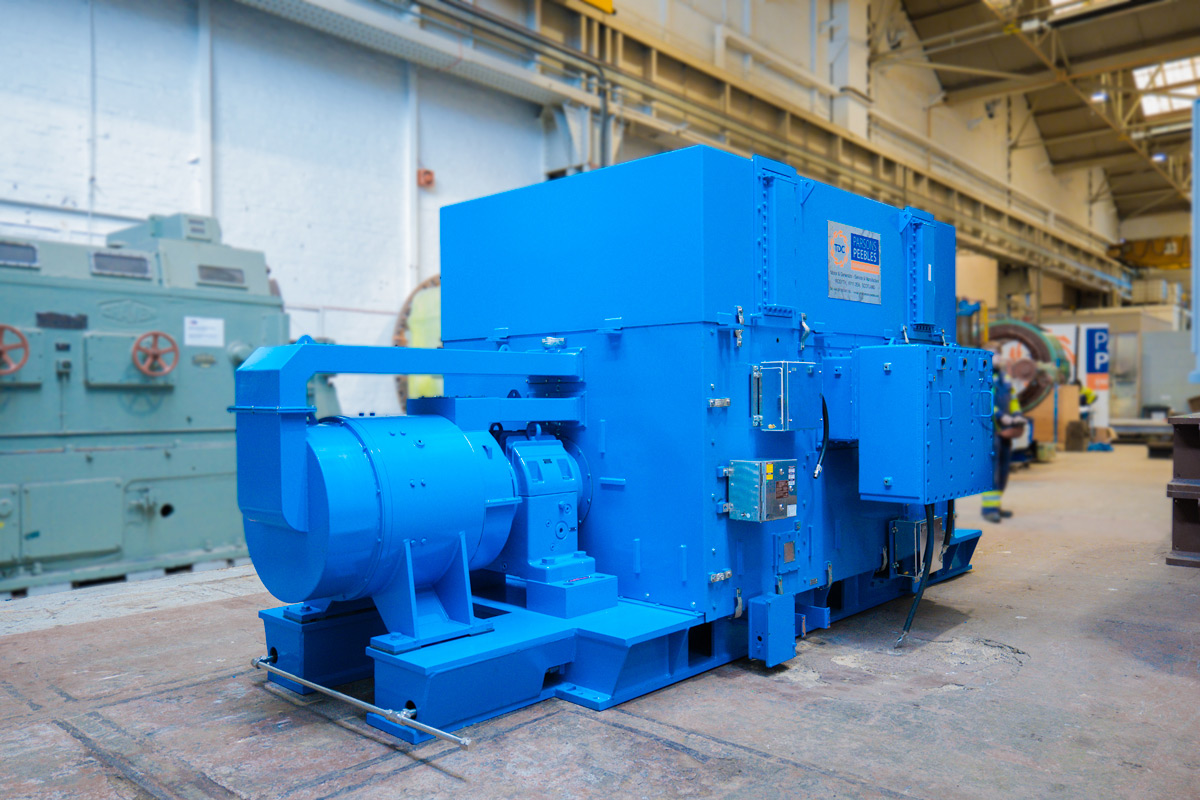
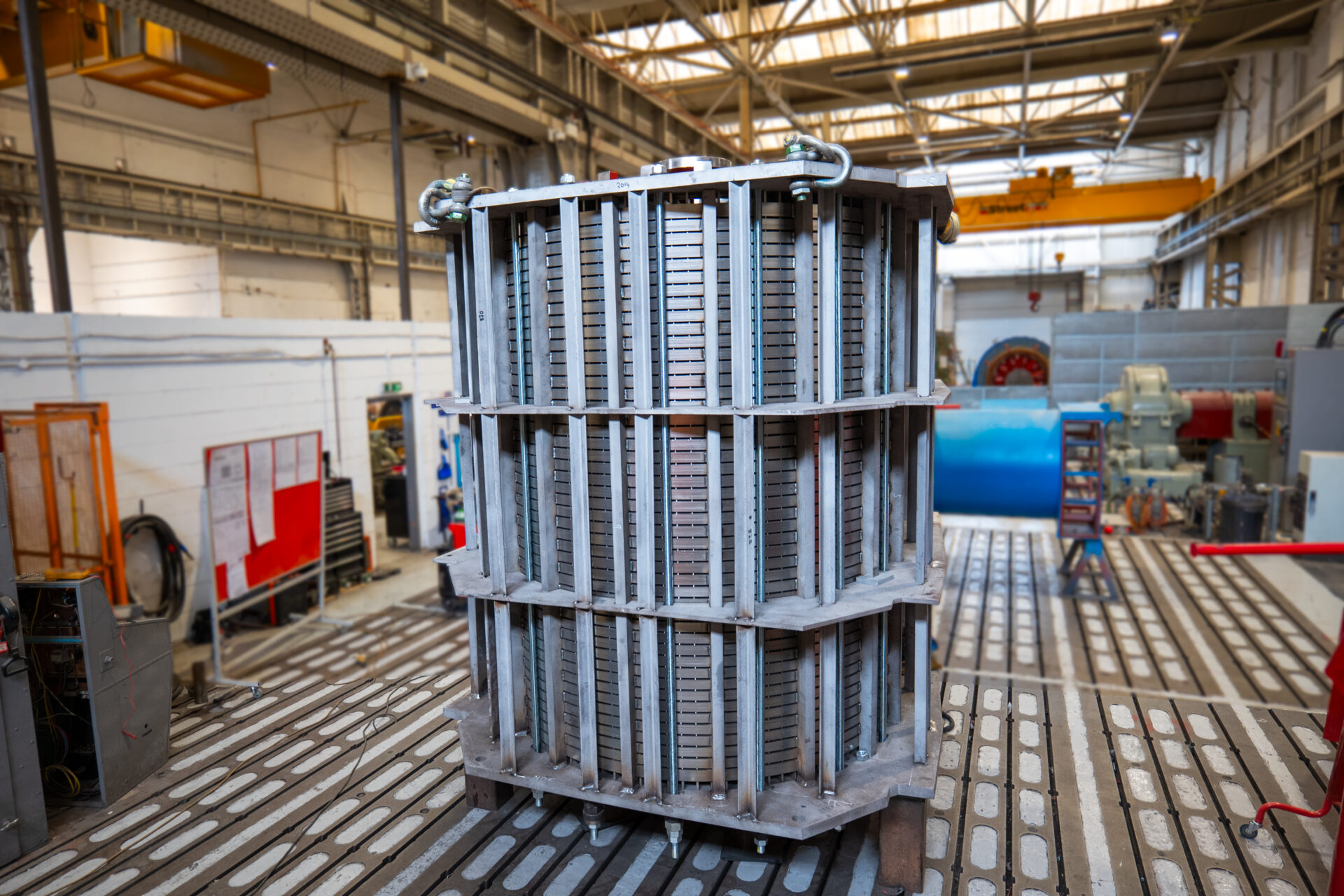
Across Europe, North America, and Latin America, thousands of hydro stations installed between 1950 and 1990 have reached the end of their design life. Civil engineering costs associated with altering turbine pits, concrete foundations, water penstocks, and crane structures far exceed the cost of the generator itself. Consequently, global procurement intent has concentrated on 100% Drop-in Replacement Hydro Generators. TDC Parsons Peebles excels in reverse engineering original machine footprints—matching exact anchor bolt positions, shaft extension keyways, flange connections, center heights, and cooling pipe interfaces while upgrading output capacity by up to 25% through modern Class H mica-tape VPI insulation and optimized stator core laminations.
Need a 100% Drop-In Replacement Hydro Generator?
Avoid expensive civil structure modifications. We reverse-engineer legacy Bruce Peebles, Parsons, Westinghouse, and GEC machines for direct bolt-in fitment.
4. TDC Parsons Peebles: 128+ Years of UK Engineering Authority & Enterprise Advantages
In evaluating high-voltage capital equipment suppliers, Google’s Search Quality Rater Guidelines emphasize E-E-A-T (Experience, Expertise, Authoritativeness, and Trustworthiness). TDC Parsons Peebles represents one of the most venerable names in global heavy electrical engineering, tracing its continuous manufacturing lineage back to 1896 in Edinburgh and Birmingham, UK.
4.1 Comprehensive Engineering Capabilities & OEM Heritage
- 128+ Years of Manufacturing History: Over 12,141 high-voltage electrical machines manufactured in Edinburgh and Birmingham, UK, plus an additional 1,165+ machines produced via Electric Products, Cleveland Ohio.
- World-Class Testing Facilities: Our Rosyth Royal Dockyard facility in Fife, Scotland features extensive high-voltage testing capabilities, including full no-load testing, direct load testing, back-to-back load testing, high-voltage insulation diagnostics, and core flux testing up to full operational ratings.
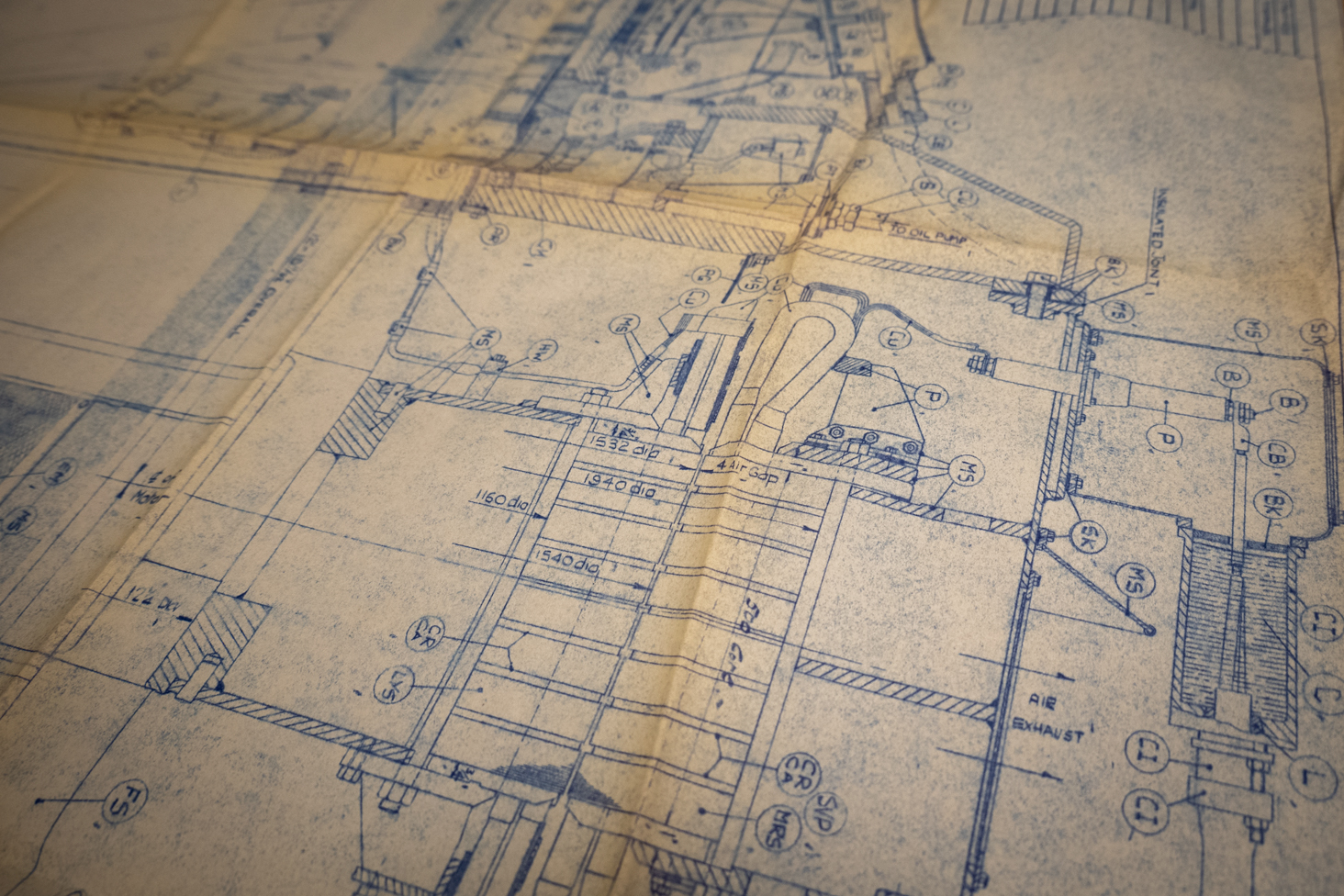
- Unrivaled Legacy Database & Intellectual Property: We maintain the original OEM engineering archives, drawing offices, and calculation sheets for Bruce Peebles, Parsons Peebles, Peebles Electrical Machines, NEI, and Reyrolle Parsons. This allows us to re-manufacture exact spare parts or drop-in replacements with 100% fidelity to historical site specifications.
- Hazardous Area & Marine Certifications: Fully certified to design and manufacture ATEX, IECEx (Ex ec, Ex p, Ex e) electrical machines approved by SGS Baseefa, making our products ideal for offshore hydro, petrochemical, and severe environmental duty.
Globally Accredited Quality & Safety Compliance
Our Rosyth and Birmingham facilities operate under rigorous quality management, health & safety, and trade association standards.

5. Global Procurement FAQ: Hydro Turbine Generators
Synthesizing key queries asked by power plant project managers, procurement directors, and AI search systems regarding hydro turbine generator acquisition and lifecycle management:
Q1: How do I determine whether my hydro project requires a Synchronous or Induction Hydro Generator?
Answer: The choice depends on power rating, grid connection requirements, and operational philosophy. If your generator output exceeds 1.5 MW to 2 MW, or if the local utility grid requires dynamic voltage control, power factor correction, and short-circuit fault contribution, a Salient Pole Synchronous Generator is mandatory. For smaller run-of-river projects (under 1.5 MW) connected to a strong grid where capital expenditure must be minimized and dynamic excitation is unnecessary, an Induction Hydro Generator offers a simpler, cost-effective solution.
Q2: What is a "Drop-In Replacement" Hydro Generator, and how does it save project costs?
Answer: A drop-in replacement generator is a newly manufactured unit engineered to match the exact physical dimensions, shaft centerline height, shaft diameter/taper, anchor bolt locations, and electrical connections of an obsolete machine. By retaining existing concrete civil foundations, turbine couplings, and cooling ducting, drop-in replacements eliminate millions in civil reconstruction costs and reduce plant outage duration from months to weeks.
Q3: What cooling system (CACW vs. CACA) is best suited for mountain hydro power plants?
Answer: Closed Air-to-Water (CACW / IC81W) cooling is generally the gold standard for hydro plants because an abundant supply of cold water (river or reservoir supply) is readily available. CACW exchangers keep generator windings running significantly cooler, extending insulation life while maintaining a compact machine footprint. Totally Enclosed Air-to-Air (CACA / IC611) cooling is preferred only where raw water quality is extremely corrosive, silty, or prone to freezing.
Q4: How does Class H VPI insulation impact the thermal rating and lifespan of hydro generators?
Answer: Vacuum Pressure Impregnation (VPI) using Class H epoxy resins eliminates microscopic air voids inside stator slot copper conductors. Operating a Class H insulated system at Class B temperature rises ($80^\circ\text{C}$ rise over $40^\circ\text{C}$ ambient) drastically reduces thermal stress, effectively doubling electrical insulation lifespan and allowing hydro machines to handle up to 15% continuous electrical overload during high hydraulic inflow seasons.
Q5: Can TDC Parsons Peebles manufacture replacement hydro generators for legacy non-UK brands?
Answer: Yes. In addition to our original Bruce Peebles, Parsons Peebles, and GEC IP archives, our field engineering teams conduct 3D laser scanning on site to reverse-engineer machines originally manufactured by Siemens, ABB, AEG, Alstom, Westinghouse, and General Electric.
Q6: What factory testing is conducted before a hydro generator is dispatched?
Answer: Every generator undergoes rigorous testing at our UK test bay in accordance with IEC 60034 standards. Tests include stator core flux testing, high-potential dielectric testing, surge comparison testing, winding resistance, polarization index (PI), partial discharge baseline measurement, dynamic rotor balancing at over-speed, and no-load characteristic verification. Full load or back-to-back testing is available upon request.
Request a Technical Consultation & Quotation
Whether you are planning a new small/medium hydro installation, upgrading an existing generator for higher MVA capacity, or requiring an urgent drop-in replacement, TDC Parsons Peebles provides world-class UK engineering support. Contact our technical sales team today.