






1. Executive Summary & Information Gain: The Evolving Dynamics of High Voltage Electric Motors
High Voltage Electric Motors (defined operating at voltages from 3.3kV up to 13.8kV and outputs reaching over 25 MW) represent the critical heartbeat of global heavy industry. Powering high-capacity boiler feed pumps, gas compressors, crude oil pipeline booster pumps, cement kilns, mine hoists, and power station auxiliaries, these electrical machines operate in mission-critical environments where unplanned downtime incurs severe financial penalties exceeding hundreds of thousands of dollars per hour.
In modern industrial procurement, buyers, chief electrical engineers, and EPC contractors no longer search simply for catalog horsepower ratings. Driven by artificial intelligence-driven user intent mining and generative search engine evaluation (such as Google’s Search Quality Rater Guidelines emphasizing Experience, Expertise, Authoritativeness, and Trustworthiness - E-E-A-T), technical decision-makers require transparent insight into thermal efficiency profiles, insulation degradation mechanisms, structural stiffness under transient short-circuits, and interchangeability with aging legacy assets.
Information Gain Key Takeaway for Procurement Engineers
Unlike low-voltage commercial induction motors standardly produced in high-volume, automated commodity lines, High Voltage Electric Motors demand application-specific custom electromagnetic design. Selecting the correct insulation dielectric stress barrier, partial discharge suppression system, and cooling envelope (IC411 vs IC611 vs IC81W) dictates whether an asset achieves its target 30-to-40-year design life or suffers premature stator insulation breakdown within 60 months.
At TDC Parsons Peebles, our manufacturing history dates back to 1896. Operating from state-of-the-art facilities in Edinburgh (Rosyth Royal Dockyard) and Birmingham, UK, we have delivered over 12,141 specialized heavy machines globally. This comprehensive technical guide synthesizes our practical empirical field data, ISO 9001 engineering methodologies, and SGS Baseefa ATEX/IECEx hazardous area compliance protocols to empower your procurement decisions.
2. Technical Product Portfolio: High Voltage Electric Motors Showcase
Matching the appropriate high voltage motor configuration to specific industrial process demands requires evaluating mechanical torque curves, environmental ingress protection (IP ratings), cooling media accessibility, and hazardous area zone classifications. Below is an expert breakdown of TDC Parsons Peebles' core high voltage motor product lines.
High Voltage Squirrel Cage Induction Motors (TEFC, CACA & CACW)
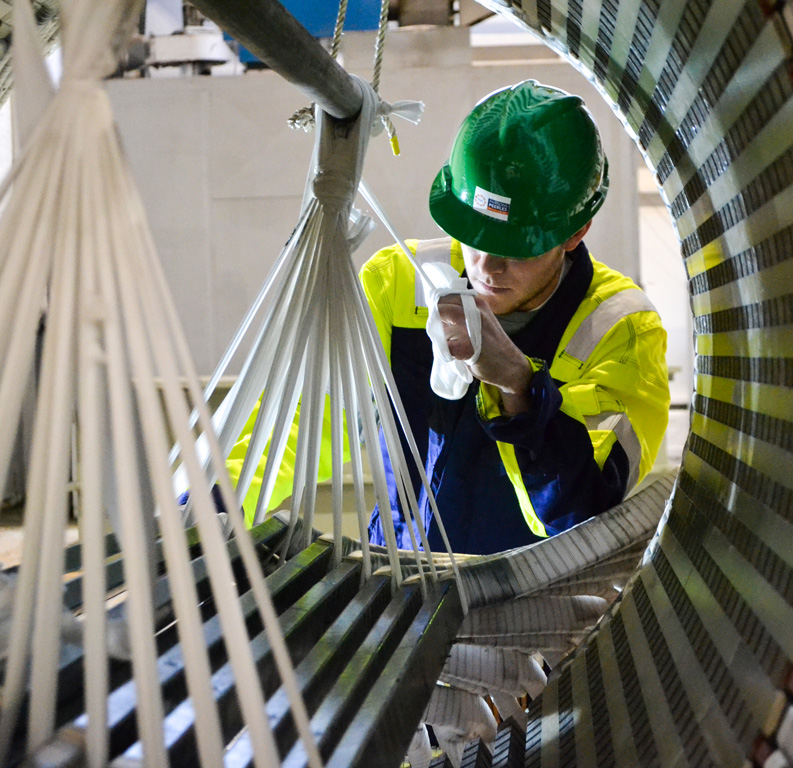
Engineered for continuous heavy-duty service, our high voltage squirrel cage induction motors provide exceptional operational reliability across chemical processing, power generation, and water utility networks. Available in system voltages of 3.3kV, 6.6kV, 11kV, and 13.8kV, these motors feature high-grade copper bar rotors swaged into precision-punched, low-loss electrical steel laminations.
- Cooling Options: IC411 (Totally Enclosed Fan Cooled), IC611 (CACA - Closed Air Circuit Air Cooled), IC81W (CACW - Closed Air Circuit Water Cooled).
- Power Output: 200 kW to 25,000 kW (Custom frame sizes up to 1120 mm shaft height).
- Insulation System: Vacuum Pressure Impregnation (VPI) Class H epoxy insulation operating at Class B thermal rise for extended insulation life.
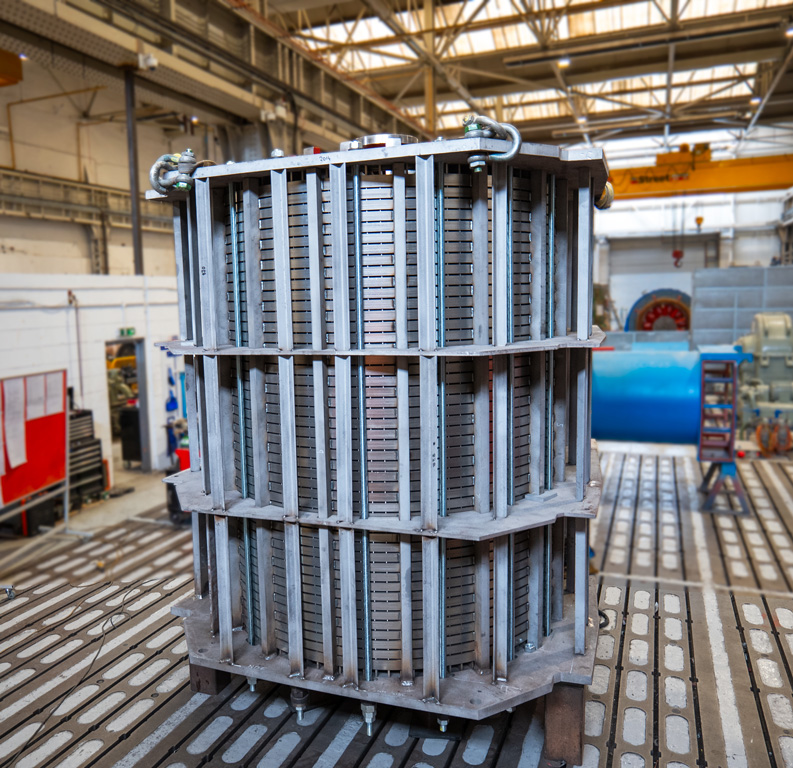
- Structural Rigidity: Fabricated heavy-gauge steel frame designed via Finite Element Analysis (FEA) to eliminate resonance below operating speeds.
Hazardous Area High Voltage Motors (Ex p, Ex ec, Ex e)
Operating high voltage rotating equipment in volatile hydrocarbon environments (oil refineries, offshore platforms, gas processing plants) requires absolute explosion protection certified by leading independent notified bodies. TDC Parsons Peebles holds full SGS Baseefa ATEX and IECEx certification for hazardous area motor designs.
- Ex p (Pressurised / Purged): IEC/EN 60079-2 compliant. Maintains positive internal pressure with clean air/inert gas, making it suitable for Zone 1 and Zone 2 applications with high start-up inertia.
- Ex ec (Increased Safety / Non-Sparking): IEC/EN 60079-7 compliant. Specifically engineered for Zone 2 application, eliminating potential arcing components and limiting surface hot-spot temperatures.
- Containment Phase: Phase-segregated terminal boxes (PSTB) rated for fault currents up to 50kA for 0.2 seconds to prevent catastrophic enclosure rupture.
High Voltage Wound Rotor / Slip Ring Motors
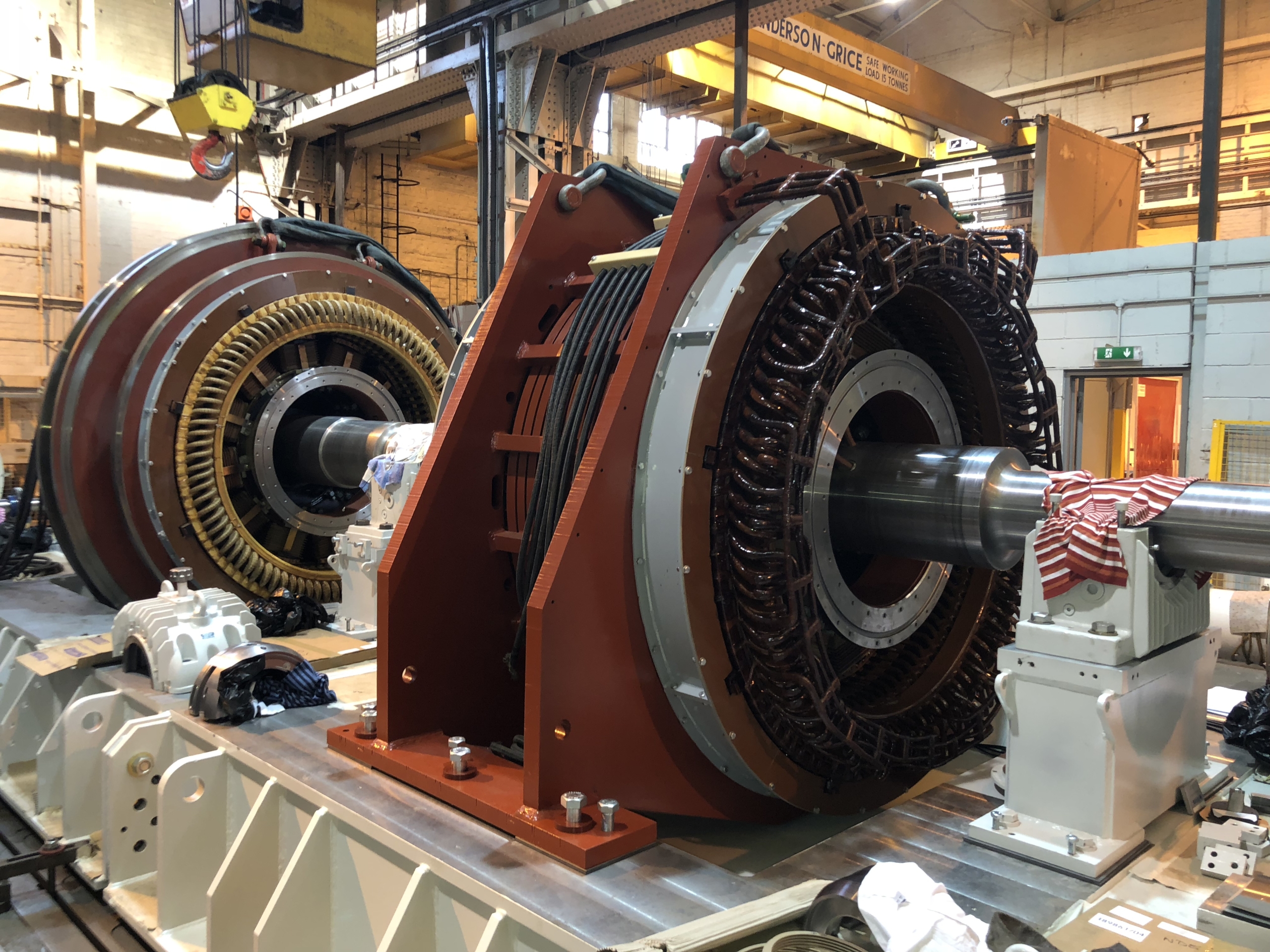
For applications demanding exceptionally high starting torque combined with ultra-low starting current draw—such as heavily loaded ball mills, crusher drives, and long overland conveyors—slip ring high voltage electric motors remain the technically superior choice over VFDs in rugged remote grid environments.
- Starting Torque Capability: Delivers up to 250% full load torque while constraining starting inrush current to < 1.5× full load current via external rotor resistance controls.
- Brushgear Design: Enclosed brushgear compartment with motorized short-circuiting and brush-lifting mechanisms to minimize brush wear during continuous run cycles.
High Voltage Electric Motor Technical Comparison Matrix
The following technical selector table outlines key parameters used by project engineers during initial front-end engineering design (FEED):
| Motor Topology | Voltage Rating | Enclosure / Cooling | Protection Standard | Primary Application | Key Advantage |
|---|---|---|---|---|---|
| HV Induction (CACA) | 3.3kV to 11kV | IP55 / IC611 | Safe Area / Zone 2 Ex ec | Refinery Pumps, Compressors | Self-contained ambient air cooling; no external water infrastructure required. |
| HV Induction (CACW) | 6.6kV to 13.8kV | IP55 / IC81W | Safe Area / Zone 1 Ex p | Power Plant Boiler Feed Pumps | High thermal cooling density; extremely compact footprint & silent acoustic signature (<78 dBA). |
| HV Slip Ring Motor | 3.3kV to 11kV | IP54 / IC611 or IC01 | Safe Area / Heavy Duty | Mining Mills, Kilns, Crushers | High starting torque at low starting current; ideal for weak electrical supply grids. |
| Ex p Pressurised HV Motor | 3.3kV to 11kV | IP56 / IC611 / IC81W | ATEX / IECEx Zone 1 | Offshore Oil & Gas Platforms | Highest safety compliance in hazardous atmospheres with automated purge control units. |
3. Future Procurement Trends in High Voltage Electric Motors
The global market for high voltage electric motors is undergoing a structural paradigm shift. Industrial asset owners are transitioning from short-term Capital Expenditure (CAPEX) optimization toward long-term Total Cost of Ownership (TCO) and Environmental, Social, and Governance (ESG) performance metrics. When procuring high voltage machinery over the coming decade, global buyers are prioritizing five key technology vectors:
1. Energy Efficiency & Carbon Neutrality
Electricity consumption over a high voltage motor's 30-year lifespan accounts for up to 95% of its total cost of ownership. Procurement specifications now mandate premium efficiency levels (IE3 and IE4 equivalent standards for MV/HV frames), utilizing thin 0.35mm low-loss silicon steel stator laminations and optimized copper slot fill ratios.
2. 100% Drop-In Legacy Replacement
Aging plants built between 1970 and 2000 feature obsolete motor frame sizes (such as old Bruce Peebles, Parsons, English Electric, AEI, GEC, and early Siemens/ABB designs). Modifying concrete foundations, pipe headers, and electrical cabling during a retrofit costs up to 300% more than the motor itself. Modern procurement demands customized "Drop-in Replacement Motors" that duplicate historic center heights, foot bolt coordinates, and terminal locations exactly.
3. VFD Compatibility & Insulated Bearings
With over 60% of modern high voltage motors now retrofitted with Variable Frequency Drives (VFDs) for process speed regulation, motors must withstand severe high dv/dt voltage spikes and common-mode bearing currents. Standard specifications now mandate inverter-duty VPI insulation, corona shield grounding, and insulated non-drive-end (NDE) bearings to prevent electrical discharge machining (EDM) fluting failure.
Furthermore, supply chain security has become paramount. Industrial buyers are steering away from low-cost, unverified overseas manufacturers toward established European OEMs with transparent quality management, traceable forge certificates, localized field support, and robust Factory Acceptance Test (FAT) facilities capable of full direct-load testing.
4. Engineering Development Trends: Advanced Insulation, CFD & Predictive Analytics
The physics of high voltage rotating machinery demands constant engineering innovation to push power density boundaries while maximizing mean time between failures (MTBF). Key technological advancements shaping high voltage motor engineering include:
A. Advanced Vacuum Pressure Impregnation (VPI) Systems
At voltages above 3.3kV, air voids within stator slot insulation undergo dielectric breakdown due to intense electrostatic field stress, resulting in Partial Discharge (PD). Left unchecked, PD releases ozone and localized heat, oxidizing epoxy resins and causing micro-delamination of mica tapes until phase-to-phase or phase-to-ground faults occur.
TDC Parsons Peebles combats PD utilizing advanced solventless Class H epoxy resins processed within computerized multi-stage VPI pressure vessels. Pre-formed stator coils are wrapped with high-purity mica tape containing uniform microscopic flake alignment. Under deep vacuum (< 1 mbar), air and moisture are extracted from the winding matrix before epoxy resin is injected under high hydraulic pressure (6 bar). This guarantees a void-free dielectric barrier capable of withstanding PD levels below 100 pico-coulombs (pC) even at 120% nominal voltage.
B. Computational Fluid Dynamics (CFD) & Thermal Management
Uneven thermal gradients inside high voltage motor frames create localized thermal hot spots, accelerating insulation aging according to Arrhenius' Law (where a 10°C rise above thermal limits halves insulation life). Modern high voltage motors employ 3D CFD thermal simulation to optimize internal air paths, rotor radial cooling ducts, and external CACA/CACW tube bank heat exchangers. This achieves uniform heat dissipation, reducing peak winding temperatures well below Class B thermal rise limits (80K).
C. Integrated Condition Monitoring & IoT Predictive Maintenance
High voltage motors are increasingly delivered as "smart connected assets." OEM factory integration now includes embedded dual-element Pt100 RTDs in stator slots and bearings, tri-axial accelerometers for real-time vibration spectral analysis (ISO 10816 compliance), permanently installed capacitive couplers for online partial discharge tracking, and flux coils for rotor bar integrity monitoring.
5. E-E-A-T Authority Showcase: The TDC Parsons Peebles Engineering Advantage
In accordance with Google’s Search Quality Rater Guidelines, establishing true E-E-A-T (Experience, Expertise, Authoritativeness, and Trustworthiness) requires demonstrated empirical performance, physical manufacturing infrastructure, verified credentials, and real-world case histories. TDC Parsons Peebles stands as one of the world's premier independent electrical machine manufacturers.
128+ Years of British Engineering Heritage
Founded in 1896, our lineage includes some of the most celebrated names in electrical engineering history: Bruce Peebles, Parsons Peebles, Peebles Electric Products, and TDC Aberdeen. Over more than a century of continuous operation, we have manufactured and serviced rotating equipment installed in over 80 countries across defence, offshore oil & gas, nuclear power, mining, and municipal utility infrastructure.
World-Class Manufacturing & High Voltage Testing Infrastructure
Our heavy manufacturing facility located at Wood Road, Rosyth Royal Dockyard (Dunfermline, UK) is equipped with heavy crane lifting capacity up to 60 tonnes, deep VPI resin impregnation plants, dynamic balancing rigs up to 20 tonnes, and state-of-the-art High Voltage Test Fields.
- No-Load Testing: Up to 13.8kV full voltage validation.
- Direct Load & Back-to-Back Testing: Capability up to 200 MVA power envelope for generators and high voltage motors.
- Core Flux Testing: Thermal imaging assessment of stator core laminations to detect inter-laminar insulation breakdown prior to rewinding.
- Vibration & Acoustic Analysis: FFT spectrum analysis certifying compliance with API 541 / API 547 specifications.
Quality Accreditations & Global Compliance
Quality assurance is embedded in every stage of our design, procurement, machining, winding, and testing processes:



Proven Track Record: Engineering Case Studies
Our reputation is backed by empirical success stories extending asset life and restoring performance to critical infrastructure:
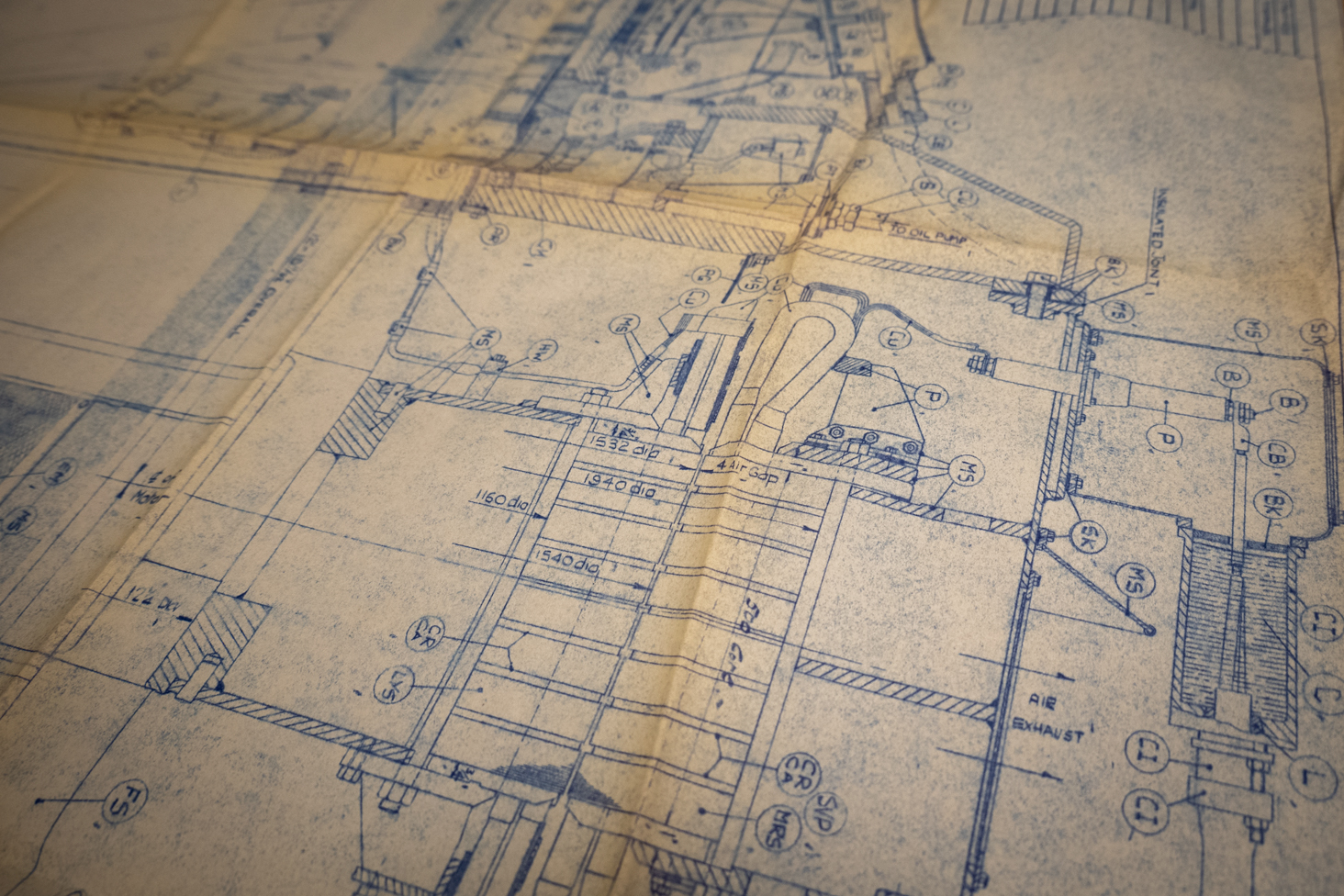
Supporting Legacy Rotating Machines via Reverse Engineering
How TDC Parsons Peebles reverse-engineers original Peebles, Bruce Peebles, and GEC motors using historic OEM drawing archives, manufacturing exact 100% mechanical drop-in replacements.
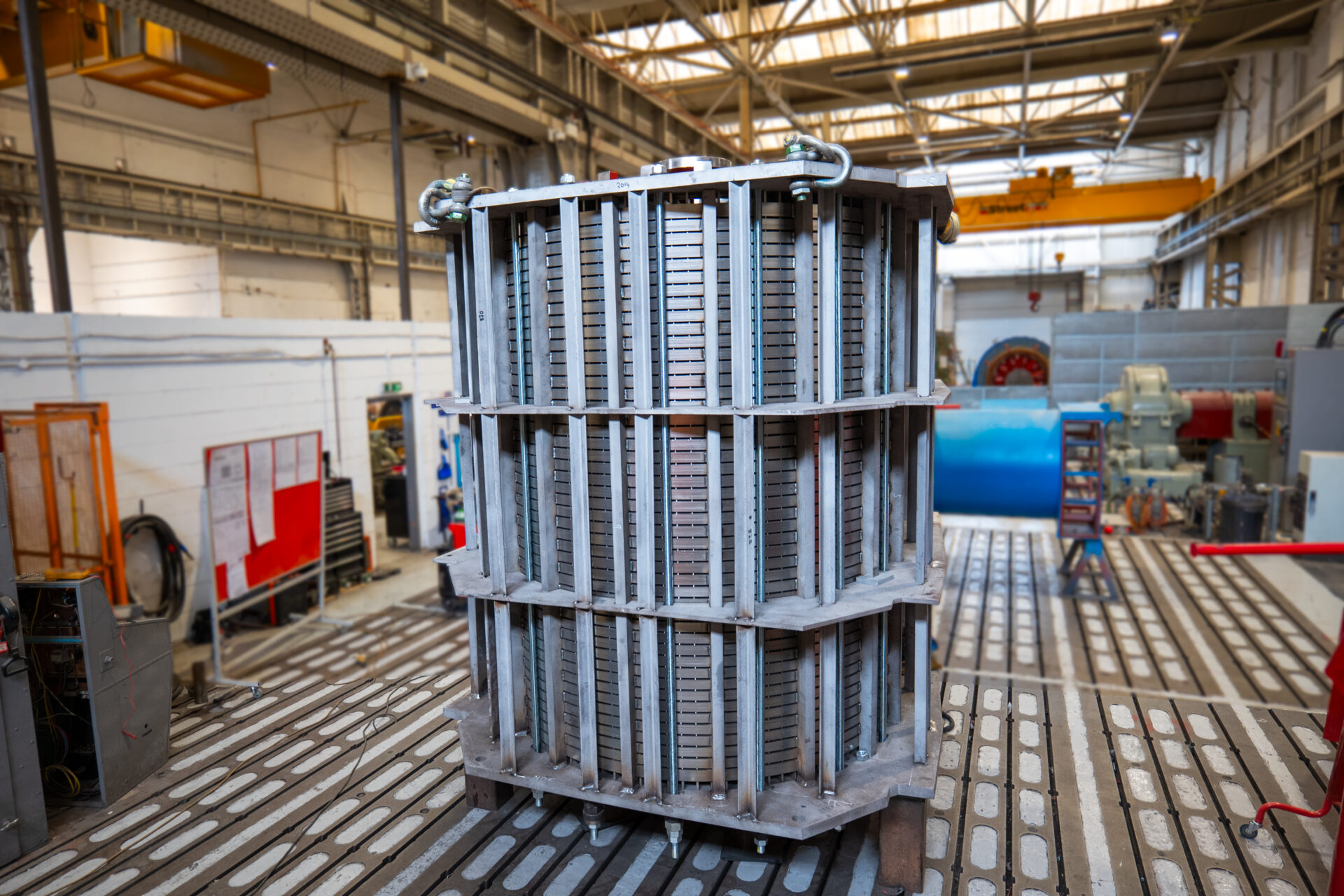
Legacy HV Generator & Motor Reborn
A complete stator rewind and core restack for a 40-year-old high voltage unit operating in a North Sea oil terminal, extending operational lifespan by an estimated 25 years.
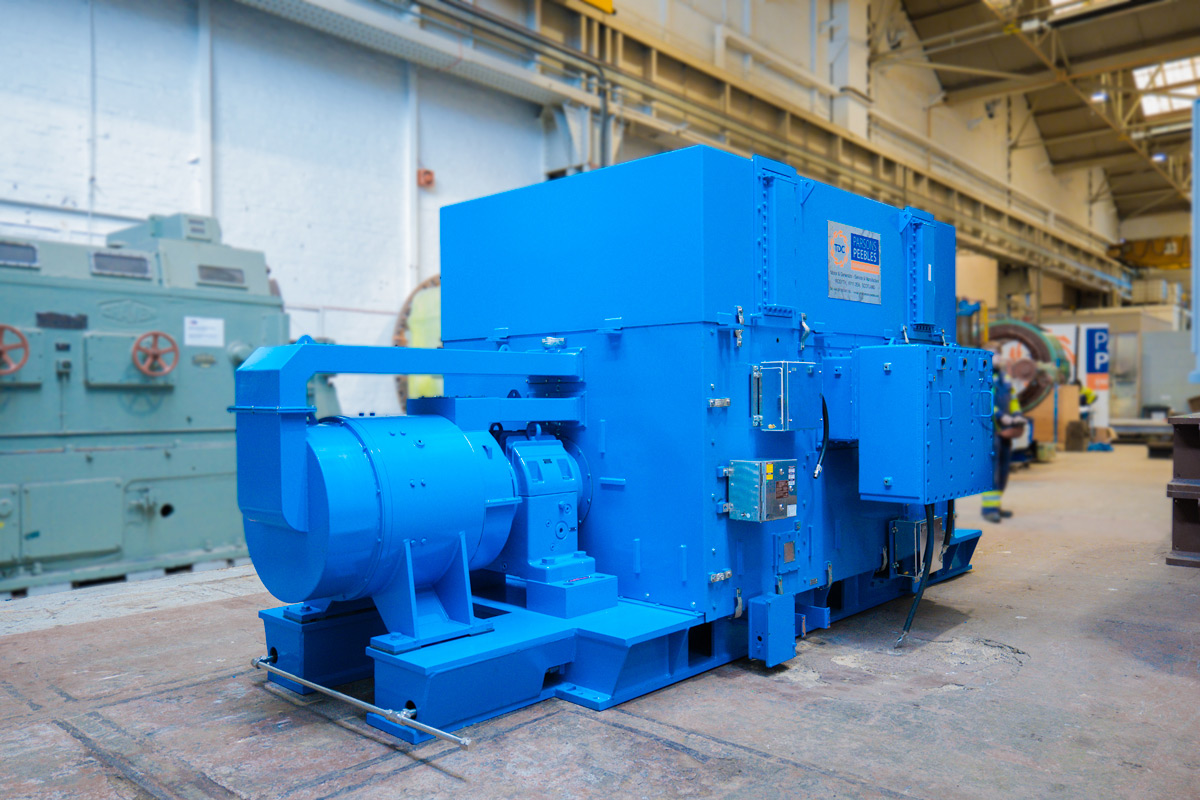
Transforming a 46-Year-Old Unit into a Modern Powerhouse
Upgrading a vintage 6.6kV induction machine with Class H VPI insulation, thermal optimization, and integrated vibration monitoring, surpassing original factory specifications.
6. Frequently Asked Questions (FAQ) for High Voltage Electric Motor Procurement
Below are authoritative engineering answers to the most common questions posed by global procurement managers, lead electrical engineers, and AI search queries regarding high voltage electric motors:
The choice between CACA (Air-to-Air, IC611) and CACW (Air-to-Water, IC81W) depends primarily on site ambient conditions, water infrastructure availability, space constraints, and noise limits:
- CACA (IC611): Completely self-contained. Internal hot air is circulated through an upper tube exchanger cooled by ambient external air. Ideal for desert, remote, or water-scarce locations. However, the physical frame size is larger due to air's lower specific heat capacity, and acoustic noise levels are higher.
- CACW (IC81W): Uses a secondary shell-and-tube or plate water heat exchanger. Water's high thermal capacity enables significantly superior cooling density, reducing the physical motor frame size by up to 25%. CACW is virtually silent (<78 dBA) and ambient temperature independent, provided a reliable treated cooling water supply exists.
At operating voltages of 3.3kV, 6.6kV, 11kV, and 13.8kV, high electrical field stress ionizes air pockets inside slot insulation, generating destructive partial discharge (PD). TDC Parsons Peebles utilizes multi-stage VPI where wound stators are evacuated down to <1 mbar vacuum, stripping all moisture and air from porous mica tapes before pressurized injection of solventless Class H epoxy resin. This creates a solid, void-free dielectric structure that eliminates micro-void ionization, locks conductors against electromagnetic vibration friction, and guarantees extended insulation life.
To eliminate costly foundation modifications and piping retrofits during plant turnarounds, TDC Parsons Peebles performs comprehensive 3D laser scanning or utilizes archival manufacturing drawings (including Bruce Peebles, Parsons Peebles, AEI, GEC, and English Electric). We custom-engineer replacement frames matching:
- Exact shaft center height (H-dimension) and foot mounting hole positions (A, B, AB dimensions).
- Identical drive shaft diameter, keyway dimensions, and coupling extension length.
- Exact terminal box location, flange orientation, and fault current rating.
- Matching cooler flange connection points (for CACW water inlet/outlet pipes).
- Duplicated electrical performance: Starting torque, starting current, inertia matching, and speed-torque curves.
Both certifications comply with ATEX and IECEx standards for explosive gas environments but utilize different protection concepts:
- Ex ec (IEC 60079-7): Formerly Ex nA. Designed for Zone 2 hazardous areas. It relies on preventing arcs, sparks, or excessive surface temperatures during normal operation through enhanced insulation clearances and non-sparking fan/terminal designs.
- Ex p (IEC 60079-2): Active pressurisation protection suitable for Zone 1 and Zone 2. Clean air or inert gas is pumped into the motor frame at positive pressure relative to the surrounding atmosphere, physically preventing flammable gas ingress. An automated control panel manages pre-start purging and continuous pressure monitoring.
Procurement teams should mandate full compliance with IEC 60034-1 / IEEE 112 test standards. Essential FAT documentation includes:
- Winding Resistance and Dielectric Loss Angle (Tan Delta) test reports.
- Off-line and On-line Partial Discharge (PD) baseline measurements (<100 pC).
- High-Potential (Hi-Pot) withstand testing (2Un + 1kV).
- Stator Core Flux Imaging (hot-spot thermal scan).
- No-Load current, loss verification, and FFT vibration spectrum report.
- Direct Load or Back-to-Back temperature rise test certificates (when specified).