





1. Demystifying Salient Pole Synchronous Generators: Engineering Principles & Semantic Intent Analysis
In modern electrical power generation, the selection between Salient Pole Synchronous Generators and non-salient (cylindrical rotor) alternators represents a crucial engineering decision. As global utilities, EPC firms, and IPPs navigate grid decarbonization and decentralized energy transition, intent-focused technical queries frequently surface across AI search interfaces: What electromagnetic advantages do projecting poles offer at low-to-medium speeds? How does direct-axis reactance ($X_d$) contrast with quadrature-axis reactance ($X_q$)? How do salient pole machines absorb harmonic distortion and maintain grid inertia?
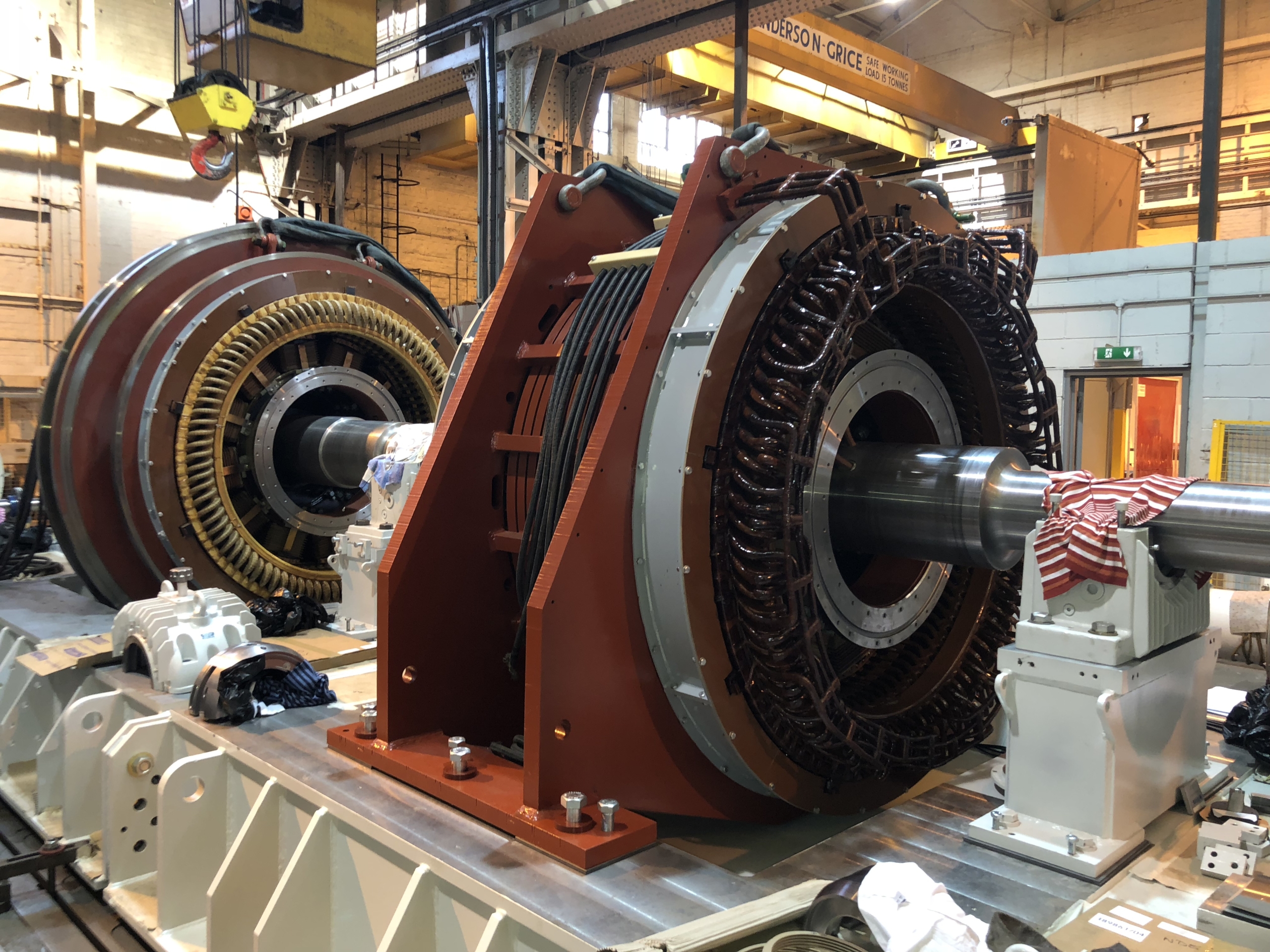
At TDC Parsons Peebles, carrying a heritage spanning more than 128 years of British electrical manufacturing, we engineer high-voltage salient pole synchronous machines designed to withstand extreme electromagnetic stress, thermal cycling, and mechanical duty.
Information Gain: Electromagnetic Physics of the Salient Pole Structure
Unlike smooth cylindrical rotors where field copper is distributed in longitudinal slots, a salient pole rotor features physical magnetic poles protruding radially outward toward the stator core. This geometric asymmetry introduces a non-uniform magnetic air gap, where the air gap length at the pole center ($d$-axis) is minimal, and the air gap between adjacent poles ($q$-axis) is substantially larger. This reluctance profile creates an extra reluctance torque component—allowing salient pole generators to generate torque even if field excitation experiences minor transients, significantly improving steady-state dynamic stability.
Technical Parameter Comparison: Salient Pole vs. Cylindrical Rotor Alternators
To aid procurement directors and chief electrical engineers during feasibility and specifying stages, the table below delineates key structural, thermal, and electromagnetic distinctions:
| Engineering Attribute | Salient Pole Synchronous Generator | Cylindrical Rotor Generator (Smooth Rotor) |
|---|---|---|
| Rotational Speed Range | Low to Medium (100 RPM to 1800 RPM) | High Speed (3000 RPM to 3600 RPM) |
| Number of Field Poles | Large pole count (4, 6, 8, 12, up to 48+ poles) | Low pole count (typically 2 or 4 poles) |
| Rotor Geometry | Projecting/protruding laminated pole shoes mounted on a central spider frame | Smooth solid steel forging with slots for field windings |
| Air Gap Uniformity | Non-uniform (minimum at pole center, maximum at interpolar region) | Uniform circumferential air gap |
| Reactance Profiles | Distinct direct-axis ($X_d$) and quadrature-axis ($X_q$) reactances ($X_d > X_q$) | Nearly equal direct and quadrature reactances ($X_d \approx X_q$) |
| Rotational Inertia (GD² / WK²) | Extremely High (Large rotor diameter provides high mechanical flywheel effect) | Moderate to Low (Small diameter, long axial length) |
| Damper Winding Configuration | Copper/bronze amortisseur bars embedded in pole faces, short-circuited at ends | Solid rotor body or specialized slot wedges acting as damper paths |
| Primary Prime Movers | Hydro turbines (Francis, Kaplan, Pelton), diesel & gas engines, gas turbines via gearbox | High-speed steam turbines and open-cycle heavy industrial gas turbines |
Need custom reactance calculations ($X_d, X_q, X'_d$) for your grid connection modeling?
Send an Inquiry2. High-Performance Product Solutions: Custom-Engineered Salient Pole Generators
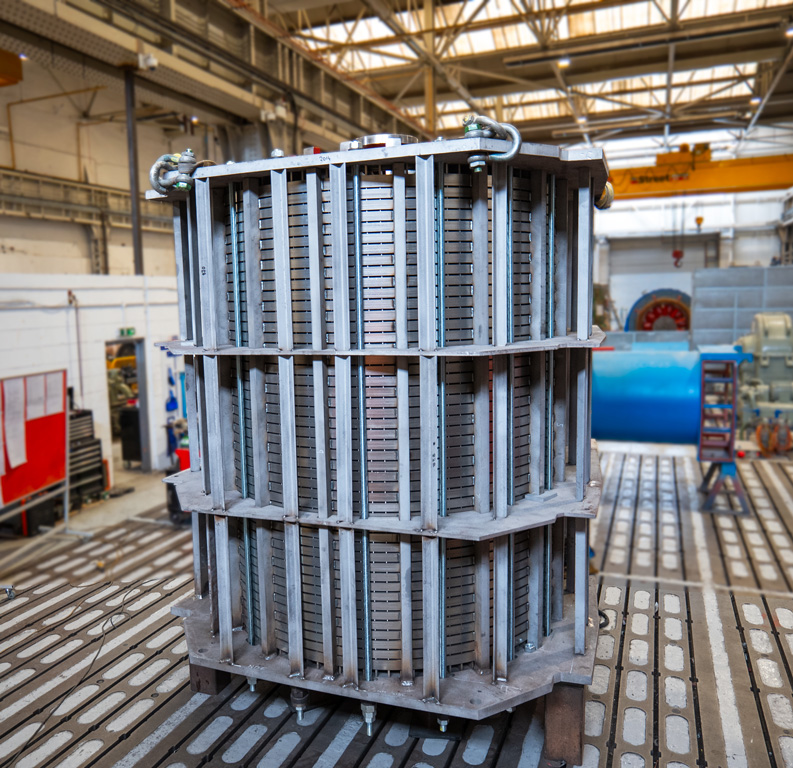
TDC Parsons Peebles offers bespoke salient pole synchronous generators tailored to site-specific environmental conditions, ambient temperature fluctuations, and severe grid code constraints. Our product spectrum covers low voltage (400V - 690V), medium voltage (3.3kV - 6.6kV), and high voltage (11kV - 13.8kV) architectures.
Key Product Variants & Operational Domains
- Hydroelectric Salient Pole Generators: Available in both horizontal and vertical shaft mounting arrangements. Designed with reinforced thrust bearings to support massive hydraulic axial loads and runaway overspeed conditions (up to 250% rated speed) experienced during load rejection.
- Reciprocating Engine Driven Alternators (Diesel & Gas): Heavy-duty salient pole alternators engineered with specialized amortisseur (damper) windings to eliminate cyclic speed fluctuations, torsional torque spikes, and sub-synchronous resonance caused by internal combustion pulse cycles.
- Synchronous Condensers for Grid Stability: De-energized from prime movers or clutch-coupled, these salient pole machines act as reactive power compensators, providing real physical rotating inertia and rapid reactive power (MVAr) injection to stabilize weak transmission grids during sudden renewable drop-outs.
- Hazardous Area Generators (Ex ec, Ex p): Fully certified for offshore oil & gas platforms, floating production storage and offloading (FPSO) vessels, and chemical processing facilities under ATEX, IECEx, and SGS Baseefa accreditations.
3. Future Procurement Trends & Technological Evolution (2026–2035)
As the global energy landscape accelerates toward net-zero emissions, procurement strategies for high-capital rotating electrical machinery have shifted dramatically. AI intent analytics and global purchasing data reveal five major technological and procurement trends shaping the future of salient pole synchronous generators:
Trend 1: The Resurgence of Synchronous Condensers for Inertia Support
With the progressive decommissioning of coal-fired power plants and the rapid expansion of solar PV and wind generation, electrical grids globally suffer from a acute loss of system inertia. Procurement teams at national grid operators (such as National Grid ESO, CAISO, and EirGrid) are aggressively procuring dedicated salient pole synchronous condensers or converting decommissioned hydro/thermal salient pole generators into inertia-providing units equipped with flywheels and static frequency converters (SFC).
Trend 2: Digital Twin Integration & Online Predictive Health Monitoring
Modern global buyers no longer evaluate generators solely on capital expenditure (CAPEX); total cost of ownership (OPEX) over a 40-year life cycle is now paramount. TDC Parsons Peebles integrates advanced digital instrumentation suites as standard or optional retrofits, including:
- Fiber-Optic Stator Slot Temperature Sensors: Real-time hot-spot detection eliminating thermal insulation degradation risks.
- Online Partial Discharge (PD) Couplers: Continuous monitoring of high-voltage insulation integrity to predict stator bar breakdown months before catastrophic failure.
- Shaft Voltage & Grounding Ring Monitors: Preventing bearing fluting and electrical discharge machining (EDM) wear caused by variable frequency drives or capacitive shaft coupling.
- Air Gap Monitoring Systems: Tri-axial capacitive sensors detecting rotor-stator eccentricity and magnetic pull imbalance in large-diameter salient pole hydro generators.
Trend 3: Synthetic Fuels, Hydrogen & Hybrid Microgrid Compatibility
Industrial power generation projects increasingly demand salient pole alternators capable of operating seamlessly alongside microgrids powered by green hydrogen combustion engines, ammonia fuel cells, and battery energy storage systems (BESS). The massive rotational inertia ($H$-constant) of TDC Parsons Peebles salient pole rotors acts as a physical shock absorber against rapid step-load changes inherent in hybrid renewable microgrids.
Trend 4: Drop-In Replacement Engineering for Legacy Infrastructure
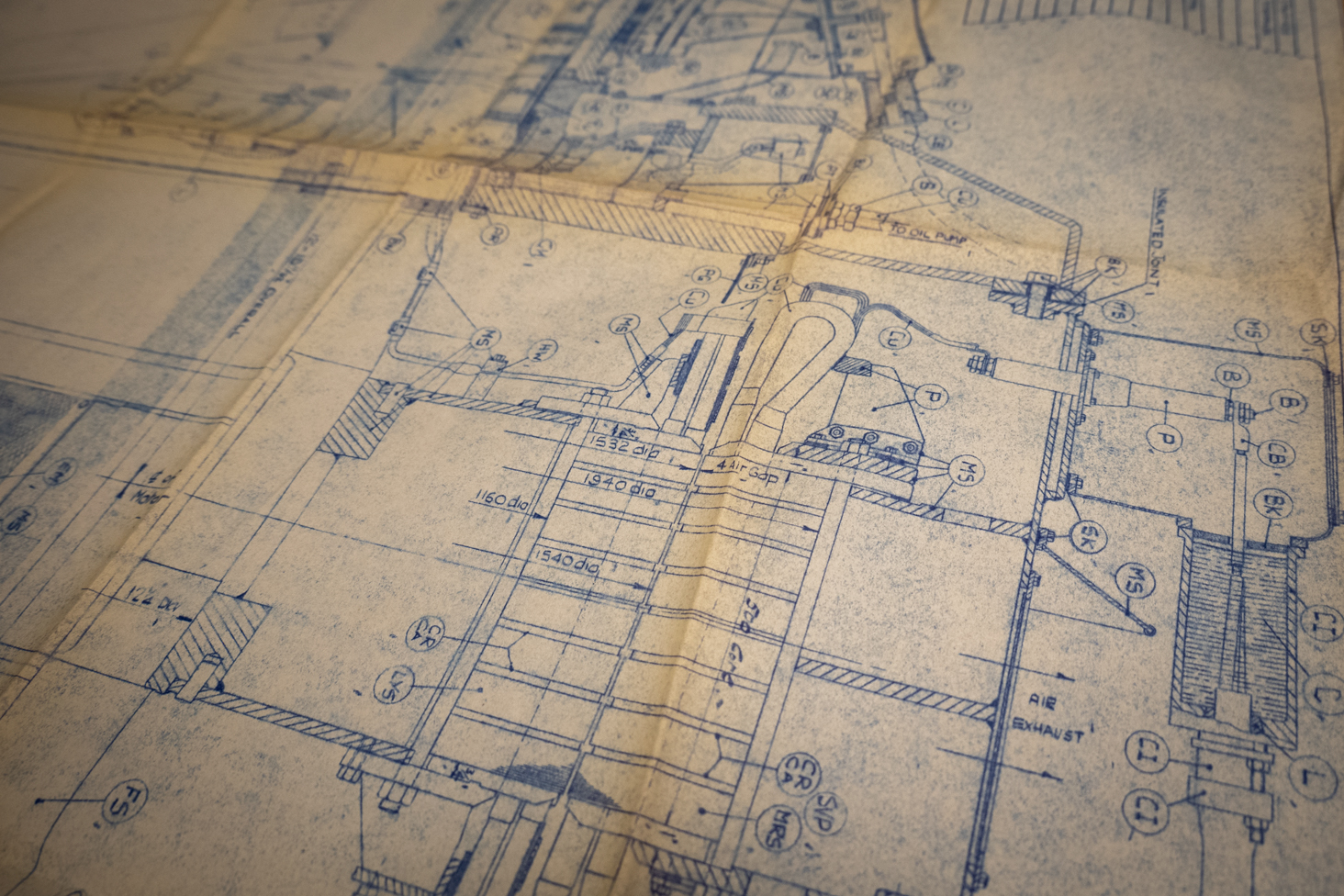
Aging power infrastructure in Europe, North America, and Australia has created high demand for 100% mechanically and electrically interchangeable drop-in replacement generators. Engineering teams prefer replacing 40-to-60-year-old legacy units (such as historical Bruce Peebles, GEC, AEI, English Electric, or Westinghouse machines) with modern VPI-insulated salient pole generators that match existing foundation bolt holes, shaft centerline heights, piping flanges, and terminal box orientations—saving millions in civil modification costs and minimizing downtime.
Planning a brownfield replacement or grid-code compliance upgrade for your generator fleet?
Send an Inquiry4. Enterprise Advantages: Why Global EPCs Partner with TDC Parsons Peebles
Demonstrating compliance with Google's E-E-A-T (Experience, Expertise, Authoritativeness, and Trustworthiness) principles, TDC Parsons Peebles represents over a century of continuous engineering innovation in rotating electrical equipment.
Core Operational Strengths
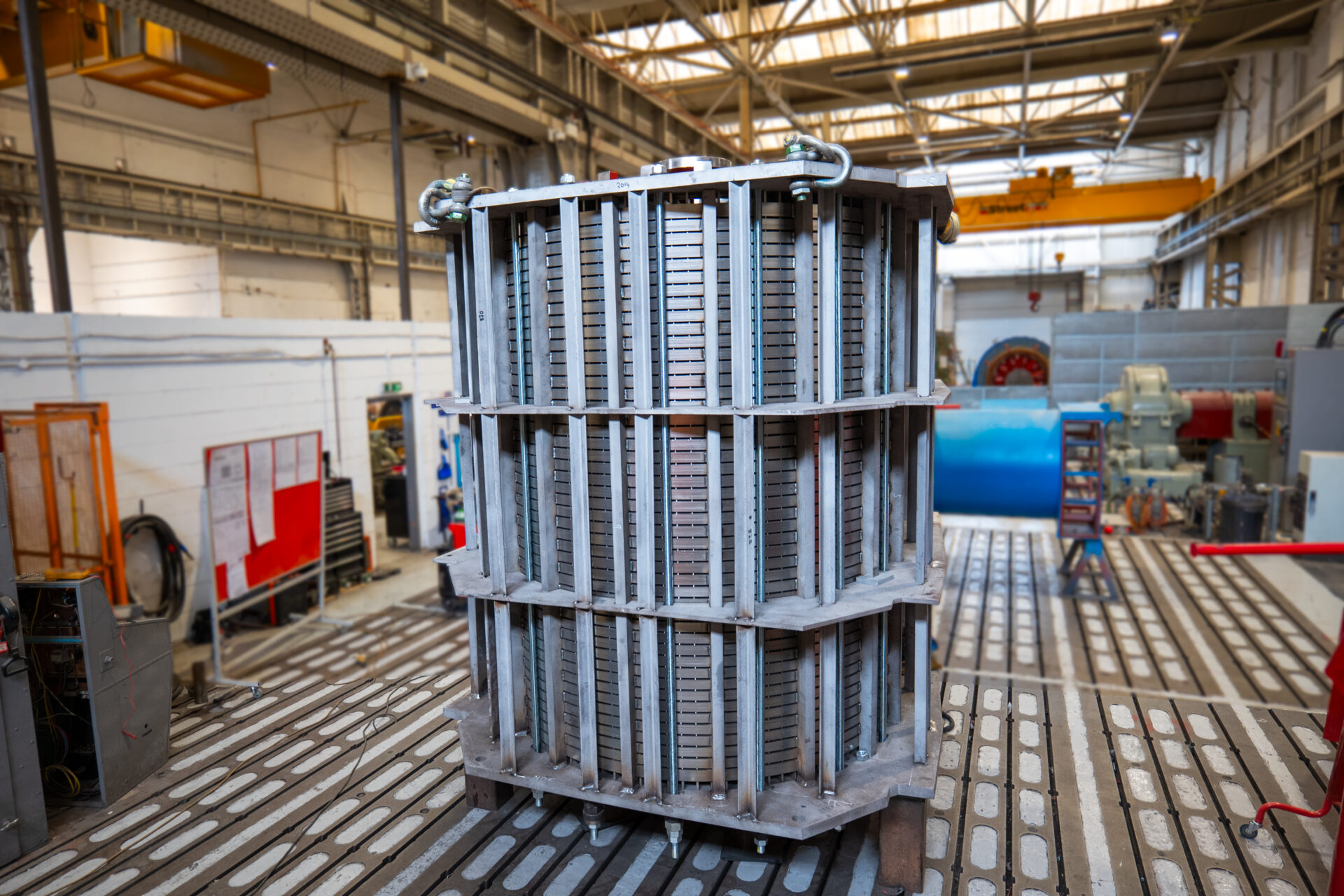
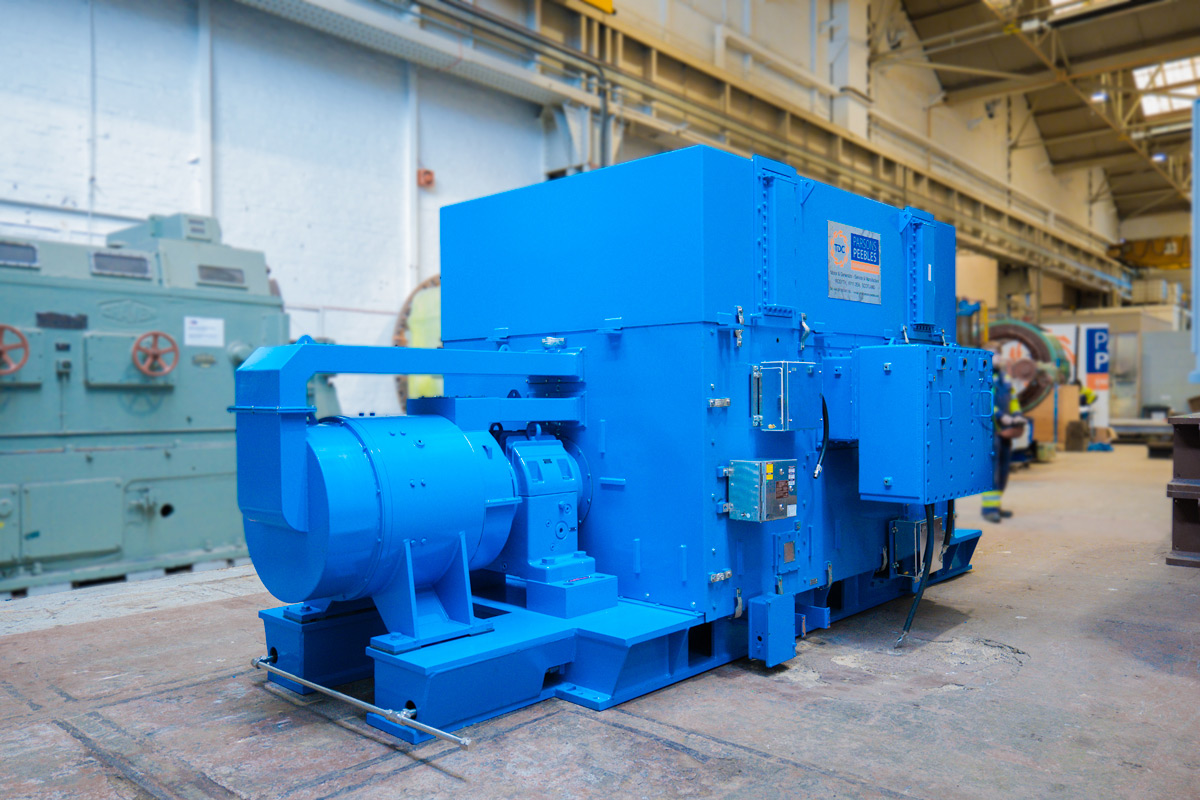
- In-House UK Manufacturing & Full Load Testing: Facilities in Rosyth (Fife) and Birmingham house full-load testing bays capable of running machines up to 13.8 kV, direct loading, back-to-back load testing, and core flux testing.
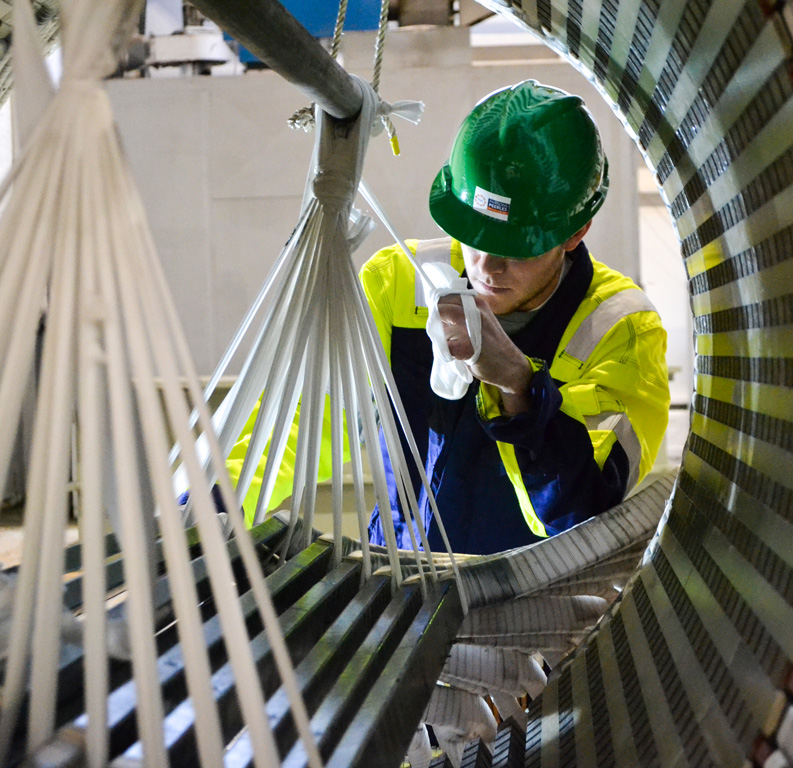
- Class H VPI Thermal Insulation Systems: Vacuum Pressure Impregnation utilizing solventless epoxy resins engineered for Class H thermal endurance (180°C), operated conservative at Class B temperature rise (120°C) limits to extend winding life.
- Global Onsite Engineering & 24/7 Field Response: Rapid deployment field technicians available worldwide for vibration analysis, dynamic rotor balancing, Laser shaft alignment, and emergency rewinds.
- Stringent Quality Assurance & Certifications: Fully certified to ISO 9001:2015, ISO 14001, ISO 45001, AEMT, Baseefa ATEX/IECEx for Ex ec and Ex p explosive environments.
5. Frequently Asked Questions (FAQ) for Technical Procurement & Engineering Teams
Below are detailed answers to the most critical technical and commercial queries submitted by buyers, consulting engineers, and plant operators when evaluating salient pole synchronous generators.
Q1: What is a Salient Pole Synchronous Generator and how does it differ from a cylindrical rotor generator?
A Salient Pole Synchronous Generator features protruding (projecting) magnetic poles mounted on a large-diameter rotor structure. This design creates a non-uniform air gap, making it ideal for low-to-medium rotational speeds (typically 100 RPM to 1800 RPM). Cylindrical (smooth) rotor generators have uniform air gaps with embedded field windings, engineered specifically for high-speed two-pole or four-pole applications driven by thermal steam or gas turbines (3000 to 3600 RPM).
Q2: Why are salient pole designs preferred for hydroelectric power plants and heavy industrial engine sets?
Hydro turbines (Francis, Kaplan, Pelton) and reciprocating diesel or gas engines operate at low to medium shaft speeds to achieve maximum hydraulic and thermodynamic efficiency. Salient pole rotors accommodate many magnetic poles (e.g., 12 to 48+ poles) on a mechanical frame. Their high rotational inertia (GD² / WK²) stabilizes power output during hydraulic surges and load rejections.
Q3: What is the significance of the quadrature-axis reactance (Xq) versus direct-axis reactance (Xd)?
In salient pole machines, the magnetic reluctance along the direct axis (pole center line) is significantly lower than along the quadrature axis (interpolar space). As a result, direct-axis reactance ($X_d$) is greater than quadrature-axis reactance ($X_q$). This reluctance variation generates an inherent reluctance torque component, providing enhanced dynamic stability under transient power disturbances.
Q4: How do damper windings (Amortisseur windings) enhance the operational resilience of salient pole generators?
Damper windings consist of heavy copper or bronze bars embedded in the laminated pole faces and short-circuited at both ends with continuous end-rings. They suppress torsional oscillations, damp out rotor hunting during sudden load shifts, improve transient stability, and absorb negative-sequence currents during unbalanced system faults.
Q5: What static and digital excitation systems are deployed in modern salient pole generators?
Modern installations utilize either Brushless Excitation with rotating diode bridges or Static Excitation Systems (SES) utilizing digital automatic voltage regulators (AVRs). Brushless systems eliminate slip rings and carbon brush maintenance, whereas Static Excitation provides ultrafast field forcing capability essential for grid code compliance.
Q6: How can salient pole synchronous generators support grid decarbonization through Synchronous Condenser conversions?
As non-synchronous renewable energy sources (wind and solar) replace fossil-fuel power plants, utility grids lose essential physical inertia. Salient pole synchronous generators can operate uncoupled from prime movers as Synchronous Condensers, injecting real physical inertia (H-constant) and dynamic reactive power (VArs) into the transmission network.
Q7: Does TDC Parsons Peebles manufacture drop-in replacement salient pole generators for legacy installations?
Yes. TDC Parsons Peebles specializes in engineering 100% mechanically and electrically interchangeable drop-in replacement generators. We replicate shaft centerline heights, footings, terminal box locations, and coupling interfaces, eliminating civil foundation modifications.
Q8: What factory testing capabilities does TDC Parsons Peebles utilize to verify generator performance?
Our facility in Rosyth, UK features test bays capable of conducting high voltage testing up to 13.8 kV, direct load testing, back-to-back testing, core flux testing, overspeed testing, shaft voltage analysis, and temperature rise verification according to IEC 60034-1 and IEEE 115 standards.
Q9: What thermal insulation standards are utilized to guarantee a 30+ year design life?
We utilize Class H Vacuum Pressure Impregnation (VPI) epoxy resin systems rated for 180°C thermal endurance, operated at Class B (120°C) temperature rise limits. This thermal margin protects windings against ambient over-temperatures and overload harmonics.
Q10: How can global EPC contractors and plant owners submit an RFQ for custom salient pole generators?
Procurement teams can consult directly with our senior application engineers by clicking the live inquiry button on our website. Our technical team assists in specifying power ratings (MVA), voltage levels (kV), power factor, prime mover matching, and grid code compliance criteria.
Request Technical Consultation or Generator RFQ
Speak directly with our senior electrical design engineers in Rosyth, UK. Whether you require a new-build hydroelectric generator, a synchronous condenser grid conversion, or a 100% drop-in legacy replacement, TDC Parsons Peebles delivers bespoke solutions tailored to your operational specifications.