





0%

High Voltage Induction Generators serve demanding applications where stable electrical output and dependable operation matter. They can support industrial processes, research facilities, and specialized power systems, depending on their design and configuration. A generator that looks suitable in a product listing may not match the site’s actual load, operating conditions, or integration requirements. Details matter. Rated voltage, frequency, output capacity, cooling method, and control compatibility all deserve careful review.

This guide compares ten generators available for sale, focusing on practical selection factors rather than headline specifications alone. It considers published performance data, construction, efficiency claims, service support, and the clarity of each supplier’s documentation. Buyers should confirm critical figures directly with manufacturers or authorized distributors. Product ranges change, and specifications can vary between configurations. That is easy to overlook when comparing similar-looking models.

The best choice depends on how and where the generator will operate. A facility with variable loads may prioritize control features, while a continuous-duty application may place greater weight on thermal management and maintenance access. Installation conditions matter, too: available space, ambient temperature, connection requirements, and planned service intervals can affect suitability. This list is a starting point, not a substitute for an engineering assessment. Some product pages leave important questions unanswered, so requesting a technical datasheet and written confirmation is sensible. Compare total ownership needs, not just purchase price. A careful review can narrow the field and help identify a generator that fits the application reliably.
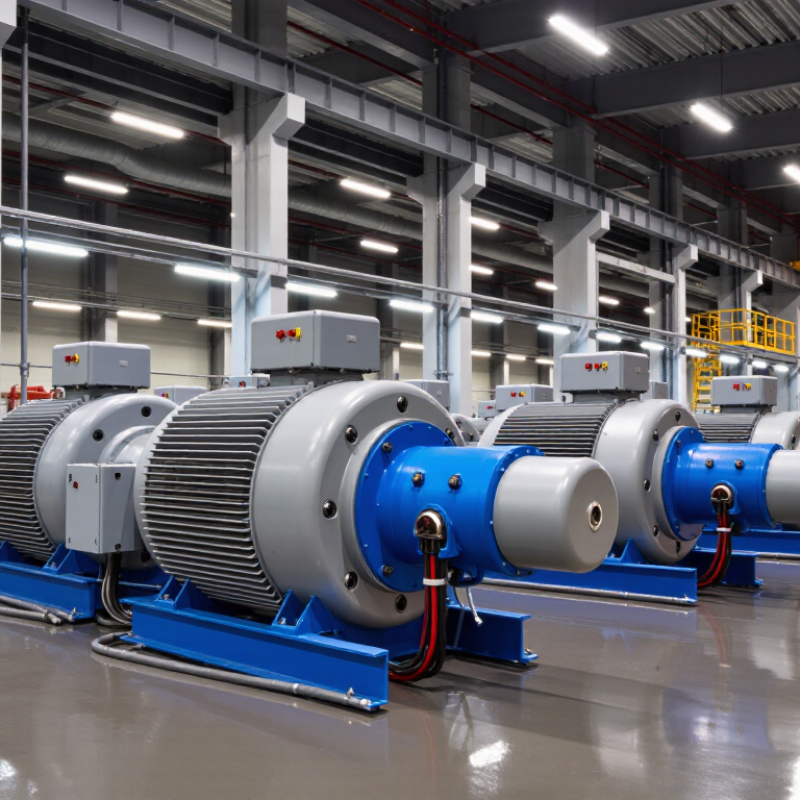
10 Best High Voltage Induction Generators for Sale

What High-Voltage Induction Generators Are and How They Work

A high-voltage induction generator converts mechanical rotation into electrical power. It uses an induction machine, similar in construction to an induction motor. “High voltage” describes its rated output, not a different basic operating principle. The machine still needs a suitable source of mechanical energy, such as a turbine or engine.

When the rotor turns slightly faster than the machine’s synchronous speed, electrical power flows from the stator to the connected system. The stator needs magnetizing current to establish its magnetic field. A grid can supply this current; an isolated setup may use capacitors. Voltage and frequency can change with speed and load, so stable output requires proper system design. Small details matter.

Tips: Check the generator’s nameplate, insulation rating, and operating limits before selecting equipment. Use voltage-rated instruments and have a qualified technician handle connections. Disconnect power and allow stored energy to discharge before inspection. A capacitor bank can support excitation, but its sizing affects voltage behavior and should not be guessed.

Key Specifications for Comparing Generator Options

When comparing high voltage induction generators, start with rated output voltage and continuous power, not the largest peak figure. Check whether ratings apply at the stated frequency and operating temperature. A unit rated for brief surges may not support a steady production load. Confirm voltage regulation, frequency stability, and waveform quality against the equipment you plan to run. Small differences matter.

Review insulation class, cooling method, and duty cycle together. These details affect how reliably a generator handles extended operation and changing loads. Ask for test conditions behind published ratings, plus protection features such as overtemperature and overcurrent shutdown. A specification sheet can leave gaps. Verify important claims with technical documentation and a qualified electrical professional, especially when installation conditions differ from the test setup.

Tips: Compare like with like. Record voltage, continuous output, frequency, load type, and duty cycle for every option. Check connection requirements and available service support before purchase. If a specification is unclear, ask for clarification in writing. A neat table helps, though it will not replace a proper load assessment.

10 Best High Voltage Induction Generators for Sale - Key Specifications for Comparing Generator Options

Generic equipment configurations for comparison, not specific manufacturer models. Ratings and speed ranges are indicative; confirm the final design, terminal voltage, site conditions, and grid requirements with the supplier.

Option Configuration Typical power range Generator terminal voltage Typical speed / frequency Grid and reactive-power considerations Common applications
1 Squirrel-cage induction generator, 3.3 kV class 0.5–2 MW 3.3 kV Usually near synchronous speed; for a 4-pole machine, about 1,500 rpm at 50 Hz or 1,800 rpm at 60 Hz, with generating speed slightly above synchronous Normally grid-connected; requires magnetizing reactive power from the grid or a correctly sized compensation system. Industrial energy recovery, small hydro, and mechanically driven process equipment
2 Squirrel-cage induction generator, 6.6 kV class 1–6 MW 6.6 kV Fixed-speed designs commonly use 4 or 6 poles; speed is slightly above synchronous while generating. Check the grid connection study, power factor limits, protection settings, and capacitor or static compensation needs. Medium-sized hydro plants and industrial drives with recoverable mechanical power
3 Large squirrel-cage induction generator, 11 kV class 5–20 MW 11 kV Pole count and rated speed are project-specific; generating operation requires rotor speed above synchronous speed. Requires utility-compatible switchgear and protection; reactive-power support and voltage stability must be assessed. Large hydro installations and industrial sites with an 11 kV collection system
4 Low-speed, multi-pole induction generator for hydro service 0.2–3 MW Typically 3.3 or 6.6 kV Multi-pole synchronous speeds match slower turbines; actual speed depends on pole count and grid frequency. Grid connection fixes operating frequency; verify turbine speed range, gearbox needs, and reactive-power supply. Small and medium hydro sites with relatively low turbine speed
5 Medium hydro induction generator, 6.6 kV class 1–10 MW 6.6 kV Selected to suit the turbine and grid frequency; fixed-speed operation is close to synchronous speed. Assess grid strength, fault levels, voltage rise, and reactive-power compensation at the point of connection. Run-of-river and small reservoir hydro plants
6 Large hydro induction generator, 11 kV class 5–30 MW 11 kV Machine speed is matched to turbine design and pole count; exact rated speed is project-specific. Requires engineered grid protection and a reactive-power plan; confirm whether direct connection or transformer coupling is specified. Larger hydro projects where induction-machine operation suits the site and grid
7 Doubly-fed induction generator (DFIG) wind system 1.5–6 MW Commonly 575–690 V at generator stator; a transformer steps up to the collection-grid voltage. Variable-speed operation is commonly around 0.7–1.3 per unit of synchronous speed, depending on design. Converter controls rotor power and can provide reactive-power control within its rating. The generator terminals are generally not high voltage. Variable-speed wind turbines connected through a step-up transformer
8 Wound-rotor induction generator 0.5–5 MW Typically 3.3 or 6.6 kV stator voltage Near synchronous speed, with rotor circuit equipment used for particular speed-control or starting schemes. More complex rotor equipment than a squirrel-cage design; evaluate slip-ring maintenance, control method, and reactive-power needs. Specialized industrial or hydro applications requiring rotor-circuit access
9 High-speed, 2-pole induction generator 1–5 MW Typically 3.3 or 6.6 kV Synchronous speed is 3,000 rpm at 50 Hz or 3,600 rpm at 60 Hz; generating speed is slightly higher. Confirm mechanical overspeed limits, grid synchronization method, and the source of magnetizing reactive power. High-speed prime movers and industrial energy-recovery systems
10 Low-voltage squirrel-cage generator with step-up transformer 0.5–3 MW Often 400–690 V at generator; transformer steps up to a site voltage such as 3.3, 6.6, or 11 kV. Usually fixed-speed and near synchronous speed; actual speed depends on pole count and grid frequency. The transformer provides the medium-voltage interface but does not make the generator terminals high voltage; include transformer losses and protection in comparisons. Projects where a standard low-voltage machine connects to a medium-voltage site network

Comparison note: “high voltage” can refer to the generator terminals or to the system voltage after a step-up transformer. Confirm which is specified, along with frequency, rated power, efficiency, insulation class, cooling method, enclosure, duty, grid-code compliance, and reactive-power capability.

Ten High-Voltage Induction Generators Available for Sale

Ten high-voltage induction generators available for sale can cover very different needs. The ten common configurations include compact laboratory units, enclosed bench models, variable-speed machines, fixed-speed machines, single-phase units, three-phase units, capacitor-excited generators, grid-connected systems, standalone systems, and test-bench assemblies. Availability and output ratings vary by seller, so treat these as useful categories, not guaranteed stock listings.

Compare rated voltage, power, frequency range, insulation class, and cooling method before choosing. Check whether the quoted voltage is line-to-line or phase-to-neutral; that detail is easy to miss. A clear data sheet should also state the required shaft speed and compatible load conditions. A listing can look complete, yet omit a key rating. That deserves a second look. High-voltage equipment should be installed and operated by qualified personnel, with suitable enclosures and protective devices.

Tips: Ask for a wiring diagram and test report. Confirm the generator’s duty cycle and service support. Match the unit to your load, not just its peak voltage. Leave clearance around vents, and keep moisture away. Small details matter.

Common Applications and Operating Requirements

High-voltage induction generators serve forging, heat treatment, brazing, and metal melting. They heat conductive workpieces without flame, making them useful where localized, repeatable heating matters. The International Energy Agency’s Energy Efficiency 2023 report says industry accounts for about 37% of global final energy use. That scale makes efficient process heating important, but it does not mean induction is the right choice for every line. Workpiece geometry, alloy, production rate, and required heating depth all affect equipment selection.

Fit the generator’s output frequency and power to the part and induction coil. A small coupling gap can improve heating consistency; a poorly matched coil can waste energy or create uneven temperatures. Cooling water must stay within the equipment maker’s specified flow and temperature limits. Keep coils and connections clean. Verify electrical grounding, enclosure integrity, and interlocks before operation, and use qualified personnel for high-voltage maintenance. These details are easy to overlook.

A trial run matters. Measure temperature at more than one point, then adjust power and heating time against the actual production part. DOE and industry guidance cannot replace site-specific testing: part placement, scale, and changing material batches can shift results. Even a careful setup may need revision.

High-Voltage Induction Generators: Applications and Representative Voltage Levels

Illustrative nominal electrical interface voltages used in common generation applications. Values are examples, not universal generator ratings.

Small hydro and wind machines commonly connect at low voltage, while industrial and plant-level systems may use medium-voltage buses. Wind farms often use a higher-voltage collector network; a step-up transformer typically separates that network voltage from the generator terminals. Actual requirements depend on power rating, grid code, insulation coordination, speed, and site conditions.

Safety, Installation, and Purchasing Considerations

A high-voltage induction generator should be judged by more than its advertised output. Check the rated voltage, frequency range, duty cycle, and insulation details against the equipment it will serve. Specifications can look complete while leaving practical questions unanswered. Ask how the unit behaves under continuous load, and whether its enclosure protects connections from dust and accidental contact. A tidy product photo proves very little.

Installation requires a qualified electrical professional familiar with high-voltage systems. The mounting area needs stable support, adequate ventilation, and controlled access. Confirm grounding, protective interlocks, emergency shutoff, and required clearances before energizing the generator. Keep cables secured and away from walkways. Never rely on improvised connections or a household outlet. That matters. A commissioning check should verify the wiring, protective devices, and operating conditions against the manufacturer’s documentation.

When comparing models, request a wiring diagram, maintenance schedule, and clear service requirements. Check that replacement parts and technical support are realistically available. Verify applicable safety certifications for your location, rather than assuming a listing or sales claim is enough. It is easy to focus on output and overlook installation costs, training, and downtime. Those details can change the true purchase price.

FAQS

What industries use high-voltage induction generators?

They support forging, heat treatment, brazing, and metal melting. They heat conductive parts without a flame.

How do I choose the right generator?

Match its output frequency and power to the workpiece and coil. Consider the alloy, part shape, heating depth, and production rate.

Why does coil fit matter?

A small coupling gap can help produce more consistent heating. A poorly matched coil may waste energy or create uneven temperatures.

What should operators check before use?

Check cooling-water flow, coil cleanliness, grounding, enclosure condition, and interlocks. Stay within specified water limits. Details get missed.

Why run a production trial?

Measure temperatures at several points on the actual part. Adjust power and heating time. One test may not settle it.

What is needed for safe installation?

Use a qualified high-voltage electrical professional. Provide stable support, ventilation, controlled access, secure cables, and emergency shutoff.

What specifications should buyers review?

Check rated voltage, frequency range, duty cycle, and insulation details. Ask how the unit performs under continuous load.

What documents and support should buyers request?

Request wiring diagrams, maintenance schedules, and service requirements. Confirm replacement parts and technical support are realistically available. Verify local safety certifications.

What costs are easy to overlook?

Installation, staff training, and downtime can change the total cost. A tidy product photo proves little. Recheck the practical details.

Conclusion

High Voltage Induction Generators convert mechanical energy into electrical power through electromagnetic induction, making them useful where dependable, high-voltage output is required. Choosing a suitable unit involves comparing key specifications such as rated voltage, power capacity, frequency, efficiency, cooling method, and operating conditions. These factors help determine whether a generator can meet the demands of a particular installation and run reliably over time.

This overview considers ten types of High Voltage Induction Generators available for sale and the applications they may support, from industrial processes to specialized power systems. It also outlines practical requirements for operation, including appropriate site conditions, compatible equipment, and regular maintenance. Before purchasing, buyers should assess installation needs, protection and grounding provisions, serviceability, and the supplier’s technical documentation. Careful planning and qualified installation help ensure safe, efficient, and dependable performance.


Amelia

Amelia

Amelia is a professional marketing specialist with a deep understanding of the company’s products, services, and customer needs. With a strong background in market research, content strategy, and business communication, she transforms complex product information into clear, practical, and engaging......