





0%

Choosing Drop-in Replacement Motors is not simply a matter of matching horsepower. The replacement must fit the machine, connect safely to the existing supply, and perform under the same operating conditions. A motor that looks identical on a workbench can still overheat, draw excessive current, or fail to deliver the required starting torque. Small differences matter.

Austin Hughes, co-author of Electric Motors and Drives, is a respected source on motor fundamentals. A practical selection principle consistent with that engineering approach is: “A true replacement must match the application, not just the nameplate.” This sentence is a concise editorial summary, not a verbatim quotation from Hughes. It points to the checks that deserve attention: frame size, shaft dimensions, voltage, frequency, speed, enclosure, mounting, and duty cycle. Measure the shaft and mounting holes. Read the full nameplate. Confirm how the machine starts and how long it runs.

The seven tips in this guide help organize those checks before purchase or installation. They also encourage useful questions for a supplier or qualified motor professional, especially when the original motor’s data is incomplete. A “drop-in” label is not proof of compatibility. Even a neat fit can hide a mismatch. Some details are easy to overlook, and that is worth admitting. Careful verification can prevent avoidable downtime and help the replacement operate as intended.
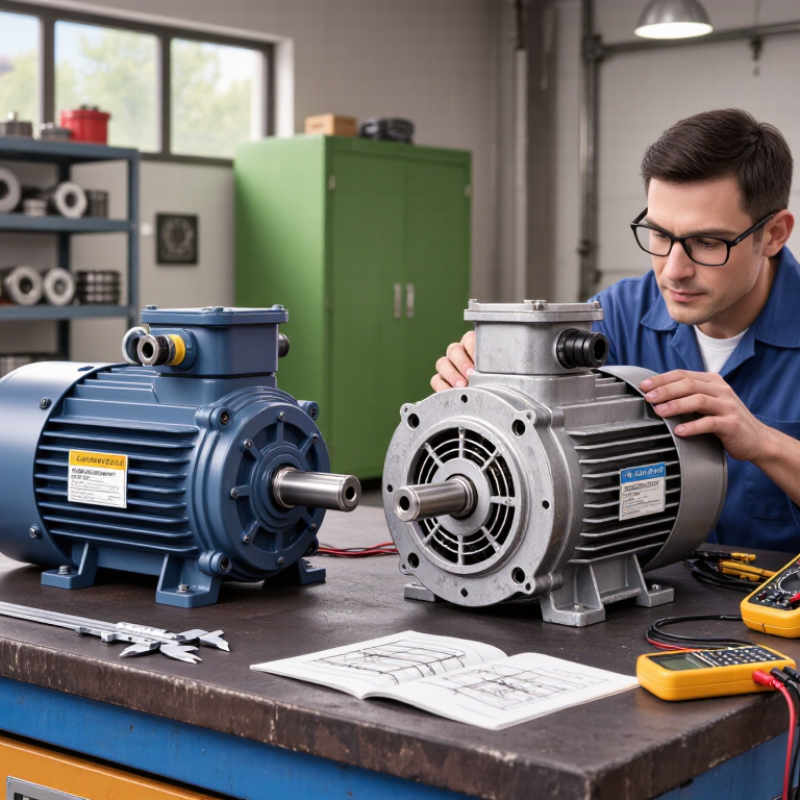
7 Tips for Choosing Drop-in Replacement Motors

Define the Application and Operating Requirements

A motor that fits the mounting holes may still fail to suit the application. Record the driven equipment, load type, and expected duty cycle before comparing replacements. A conveyor running continuously has different needs from a pump that starts several times each hour. Note the available voltage, phase, frequency, and control method, too. That detail matters.

Tip: Check shaft diameter, frame dimensions, mounting orientation, terminal position, and rotation direction. Compare rated speed and torque with the original motor’s data plate. If the machine starts under load, ask about starting torque and current—not just running power.

Operating conditions can change the right choice. Measure ambient temperature near the motor, and note dust, moisture, vibration, and limited airflow. These conditions affect insulation life and cooling. Confirm whether the replacement’s enclosure and temperature rating suit the actual location. It is easy to assume the old motor was correctly selected; sometimes it was merely what fit at the time. When specifications are missing, inspect the machine and gather measurements before ordering. A small mismatch can mean extra adapters, altered wiring, or unexpected downtime.

Verify Frame, Shaft, and Mounting Compatibility

A replacement motor can match the old unit’s horsepower and still fail to fit. Measure the frame, shaft diameter, shaft extension, and mounting-hole spacing before ordering. Check the shaft keyway, too; a small mismatch can prevent a coupling from seating correctly. For foot-mounted motors, compare the distance from the shaft centerline to the mounting surface. For flange mounts, verify the pilot diameter and bolt pattern. Use the motor nameplate and a drawing where possible. Measure the old motor directly if records are incomplete, but allow for wear or paint buildup.

NEMA MG 1 provides standardized motor dimensions for many common frame sizes, but not every motor follows the same mounting arrangement. Confirm the exact frame designation and dimensional drawing rather than relying on horsepower alone. The U.S. Department of Energy’s 2014 sourcebook, Improving Motor and Drive System Performance, estimates that motor-driven systems use about 68% of the electricity consumed in U.S. manufacturing. That makes a careful replacement worthwhile: a poor fit can add installation time and leave alignment problems that affect connected equipment. Check rotation and terminal-box clearance as well. Details matter.

A practical check is to lay the old motor beside the proposed unit and compare the shaft and mounting points. Take photos before removal. I have seen a “matching” frame still need a spacer; that is not a perfect drop-in replacement. When dimensions differ, ask the supplier for a verified drawing and document the gap before installation.

7 Tips for Choosing Drop-in Replacement Motors — Verify Frame, Shaft, and Mounting Compatibility
Tip What to Verify How to Check Why It Matters
1. Confirm the frame size Frame designation and key mounting dimensions, including shaft center height and mounting-hole spacing. Compare the existing motor’s nameplate and dimensional drawing with the proposed motor’s drawing. Do not rely on frame labels alone when dimensions are critical. A matching frame designation does not necessarily guarantee that every physical dimension or mounting detail is identical.
2. Match the shaft Shaft diameter, usable extension length, keyway dimensions, and shaft configuration. Measure the existing shaft and check both motors’ dimensional drawings. Confirm whether the driven equipment uses a key, coupling, pulley, or another connection. A shaft that differs in size or geometry may not fit the existing coupling or driven equipment.
3. Verify the mounting arrangement Foot-mounted, flange-mounted, face-mounted, or other arrangement; hole pattern and orientation. Compare the mounting style and bolt locations. Check clearance around the motor, conduit box, and nearby equipment. Even a motor with a compatible frame may not install as a direct replacement if its mounting details or clearances differ.
4. Check electrical ratings Rated voltage, phase, frequency, current, and connection requirements. Read the existing motor nameplate and confirm that the supply and control equipment are suitable for the replacement’s ratings. Electrical mismatches can prevent correct operation or require changes to the supply or controls.
5. Match speed and performance Rated speed, pole count where specified, power rating, and required starting or load characteristics. Compare nameplate data and application requirements. Check that the replacement can meet the driven equipment’s operating needs. A motor with different speed or performance characteristics can affect machine output and connected equipment.
6. Select the right enclosure and environment rating Enclosure type and suitability for exposure to dust, moisture, washdown, or other site conditions. Review the motor documentation and compare its environmental suitability with the installation location and applicable site requirements. An unsuitable enclosure may not provide adequate protection in the operating environment.
7. Confirm duty and thermal requirements Duty rating, insulation and temperature information, cooling method, and any applicable overload or starting requirements. Compare the existing motor’s nameplate and application conditions with the replacement documentation. Consult a qualified motor professional if operating conditions are unclear. A motor must be suitable for the actual operating cycle and thermal conditions, not just the physical installation.

Match Voltage, Phase, Speed, and Control Needs

A replacement motor can fit the mounting feet and still fail in service. Match the nameplate voltage and phase to the available supply; a 230-volt, three-phase motor is not a direct substitute for a single-phase unit. Check frequency, wiring, frame size, shaft diameter, and rotation direction too. Small mismatches matter.

Tip: Verify speed and load together. Compare rated RPM, pole count, torque, and the driven machine’s operating range. The U.S. Department of Energy’s Improving Motor and Drive System Performance sourcebook reports that motor-driven systems use about 69% of electricity in U.S. manufacturing. That scale makes correct motor selection important for energy use, but efficiency figures alone do not guarantee compatibility. A slightly different speed can change a fan’s airflow or a pump’s output.

Tip: Confirm the control method before ordering. If the existing motor runs on a variable-frequency drive, check that the replacement is suitable for inverter operation and that its insulation and cooling meet the application’s needs. Review the drive’s voltage, current, and minimum-speed limits against the motor data. Keep the old nameplate details handy. A quick visual match is tempting, but I would treat it as a starting point, not proof. Verify the manufacturer’s technical documentation and have a qualified technician check uncertain connections.

Choosing a Drop-in Replacement Motor: Match Speed

These bars show synchronous speed, calculated as 120 × frequency ÷ number of poles. An induction motor’s actual operating speed is typically lower under load, so verify the original motor’s rated speed as well as its voltage, phase, and control requirements.

Compare Torque, Efficiency, and Thermal Performance

A drop-in motor can match the shaft and still disappoint under load. Compare continuous torque, starting torque, and the machine’s real duty cycle—not just the nameplate horsepower. A conveyor may need steady torque; a loaded pump may demand more during startup. Check the replacement’s torque-speed curve against the driven equipment’s requirements. Fit matters. Performance matters more.

Efficiency deserves a close look, too. The U.S. Department of Energy’s 2014 Industrial Electric Motor Systems Market Opportunities Assessment estimates that motor systems use about 68% of electricity in U.S. manufacturing. Even modest efficiency differences can therefore affect operating costs, especially in motors that run for long shifts. Compare efficiency at the expected load, not only at full load. Then check thermal limits: ambient temperature, ventilation, enclosure, and inverter operation can all change winding temperature. A motor that runs hot may need derating or better cooling. Measure where possible. A thermal label alone cannot predict the temperature inside a crowded machine housing.

I would still treat catalog ratings as a starting point, not a promise; real loads are often messier than the test conditions. Keep records of current, temperature, and vibration after installation. Those readings may reveal a mismatch before it becomes a failure.

Check Standards, Reliability, and Replacement Support

A drop-in replacement is only truly interchangeable when its dimensions and operating conditions match. Check shaft diameter, frame size, mounting feet, terminal-box position, voltage, frequency, speed, and enclosure. Measure the installed motor before removal; old drawings may not reflect later changes. Compare its nameplate with applicable requirements, such as NEMA MG 1 or IEC 60034. Standards matter.

Reliability depends on the actual duty, not just the catalog rating. Check starts per hour, load profile, ambient temperature, vibration, bearing arrangement, and ingress protection. The U.S. Department of Energy’s Improving Motor and Drive System Performance: A Sourcebook for Industry reports that motor-driven systems use about 68% of electricity consumed by U.S. manufacturing. That makes efficiency and avoidable downtime worth examining. Ask for test records, warranty terms, delivery estimates, and access to repair or commissioning support. Get specifics in writing.

Before ordering, request a dimensional drawing, wiring diagram, and performance data. Confirm whether the existing starter or variable-frequency drive needs adjustment. A motor can bolt into place and still run hot under a different load. Small mismatch. Keep the failed unit’s nameplate details and note its operating symptoms; they can help support staff identify an unsuitable replacement. A checklist helps, but it cannot replace checking the actual installation.

FAQS

What information should I collect before choosing a replacement motor?

Record the driven equipment, load type, duty cycle, voltage, phase, frequency, and control method. Continuous conveyors need different performance from pumps that start hourly.

Can matching horsepower guarantee a suitable replacement?

No. Matching horsepower does not confirm shaft size, mounting, torque, speed, or starting performance. It may still fit badly.

Which physical measurements matter most?

Measure the frame, shaft diameter, shaft extension, mounting-hole spacing, and shaft keyway. Also check the mounting orientation and shaft centerline height.

What should I check for foot-mounted motors?

Compare the shaft centerline distance from the mounting surface. Check each mounting hole carefully. A small offset may require an adapter.

What should I check for flange-mounted motors?

Verify the pilot diameter, bolt pattern, shaft dimensions, and available clearance. Do not rely on appearance alone.

Why does starting torque matter?

A machine starting under load may require more torque and current than normal running conditions. Running power alone can hide a weak replacement choice.

How do site conditions affect motor selection?

Measure nearby temperature and note dust, moisture, vibration, and restricted airflow. These conditions can shorten insulation life and reduce cooling.

How can I verify a motor when records are incomplete?

Photograph the old motor before removal and measure it directly. Compare both units side by side. Paint or wear may distort measurements, so inspect carefully.

What if the proposed motor has different dimensions?

Request a verified dimensional drawing and document every difference before installation. A spacer, altered wiring, or alignment change may be needed. That is not a true drop-in replacement.

Is the old motor automatically the correct reference?

Not always. It may have been selected because it was available or convenient. Recheck the application instead of copying every old detail.

Conclusion

Choosing the right Drop-in Replacement Motors starts with a clear understanding of the application and operating environment. Define the required load, duty cycle, ambient conditions, and available space before evaluating options. Then verify that the motor’s frame size, shaft dimensions, mounting pattern, and connection layout match the existing equipment. Electrical compatibility is equally important, so confirm voltage, phase, frequency, rated speed, and control requirements to ensure smooth integration without unnecessary modifications.

Beyond physical and electrical fit, compare torque capacity, energy efficiency, starting performance, and thermal behavior under real operating conditions. A suitable replacement should deliver reliable performance without overheating or causing excessive energy consumption. Finally, review applicable safety and efficiency standards, construction quality, expected service life, and the availability of technical support, documentation, spare parts, and future replacements. A careful comparison of these factors can reduce installation time, minimize downtime, and help ensure dependable long-term operation.


Amelia

Amelia

Amelia is a professional marketing specialist with a deep understanding of the company’s products, services, and customer needs. With a strong background in market research, content strategy, and business communication, she transforms complex product information into clear, practical, and engaging......