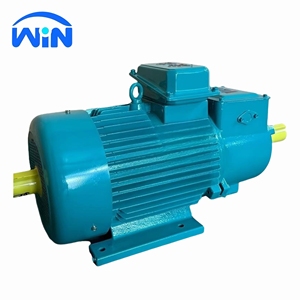
CE Certified Custom Electric Motor Design Factories & Factory
Global Engineering Standard, High-Torque Wound Rotor Architectures & Technical Sourcing Whitepaper for Heavy Industrial Applications
Enterprise Product Portfolio
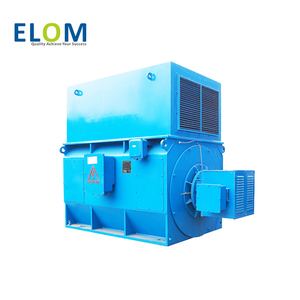
High-Performance Custom Electric & Wound Rotor Induction Motors
Rigorously engineered according to CE, IEC 60034, ATEX, and NEMA standards. Built for high-torque prime movers, heavy industrial fans, metallurgical plants, and extreme duty cycles.
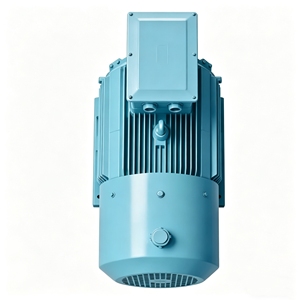
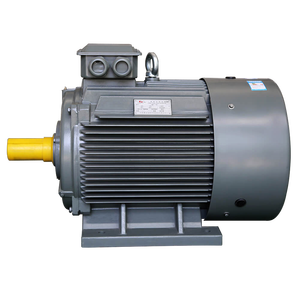
Industrial Fan Series
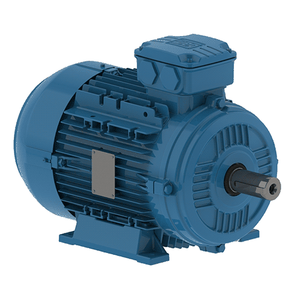
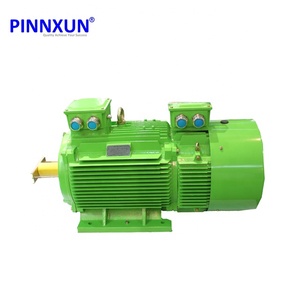
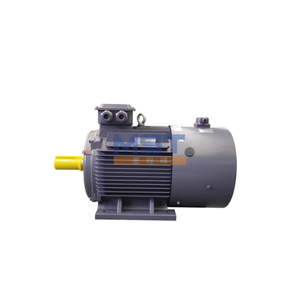
15kW (15000W) 3-Phase Asynchronous Industrial Fan Motor
CE Certified Custom Electric Motor Manufacturing: Technical Architecture & Customization Standards
Selecting a certified partner among global CE certified custom electric motor design factories requires a rigorous evaluation of electromagnetic design capability, thermal management integrity, mechanical isolation standards, and dynamic testing protocols. Custom electric motors are not off-the-shelf commodities; they form the mechanical backbone of continuous-process industries, including oil & gas refining, heavy mining, marine propulsion, power generation, and steel manufacturing.
Building upon over 128 years of engineering heritage (originated through UK engineering leadership via TDC Parsons Peebles), modern OEM custom motor manufacturing synthesizes finite element analysis (FEA), computational fluid dynamics (CFD), and vacuum pressure impregnation (VPI) technologies to deliver rotating machinery tailored for high ambient stresses, aggressive duty cycles, and strict grid code compliance.
Industrial applications frequently demand torque-speed characteristics that standard NEMA Design B or IEC Design N squirrel cage induction motors cannot fulfill. In high-inertia starting scenarios—such as cement ball mills, centrifugal compressors, mine hoists, and heavy industrial crushers—the motor must develop massive locked-rotor torque while strictly limiting line inrush current.
Wound Rotor (YR/YZR Slip Ring)
Features an insulated 3-phase rotor winding brought out to heavy-duty slip rings. Connecting external liquid rheostats or resistance banks enables smooth starting with locked-rotor torque exceeding 250% of full load torque at starting currents as low as 1.2x to 1.5x full-load current.
Deep-Bar & Double-Squirrel Cage
Utilizes skin effect during starting to increase rotor resistance automatically at higher slip frequencies. Ideal for direct-on-line (DOL) started pumps and blowers requiring robust mechanical structure without active slip ring maintenance.
Hazardous Area (Ex ec, Ex p, Ex e)
Certified by SGS Baseefa and ATEX/IECEx authorities for Zone 1 and Zone 2 environments. Pressurized (Ex p) and increased safety (Ex e/ec) enclosures prevent explosive vapor ignition in petrochemical environments.
2. Technical Parameter Standard Matrix: Low Voltage to High Voltage
Custom manufacturing facilities structure electric motor designs into distinct insulation classes, cooling arrangements, and mechanical mounting standard configurations. The table below outlines technical benchmarks provided across our CE certified custom electric motor manufacturing facilities:
Specification Parameter
Low Voltage (LV) Series
Medium Voltage (MV) Series
High Voltage (HV) Series
Operating Voltage Range
380V / 400V / 440V / 690V
3.0 kV / 3.3 kV / 6.0 kV
6.6 kV / 10.0 kV / 13.8 kV
Output Power Range
5.5 kW to 315 kW
250 kW to 1,600 kW
1,000 kW to 15,000 kW (15MW)
Thermal Insulation Class
Class F (Temp rise Class B)
Class H VPI (Temp rise Class B)
Class H VPI Resin-Rich System
Cooling Configurations
TEFC (IC411) / Screen Protected
CACA (IC611) / CACW (IC81W)
CACW (IC81W) / Forced Air IC666
Ingress Protection (IP)
IP55 / IP56 / IP65
IP23 / IP54 / IP55
IP55 / IP56 Hazardous Sealed
Bearing Configurations
Anti-Friction Deep Groove / Roller
Insulated Regreasable / Sleeve
Sleeve Bearings with Forced Lube
Regulatory Certifications
CE, ISO 9001, IE2/IE3/IE4
CE, ATEX, IECEx, IEEE 841
CE, ATEX, IECEx, ISO 14001
Future Procurement Trends in Custom Electric Motor Sourcing (2025–2035)
The global industrial motor market is undergoing a profound paradigm shift driven by stringent energy efficiency directives (such as EU Stage 2 regulations and NEMA Premium mandates), total cost of ownership (TCO) prioritization, and supply chain risk mitigation. B2B procurement managers and EPC engineering leads must align custom electric motor purchasing strategies with the following emerging procurement trends:
1. 100% Drop-In Interchangeability Demand
Replacing legacy rotating machinery from historical manufacturers (such as Parsons Peebles, WEG, ABB, Siemens, or GE) often incurs millions in civil modification costs. Modern procurement prioritizes factories capable of precise mechanical foot-to-shaft matching, terminal box mirroring, and electromagnetic emulation—eliminating bedplate reworking.
2. Integrated IoT & Condition Monitoring
Procurement contracts increasingly require factory-installed digital monitoring arrays: tri-axial wireless vibration transducers, embedded PT100 resistance temperature detectors (RTDs) in stator windings and bearings, and core flux sensors for real-time health telemetry via MQTT/Modbus protocols.
3. Life-Cycle Carbon Footprint & Super Efficiency
Electricity accounts for over 90% to 95% of an industrial motor’s total life-cycle cost over a 20-year span. Sourcing policies now evaluate lower iron-loss silicon steel laminations (0.35mm or 0.27mm grade) and slot fill optimization to achieve IE4 (Super-Premium) and IE5 (Ultra-Premium) efficiency levels.
Product Development & Technological Advancement Trends in Electric Motor Manufacturing
Engineers at leading custom electric motor design factories are redefining rotating machine performance through breakthroughs in material science, insulation chemistry, and variable frequency drive (VFD) compatibility.
1. Advanced Insulation Systems (VPI & Corona Shielding)
Modern medium-voltage and high-voltage motors operate under intense electrical stress. The adoption of solvent-free epoxy resins applied through multi-stage Vacuum Pressure Impregnation (VPI) guarantees void-free insulation structures with exceptional dielectric strength. For VFD-driven applications, inverter-duty magnetic wire paired with mica-tape ground insulation and conductive tape edge protection prevents partial discharge (PD) and pulse-reflection insulation breakdown caused by rapid dV/dt voltage spikes.
Thermal stress is the primary root cause of winding insulation failure. Modern custom designs deploy internal shaft-mounted radial re-circulating fans paired with external CACA (Totally Enclosed Air-to-Air Cooled - IC611) heat exchangers or CACW (Totally Enclosed Air-to-Water Cooled - IC81W) systems. CACW cooling allows massive power density increases (up to 30% higher kW output per frame size) while maintaining low ambient noise levels (<75 dBA) in sound-sensitive installation areas.
3. Low Starting Current & High Peak Torque Rotor Metallurgy
In wound rotor induction motors (YR/YZR series), advancements in slip ring brush holder assemblies, silver-copper alloy collector rings, and automated brush-lifting mechanisms have extended maintenance intervals from 2,000 hours up to over 10,000 continuous operating hours. For high-torque crane and metallurgical duty, heavy-gauge copper bar rotors welded to end rings via medium-frequency induction brazing withstand severe thermal cycling and frequent dynamic braking loads.
Enterprise Advantage: 128+ Years of UK & Global Rotating Equipment Excellence
Rooted in over a century of heavy electrical machinery manufacturing (tracing back to TDC Parsons Peebles and associated UK industrial facilities), our enterprise stands as a premier global benchmark for custom electric motor engineering. Our facility capabilities include:
ISO 9001 & ATEX Certified Quality
Certified by international bodies including SGS Baseefa and AEMT. Full compliance with ISO 9001 quality management, ISO 14001 environmental standards, and global hazardous area safety codes.
Full Load & High Voltage Test Bay
Equipped with state-of-the-art testing bays capable of full-load, direct load, back-to-back load testing, high-voltage surge testing, and precision core flux testing up to full rated capacity.
Bespoke Tailored Mechanical Engineering
Complete custom machining capabilities for special shaft extension dimensions, double-ended shafts, custom flange adapters, non-standard terminal box locations, and specialized paint coatings for offshore marine environments.
Procurement & Technical FAQ: Custom Electric Motor Sourcing
Below are authoritative technical answers to common questions raised by industrial buyers, electrical consultants, and procurement managers when ordering custom electric motors and wound rotor induction machines:
What makes a custom electric motor CE certified?
CE certification confirms that the custom electric motor meets essential European Health, Safety, and Environmental protection directives. This includes compliance with the Low Voltage Directive (2014/35/EU), EMC Directive (2014/30/EU), Machinery Directive (2006/42/EC), and Ecodesign Directive (2009/125/EC). Certified factories provide formal Declaration of Conformity documentation and complete technical file verification.
When should I select a Wound Rotor (Slip Ring YR/YZR) motor over a Squirrel Cage motor?
Wound rotor motors are selected when your mechanical drive system demands high starting torque (200%–270% FLT) paired with strict starting current limitations (1.2x–1.5x FLC). They are optimal for weak power grids or applications with massive rotational inertia, such as cement grinding mills, heavy crushers, port container cranes, and mine winders.
How do factory engineers guarantee 100% drop-in mechanical replacement?
Our engineering team utilizes laser scanning, historical OEM drawing archives (covering Parsons Peebles, WEG, ABB, etc.), and 3D CAD modeling. We match center-height (H dimension), shaft diameter, keyway dimensions, hold-down bolt hole spacing (A & B dimensions), flange PCD, and main terminal box orientation down to sub-millimeter tolerances.
What are the differences between CACA (IC611) and CACW (IC81W) cooling systems?
CACA (Totally Enclosed Air-to-Air Cooled) utilizes internal warm air passing through a heat exchanger tubesheet cooled by external ambient air pushed by an outer fan. CACW (Totally Enclosed Air-to-Water Cooled) passes internal air through a liquid water-cooled radiator tube bundle. CACW provides superior thermal dissipation, allows smaller physical frame footprints, and operates with significantly lower noise.
What insulation system is recommended for VFD-driven high-voltage motors?
We recommend a Class H Vacuum Pressure Impregnation (VPI) epoxy mica system incorporating inverter-duty magnet wire and phase insulation capable of withstanding voltage rise rates (dV/dt) exceeding 10 kV/μs. Corona shielding tapes are applied to stator slot exits to mitigate damaging partial discharge activity.
How does custom thermal class rating impact motor longevity?
Designing a motor with Class H insulation (rated for 180°C) but operating it strictly at Class B temperature rise limits (max 80°C rise) extends winding thermal lifetime exponentially. Arrhenius thermal degradation laws indicate that operating insulation 10°C below its thermal limit doubles expected insulation life.
What test reports are provided during Factory Acceptance Testing (FAT)?
Standard FAT documentation includes full winding resistance measurements, no-load current/voltage balance, locked-rotor torque and current test, high-potential dielectric test, insulation resistance (IR) and Polarization Index (PI) test, dynamic vibration analysis, and acoustic noise level measurement according to IEC 60034-2-1 standards.
What is the typical manufacturing lead time for custom engineered electric motors?
Lead times range from 6 to 12 weeks for low-to-medium voltage custom cast-iron frame motors, and 12 to 20 weeks for high-voltage MV/HV fabricated steel frame motors, depending on special metallurgy, testing requirements, and hazardous area certification scope.
Request a Custom Electric Motor Engineering Quote
Partner with an industry-leading custom motor factory. Contact our technical sales and engineering group to discuss drop-in replacement units, wound rotor designs, high-voltage specifications, or custom project quotes.