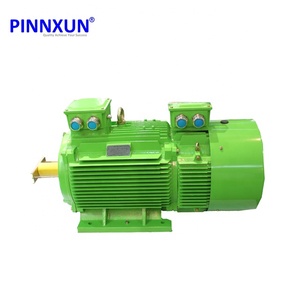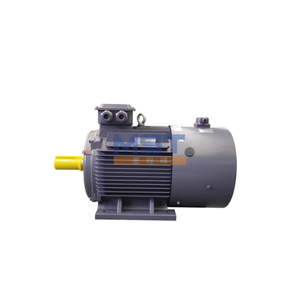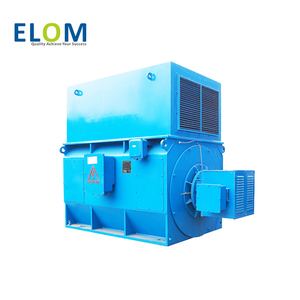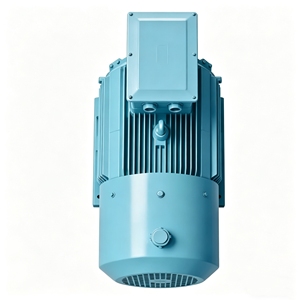





In high-stakes industrial sectors such as power generation, marine propulsion, petrochemical refining, heavy mining, and municipal water treatment, high-voltage (HV) and low-voltage (LV) electric motors constitute the critical heart of operational infrastructure. Over decades of operation, continuous thermal stress, mechanical vibration, transient voltage spikes, and atmospheric contamination inevitably degrade motor insulation systems and mechanical tolerances. When critical rotating equipment fails or suffers severe efficiency degradation, procurement directors face a strategic decision: capital expenditure on a brand-new OEM motor vs. precision engineering rebuilding and remanufacturing.
As an established CE-certified motor rebuilding factory and international exporter, our technical framework proves that comprehensive motor rebuilding—when executed in strict compliance with European Union (CE) directives and ISO quality management systems—delivers performance equivalent to or exceeding original factory specifications. Furthermore, remanufacturing provides up to 60% direct cost savings, eliminates long lead-time delays associated with custom frame fabrications, and reduces embodied carbon emissions by more than 80% compared to casting and machining new motor frames.
Key Information Gain: Under the EU Eco-design Directive (2009/125/EC) and Machinery Directive (2006/42/EC), CE certification for rebuilt motors is not merely a stamp of approval—it requires rigorous electromagnetic redesign, thermal recalculation, non-destructive core loss verification, and electrical safety validation under full load conditions.
Tracing our engineering lineage back over 128 years (incorporating legendary UK manufacturing foundations including TDC Parsons Peebles and Electric Products Cleveland Ohio), our state-of-the-art facilities in Edinburgh, Rosyth, and Birmingham have manufactured and restored over 12,141 heavy industrial machines. We integrate century-old craftsmanship with modern diagnostic telemetry to provide complete drop-in replacement solutions for obsolete or failing motors.
Achieving CE compliance during major motor overhaul requires a systematic, scientifically validated workflow. A simple "rewind and paint" job is insufficient for heavy industrial application. Below is our standardized 5-phase engineering protocol:
Incoming inspection includes surge comparison testing, Partial Discharge (PD) analysis, tan-delta insulation assessment, infrared thermography, and core-loss flux testing to identify shorted laminations.
Old windings are stripped inside temperature-controlled pyrolysis ovens (<380°C) to prevent annealing of electrical steel sheets, preserving inter-lamination insulation and magnetizing efficiency.
Precision hand-formed form-wound or random-wound coils using Class H corona-resistant copper wire. Complete assembly is subjected to multi-cycle Vacuum Pressure Impregnation with 100% solid epoxy resin.
Shaft journals, bearing housing fits, slip rings, and commutators are re-machined using CNC lathes and laser-guided micro-grinding. Rotors undergo dynamic balancing under operating speed simulations.
Routine and type testing performed in accordance with IEC 60034-1, IEEE 115, and EN 60204-1. Issuance of comprehensive test certificates, CE mark affixation, and Technical Construction File (TCF) archive.
Heavy-duty seaworthy crating with vapor corrosion inhibitor (VCI) shrink-wrapping and shaft lock clamps ensuring zero transit oxidation or bearing false brinelling across ocean freight routes.
The global market for industrial motor servicing is undergoing a massive transformation driven by strict environmental, social, and governance (ESG) mandates, supply chain volatility, and electricity tariff inflation. Purchasing managers and chief engineers are adopting new procurement strategies:
Historically, rewinding an electric motor resulted in a 1% to 2% loss in operational efficiency due to crude stripping practices. Modern CE-certified factories utilize electromagnetic redesign software. By increasing copper cross-sectional area, upgrading slot insulation thinness, and utilizing low-loss silicon steel laminations during rotor rebuilding, overhauled motors frequently achieve IE3 (Premium Efficiency) or IE4 (Super Premium Efficiency) performance, substantially lowering lifetime kilowatt-hour consumption.
Future-proof motor rebuilding now incorporates embedded digital telemetry directly into stator slots and bearing housings during the remanufacturing phase. Dual PT100 RTD sensors, tri-axial piezoelectric vibration transmitters, and magnetic flux coils are integrated seamlessly. This enables real-time cloud monitoring of partial discharge and bearing degradation, moving plant maintenance from reactive failure response to predictive AI-driven maintenance.
Enterprise procurement policies in Europe, North America, and Asia now enforce strict Scope 3 emissions reporting. Remanufacturing a 1,000 kW high-voltage motor saves approximately 15 to 25 metric tons of CO2 equivalent compared to primary smelting, casting, and overseas transport of a new motor frame. Rebuilding has thus transitioned from a cost-saving measure to a primary driver of corporate sustainability compliance.
The technological scope of electric motor rebuilding is evolving rapidly with advances in material science and electrical engineering:
Selecting an experienced engineering partner for electric motor rebuilding safeguards your plant against catastrophic unplanned shutdowns while optimizing long-term capital efficiency. With over a century of proven British and international manufacturing success, our factories deliver certified durability, energy efficiency, and full CE/ATEX compliance across every project.