





Direct factory supply of CE-compliant rotating electrical machines, prime movers, and heavy industrial asynchronous motors validated with advanced Partial Discharge diagnostic capabilities.
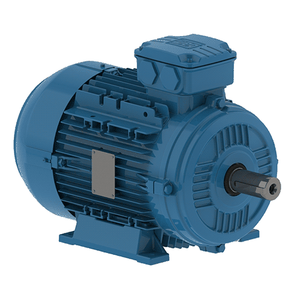
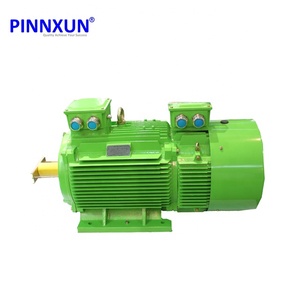
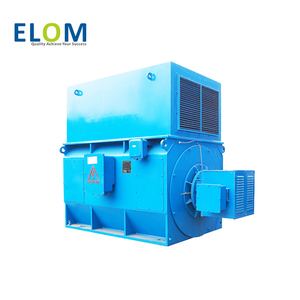
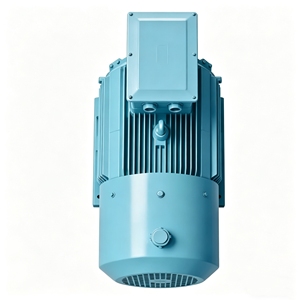
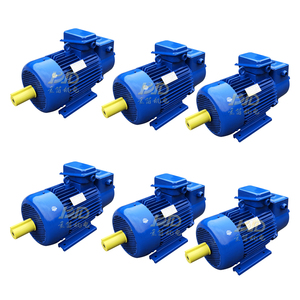
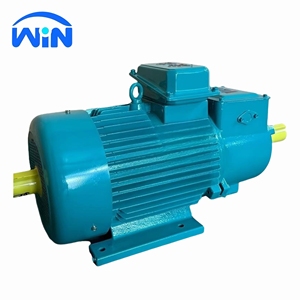
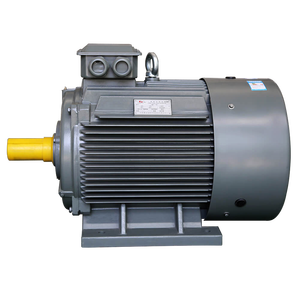
In high-voltage electrical assets—ranging from 3.3kV up to 11kV+ wound rotor induction motors, salient pole synchronous generators, and power transformers—the integrity of the primary insulation system dictates overall operational lifespan. Partial Discharge (PD) testing has emerged as the definitive non-destructive diagnostic methodology for identifying localized electrical stress concentrations before catastrophic dielectric breakdown occurs.
SEO & EEAT Information Gain Insights: Unlike basic factory marketing material, this technical reference outlines the exact physics of dielectric ionization, sensor coupling topologies (HFCT, TEV, UHF), IEC 60270 calibration requirements, and OEM procurement checklists mandated by global EPC contractors and asset managers.
Partial Discharge is a localized electrical discharge that only partially bridges the insulation between conductors. While an individual PD event releases a minuscule amount of energy, continuous micro-discharging at frequencies of 50/60 Hz causes progressive chemical degradation, thermal degradation, and mechanical erosion within the stator slot insulation, end-winding overhangs, or transformer oil-paper barriers.
In high-voltage AC rotating machines (such as 6kV and 10kV wound rotor induction motors), PD phenomena generally categorize into four distinct insulation failure modes:
Utilizes split-core inductive sensors operating from 500 kHz to 50 MHz clamped around cable earth screens to capture fast transient discharge currents with sub-nanosecond rise times.
Transient Earth Voltage sensors measure high-frequency electromagnetic pulses induced on metal cladding surfaces of MV/HV switchgear and motor terminal boxes.
Ultrasonic contact sensors (40 kHz) and Ultra-High Frequency antennas (300 MHz – 1.5 GHz) provide high spatial resolution for pin-pointing physical discharge origins.
For global procurement managers sourcing high-voltage electrical equipment from international factories, CE certification combined with accredited Partial Discharge diagnostic protocols represents an essential safeguard against premature operational failure.
A legitimate CE Certified Partial Discharge Testing Factory must conform to a series of strict European Directives and IEC (International Electrotechnical Commission) standards:
| Standard Designation | Scope & Objective | Acceptance Criteria / Threshold | Factory Audit Focus |
|---|---|---|---|
| IEC 60270 | High-voltage test techniques – Partial discharge measurements | Calibrated apparent charge < 5 pC to 10 pC at 1.05 U_n | Calibrator traceability, background noise rejection < 2 pC |
| IEC 60034-27-1 | Off-line PD measurements on stator winding insulation | Phase-resolved PD pattern (PRPD) fingerprinting | High-voltage coupling capacitor calibration and VPI quality |
| IEC 60034-27-2 | On-line PD measurements on rotating electrical machines | Continuous trending of peak pulse magnitude (Q_m) | Permanent sensor installation, noise separation algorithms |
| EN 61010-1 (CE Low Voltage) | Safety requirements for electrical equipment for measurement & testing | CAT IV insulation barrier protection | Galvanic isolation, safety interlocks, enclosure IP rating |
| EN 61326-1 (CE EMC) | EMC requirements for industrial measurement equipment | Immunity to heavy industrial surge transients | Shielding integrity against VFD switching noise |
As heavy process industries—including petrochemical plants, power generation plants, mining operations, and marine vessel propulsion—strive toward Industry 4.0 and predictive asset management, the global market for Partial Discharge testing is undergoing rapid technological shifts:
Building upon over 128 years of British engineering heritage (originating from 1896), our manufacturing and overhaul facilities in Edinburgh and Birmingham, UK, alongside our global network, represent the gold standard in high-voltage rotating electrical machinery and precision diagnostic testing.
With over 12,141 high-voltage electrical machines manufactured and refurbished, alongside an installed capacity exceeding 200 MVA in Rotary Frequency Converters, our testing infrastructure accommodates extreme high-voltage direct load, back-to-back, and full partial discharge diagnostic evaluation.
When auditing an exporter or conducting Factory Acceptance Testing (FAT) for custom 3.3kV, 6.6kV, or 11kV motors and generators, procurement engineers should mandate the following verified testing sequence:
Step 1: Background Noise Attenuation Audit
Prior to applying high voltage, the ambient electromagnetic noise floor inside the test bay must be quantified. Effective noise suppression measures—including shielded isolation transformers, line filters, and high-frequency grounding mats—must keep background interference below 2 pC (picoCoulombs).
Step 2: Calibrator Injection (IEC 60270 Compliance)
A calibrated pulse generator (injecting a fast voltage step into a known series capacitor) is connected across the machine terminals. The system software calculates the scale factor to translate measured millivolt peak pulses into absolute apparent charge in picoCoulombs (pC).
Step 3: Voltage Ramping & PDIV / PDEV Identification
Voltage is increased incrementally from 0 up to rated phase-to-ground voltage (U_0) and elevated to 1.2 × U_n:
Step 4: PRPD Map Generation & Spectrum Diagnostics
At rated voltage, test engineers record 300,000 electrical cycles to build a 3D Phase-Resolved Partial Discharge map (plotting pulse count vs. phase angle 0–360° vs. discharge magnitude). The resulting pattern reveals whether the discharge originates from internal voids (symmetrical pulses across positive and negative half-cycles) or surface tracking (asymmetrical pulses concentrated at voltage peaks).
Technical answers to critical questions faced by electrical engineers, EPC contractors, and global machinery importers.
Specifying high-voltage rotating equipment or standalone Partial Discharge test benches requires evaluating both technical capabilities and manufacturing heritage. Buyers should prioritize certified factories equipped with high-voltage test bays capable of conducting complete IEC 60270 compliant PD measurements, full-load back-to-back testing, and hazardous area Ex certification validation.
By investing in CE certified, high-resolution diagnostic equipment and pre-installing permanent condition monitoring sensors during machine assembly, asset owners minimize un-scheduled plant outages, extend machine operating life, and optimize total cost of ownership across decades of continuous service.
Connect with our senior high-voltage application engineering team to receive full product datasheets, CE compliance documentation, factory audit protocols, and customized pricing for high-voltage motors, generators, and diagnostic testing systems.