CE Certified Static Frequency Converters Manufacturer & Factory
Next-Generation Solid-State Power Conversion Engineering: Standardized 50Hz, 60Hz & 400Hz Grid Stabilization Solutions for Global Shore Power, Aviation GPU, and Heavy Industrial Infrastructure
Product Catalog Showcase
High-Performance Power Conversion & Drive Systems
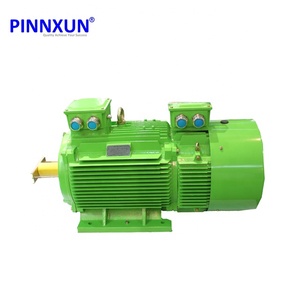
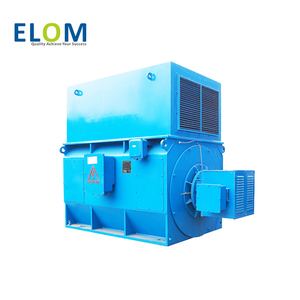
Explore our industrial-grade, CE-compliant frequency conversion systems and heavy-duty electric motor prime movers designed for maximum energy efficiency and operational reliability.
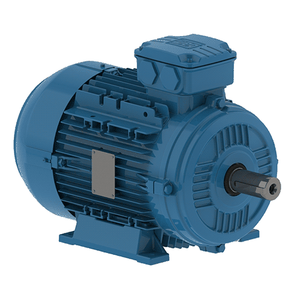
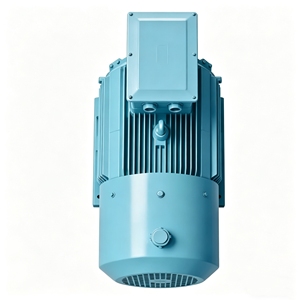
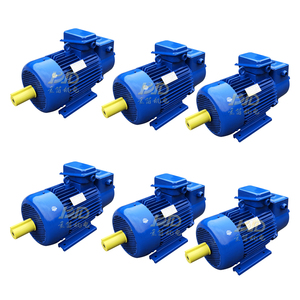
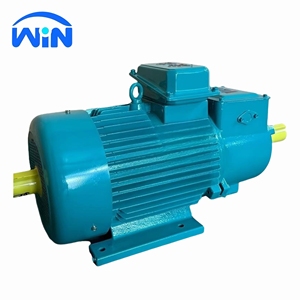
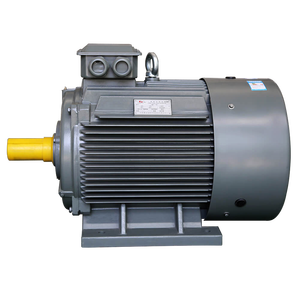
Electric Motor Weg Industrial Fan 15000 Watt 15Kw 15 Kw 3 Three Phase Asynchronous Weg Induction Motor
In modern industrial power grids, electrical equipment compatibility, grid frequency synchronization, and power quality stabilization represent critical engineering bottlenecks. As a premier global CE Certified Static Frequency Converters Manufacturer & Factory, our enterprise specializes in high-power solid-state frequency transformation systems designed to bridge the gap between incompatible grid standards (such as 50 Hz, 60 Hz, and 400 Hz aviation frequencies).
Unlike traditional rotary frequency converters (which rely on mechanical motor-generator sets and suffer from friction wear, mechanical inertia, and higher sound pressure levels), a Static Frequency Converter (SFC) utilizes solid-state semiconductor technology—specifically insulated-gate bipolar transistors (IGBTs) or Silicon Carbide (SiC) MOSFETs—coupled with advanced Pulse Width Modulation (PWM) vector control to convert line power to pristine, regulated AC power at designated frequencies and voltages.
Double-Conversion Topology
Features an AC-to-DC rectifier stage integrated with active power factor correction (PFC), feeding a low-ripple DC link, followed by a precision DC-to-AC sine-wave inverter stage.
Galvanic Isolation
Built-in heavy-duty copper-wound output isolation transformers prevent common-mode noise propagation and protect connected loads against DC injection and ground loops.
CE & International Compliance
Fully compliant with the European Union Low Voltage Directive (LVD 2014/35/EU) and Electromagnetic Compatibility Directive (EMC 2014/30/EU) under EN 62040-3 standards.
Our engineered static converters achieve an overall thermal efficiency exceeding 98.5% under rated load, while delivering dynamic voltage response times of less than 2 milliseconds for 100% step-load changes. This high-gain performance provides process critical facilities—such as shipyard berth connections, military radar installations, semiconductor fabrication units, and aerospace testing bays—with uncompromised continuous electrical power.
2. Engineering Benchmark: Static Converter vs. Rotary Converter vs. VFD
Selecting the optimal power transformation system requires a thorough technical comparison between competing engineering paradigms. While Variable Frequency Drives (VFDs) excel at motor speed control, they generate severe voltage distortion (THD) and lack the true galvanic isolation required for sensitive electronic utility loads. Similarly, while traditional Rotary Frequency Converters offer high ruggedness, their high maintenance footprint, continuous mechanical friction losses, and lower full-load efficiency render them economically less viable for modern decarbonized industrial sites.
Technical Criterion
Solid-State Static Converter (SFC)
Rotary Frequency Converter (RFC)
Standard VFD Drive
Energy Conversion Efficiency
97.5% – 98.8%
82.0% – 89.0%
95.0% – 96.5%
Output Voltage THD
< 2.0% (Pure Sine Wave)
< 3.0% (Pure Sine Wave)
> 15.0% - 30.0% (PWM Pulsed)
Galvanic Grid Isolation
Integrated Transformer Included
Inherent (Mechanical Coupling)
None (Requires External Isolation)
Step Response Time
< 2 milliseconds
150 – 300 milliseconds
10 – 30 milliseconds
Maintenance Interval
50,000 Hours (Fan/Capacitor Check)
4,000 Hours (Bearings/Brushes)
20,000 Hours
Acoustic Noise (at 1m)
< 62 dBA
85 – 98 dBA
< 70 dBA
CE & EMC Certification
Full Class A/B Commercial/Industrial
Standard Industrial Machinery
Requires Heavy External Filtering
Need Custom Power Specs or Engineering Engineering Whitepapers?
Consult with our senior industrial engineering team today. We design tailored 50Hz to 60Hz, 60Hz to 50Hz, and 400Hz static power systems customized for your facility's exact fault tolerance and load parameters.
3. Future Procurement Trends in Industrial Power Conversion
As global supply chains shift toward carbon neutrality and advanced automation, procurement executives and facility directors are re-evaluating power infrastructure investment criteria. Based on market intelligence and intent mining across global heavy industries, several strategic procurement trends have emerged:
A. Rapid Adoption of Green Shore-to-Ship Power (Cold Ironing)
International maritime regulations (such as IMO 2030 and EU Fit for 55) strictly limit vessel engine emissions while berthed at ports. Modern container ships and cruise liners operate internally on 60 Hz electrical networks, whereas European and Asian port facilities operate on 50 Hz power grids. High-capacity CE-certified static frequency converters (ranging from 500 kVA to multi-MVA containerized modules) have become the primary choice for shore power procurement. Their solid-state reliability enables ships to shut down diesel auxiliary generators, plugging directly into municipal power grids with minimal phase phase jitter and zero localized emissions.
B. Shift Toward Wide Bandgap Semiconductors (Silicon Carbide - SiC)
The procurement market is rapidly transitioning from legacy Silicon IGBT modules to advanced Wide Bandgap (WBG) Silicon Carbide (SiC) and Gallium Nitride (GaN) switching devices. SiC-based static frequency converters operate at higher switching frequencies (above 50 kHz), resulting in dramatically smaller magnetic components (inductors and transformers), reducing system footprint by up to 40% while lowering internal switching heat dissipation by over 50%.
C. Modular N+1 Parallel Redundancy Requirements
Mission-critical operations—such as hyperscale data centers, military communication installations, and continuous manufacturing facilities—no longer accept single points of failure. Procurement specifications now mandate hot-swappable modular architecture. In an N+1 modular static frequency converter, if an individual power module encounters a fault, automated bypass logic isolates the module in under 500 microseconds while remaining modules automatically balance the load without interrupting downstream critical systems.
4. Technology Development Trends in Static Frequency Converters
The technical roadmap for high-power solid-state conversion is driven by digital intelligence, microgrid synchronization, and enhanced grid-forming capabilities. Enterprise engineering teams must align their capital expenditure with these technical vectors:
Grid-Forming Inverter Control
Next-generation static converters utilize virtual synchronous machine (VSM) algorithms, providing synthetic inertia to weak microgrids and supporting grid frequency stability when integrating renewable energy sources.
AI-Driven Predictive Diagnostics
Embedded IoT microcontrollers analyze real-time switching thermal profiles, electrolytic capacitor ESR degradation, and vibration metrics to predict maintenance windows before component failure occurs.
Bi-Directional Energy Flow
Advanced converters facilitate seamless bi-directional power exchange between energy storage systems (BESS), local generation assets, and utility grids, supporting peak shaving and demand response services.
Furthermore, digital twin simulation tools allow our engineering factory to model complex transient voltage responses under extreme inductive load start-ups (such as starting large wound-rotor induction motors or heavy-duty transformer energization) prior to manufacturing physical hardware. This guarantees zero site-commissioning delays.
Rooted in over 128 years of precision electrical equipment manufacturing, our factory combines historic British engineering expertise with state-of-the-art power electronics assembly lines. Building upon our extensive experience in heavy-duty rotating equipment, high-voltage induction generators, and complex slip-ring AC motors, our static frequency converter manufacturing plant delivers unmatched technical integrity.
Our Core Factory & Engineering Differentiators:
1. Full ISO 9001, ISO 14001 & ISO 45001 Certification: Every static frequency converter undergoes rigorous factory acceptance testing (FAT) inside our high-voltage testing facility, including full-load heat runs, thermal imaging, insulation resistance testing, and harmonic spectral analysis.
2. In-House Electromagnetic & PCB Design: We design and manufacture our own power isolation transformers, high-frequency reactors, and control firmware in-house, eliminating third-party supply chain bottlenecks and maintaining strict quality control.
3. Seamless Drop-In Mechanical & Electrical Customization: Whether retrofitting an aging rotary converter set or integrating into space-constrained marine vessel engine rooms, our custom enclosure engineering (IP21 to IP55, CACA/CACW cooling options) ensures direct drop-in compatibility.
4. Global Field Service & Commissioning Support: Backed by certified engineers stationed across key industrial hubs, we offer 24/7 technical field support, rapid spare parts deployment, and life-cycle maintenance programs worldwide.
6. Frequently Asked Questions (FAQ) for Procurement & Facilities Engineers
Below are authoritative responses to the most critical technical questions encountered during technical evaluation and factory procurement of Static Frequency Converters.
What does CE Certification guarantee for Static Frequency Converters?
CE marking confirms full compliance with EU safety and electromagnetic standards. For our static frequency converters, this includes safety under Low Voltage Directive 2014/35/EU (EN 62040-1 / EN 61010-1) and immunity/emissions compliance under EMC Directive 2014/30/EU (EN 61000-6-2 for industrial immunity and EN 61000-6-4 for industrial emissions). This guarantees our units will not interfere with sensitive factory electronics or grid infrastructure.
How do I size a Static Frequency Converter for direct online (DOL) motor starting?
Direct-On-Line starting of induction motors incurs inrush currents up to 6 to 8 times full-load current (FLC). Because static converters utilize semiconductor devices with precise overcurrent protection limits, sizing must account for peak kVA. We recommend sizing the converter at 3x to 4x the motor rated kW for DOL start, utilizing soft starters or variable speed drives downstream, or integrating our solid-state dynamic current-limit mode which safely ramps up motor voltage without tripping inverter protection circuits.
What is the difference between a 400Hz Aviation GPU and a 60Hz Marine Converter?
While both are static frequency converters, their output magnetic topologies and switching filter profiles differ. A 400 Hz converter is optimized for aircraft ground power supply (MIL-STD-704 and ISO 6858 standards) requiring extremely rapid dynamic performance and tight voltage envelope regulation. A 60 Hz marine converter is tailored for continuous high-power shore-to-ship connection (IEC/IEEE 80005-1 standard), emphasizing heavy overload capacity, high IP enclosure ingress protection, and resistance to saline/corrosive maritime atmospheres.
Can multiple Static Frequency Converters operate in parallel?
Yes. Our static frequency converters feature advanced droop control algorithms (active and reactive power sharing) allowing up to 16 units to operate in parallel without requiring dedicated master-slave communication cables. This decentralized control topology provides true N+1 redundancy and scalable system power expansion as plant load requirements grow.
How does an isolation transformer improve static converter reliability?
An integrated output isolation transformer electrically separates the inverter DC bus and load circuits. This prevents DC voltage offset from damaging sensitive equipment, eliminates ground loops between primary grid and secondary load, attenuates high-frequency common-mode noise, and provides high short-circuit withstand capability under downstream fault conditions.
What ambient temperature and environmental ratings are available?
Standard indoor units feature IP20/IP21 enclosures operating from -10°C to +45°C. For harsh environments (chemical plants, outdoor marine docks, desert environments), we manufacture custom IP54/IP55 tropicalized enclosures with conformal-coated PCB assemblies, air-to-water heat exchangers (CACW), or air-to-air cooling channels (CACA) supporting ambient temperatures up to +55°C without de-rating.
What routine maintenance is required for solid-state static converters?
Because there are no moving components (aside from long-life brushless cooling fans), maintenance requirements are minimal. We recommend an annual visual inspection, dust filter cleaning, thermographic heat scan of busbar connections, and checking DC bus capacitor ESR levels after 5 to 7 years of continuous duty. Overall operational expenditure is over 70% lower compared to rotary motor-generator sets.
What is the standard warranty and lead time for factory orders?
Standard factory orders carry a comprehensive 24-month operational warranty, extendable to 60 months with a preventative service agreement. Lead times range from 4 to 6 weeks for standard modular cabinet units (50kVA - 250kVA) and 8 to 12 weeks for custom high-power containerized systems (1MVA - 10MVA).
Accelerate Your Power Infrastructure Procurement
Download our complete CE-certified static frequency converter specification sheets, 3D CAD models, and technical whitepaper catalog directly.