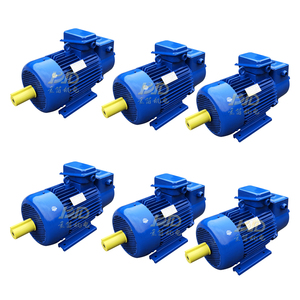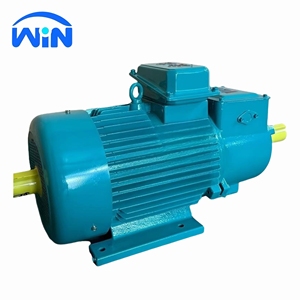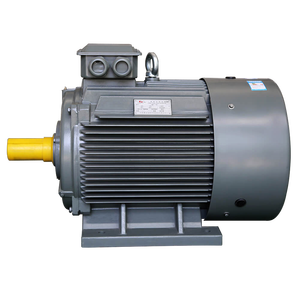





Explore our precision-engineered high-speed generators, wound rotor slip ring motors, and industrial three-phase asynchronous machines built to ISO 9001, IEC, and Ex standards.
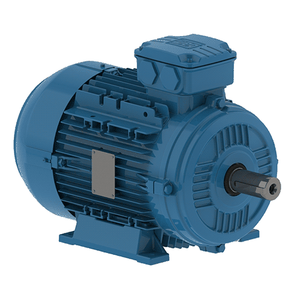
In modern industrial applications—ranging from distributed gas turbine power plants and waste heat recovery units to high-frequency marine propulsion and microgrid stabilization—high speed generators serve as the electro-mechanical heart of primary energy conversion. Defined as synchronous or asynchronous rotating machines operating at velocity profiles exceeding standard 1,500/1,800 RPM base speeds (frequently operating at 3,000 RPM, 3,600 RPM, and up to 18,000+ RPM via direct-coupling to high-speed prime movers), these generators demand rigorous dynamic balancing, electromagnetic optimization, and advanced thermal dissipation engineering.
As global industries transition toward higher energy densities, lower continuous carbon outputs, and reduced total cost of ownership (TCO), selecting premier manufacturing partners from China has evolved from a simple cost-reduction strategy into a strategic engineering partnership. Contemporary Chinese manufacturing complexes integrate over a century of global rotating equipment engineering traditions—inheriting design blueprints from legacy pioneers like TDC Parsons Peebles and WEG standards—with state-of-the-art automated Class H Vacuum Pressure Impregnation (VPI), CNC multi-axis stator slotting, and continuous rotor dynamic finite element analysis (FEA).
Key Engineering Gain: Direct-drive high-speed generators eliminate intermediate reduction gearboxes, reducing mechanical drivetrain losses by 3.5% to 5.8%, minimizing lubrication footprints, and dramatically extending Mean Time Between Overhauls (MTBO) to over 80,000 continuous operating hours.
The structural integrity of a high-speed generator rotor undergoing high centrifugal stress profiles (exceeding 15,000 G-forces at tip radii) requires specialized metallurgy and precision balancing. Our manufacturing facilities utilize high-tensile forged alloy steels (such as 34CrNi3Mo or 18CrNiMo7-6) for solid-rotor or laminated-rotor shafts. Dynamic balancing is performed strictly under ISO 1940-1 Grade G1.0 standards inside high-speed vacuum pit facilities to prevent aerodynamic friction heating and acoustic resonance.
From an electromagnetic perspective, high-frequency operation generates elevated core losses (hysteresis and eddy current dissipation) within stator laminations. To mitigate non-linear iron losses at fundamental frequencies above 100 Hz, our factory incorporates ultra-thin, high-grade silicon steel laminations (0.23mm to 0.35mm thickness) coated with inorganic C-5 insulation layers. Stator windings feature skewed-slot geometry and transposed Roebel bars to suppress spatial harmonics, ensuring THD (Total Harmonic Distortion) remains below 1.5% under unbalanced three-phase load profiles.
Eliminates mechanical gearbox wear, reduces vibration spectrum amplitudes, and optimizes overall drivetrain efficiency.
Solvent-free epoxy resin processed under high-vacuum impregnation for superior dielectric strength and moisture immunity.
ATEX, IECEx, and Ex ec / Ex p safety compliance tailored for harsh offshore, oil & gas, and chemical refineries.
Combining legacy UK engineering expertise—modeled after TDC Parsons Peebles' 128+ years of high-voltage rotating equipment design—with China's massive industrial supply chain ecosystem, our facility provides turnkey power generation solutions. We specialize in custom electro-mechanical configurations, drop-in replacement motors, high-speed slipring generators, and salient-pole synchronous units built to stringent international EPC procurement standards.
One of the most critical challenges facing plant engineers during generator retrofit projects is minimizing civil work and mechanical modifications. Our design team leverages 3D laser scanning and reverse engineering protocols to match foot-to-shaft height dimensions, terminal box locations, shaft extension profiles, and cooling duct positions. Whether replacing an legacy WEG motor, Siemens generator, or Parsons Peebles machine, our custom drop-in units are 100% mechanically and electrically interchangeable.
Quality assurance is embedded in every phase of our manufacturing process. Every machine undergoes rigorous routine testing according to IEC 60034 standards within our state-of-the-art testing bay. Our testing infrastructure includes:
| Topology Class | Rated Speed (RPM) | Voltage Range | Efficiency (%) | Primary Industrial Application |
|---|---|---|---|---|
| High-Speed Synchronous PM Generator | 3,000 – 18,000 | 380V – 6.6kV | 97.5% – 98.8% | Microturbines, ORC Waste Heat Recovery, sCO2 Power |
| Wound Rotor Induction Generator (YR Series) | 1,000 – 3,000 | 380V – 11kV | 95.2% – 96.8% | Mining Drives, Heavy Cranes, Prime Movers, Mills |
| Salient Pole Synchronous Generator | 1,500 – 3,600 | 3.3kV – 13.8kV | 96.0% – 97.5% | Hydroelectric Plants, Diesel/Gas Gensets, Cogeneration |
| High-Voltage Squirrel Cage Generator | 1,500 – 3,000 | 380V – 10kV | 94.8% – 96.2% | Industrial Fan Drives, Pumps, Compressor Stations |
The global energy sector is rapidly steering away from traditional hydrodynamic sleeve bearings toward Active Magnetic Bearings (AMB). AMBs levitate the high-speed rotor within an electromagnetic field, eliminating mechanical contact friction entirely. This trend allows high speed generators to operate safely at speeds upwards of 20,000 RPM while completely removing oil lubrication systems. This zero-oil requirement drastically lowers fire hazards in offshore oil platforms and eliminates oil contamination risks in hydrogen and clean gas processing turbines.
As thermal power plants transition from natural gas to green hydrogen blends and supercritical CO2 closed-loop cycles, high speed generators must withstand elevated ambient operating temperatures and corrosive gaseous environments. Supercritical CO2 turbines require extremely compact high-density generators operating at high pressures. Modern Chinese generator factories are pioneering canned rotor designs and hermetically sealed cooling jackets (IC81W / CACW) utilizing nickel-based superalloys to meet these aggressive thermodynamic demands.
Procurement departments in top-tier EPC firms now demand smart generators equipped with embedded IIoT sensor suites. Modern high speed generators are delivered with integrated multi-channel Pt100 RTDs, tri-axial piezoelectric accelerometers for real-time vibration spectral analysis, magnetic flux probes for turn-to-turn fault detection, and digital telemetry for slip-ring temperature logging. These sensors feed data directly into a cloud-based Digital Twin model, allowing predictive maintenance algorithms to schedule servicing long before catastrophic mechanical failures occur.
Procurement decisions are increasingly governed by Scope 3 carbon footprint evaluations. Factory leaders in China are committing to sustainable material sourcing—utilizing 100% recycled structural steel frames, lead-free solder connections, and low-VOC VPI epoxy resins. Furthermore, modular rotor and stator designs enable fast remanufacturing, rewinding, and magnetic rotor retrofits at the end of the initial 20-year service lifecycle, aligning with global ESG compliance guidelines.
Technical details, customization policies, certification standards, and lead-time information for global procurement managers.
Request our technical product catalogs, engineering CAD dimension drawings, and factory direct quotes. Our senior electro-mechanical engineering team is ready to support your custom generator project.