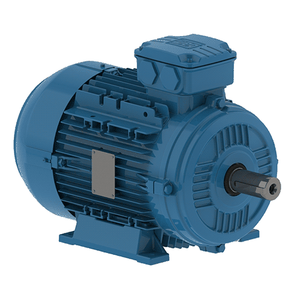
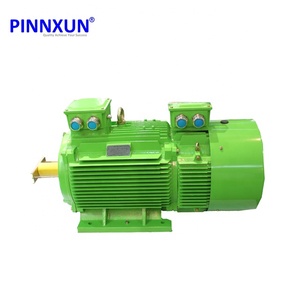
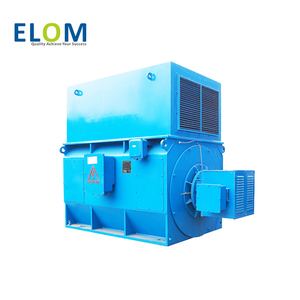
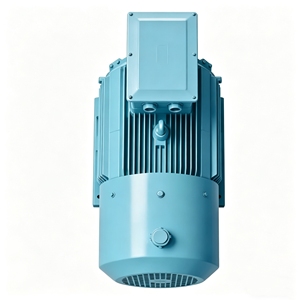
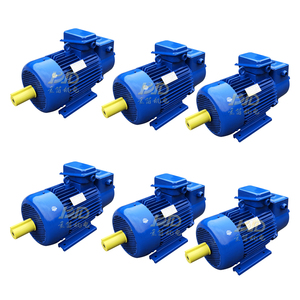
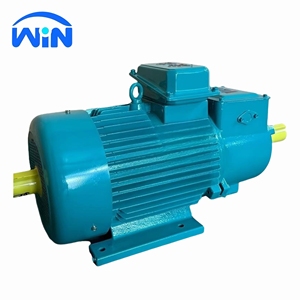
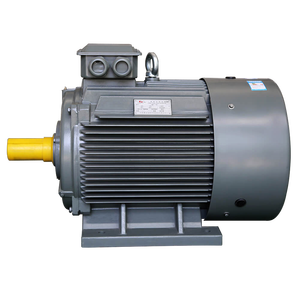
In modern heavy industrial applications—ranging from mining SAG mills, ball mills, and cement rotary kilns to high-pressure reciprocating compressors and marine propulsion—the demand for continuous high-torque output at low rotational speeds (typically 50 RPM to 500 RPM) has historically presented major electromechanical challenges. Traditional drive topologies relied heavily on high-speed induction motors coupled with massive mechanical gearboxes. However, these legacy systems incur continuous power losses (gearbox efficiency drops of 3% to 8%), frequent lubricant replacement, seal degradation, high mechanical vibration, and high total cost of ownership (TCO).
As global industrial operations shift toward net-zero carbon targets and maximum energy density, Low Speed Synchronous Motors (LSSMs) designed and manufactured by leading Chinese industrial factories—incorporating world-class British rotating machine engineering heritage—have emerged as the definitive solution. Operating at exact synchronous speeds proportional to line frequency (or VFD excitation frequency) without rotor slip, LSSMs deliver constant, pulseless torque, dynamic power factor correction (up to unity or leading power factor), and elimination of mechanical speed reduction stages.
Information Gain Highlight: Low speed synchronous motors can operate at a leading power factor (e.g., 0.9 or 0.85 leading), serving dual functions as high-torque mechanical prime movers and reactive power compensators for the industrial plant's electrical grid. This eliminates the requirement for separate static VAR compensators or capacitor banks.
Technical Benchmark Matrix
Engineering Comparison: Low Speed Synchronous vs. Induction Gearbox Systems
Design Metric / Parameter
Direct Drive Low Speed Synchronous Motor
High-Speed Induction Motor + Gearbox
Permanent Magnet Direct Drive Motor
Operating Efficiency (%)
96.5% - 98.8% (Consistent at low RPM)
88.0% - 92.5% (Includes gearbox losses)
95.5% - 97.5% (Risk of thermal demagnetization)
Power Factor Control
Adjustable (Lagging to 0.8 Leading)
Fixed Lagging (0.82 - 0.88)
Fixed near Unity (Requires active VFD inverter)
Starting Torque Capacity
Up to 250% - 300% Rated Torque
150% - 200% Rated Torque
180% - 220% Rated Torque
Maintenance Interval
40,000+ Hours (No gear oils/seals)
8,000 - 12,000 Hours (Oil changes, gear wear)
25,000 Hours (Magnet rotor inspection)
Heavy Duty Overload Rating
Exceptional (S1 continuous duty)
Moderate (Limited by thermal shock on gear teeth)
Moderate to High (Subject to Curie temp limits)
Total Cost of Ownership (10-Yr)
Lowest (35% lifetime energy savings)
Highest (Ongoing maintenance + friction loss)
Medium to High (High initial rare-earth cost)
Manufacturer Pedigree
Why TDC Parsons Peebles & China Manufacturing Synergies Lead the World
Rooted in over 128 years of British rotating electrical machine engineering excellence (tracing origin to 1896 in Rosyth, Dunfermline, UK), our enterprise synthesizes century-old design IP with China's state-of-the-art manufacturing infrastructure. This unique dual-heritage platform allows us to deliver heavy-duty low speed synchronous motors and slip ring AC drives that exceed rigid IEC 60034, IEEE 841, and ATEX/IECEx specifications while maintaining highly competitive global procurement economics.
VPI Class H Insulation & Thermal Integrity
All stator and rotor windings undergo automated Vacuum Pressure Impregnation (VPI) using solventless epoxy resins, delivering void-free thermal dissipation, extreme dielectric strength, and complete moisture/chemical resistance for harsh mining and coastal environments.
100% Drop-In Replacement Engineering
We specialize in custom mechanical and electrical reverse-engineering. Whether replacing legacy Westinghouse, General Electric, WEG, or Siemens motors, our custom mounting footings, shaft height adjustments, and terminal box orientations eliminate costly civil foundation redesigns.
Advanced High Voltage Testing Facility
Equipped with dedicated test beds up to 20 MVA capacity, every motor undergoes rigorous testing including Full Load Heat Run, Core Flux Loss Analysis, Partial Discharge Monitoring, Dynamic Balancing to ISO 1940 Grade G1.0, and Routine High-Pot Testing before factory release.
Hazardous Area & Ex p / Ex ec Certification
Fully accredited by SGS Baseefa for Zone 1 and Zone 2 hazardous installations. Our pressurized (Ex p) and non-sparking (Ex ec) low speed motors safeguard offshore oil platforms, gas compressor stations, and chemical refineries against explosive atmospheres.
2026-2035 Industry Insights
Future Sourcing & Procurement Trends in Low Speed Heavy Drive Systems
Understanding global procurement macro-trends empowers EPC contractors, plant directors, and OEM machine builders to future-proof their capital investments. Over the next decade, the low speed synchronous motor manufacturing landscape in China is undergoing key technological disruptions:
1. Integration of Smart Brushless Excitation & Digital Twin Monitoring
Traditional slip ring excitation systems requiring carbon brush replacements are increasingly superceded by static brushless excitation units featuring rotating diode bridges. Modern low speed synchronous motors manufactured in top Chinese facilities feature embedded IoT sensor suites—monitoring tri-axial vibration, stator tooth temperature (PT100 RTDs), flux leakage, and partial discharge in real-time. This telemetry feeds directly into plant-wide predictive maintenance algorithms, preventing unexpected downtime.
2. Variable Frequency Drive (VFD) Compatible Salient Pole Rotors
Direct-on-line (DOL) starting of large synchronous motors causes substantial voltage dips on industrial power grids. The latest procurement trend emphasizes VFD-driven low speed synchronous motors. By utilizing low-voltage or medium-voltage multi-level VFDs, plants achieve smooth soft-starting with zero inrush current spikes, infinite speed variation from 0 to 100% rated RPM, and maximum torque capability right down to zero speed.
China's tier-1 electrical motor factories are adopting ultra-thin, low-loss cold-rolled grain-oriented (CRGO) and non-grain-oriented (CRNGO) silicon steel laminations (0.27mm to 0.35mm thickness). Combined with laser-scribed core cutting, core eddy current losses are reduced by up to 22%, directly contributing to lower operational carbon footprints for heavy industry end-users.
4. Customization for Extreme Environmental Tolerances
Procurement specifications now frequently mandate ambient temperature operating capabilities ranging from -45°C (Arctic mining installations in Northern Canada and Kazakhstan) to +60°C (Middle Eastern desert water pumping facilities), along with C5-M marine anti-corrosion coating systems for offshore applications.
Sourcing Audit Checklist
Key Criteria for Selecting Tier-1 Chinese Low Speed Synchronous Motor Manufacturers
When vetting potential motor factories and suppliers in China for high-stakes capital equipment projects, technical procurement teams should evaluate manufacturers against the following critical benchmarks:
Full-Capacity Factory Acceptance Testing (FAT): Verify whether the supplier possesses back-to-back load testing capabilities and high-voltage power supplies to test large machines under real load conditions.
Stator Core Punching & Coil Winding Automation: Ensure automated CNC coil spreading, taping, and robotic slot insertion to eliminate human error in high-voltage insulation gaps.
Rotor Dynamic Balancing Standards: Confirm dual-plane dynamic balancing to ISO 1940-1 Grade G1.0 or G2.5 at operating speed to minimize bearing wear and shaft fatigue.
Quality Management Certifications: Require ISO 9001:2015, ISO 14001, ISO 45001, along with CE, ATEX, IECEx, and CSA marks depending on target destination deployment.
Supply Chain Traceability: Demand full material certificates for copper wire purity (>99.99% ETP grade), bearing brands (SKF, FAG, NSK), and structural steel plate mill test certificates.
Q1
What is the primary difference between a low speed synchronous motor and a low speed induction motor?
A low speed synchronous motor runs at exact synchronous speed (N_s = 120f / p) synchronized with supply frequency, regardless of load changes, maintaining zero slip. In contrast, an induction motor suffers from rotor slip, causing speed to drop as load increases. Furthermore, synchronous motors allow active power factor control (unity or leading), whereas induction motors always operate at a lagging power factor.
Q2
Why are low speed synchronous motors ideal for ball mills and reciprocating compressors?
Ball mills and reciprocating compressors require massive starting torques and operate continuously under heavy, fluctuating shock loads at low rotational speeds. Low speed synchronous motors deliver direct-drive capability without a gearbox, exhibit high pull-out torque ratios (250%+), and absorb cyclic load pulsation without mechanical wear or speed variation.
Q3
Can Chinese synchronous motor manufacturers customize drop-in replacements for European or American legacy motors?
Yes. Leading Chinese manufacturers with international engineering expertise (such as TDC Parsons Peebles OEM partners) specialize in 100% mechanical and electrical drop-in replacements. Shaft extensions, mounting hole footprints, center heights, and terminal box locations are custom-machined to replicate original equipment dimensions down to millimeter precision.
Q4
What excitation methods are available for low speed synchronous drives?
Two main excitation configurations are manufactured: 1) Brushless Excitation Systems, utilizing an auxiliary AC exciter and rotating rectifier assembly mounted on the main shaft (eliminating carbon brushes and slip rings); and 2) Static / Slip Ring Excitation, where DC current is supplied via carbon brushes on heavy-duty bronze slip rings, ideal for fast dynamic field control.
Q5
How does operating at a leading power factor reduce industrial electricity bills?
Industrial electrical utilities impose heavy financial penalties for low power factors (typically below 0.90 lagging) caused by surrounding induction equipment. By over-exciting a low speed synchronous motor, it supplies capacitive reactive power back into the plant grid, raising the total facility power factor near unity and eliminating utility penalties.
Q6
What lead time is typically required for custom high-voltage low speed synchronous motors from China?
Standard engineering design, manufacturing, VPI processing, assembly, and testing for custom high-voltage synchronous motors typically ranges from 12 to 18 weeks, depending on frame size, kW rating, and specific hazardous area certifications. Rapid-track manufacturing options are available for emergency operational replacements.
Request a Custom Engineering Quote & Technical Consultation
Contact our senior rotating machine application engineers today for tailored specifications, drop-in replacement evaluations, and competitive B2B factory pricing.