



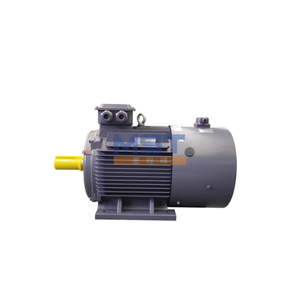
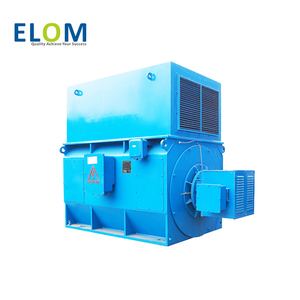
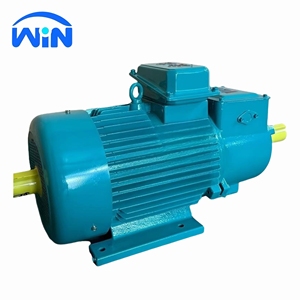
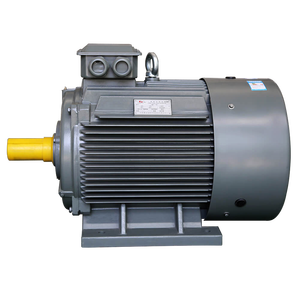
In global industrial power transmission, electrical efficiency, precise speed regulation, and reactive power compensation are no longer optional—they are imperative for operational viability. As global industrial operators migrate toward energy-dense machinery, high-voltage Synchronous Motors have emerged as the foundational drive technology for heavy compressors, ball mills, extruders, water pump stations, and utility power generation plants.
As a leading China Best Synchronous Motors Factory & Exporter, our engineering division integrates over a century of electro-mechanical heritage with modern, automated manufacturing processes. Operating under rigorous IEC, NEMA, IEEE, and ISO 9001 frameworks, our manufacturing base specializes in high-efficiency high-voltage (HV) synchronous motors, permanent magnet synchronous motors (PMSM), synchronous condensers, and tailored drop-in replacement solutions for legacy plants globally.
Unlike standard three-phase asynchronous (induction) motors, which suffer from rotor slip and lagging power factors, synchronous motors operate at absolute synchronous speed ($n_s = 120f/p$) under all load conditions up to break-away torque. By injecting direct current (DC) into the rotor excitation windings or utilizing high-energy Neodymium-Iron-Boron (NdFeB) permanent magnets, synchronous machines operate at unity power factor ($\cos \phi = 1.0$) or leading power factor ($\cos \phi = 0.8\text{ to }0.9\text{ leading}$).
This operational characteristic delivers substantial operational expenditure (OPEX) advantages:
Engineered for low-speed, high-torque industrial applications such as reciprocating compressors, SAG/ball mills, and mine hoists. Features robust laminated pole shoes, damper windings for transient stability, and Class H Vacuum Pressure Impregnation (VPI).
Direct-drive high-torque synchronous motors designed without slip rings or brushes. Eliminates gearbox losses, reduces mechanical maintenance by 60%, and offers exceptional power density for marine propulsion and industrial extruders.
Fully certified Ex ec, Ex p (Pressurized), and Ex e electric motors for Zone 1 and Zone 2 oil & gas refineries, offshore platforms, and chemical processing units. Verified by SGS Baseefa under ATEX & IECEx protocols.
| Technical Parameter | High-Voltage Synchronous Motor (TDC China) | Standard Induction Motor (Wound/Cage) | Impact on Facility OPEX & Grid |
|---|---|---|---|
| Operating Speed | Absolute Synchronous ($n_s = 120f/p$) | Varies with load (Slip 0.5%–5%) | Zero speed variance under heavy torque fluctuations |
| Power Factor ($\cos \phi$) | Adjustable (0.8 Leading to 1.0 Unity) | Fixed Lagging (0.75–0.88 Lagging) | Eliminates utility power factor penalty fees |
| Energy Efficiency | 96.5% – 98.5% (IE4 / IE5 level) | 91.0% – 95.5% (IE2 / IE3 level) | Saves $45,000–$180,000 annually per megawatt |
| Air Gap Clearance | Larger mechanical air gap (Robust) | Small air gap (Higher friction risk) | Superior mechanical tolerance to vibration |
| Starting Torque & Current | High starting torque, low inrush via VFD/Softstarter | High inrush current ($6-8\times I_n$) | Protects localized transformers and switchgear |
| Grid Voltage Dip Tolerance | High (Excitation override protection) | Low (Risk of motor stalling/tripping) | Prevents catastrophic process shutdowns |
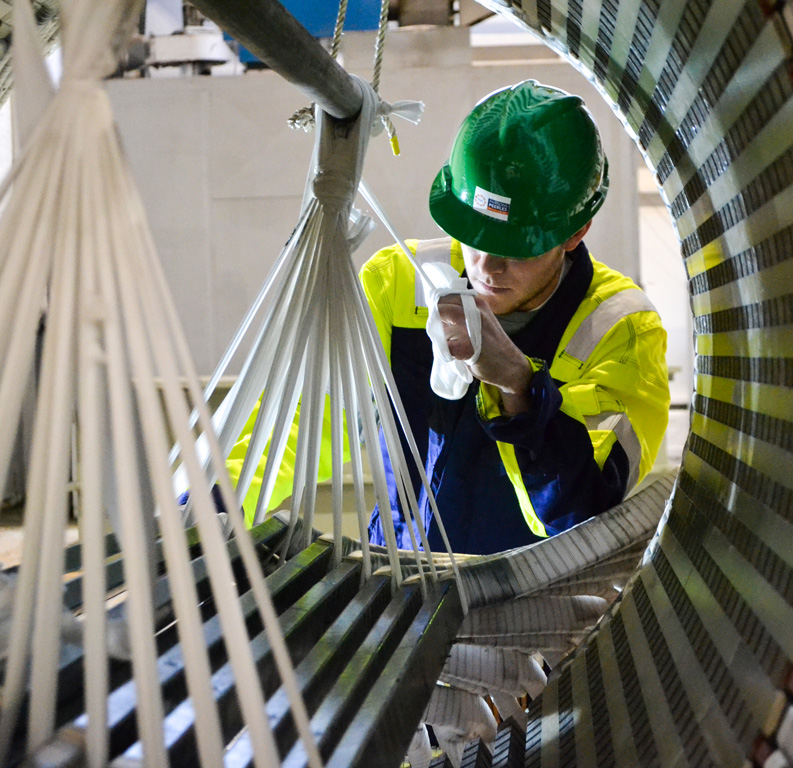
Our stator manufacturing line utilizes fully automated mica tape winding machines combined with solventless epoxy resin Vacuum Pressure Impregnation (VPI). Operating under Class H insulation thermal ratings, every stator core undergoes core flux testing to eliminate hot spots and partial discharge before final assembly.
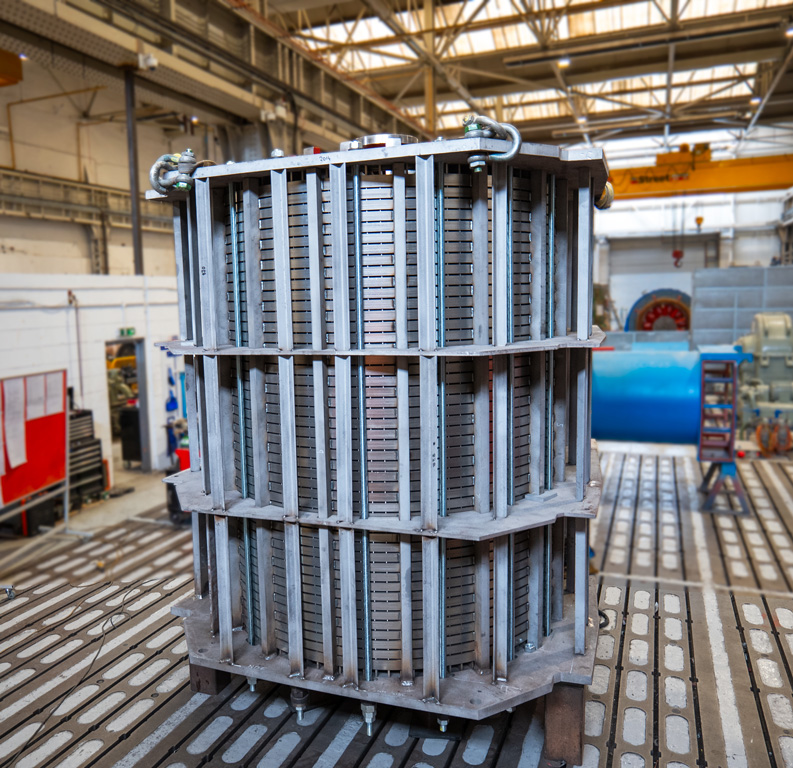
Structural reliability in synchronous machinery demands extreme dynamic balance. Our rotor shafts are forged from high-tensile alloy steel (42CrMo4) and precision balanced on Schenck hard-bearing dynamic balancing machines to ISO 1940 Grade G1.0 tolerance—minimizing operational vibration to under 1.0 mm/s RMS.
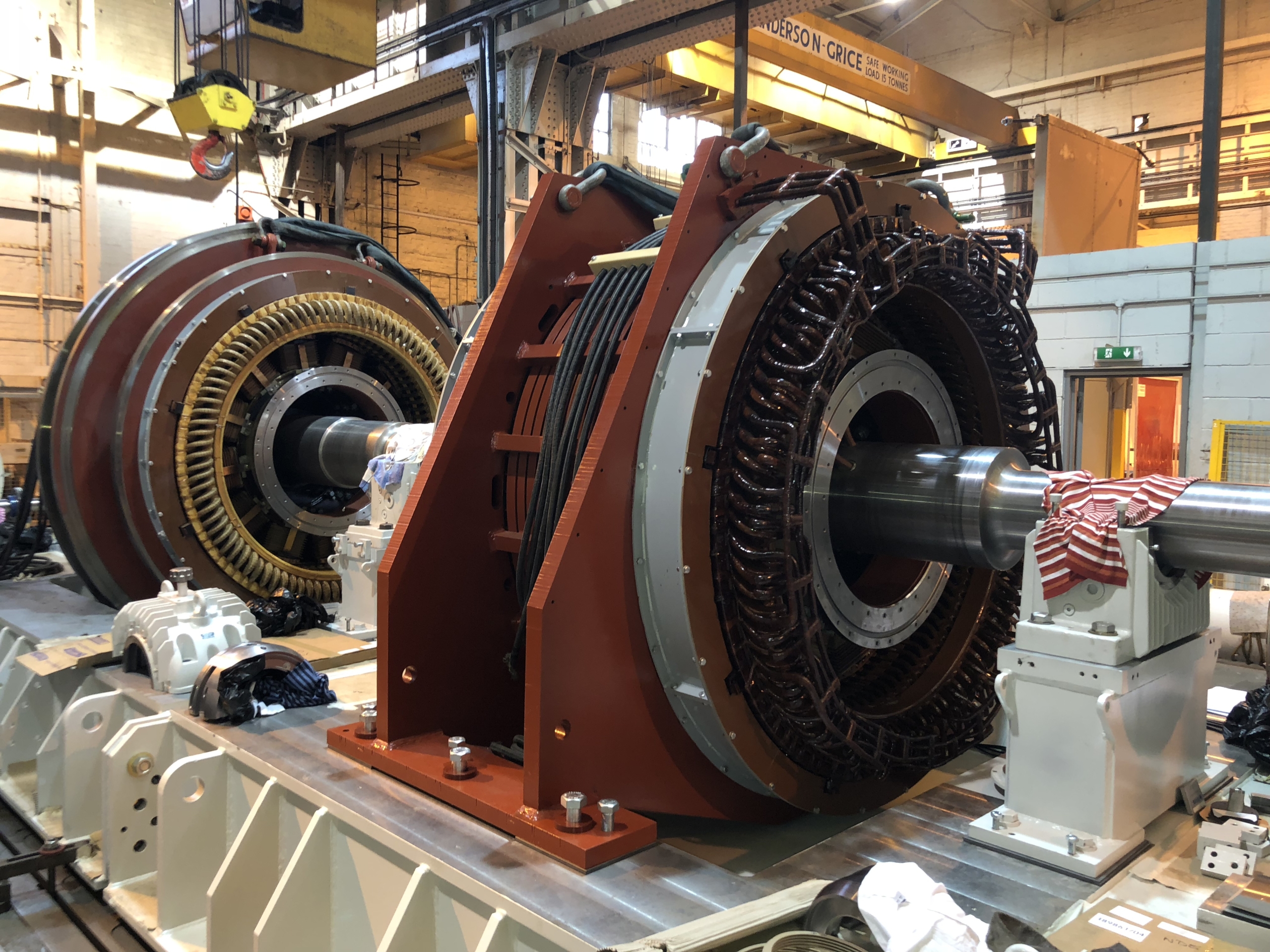
Our facility houses one of the largest independent High-Voltage Load Testing Bays in Asia. We perform full-load, no-load, temperature rise, and back-to-back testing up to 13.8kV. Furthermore, we specialize in custom 100% Drop-In Replacement Motors—matching mechanical shaft heights, foot bolt centers, and terminal box locations of legacy brands (WEG, ABB, Siemens, Parsons Peebles) to eliminate civil modifications.



As global supply chains adapt to carbon neutrality targets, strict energy efficiency mandates, and digitalized industrial automation, procurement managers must anticipate several major shifts in motor design and export manufacturing:
With the rapid retirement of coal-fired thermal power plants and the integration of intermittent renewable energy (wind and solar), power grids across Europe, the Middle East, and the Americas face severe loss of short-circuit ratio (SCR) and physical grid inertia. Re-purposed and newly manufactured Synchronous Condensers—essentially un-loaded synchronous motors connected to the grid—are seeing exponential demand growth. They supply dynamic instantaneous inertia and voltage stabilization without consuming active fossil power.
Heavy industries are actively phasing out complex mechanical gearboxes in ball mills, cement kilns, and marine propulsion shafts. Direct-Drive PMSM motors operate at ultra-low speeds (10 RPM to 200 RPM) while delivering immense torque. Eliminating the gearbox reduces mechanical maintenance overhead, cuts lubricant waste, and elevates overall powertrain efficiency by 4% to 8%.
Modern procurement specifications for high-voltage export motors now mandate integrated industrial Internet of Things (IIoT) instrumentation. Our export-grade synchronous motors are equipped with:
B2B buyer decisions have shifted from Initial Purchase Price (CAPEX) to Total Life Cycle Costing (LCC). Electric motor energy consumption accounts for over 90% of a heavy machine's total operating cost over a 20-year lifespan. China's top tier export factories now design machines exceeding IE4 (Super Premium Efficiency) and IE5 (Ultra Premium Efficiency) levels, allowing operators to achieve full capital payback within 14 to 26 months of continuous operation.
Sourcing directly from a specialized Chinese factory provides exceptional cost-to-performance efficiency without compromising compliance. By integrating complete vertical supply chains—from electrical steel laminations and copper magnet wire to heavy CNC forging and automated VPI insulation—Chinese manufacturers deliver full IEC/NEMA compliance, SGS ATEX certifications, and custom drop-in engineering at 30% to 50% lower CAPEX compared to European or North American OEMs.
Synchronous motors feature separate DC rotor excitation (via brushless exciter or static exciter). By increasing the excitation current (over-excitation), the motor operates at a leading power factor. This supplies reactive power (kVAr) to the plant's internal grid, counteracting the lagging reactive power drawn by smaller induction motors and transformers. Consequently, facility power factor increases toward unity ($\cos \phi = 1.0$), completely eliminating utility low power factor surcharges.
To engineer a 100% mechanically and electrically interchangeable replacement, please provide: (1) Original OEM nameplate data; (2) Shaft height (H dimension), foot hole spacing (AB/AC), and shaft extension dimensions; (3) Operating voltage, frequency, and phase count; (4) Driven equipment type (compressor, pump, mill); (5) Enclosure type and cooling method (IC01, IC81W, IC611); (6) Hazardous area classification if applicable (Ex ec, Ex p, Zone 1/2).
Every export machine undergoes rigorous Factory Acceptance Testing (FAT) in accordance with IEC 60034 or IEEE 115 standards. Tests include: winding resistance, insulation resistance (IR) & Polarization Index (PI), high-voltage withstand test, phase rotation, core flux testing, dynamic balancing, no-load loss measurement, thermal rise tests, and bearing vibration spectrum analysis. Full test reports and video FAT inspections are provided prior to packaging in seaworthy vacuum-sealed export wooden cases.
Brushless excitation uses an auxiliary AC exciter mounted on the main shaft with a rotating diode bridge. It eliminates carbon brushes, slip rings, and carbon dust accumulation, making it ideal for continuous, low-maintenance, or hazardous area operation. Static excitation uses slip rings and carbon brushes connected to an external thyristor rectifier; it offers faster field response times for high-transient grids, though it requires routine brush replacement.
Consult with our senior motor design engineers for technical proposals, custom dimensional drawings, energy-saving ROI assessments, or immediate RFQ processing.