






China Best Turbo Generators Manufacturer & Supplier

High-Voltage Rotating Electrical Machines, Wound Rotor Motors & Industrial Energy Solutions | 128+ Years Engineering Heritage

Recommended Heavy-Duty Turbo Generators & Motors

Engineered for high torque, extreme environmental resilience, continuous duty operational longevity, and seamless power conversion across global grid specifications.

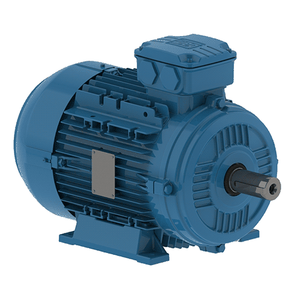
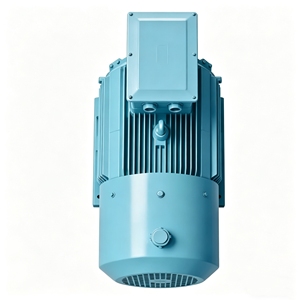
Electric Motor Weg Industrial Fan 15000 Watt 15Kw 15 Kw 3 Three Phase Asynchronous Weg Induction Motor

Electric Motor Weg Industrial Fan 15000 Watt 15Kw 3 Phase Asynchronous Induction Motor

Send an Inquiry
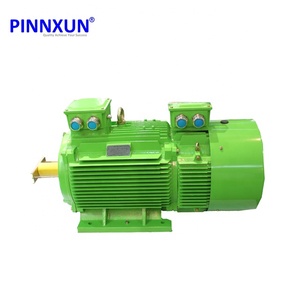
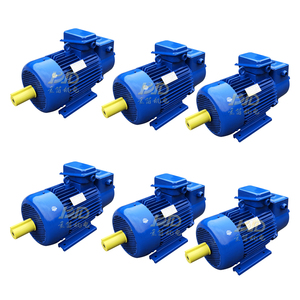
YR Wound Rotor Three Phase Induction Motor for Prime Mover

YR Wound Rotor Three Phase Induction Motor for Prime Mover Applications

Send an Inquiry
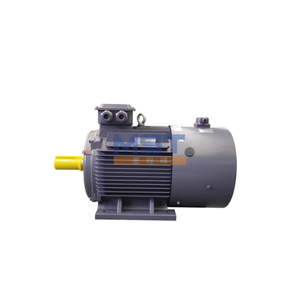
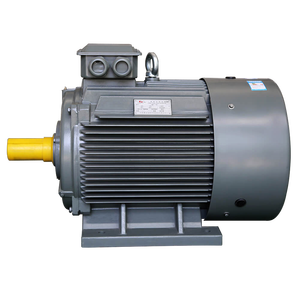
Ye2-1600l-4 15kw Induction Wound Rotor Induction Motor Weg Induction Motor

Ye2-1600l-4 15kw High-Efficiency Induction Wound Rotor AC Motor

Send an Inquiry
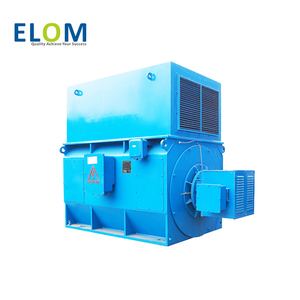
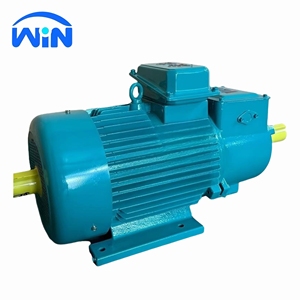
YR 3200KW High Torque Wound Rotor Induction Motor IP23

YR 3200KW High Torque Heavy-Duty Wound Rotor Induction Motor IP23

Send an Inquiry
380V/3kV/6kV/10kV Three Phase Asynchronous Motor 5.5kW-3150kW Wound Rotor AC Motors

380V/3kV/6kV/10kV Three Phase Asynchronous 5.5kW-3150kW Wound Rotor Motors

Send an Inquiry
High-quality Wound Rotor Motor Crane slip Ring AC Motor, 380v, 440v, 660V, Insulation Class YZR Three-phase Asynchronous Motor

High-Quality YZR Crane Slip Ring AC Motor 380V/440V/660V Class H/F

Send an Inquiry
YZR Wound Rotor Induction AC Motor Multiple Power Specifications Applied for Bridge Crane Portal Hoist Metallurgical Plant

YZR Wound Rotor AC Motor for Bridge Crane, Portal Hoist & Metallurgy

Send an Inquiry
IE2 280 Series 4 Pole 1500 Rpm 380v 400v Wound Rotor Induction Motor Weight 50hz Ac 100 hp Electric 75 kw 3 Phase 415v Motor

IE2 280 Series 4 Pole 1500 Rpm 380V/400V/415V 75kW (100HP) Electric Motor

Send an Inquiry
12,141+
Machines Manufactured
128+
Years Combined Heritage
200 MVA
Installed RFC Capacity
100%
Interchangeable Engineering

Why Partner with China's Premier Turbo Generator Manufacturer

Combining legacy European electromechanical engineering standards with China's high-capacity advanced industrial manufacturing infrastructure.

ISO 9001 & ATEX Certified Quality

Our state-of-the-art facilities operate under rigorous ISO 9001, ISO 14001, and OHSAS 18001 standards. Approved by SGS Baseefa, our Ex ec, Ex p, and Ex e hazardous area turbo generators and high-voltage motors operate safely in explosive, volatile environments worldwide.

100% Drop-In Replacement Engineering

We eliminate costly plant structural redesigns. Our mechanical and electrical design teams engineer 100% drop-in replacements for legacy Parsons Peebles, WEG, Siemens, ABB, and General Electric machines—matching shaft height, foot centers, terminal box positions, and cooling duct connections precisely.

Full-Scale HV Testing Capabilities

Every turbo generator and high-voltage motor undergoes stringent testing prior to dispatch, including No-Load Testing, Full Direct Load Testing, Back-to-Back Load Testing, Core Flux Testing, and Insulation Resistance / Polarization Index validation up to 13.8kV.

Comprehensive Technical Whitepaper: Engineering High-Performance Turbo Generators & Heavy-Duty Induction Motors

Turbo generators and high-voltage wound rotor induction motors constitute the critical heart of modern energy conversion, utility grid stabilization, heavy manufacturing, mining hoists, marine propulsion, and petrochemical processing plants. Selecting the right manufacturer and supplier in China requires a comprehensive understanding of rotor dynamics, stator thermal dissipation mechanisms, Vacuum Pressure Impregnation (VPI) insulation integrity, and electromagnetic design optimizations tailored to severe industrial operating cycles.

Executive Summary & Information Gain Insight

In modern high-efficiency power generation and mechanical drive systems, Total Cost of Ownership (TCO) over a 30-year lifecycle outweighs initial procurement expenditure by a factor of 12:1. Advanced turbo generator design must balance electromagnetic flux density, rotor mechanical stress limits during load transients, harmonic distortion mitigation, and thermal stress resilience under continuous Class H loading protocols.

1. Electromagnetic Architecture & Stator/Rotor Optimization

Our turbo generator and wound rotor motor ranges utilize low-loss, high-permeability cold-rolled silicon steel laminations. Stator cores are precision-punched and stacked under automated hydraulic compression to eliminate interlaminar magnetic noise and core vibration. Cores undergo rigorous Core Flux Testing (Ring Test) to verify zero hot-spot thermal anomalies prior to winding insertion.

Rotor designs for prime movers and heavy-duty asynchronous applications utilize high-grade copper bars or precision-wound rotor coils bonded with high-tensile glass bandings. This guarantees mechanical structural stability under extreme centrifugal forces, reaching rotational speeds of 1500 RPM to 3600 RPM under fluctuating load factors.

2. Advanced Thermal Management: CACA, CACW & Hydrogen Cooling Configuration

Heat dissipation is the single greatest determinant of rotating machine reliability. We engineer tailored cooling topology based on installation footprint and ambient environmental severity:

  • TEFC / CACA (Totally Enclosed Air-to-Air Cooled - IC611 / IC616): Utilizes internal and external closed-loop air circuits with heavy-duty aluminum or copper cooling tubes. Ideal for dusty cement factories, outdoor power stations, and mining environments.
  • CACW (Totally Enclosed Water-to-Air Cooled - IC81W): Features top-mounted air-to-water heat exchangers. Delivers exceptional cooling density, minimal acoustic footprint (< 80 dBA), and isolated internal environments suited for marine vessels and chemical plants.
  • Open Drip-Proof / Screen Protected (IP23 / IC01): Maximize airflow efficiency for indoor power generation rooms where ambient air cleanliness can be regulated.

3. Insulation Systems & VPI Technology

Insulation integrity governs electrical breakdown resistance. Our high-voltage turbo generators and asynchronous motors feature a continuous Class H resin system implemented using Vacuum Pressure Impregnation (VPI). Winding coils are insulated with multi-layer mica tape, inserted into stator slots with magnetic slot wedges to eliminate harmonic heating, and submerged in solventless epoxy resin under high vacuum and pressure cycles. The result is a void-free, moisture-impermeable, heat-resisting dielectric structure tested to withstand high voltage surges and partial discharge thresholds according to IEC 60034-18 and IEEE 286 standards.

Technical Specification & Application Matrix

Review our core industrial turbo generator and wound rotor motor specifications designed for high-demand B2B procurement applications:

Equipment Category Power Output Range Voltage Ratings Enclosure & Cooling Primary Industrial Application
Industrial Turbo Generators 1,000 kW – 50,000 kW 3.3kV / 6.6kV / 10kV / 13.8kV CACW (IC81W) / CACA (IC611) Thermal Power Plants, Combined Heat & Power (CHP), Gas/Steam Turbines
YR / YZR Wound Rotor Motors 15 kW – 3,200 kW 380V / 660V / 3kV / 6kV / 10kV IP23 / IP54 / IP55 (CACA) Heavy Bridge Cranes, Mining Hoists, Ball Mills, Crusher Drives
High Voltage Induction Generators 500 kW – 15,000 kW 3kV / 6kV / 10kV IC611 / IC81W Hydroelectric Facilities, Waste Heat Recovery, Biomass Generation
Ex p / Ex ec Hazardous Motors 100 kW – 10,000 kW 400V to 11kV Pressurized / Non-Sparking ATEX Offshore Oil Platforms, Petrochemical Refineries, Gas Processing
Rotary Frequency Converters 300 kVA – 20 MVA 50Hz / 60Hz / 400Hz Dual Grid Enclosed Modular Skid Naval Shore Power, Aviation Ground Support, International Grid Test Beds

Global Procurement & Technological Future Trends

Strategic insights for procurement directors, engineering consultants, and plant managers navigating energy transition and machinery lifecycle planning.

1. Decarbonization & Hybrid Power Integration

Global power grids are shifting rapidly toward renewable integration, requiring turbo generators capable of handling severe thermal cycling, rapid load ramping, and islanded operational stability. Future procurement strategies emphasize synthetic inertia capabilities and synchronous condenser retrofits to stabilize weak transmission networks affected by intermittent solar and wind penetration.

2. Digital Twins & Real-Time IoT Predictive Analytics

Modern procurement demands extend beyond physical iron and copper. Advanced turbo generators are now equipped with integrated digital twin sensors, monitoring tri-axial vibration, stator tooth temperature profiles, rotor flux leakage, and partial discharge activity in real time. Cloud-connected analytics predict insulation degradation months before failure, moving industrial plants from reactive repair to zero-downtime predictive maintenance cycles.

3. Ultra-High Efficiency (IE4 / IE5) Electrical Standards

With global energy tariffs escalating, energy efficiency has transitioned from a compliance requirement to a key competitive advantage. Industrial buyers are prioritizing premium efficiency wound rotor induction motors and low-loss turbo generators that reduce thermal losses by up to 25%, resulting in rapid capital expenditure payback periods within 14 to 22 months of continuous operation.

4. Modular Drop-in Standardization & Circular Refurbishment

Lead times for massive power infrastructure are tightening. The future of procurement relies on modular, standardized stator frame footprints paired with flexible terminal positioning. Furthermore, circular economy principles are driving plant operators to mandate 100% mechanically interchangeable replacement units that accept component-level upgrades without requiring civil foundation rebuilds.

Frequently Asked Questions (FAQ)

Key technical and commercial considerations for purchasing turbo generators and heavy-duty wound rotor motors from China.

What distinguishes a Turbo Generator from standard low-speed salient pole generators?

Turbo generators are specifically engineered for high-speed operation (typically 1500/1800 RPM for 4-pole or 3000/3600 RPM for 2-pole) driven directly by gas turbines, steam turbines, or high-speed prime movers. They feature solid cylindrical rotor designs forged from high-alloy steel to withstand massive centrifugal forces, whereas salient pole generators operate at lower rotational speeds with projecting magnetic poles suited for hydro turbines or slow-speed diesel engines.

How does a YR / YZR Wound Rotor Induction Motor handle high-starting-torque loads?

Wound rotor (slip-ring) induction motors allow external resistance to be inserted into the rotor circuit during startup via heavy-duty carbon brushes and slip rings. This dramatically reduces starting current (inrush current down to 1.5× full load current) while maximizing starting torque (up to 250-300% of nominal torque). It is the preferred choice for heavy-inertia mill drives, crushers, and mine hoists where direct-on-line (DOL) starting would cause severe voltage drops on the power supply grid.

Can your engineering team provide exact drop-in replacements for obsolete European or American motors?

Yes. We specialize in reverse-engineering legacy electrical machines (including vintage Parsons Peebles, AEI, GEC, Westinghouse, WEG, and Siemens units). By accurately replicating terminal box placement, shaft extensions, keyways, hold-down bolt centers, and center heights, our replacement motors slide directly onto existing baseplates without modifying site piping, couplings, or structural concrete foundations.

What quality control protocols and Factory Acceptance Tests (FAT) are conducted prior to shipment?

All machines undergo comprehensive testing in accordance with IEC 60034 and IEEE 115 specifications. Standard FAT procedures include Winding Resistance Measurement, Insulation Resistance & Polarization Index (PI) Test, High-Potential Dielectric Withstand Test, No-Load Power Loss & Current Balance, Core Flux Ring Testing, Dynamic Balancing (ISO 1940 Grade G1.0/G2.5), and Vibration Spectrum Analysis across all bearings.

What are the recommended cooling systems for turbo generators operating in harsh, hot ambient environments?

For hot, dusty, or coastal environments exceeding 45°C ambient temperatures, we recommend CACW (Totally Enclosed Water-to-Air Cooled, IC81W) systems connected to a plant closed-loop cooling water circuit. Alternatively, heavy-duty CACA (Totally Enclosed Air-to-Air Cooled, IC611) units with anti-corrosion treated aluminum tubes or stainless steel fins provide complete isolation of the internal windings from ambient sand, moisture, and aggressive atmospheric chemicals.

What certification do you provide for hazardous location (ATEX / IECEx) installations?

Our hazardous area high-voltage motors and turbo generator systems are certified by SGS Baseefa and compliant with ATEX directive 2014/34/EU and IECEx standards. We manufacture Ex ec (Increased Safety / Non-Sparking), Ex p (Purged and Pressurized), and Ex e rated equipment tailored for Zone 1 and Zone 2 explosive dust and gas atmospheres commonly encountered in oil refineries and offshore platforms.

What is the typical operational lifecycle and warranty period of your turbo generators?

Engineered with Class H VPI insulation operated strictly within Class B temperature rise limits, our rotating electrical machines carry an operational design lifecycle exceeding 30 years under standard maintenance schedules. We provide standard 18-to-36-month comprehensive factory warranties, alongside global field engineering support for commissioning, alignment, and emergency spare parts supply.

Ready to Upgrade Your Power Infrastructure?

Consult directly with our senior electromechanical engineering team to receive customized CAD drawings, technical datasheets, and competitive B2B factory pricing within 24 hours.

Send an Inquiry