





Certified vibration spectrum analyzers, wireless triaxial transmitters, dynamic signal collectors, and electrodynamic test benches engineered for zero-downtime industrial asset performance.
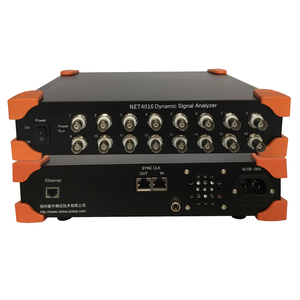
Modern industrial operations require continuous, non-invasive machine health diagnostics to eliminate unplanned downtime, optimize asset life cycles, and maximize operational throughput. As heavy industry transitions toward Smart Manufacturing and Industry 4.0 standards, searching for trustworthy China best vibration analysis services manufacturers & manufacturer partners has evolved from simple component sourcing into a critical strategic initiative. Industrial rotating equipment—ranging from megawatt-scale high-voltage induction motors and synchronous generators to high-speed centrifugal pumps and turbines—operates under complex electromechanical stress vectors.
Vibration analysis services provide the primary diagnostic window into the internal mechanical dynamics of rotating machinery. By capturing time-waveform signals, evaluating Fast Fourier Transform (FFT) spectrums, measuring phase angles, and calculating peak-to-peak displacement, velocity (mm/s RMS), and acceleration (g peak), reliability engineers can pinpoint micro-inch bearing flaking, rotor unbalance, shaft misalignment, gear mesh defects, structural resonance, and electrical slot pass frequencies long before catastrophic mechanical failure occurs.
Leading Chinese vibration diagnostics manufacturers now fully harmonize hardware spectral outputs with ISO 20816-3 (industrial machines operating above 15 kW) and ISO 10816 evaluation zones. Deploying 24-bit delta-sigma Analog-to-Digital Converters (ADCs) ensures a dynamic range exceeding 110 dB, permitting the simultaneous extraction of low-frequency unbalance harmonics (<2 Hz) alongside high-frequency bearing impact spikes (>10 kHz).
When selecting a manufacturing partner, industrial asset managers must distinguish between basic instrument distributors and fully integrated engineering manufacturers. A true Tier-1 manufacturer possesses proprietary MEMS sensor calibration laboratories, high-voltage test bays, electromagnetic shaker calibration rigs, and deep rotating machine rewind and redesign expertise.
Building on over 128 years of accumulated electromechanical engineering heritage—derived from OEM manufacturing roots in Edinburgh, Birmingham, and global field service operations—our manufacturing facility delivers complete, integrated vibration monitoring and rotating equipment solutions. We don't just supply stand-alone sensors; we engineer drop-in replacement motors, high-voltage generators, and state-of-the-art diagnostic dynamic signal analysis systems backed by comprehensive test protocols.
Full compliance with international quality standards. Certified manufacturing for hazardous area environments, including Ex ec, Ex p (pressurized), and Ex e flameproof motor and sensor enclosures validated by SGS Baseefa.
Equipped with advanced test rigs enabling No-Load Testing, Direct Load Testing, Back-to-Back Full Load Testing, and Core Flux Testing up to 13.8 kV and multi-megawatt capacity to verify vibration compliance under full thermal load.
100% mechanically and electrically interchangeable replacement motors and generators designed to match legacy footprint dimensions, eliminating costly civil modifications while integrating modern vibration transducers.
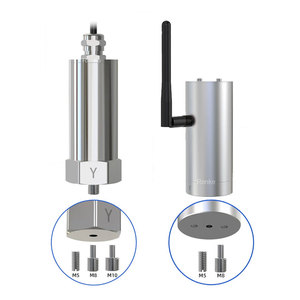
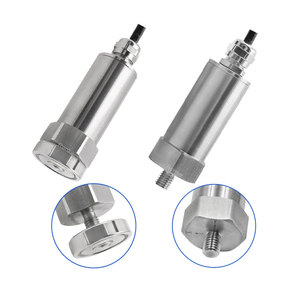
Precision vibration signal analysis relies heavily on the physical interface between the machine housing and the transducer. Our engineering team custom-manufactures magnetic mounts, stud-mounted triaxial piezoelectric accelerometers, and non-contact eddy current proximity probes tailored for critical journal bearing gap measurements. Every instrument undergoes multi-axis frequency sweep testing using electromagnetic vibration shaker benches prior to client shipment.
Global procurement teams searching for top-tier vibration analysis services manufacturers in China must anticipate key technological convergences shaping the predictive maintenance sector over the next decade. Sourcing strategies are moving away from reactive handheld spot-checking toward autonomous, wireless, edge-processing IoT network architectures.
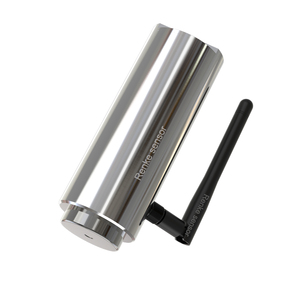
Procurement demand is surging for industrial wireless sensors utilizing RS485 Modbus, LoRaWAN, NB-IoT, and WirelessHART protocols. Wireless triaxial sensors featuring ultra-low-power microcontrollers allow continuous vibration monitoring on previously inaccessible overhead fan decks, remote pipeline pumps, and hazardous petrochemical processing units without incurring expensive cable installation costs.
Future-proof procurement specifications demand combined vibration and surface temperature telemetry within a single enclosure. Modern triaxial transmitters measure 3-axis vibration (X, Y, Z coordinates) alongside contact surface temperature, enabling early fault detection via thermal anomaly correlation before vibration levels reach alarm thresholds.
Next-generation dynamic signal analyzers incorporate high-performance ARM or DSP processors directly at the sensor node. Fast Fourier Transforms (FFT) and envelope demodulation calculations are performed locally on the edge device, transmitting only processed trend parameters (velocity RMS, acceleration peak, crest factor, kurtosis) and fault alerts to cloud servers to save bandwidth.
Prioritize manufacturers who offer modular open-architecture software interfaces (MQTT, OPC UA, REST APIs) rather than closed proprietary ecosystems. Open architecture prevents vendor lock-in and allows seamless integration of vibration telemetry into plant-wide SCADA and Enterprise Asset Management (EAM) platforms such as SAP PM or IBM Maximo.
To assist technical evaluation committees in selecting the appropriate hardware for specific machinery classes, the comparative matrix below outlines key technical specifications across primary vibration analysis equipment categories manufactured in China.
| Equipment Category | Primary Diagnostic Function | Sampling Frequency / Dynamic Range | Typical Industrial Applications | Key Standard Compliance |
|---|---|---|---|---|
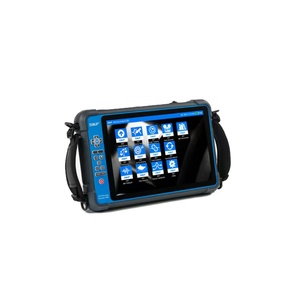
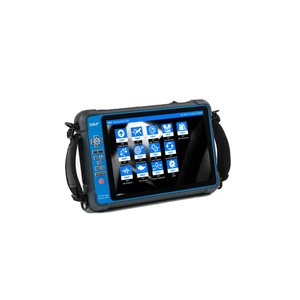
| Dynamic Signal Analyzers | Multi-channel real-time FFT spectrum analysis, order tracking, phase angle assessment | Up to 102.4 kHz per channel / 24-bit delta-sigma (>110 dB) | Turbomachinery commissioning, structural modal analysis, high-voltage motor diagnostics | ISO 20816, IEC 60034-14, CE |
| Triaxial Wireless Sensors | Continuous 3-axis vibration velocity/acceleration trend monitoring + temperature tracking | 10 Hz to 5 kHz frequency response / 16 to 24-bit ADC | Balance of Plant (BOP) pumps, cooling towers, conveyor drives, remote fans | LoRaWAN, RS485 Modbus, ATEX Zone 1/2 |
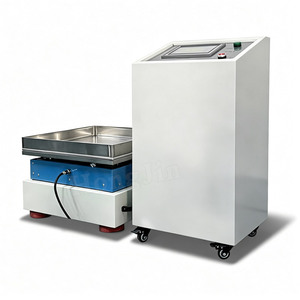
| Electrodynamic Shaker Benches | Environmental Stress Screening (ESS), resonance frequency sweep testing, calibration | 5 Hz to 3,000 Hz / Sine/Random displacement & acceleration control | Automotive part testing, rubber damping evaluation, sensor calibration labs | MIL-STD-810G, ISO 9001, IEC 60068 |
| Portable Vibration Meters | Routine operator walk-around inspection, overall RMS velocity & bearing condition scoring | 10 Hz to 1 kHz (Velocity), 1 kHz to 10 kHz (Acceleration Enveloping) | Daily maintenance inspection, HVAC units, small gearboxes, electric motors | ISO 10816 Class I-IV criteria |
Historically, vibration diagnostics relied on manual interpretation of amplitude vs. frequency plots by Level II or Level III ISO certified vibration analysts. Modern Chinese manufacturers are integrating advanced DSP algorithms directly into hardware firmware:
Key technical questions answered by senior condition monitoring engineers to guide your RFQ evaluation process.
Buyers should evaluate five core factors: (1) Sensor Calibration Rigor: Verify if the manufacturer operates NIST/ISO-traceable electromagnetic shaker calibration tables; (2) Hardware Signal Quality: Ensure a minimum 24-bit ADC resolution and low noise floor (<50 µg/√Hz); (3) Certifications: Check for ISO 9001 quality management alongside ATEX, IECEx, or Ex-proof certificates for hazardous area deployment; (4) Interchangeability & Support: Confirm availability of OEM drop-in mounting accessories and open Modbus/MQTT communication protocols; (5) Testing & Verification: Review factory acceptance test (FAT) reports and high-voltage back-to-back load test bay capabilities.
Single-axis accelerometers measure vibration along only one orientation (typically vertical or radial). However, common mechanical faults emit directional energy: pure unbalance produces high radial amplitude, shaft misalignment manifests in high axial vibration, and structural looseness shows distinct horizontal-to-vertical amplitude ratios. Triaxial sensors capture horizontal, vertical, and axial motion simultaneously from a single mounting point, reducing installation labor by 66% while providing a complete 3D orbital vector analysis of machine health.
Piezo-electric accelerometers utilize dynamic quartz or ceramic crystals to generate voltage under mechanical stress. They offer exceptional frequency response (up to 15-20 kHz) and high thermal durability, making them ideal for high-speed turbomachinery and gear mesh envelope diagnostics. MEMS (Micro-Electro-Mechanical Systems) sensors integrate capacitive silicon structures directly onto microchips; they excel at low-frequency measurements down to 0 Hz (DC response), consume minimal power (ideal for wireless battery-powered IoT nodes), and offer cost-effective scalability for Balance of Plant asset monitoring.
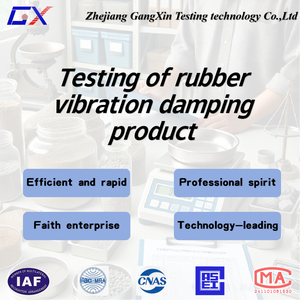
Electrodynamic shaker benches subject manufactured parts (such as rubber vibration dampers, automotive electronics, and motor mounts) to controlled sinusoidal, random, or shock vibration profiles. By conducting Environmental Stress Screening (ESS) and resonant frequency sweeps, manufacturers can evaluate structural fatigue, dampening coefficients, and dynamic insulation stability under simulated harsh field conditions before mass installation.
Yes. Tier-1 manufacturers design devices featuring standard 4-20mA analog current loops, 0-10V raw AC voltage outputs, buffered BNC outputs, and industrial digital protocols (RS485 Modbus RTU, Ethernet IP, MQTT). This ensures direct compatibility with existing rack systems, PLCs, DCS networks, and legacy condition monitoring platforms such as SKF @ptitude or Bently Nevada System 1.
Consult with our senior condition monitoring applications team for customized dynamic signal analysis systems, wireless IoT sensor deployments, or OEM drop-in motor replacements.