





Explore our top-rated synchronous generators engineered for maximum transient response, severe climate endurance, grid synchronization, and continuous heavy-duty industrial application.
An authoritative technical analysis of grid stability, excitation dynamics, power factor optimization, and total cost of ownership for high-stakes industrial power procurement.
In modern industrial energy architectures, the demand for stable, predictable, and clean electrical power has expanded far beyond simple standby backup. As critical infrastructure—ranging from hyper-scale data centers and regional logistics hubs to off-shore oil platforms and continuous process manufacturing—integrates increasingly complex non-linear loads, the role of the Industrial Synchronous Generator has become paramount.
Unlike asynchronous induction units, a high-performance synchronous alternator operates at a exact rotational speed locked in phase harmony with the electrical frequency ($f = \frac{p \times n}{120}$). This mechanical-electrical lock ensures absolute voltage control, superior fault-clearing capabilities, and instantaneous reactive power compensation (kVAR generation) vital for stabilizing weak microgrids or high-demand distribution networks.
Sourcing industrial synchronous generators from top-tier Chinese manufacturers yields up to a 40% reduction in total capital expenditure (CapEx) while achieving identical or superior thermal margins, low subtransient reactance ($X''_d$), and full compliance with IEC 60034-1, NEMA MG1-32, and ISO 8528 standards.
Bridging 128+ years of British rotating electrical machine engineering with advanced high-capacity Chinese precision manufacturing ecosystems.
Every synchronous alternator undergoes stringent quality gate inspections from raw copper wire lamination testing to VPI (Vacuum Pressure Impregnation) insulation validation. Manufactured under certified ISO 9001, ISO 14001, and ISO 45001 frameworks.
We supply specialized Ex ec, Ex p, and Ex e explosion-proof synchronous machinery approved by SGS Baseefa and AEMT. Designed specifically for oil refineries, chemical production plants, and marine off-shore platforms.
Our engineering division produces 100% mechanically and electrically interchangeable replacement units for aging legacy machines. Eliminate civil foundation modifications and minimize total operational downtime during overhauls.
Our test beds support No Load, Direct Load, Back to Back, and Core Flux Testing up to 20 MVA output ratings. Complete Factory Acceptance Testing (FAT) digital telemetry is delivered with every export order.
Founded in 1896, our legacy encompasses landmark electrification projects. Today, China’s top manufacturing plant scaled exports combine century-old design principles with state-of-the-art automated robotic winding.
Equipped with optional 4G/5G IoT telematics controllers, our mobile and stationary generators allow real-time predictive maintenance monitoring, remote paralleling control, and rapid field service dispatch worldwide.
Understanding excitation topology, thermal class margins, voltage regulation, and subtransient dynamics for high-reliability systems.
Modern industrial synchronous generators supplied by leading Chinese exporters utilize a three-phase brushless excitation system coupled with an auxiliary Permanent Magnet Generator (PMG). The PMG acts as an isolated power source supplying the Automatic Voltage Regulator (AVR), completely immune to load voltage distortions or non-linear harmonic pollution caused by variable frequency drives (VFDs) and UPS rectifiers.
This design guarantees a sustained short-circuit current capability of 300% rated current for up to 10 seconds (per IEC 60034-1), allowing upstream protective circuit breakers to selectively trip during system fault events without collapsing the generator field.
Operating longevity is directly tied to dielectric insulation integrity. Our synchronous alternators feature Class H insulation materials engineered to operate within Class F temperature rise limits ($105^\circ\text{C}$ rise over a $40^\circ\text{C}$ ambient). The complete stator winding assembly undergoes double-cycle Vacuum Pressure Impregnation (VPI) using premium epoxy resin matrices, eliminating microscopic void formations and providing resistance against moisture ingress, aggressive chemical vapors, and thermal cycling stress.
Depending on prime mover velocity—whether driven by high-speed medium-speed diesel engines (1500/1800 RPM) or hydro turbines and heavy gas combustion engines—rotor geometries are customized:
Strategic shift analysis for EPC contractors, industrial plant directors, and global machinery importers over the next decade.
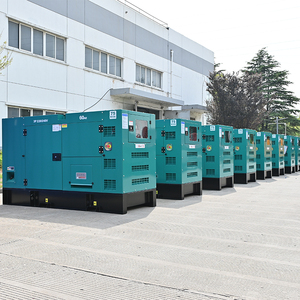
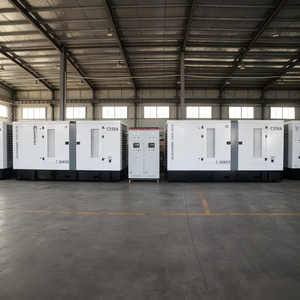
Procurement is rapidly shifting away from single massive monolithic generators toward modular parallel clusters (e.g., 16 units of 250kVA - 500kVA synchronous generators synced via digital bus networks). This modularity offers $N+1$ redundancy, flexible step-loading, optimized low-load fuel consumption, and simplified shipping logistics inside standard ISO containers.
Global buyer specifications now mandate synchronous alternators capable of interfacing with alternative-fuel prime movers—including dual-fuel natural gas, hydrogen-diesel blends, hydrotreated vegetable oil (HVO), and bio-methanol. China's top exporters are leading this transition by matching low-inertia alternators to clean combustion engines.
Enterprise procurement specifications increasingly require integrated 4G/5G smart controllers with cloud IoT connectivity. Real-time vibration spectral analysis, rotor thermal modeling, bearing oil quality degradation monitoring, and remote excitation calibration drastically minimize unexpected field outages.
Next-generation engineering breakthroughs shaping high-voltage generation efficiency and harmonic suppression.
As modern facility loads become dominated by non-linear electronics, standard 2/3 pitch stator windings are being augmented by advance skewing techniques and finite element method (FEM) magnetic flux optimization. Future synchronous alternators deliver Total Harmonic Distortion (THD) of less than 1.5% under linear load and under 3% under severe non-linear switching conditions, protecting sensitive data center hardware.
Through the application of cold-rolled grain-oriented (CRGO) silicon steel laminations with ultra-low core loss ($< 0.9 \text{ W/kg}$ at 1.5T), the power-to-weight ratio of Chinese export synchronous generators has increased by 22% over the last five years. Smaller footprint footprints enable seamless integration into compact mobile trailer units and soundproof silent canopies.
A comprehensive engineering benchmark for global buyers evaluating synchronous generator technical specifications.
| Technical Parameter | China Top Tier-1 Exporter Standard | Standard Low-Cost Exporter | Industrial Value Impact |
|---|---|---|---|
| Excitation System | Brushless + PMG (Isolated AVR Supply) | Shunt / Self-Excited System | 300% short-circuit fault clearing protection |
| Insulation System | Class H VPI Resin Impregnated | Class F Dip Varnished | +30,000 hrs extended stator winding life |
| Subtransient Reactance ($X''_d$) | Low Range ($10\% - 14\%$) | High Range ($16\% - 22\%$) | Superior motor starting kVA & reduced sag |
| Stator Pitch Geometry | Exact 2/3 Pitch (Suppresses 3rd Harmonics) | Full Pitch / Non-Optimized | Eliminates neutral circulation currents |
| Paralleling Control | Digital Droop + 4G Bus Sync (Max 16 Units) | Basic Analog Manual Sync | Automated grid-matching & load sharing |
| Enclosure Protection | IP23 Outdoor / IP55 Hazardous Marine Options | IP21 Basic Indoor | Extreme weather & dust ingress protection |
Expert technical responses to critical sourcing, installation, and operating queries faced by global buyers.
A synchronous generator runs at exact synchronous speed proportional to grid frequency and features an independent rotor DC excitation system (or brushless exciter). This allows direct, precise control over both active power (kW) and reactive power (kVAR), enabling power factor adjustment (leading, lagging, or unity). Induction generators, by contrast, require external reactive power from the grid to magnetize their rotor and cannot independently regulate system voltage or operate effectively in isolated islanded microgrids.
A 2/3 pitch stator winding design mathematically eliminates the 3rd, 9th, and 15th triple-n harmonics from the output voltage waveform. This prevents dangerous neutral circulating currents when generators operate in parallel or connect to 4-wire distribution systems powering non-linear electronic loads like computers, UPS systems, and variable frequency drives (VFDs).
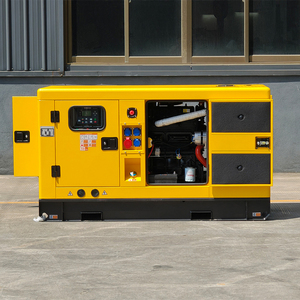
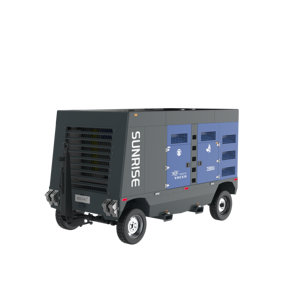
Modern mobile diesel synchronous generators (such as the 200kW/250kVA Volvo powered series) utilize smart digital paralleling controllers equipped with CAN-bus communication modules. The controllers continuously monitor voltage amplitude, phase angle, frequency, and phase rotation. Upon automatic alignment, the motorized breakers close seamlessly. Integrated 4G/5G telematics allow remote start/stop, dynamic load allocation based on engine fuel efficiency curves, and off-site cloud diagnostic telemetry.
Subtransient Reactance ($X''_d$) determines the initial instantaneous voltage dip when a large electric motor starts across the line (DOL). A lower $X''_d$ value (typically $10\%-14\%$) signifies a stiffer generator capable of delivering high locked-rotor kVA with minimal voltage sag, preventing contactors from dropping out and keeping connected sensitive electronics stable.
Tier-1 Chinese synchronous generator exporters conduct FAT according to IEC 60034-1, ISO 8528, and IEEE 115 standards. Essential tests include: Cold Stator Resistance Measurement, Open-Circuit Saturation Curve, Short-Circuit Characteristic Curve, Temperature Rise Load Test, Insulation Resistance & HV Dielectric Withstand Test, Transient Voltage Dip/Recovery Load Step Test, and Vibration FFT Spectrum Analysis.
Yes. Customizations include marine-grade anti-corrosive epoxy paint coatings (C4/C5-M environment rated), space heaters to prevent moisture condensation during shut-down, IP54/IP55 sealed terminal boxes, anti-tropicalization fungus treatment on windings, and full ATEX / IECEx certifications (Ex ec, Ex p) for Zone 2 hazardous chemical gas atmospheres.
Connect with our senior power application engineers to analyze your electrical load requirements, request Factory Acceptance Test reports, or order drop-in replacement synchronous machines.