





Explore our OEM-certified heavy-duty electric motors, wound rotor induction machines, and high-voltage transformer testing compatibility models verified for continuous high-torque industrial duty.

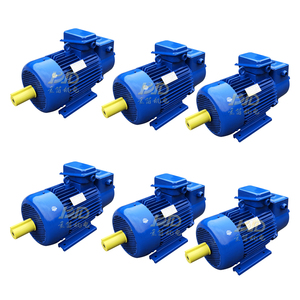
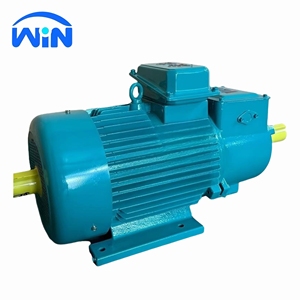
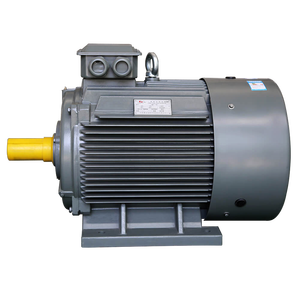
In the contemporary global energy landscape, industrial power distribution grid operators, heavy industrial processing plants, and power generation utilities face unprecedented challenges regarding asset reliability, operational efficiency, and stringent safety standards. Electrical power transformers and heavy rotating AC machines (such as high-voltage wound rotor induction motors, salient pole synchronous generators, and rotary frequency converters) serve as critical infrastructure nodes. The failure of a single main power transformer or high-voltage motor can trigger catastrophic unplanned downtime, costing utility providers and industrial plants millions of dollars per day in lost production and repair costs.
Selecting a certified China Top Transformer Testing Services Factory & Suppliers partner requires evaluating multi-faceted technical parameters beyond standard factory routine testing. Modern transformer quality assurance demands a holistic testing framework encompassing static diagnostic measurements, dynamic full-load thermal endurance evaluation, partial discharge (PD) spectral analysis, and electromagnetic core integrity assessment. Leveraging over 128 years of accumulated engineering heritage traceably aligned with leading UK and global manufacturing benchmarks—such as TDC Parsons Peebles—leading Chinese OEM testing facilities now provide comprehensive, world-class testing and diagnostic services designed to meet rigorous International Electrotechnical Commission (IEC 60076, IEC 60034) and Institute of Electrical and Electronics Engineers (IEEE C57.12.90) protocols.
Information Gain Insight: Advanced diagnostic transformer testing goes far beyond basic DC resistance and turns-ratio verification. Modern factory acceptance testing (FAT) incorporates Frequency Response Analysis (SFRA) and Dissolved Gas Analysis (DGA) micro-sampling to establish a baseline dynamic electromagnetic fingerprint, permitting predictive failure forecasting over a 40+ year operating lifecycle.
This comprehensive technical whitepaper details the state-of-the-art testing capabilities, regulatory compliance frameworks, future procurement strategies, and technical specifications required when partnering with premier transformer testing service providers and industrial electric motor suppliers in China.
Premier factory acceptance testing facilities utilize advanced high-voltage test beds equipped with full-load motor-generator test sets, core flux analyzers, and digital partial discharge tracking systems.
Simulating full operational load thermal stress using back-to-back testing configurations. Validates temperature rise curves of transformer windings, core hot spots, and cooling system efficiency (CACA / CACW) under maximum thermal rating.
Exciting transformer core laminations and stator cores at full operational flux density to detect localized insulation breakdowns, interlaminar short circuits, and hot spots using high-resolution thermal imaging cameras.
Non-destructive measurement of high-frequency electrical discharges inside insulation systems (oil-paper or resin vacuum pressure impregnation VPI). Quantifies discharge amplitude in picocoulombs (pC) to prevent dielectric breakdown.
Mapping internal mechanical winding displacement, bulk coil movements, or core deformation resulting from heavy transportation shock or severe short-circuit electromagnetic forces.
Gas chromatography analysis of transformer oil insulating fluid to detect micro-ppm levels of Hydrogen (H₂), Methane (CH₄), Acetylene (C₂H₂), and Ethylene (C₂H₄), revealing internal arcing or thermal decomposition.
100% mechanical and electrical interchangeability validation. Ensures new or refurbished transformers and motors match legacy footprint dimensions, terminal box locations, and shaft heights exactly.
Evaluating a manufacturer or independent testing facility requires verifying adherence to recognized international technical standards. The table below outlines the primary testing procedures, acceptance thresholds, and target failure modes mitigated during comprehensive testing:
| Test Category | Standard Protocol | Testing Equipment / Parameters | Target Failure Mode Prevented |
|---|---|---|---|
| Insulation Resistance & Polarization Index (PI) | IEEE 43 / IEC 60076-1 | 5kV - 10kV Digital Megohmmeter (PI = R10min / R1min > 2.0) | Moisture ingress, insulation contamination, micro-fissures in groundwall insulation. |
| Partial Discharge (PD) Testing | IEC 60270 / IEEE 1434 | High-frequency current transformers (HFCT), UHF Sensors (< 10 pC threshold) | Internal corona discharge, dielectric treeing, void-induced insulation breakdown. |
| Winding Resistance & Voltage Ratio | IEC 60076-1 Clause 11.2 | Micro-ohmmeter with automatic temperature compensation & TTR Meter | Loose internal taps, broken copper strands, incorrect turn ratio winding errors. |
| Temperature Rise Test (Full Load) | IEC 60076-2 / IEC 60034-2 | Full Load Motor-Generator Test Bed, Multi-channel RTD Data Logger | Overheating of oil/windings, cooling fan failure, thermal degradation of insulation. |
| Core Flux Magnetization Test | BS EN 60034-14 / ISO 10816 | Low-voltage core excitation loop, infrared thermography camera | Stator core shorting, interlaminar lamination burrs, core hot spot damage. |
| Hazardous Area Explosion Proof (Ex p / Ex ec) | EN/IEC 60079-0, 60079-2, 60079-7 | Purge pressure loss monitoring, enclosure IP66 hydrostatic pressure test | Ignition of explosive atmospheric gases in chemical & offshore installations. |
The global high-voltage transformer and electric machinery market is undergoing a rapid evolution driven by the energy transition, decentralization of electrical grids, and integration of industrial Internet of Things (IIoT) sensors into power apparatus. Strategic procurement managers sourcing transformer testing services and heavy industrial equipment from China must align their sourcing criteria with three major long-term structural trends:
Traditional mineral oil insulated transformers are increasingly being superseded by non-toxic, highly biodegradable natural ester (vegetable oil) fluids. Natural ester fluids offer superior flash and fire points (>300°C), significantly reducing fire suppression infrastructure requirements. However, natural ester fluids exhibit different viscosity profiles and moisture absorption characteristics. Suppliers and testing facilities must possess specialized diagnostic protocols for ester-fluid oil sampling, breakdown voltage (BDV) testing, and thermal dissipation factor evaluation under variable low-temperature conditions.
Driven by global logistics efficiency and carbon footprint reduction targets, global EPC buyers are rapidly adopting Virtual Factory Acceptance Testing (vFAT). Leading Chinese testing facilities now integrate multi-angle HD streaming cameras, real-time SCADA telemetry displays, and digital twin simulation models. International buyers can witness real-time high-voltage impulse tests, short-circuit withstand tests, and acoustic noise level measurements remotely with full data encryption and immediate timestamped verification.
Modern high-voltage equipment procurement contracts increasingly mandate the pre-installation of embedded continuous condition monitoring systems. Fiber-optic temperature sensors embedded directly within transformer winding hot spots, combined with permanently mounted ultra-high frequency (UHF) partial discharge sensors, allow machine-learning algorithms to continuously benchmark operational metrics against baseline factory acceptance test data. Sourcing equipment engineered with these sensor interfaces ensures seamless integration into smart utility asset management platforms.
Combining over 128 years of British rotating machinery and electrical power engineering heritage (originating from Parsons Peebles in 1896) with state-of-the-art Chinese manufacturing and testing infrastructure creates a compelling competitive advantage for global power infrastructure developers:
We specialize in custom "drop-in" replacement motors and transformers. Our engineering team leverages an extensive library of historical original manufacturer designs, ensuring seamless replacement without structural or piping modifications.
Full ATEX and IECEx compliance for Ex ec, Ex p (pressurized), and Ex e electric motors and electrical apparatus. Certified by leading bodies (SGS Baseefa) for deployment in extreme oil & gas refineries, offshore platforms, and chemical plants.
Our testing facilities feature high-capacity variable frequency supplies, load banks, and automated data acquisition systems capable of performing full no-load, full direct-load, and short-circuit testing on machinery up to high-voltage ratings.
Answers to technical inquiries frequently raised by power system procurement engineers, plant managers, and quality assurance inspectors.
Routine Tests (e.g., winding resistance, voltage ratio, insulation resistance, partial discharge) are performed on every single manufactured transformer. Type Tests (e.g., temperature rise test, lightning impulse test) are performed on a representative unit to verify compliance with basic design standards. Special Tests (e.g., sound level measurements, short-circuit withstand test, SFRA) are conducted upon specific customer agreement.
Partial discharge measures localized electrical breakdowns within solid or liquid insulation that do not completely bridge the space between conductors. Unchecked PD causes progressive insulation erosion, leading to eventual catastrophic electrical fault. Factory PD testing ensures the insulation system is completely free of micro-voids or manufacturing defects prior to commissioning.
Yes. Premium OEM suppliers utilize specialized reverse-engineering software to match mechanical shaft height, foot-hole spacing, terminal box orientation, and electrical torque-speed curves precisely. This allows direct installation on existing civil foundations without costly structural alterations.
Core flux testing magnetizes the iron laminations to normal working flux density using a test winding. Infrared thermal imaging then scans the core surface to identify localized overheating caused by damaged insulation between core laminations. Correcting burrs or shorts prevents core melting under sustained operating duty.
For hazardous locations (oil refineries, chemical process plants), ensure the factory holds valid ATEX Directive certifications for Europe or IECEx certificates for international acceptance. Key protective concepts include Ex ec (non-sparking), Ex p (pressurized enclosure), and Ex e (increased safety).
Standard routine testing is typically completed within 3 to 5 business days following final assembly. Comprehensive type testing, including full load temperature rise and impulse testing, generally requires 7 to 14 days, including customer-witnessed remote or on-site inspections.
Contact our technical engineering team today for factory inspection schedules, technical specification reviews, customized equipment quotes, or third-party diagnostic testing inquiries.