



China Top Wound Rotor Induction Motors Manufacturers & Suppliers

High-Torque YR & YZR Series Slip Ring Electric Motors Engineered for Heavy Industrial Duty, Crane Hoisting, Mining & Metallurgical Plant Infrastructure.

Product Catalog

Featured Industrial Wound Rotor Motors

Browse our high-voltage, heavy-duty slip ring induction motors built to withstand extreme starting torque requirements and severe operating environments.
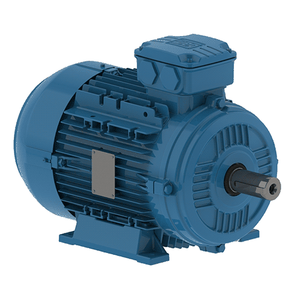
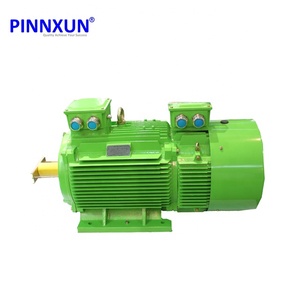
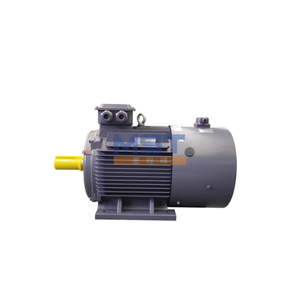
15kW Industrial
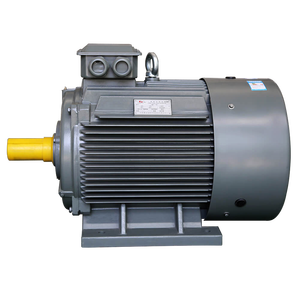
15kW Electric Motor Fan Three Phase Asynchronous Induction Motor

Electric Motor Weg Industrial Fan 15kW 3-Phase Asynchronous Induction Motor

  • Power Rating: 15 kW / 15000W
  • Phase & Type: 3-Phase Asynchronous
  • Application: Industrial Blowers & Heavy Fans
Get a Quote
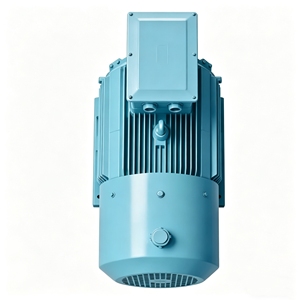
YR Series
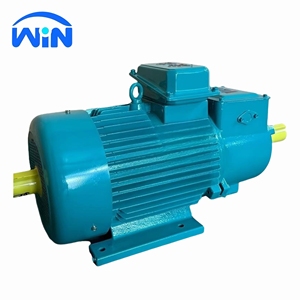
YR Wound Rotor Three Phase Induction Motor for Prime Mover

YR Series Wound Rotor Three Phase Induction Motor for Prime Mover

  • High Locked-Rotor Torque Design
  • Insulation Class: F / H Protection
  • Optimal for Crushers & Ball Mills
Get a Quote
YE2-1600L
Ye2-1600l-4 15kw Induction Wound Rotor Motor

YE2-1600L-4 15kW High-Efficiency Wound Rotor Induction Motor

  • Poles: 4 Pole / 1500 RPM Base Speed
  • Enclosure Protection: IP54 / IP55
  • Variable Speed via Rotor Resistor
Get a Quote
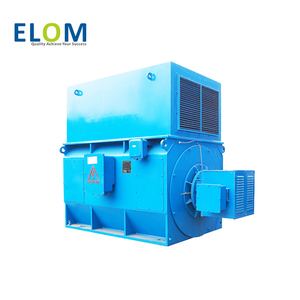
3200kW Mega Power
YR 3200KW High Torque Wound Rotor Induction Motor IP23

YR 3200kW High Torque Heavy-Duty Wound Rotor Motor IP23

  • Capacity: Mega Watt Scale (3200 kW)
  • Cooling: IC01 / Open Drip-Proof IP23
  • Extreme Inrush Current Control
Get a Quote
High Voltage MV/HV
380V 3kV 6kV 10kV Three Phase Asynchronous Motor 5.5kW-3150kW

380V/3kV/6kV/10kV High Voltage Wound Rotor AC Motor (5.5kW-3150kW)

  • Voltage Options: 380V up to 10kV
  • Vacuum Pressure Impregnation (VPI)
  • Custom Slip Ring Brush Rigging
Get a Quote
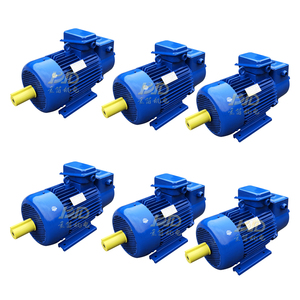
Crane Duty YZR
YZR Three-phase Asynchronous Motor Crane Slip Ring AC Motor

YZR Crane Duty Slip Ring AC Motor (380V/440V/660V Class H)

  • Duty Rating: Intermittent S3/S4 Duty
  • Thermal Class: Class H Insulation
  • Metallurgical & Crane Hoisting Duty
Get a Quote
Metallurgical Plant
YZR Wound Rotor AC Motor for Bridge Crane Portal Hoist

YZR Metallurgical & Portal Hoist Heavy Slip Ring AC Motor

  • Heavy Shock-Load Resistant Frame
  • Multi-Speed & Torque Speed Curve
  • Severe Operating Temp Compliant
Get a Quote
IE2 280 Series
IE2 280 Series 4 Pole 75kw 100hp Wound Rotor Induction Motor

IE2 280 Series 4 Pole 75kW (100HP) 380V/400V/415V Wound Rotor Motor

  • Power: 75 kW / 100 HP @ 50Hz/60Hz
  • Frame Size: 280 Standard Cast Iron
  • High-Strength Slip Ring Assembly
Get a Quote
12,000+
High-Voltage Units Deployed Globally
2.5× - 3.0×
Breakthrough Starting Torque Ratio
100% VPI
Class H/F Insulation System
ISO 9001
IEC 60034 Certified Standard
Technical Whitepaper

State of China's Wound Rotor Induction Motor Manufacturing & Global OEM Supply

In heavy-duty process industries such as cement grinding, underground mining extraction, port container handling, and steel rolling mills, direct-on-line starting of high-inertia loads creates extreme thermal and mechanical stresses. Wound Rotor Induction Motors (WRIM), also universally designated as Slip Ring Motors (YR, YZR, and JR series), remain the paramount electromechanical choice when applications demand exceptional starting torque combined with low locked-rotor current.

As premier Chinese electric motor manufacturers advance their precision engineering capabilities, China has transformed into the global epicenter for high-voltage (HV) and low-voltage (LV) heavy-duty wound rotor induction AC motors. By leveraging automated vacuum pressure impregnation (VPI) systems, precision-machined phosphor-bronze collector rings, and advanced thermal dynamic modeling, top-tier suppliers deliver custom drop-in replacement units that match or exceed Western OEM specifications at significantly optimized total cost of ownership (TCO).

Key Engineering Advantage of Wound Rotor Motors: Unlike standard squirrel cage induction motors where locked-rotor starting current can spike up to 600%–800% of Full Load Current (FLC), a wound rotor motor connected to a Liquid Resistance Starter (LRS) or external resistor bank can deliver 200% to 250% rated starting torque while constraining starting current to less than 150% FLC.

Electromechanical Dynamics: How Wound Rotor Induction Motors Achieve Superior Torque

The foundational superiority of the wound rotor motor lies in its secondary (rotor) electrical circuit. While a squirrel cage rotor consists of short-circuited aluminum or copper bars, a wound rotor contains a complete three-phase insulated winding—typically insulated with mica-tape Class H materials—connected to copper or brass slip rings mounted on the rotor shaft. Carbon brushes ride on these rotating collector rings to complete the external rotor circuit.

By inserting adjustable external resistance ($R_{ext}$) into the rotor circuit during startup, the motor's power factor at low speeds is dramatically elevated. The slip at which maximum torque (breakdown torque, $T_{max}$) occurs shifts proportionally with rotor resistance according to the electrodynamic relation:

S_{max} = \frac{R_2 + R_{ext}}{\sqrt{R_1^2 + (X_1 + X_2)^2}}

As the driven machine accelerates up to nominal operating speed, the external resistance is incrementally reduced (via step-resistors or automated liquid resistance starters) until the slip rings are completely short-circuited. At full speed, the motor operates at peak electrical efficiency comparable to premium-efficiency squirrel cage motors.

YR Series (Continuous Duty S1)

Designed for continuous industrial operation (S1 duty rating). Ideal for driving large ball mills, raw material crushers, high-capacity centrifugal blowers, mine main ventilating fans, and water supply pumps requiring smooth, low-current starting under heavy load conditions.

YZR Series (Crane & Metallurgical S3/S4)

Specifically engineered for intermittent periodic duty (S3/S4 duty rating) with high mechanical shock resistance. Features reinforced cast-iron end shields, heavy-duty brush rigging, and Class H insulation to withstand constant reversing, dynamic braking, and severe thermal cycles in steel mills and overhead cranes.

HV Slip Ring Motors (3kV, 6kV, 10kV)

Utilizing high-grade magnetic silicon steel laminations and advanced VPI resin impregnation, these medium/high voltage motors deliver power ratings up to 3,150 kW and beyond, eliminating weak grid line voltage drop issues across large-scale industrial projects.

Future Procurement Trends for Industrial Wound Rotor Motors (2025–2030)

Global procurement directors and engineering procurement contractors (EPCs) are shifting their technical criteria when sourcing heavy rotating machinery from Chinese OEMs. Key procurement trends shaping the next decade include:

  • Integrated Smart Condition Monitoring (IoT Sensor Integration): Modern procurement specifications increasingly dictate built-in PT100 temperature sensors inside stator slots and bearing housings, tri-axial wireless vibration sensors, and real-time infrared thermography ports over collector ring chambers to detect brush spark flashovers early.
  • Hybrid Variable Speed Control Systems: While Variable Frequency Drives (VFDs) have dominated light duty applications, combining a Slip Power Recovery System (SPRS) or modern inverter with wound rotor motors allows heavy industries to recover slip energy from the rotor circuit, feeding it back into the AC grid and achieving up to 30% energy efficiency gains in variable-speed pumping and ventilating applications.
  • Custom "Drop-in Replacement" Dimensional Matching: Replacing legacy European or American motors (such as legacy WEG, ABB, or Siemens slip ring units) often poses severe structural challenges. Top Chinese suppliers now utilize 3D laser scanning to manufacture custom bedplate-compatible frames, terminal box locations, and shaft extension dimensions—eliminating costly civil modifications.
  • Thermal Class H Insulation Over-Specifying: To maximize service lifespan in harsh environments (mining, desert, high altitude), standard Class F insulation is rapidly being superseded by Class H insulation systems with VPI processing, raising temperature allowance margins and thermal shock resistance under frequent starting cycles.

Technical Comparison Matrix: YR vs. YZR Heavy Duty Motor Series

Selecting the exact motor topology requires matching application duty cycles with electrical specs. The table below details technical baseline differences between standard industrial YR motors and crane metallurgical YZR motors:

Technical Parameter YR Series (Standard Industrial) YZR Series (Crane & Metallurgical)
Duty Cycle Rating S1 (Continuous Running) S3, S4, S5 (Intermittent Periodic Duty, 25%, 40%, 60%)
Insulation Thermal Class Class F (Temp Rise 105K) Class H (Temp Rise 125K / Heavy Thermal Surge)
Starting Torque Ratio ($T_k/T_n$) 1.8 – 2.2 times Nominal Torque 2.3 – 3.0 times Nominal Torque
Enclosure Protection Class IP23 (Open Drip Proof) / IP54 (TEFC) IP54 / IP55 (Totally Enclosed Dust/Splash Proof)
Cooling Method IC01, IC411, or IC611 (Air-to-Air Exchanger) IC411 (Self-Ventilated Surface Frame Cooled)
Primary Applications Ball Mills, Crusher Plants, Mine Vent Blowers Overhead Cranes, Hoists, Ladle Cars, Port Gantry

Why Choose Leading Chinese Manufacturers for OEM & Procurement

Leading Chinese motor manufacturers adhere to international quality frameworks including ISO 9001:2015 Quality Management, ISO 14001 Environmental Management, and CE / IEC 60034 compliance. Advanced manufacturing facilities feature:

Vacuum Pressure Impregnation (VPI)

Eliminates microscopic voids in high-voltage copper stator and rotor windings, ensuring maximum dielectric strength, resistance to chemical moisture, and superior heat transfer performance.

Dynamic High-Speed Rotor Balancing

Every rotor assembly undergoes precision multi-plane dynamic balancing according to ISO 1940 Grade G2.5/G1.0, ensuring near-zero vibration signatures and significantly extending bearing life.

Comprehensive Factory Acceptance Testing (FAT)

Equipped with high-capacity digital test benches capable of full-load, no-load, temperature rise, breakdown torque, and withstand-voltage testing up to 13.8kV ratings before dispatch.

Procurement Guide

Frequently Asked Questions (FAQ)

Technical insights and purchasing guidance for sourcing wound rotor induction motors from top Chinese suppliers.

Q1 What is the primary technical difference between a wound rotor induction motor and a squirrel cage induction motor?
A wound rotor induction motor has a three-phase insulated winding on the rotor connected to slip rings and carbon brushes, allowing external resistance to be added into the rotor circuit. A squirrel cage motor has permanently short-circuited aluminum/copper rotor bars. The wound rotor design enables exceptionally high starting torque (200%+ of nominal) with low starting current (under 150% FLC), making it superior for heavy-inertia starting loads.
Q2 How do I correctly size the Liquid Resistance Starter (LRS) or external resistor for a YR series motor?
Sizing an LRS requires knowing the open-circuit rotor voltage ($U_{2e}$) and rated rotor current ($I_{2e}$) listed on the motor nameplate. The initial liquid resistance ($R_0$) is calculated to limit the starting current to the desired target while matching the load torque curve. Leading Chinese OEMs provide custom rotor parameters ($U_2$, $I_2$) to ensure seamless LRS pairing.
Q3 Can Chinese wound rotor motors serve as drop-in replacements for European brands like ABB, WEG, or Siemens?
Yes. Leading Chinese manufacturers specialize in customized mechanical modifications. By providing shaft height, foot-hole mounting dimensions, shaft diameter, keyway dimensions, and terminal box orientation, OEMs can build 100% mechanically and electrically interchangeable drop-in replacement motors.
Q4 What routine maintenance is required for slip rings and carbon brushes in wound rotor AC motors?
Routine maintenance includes inspecting carbon brush length, checking brush spring pressure (typically 20–25 kPa), cleaning conductive carbon dust from the slip ring enclosure using clean dry compressed air, and monitoring slip ring surface concentricity and patina. Optional brush-lifting mechanisms (short-circuiting device) can be added to lift brushes once the motor reaches full speed, eliminating brush wear during normal operation.
Q5 What voltage ranges are available for Chinese YR and YZR series motors?
Standard low-voltage ratings include 380V, 400V, 415V, 440V, and 660V (50Hz or 60Hz). For high-voltage industrial applications, motors are manufactured in 3kV, 3.3kV, 6kV, 6.6kV, 10kV, and 11kV ratings, with power capacities ranging from 55 kW up to 10,000 kW+.
Q6 How does altitude and ambient temperature affect motor selection for mining applications?
Standard motors are rated for ambient temperatures up to 40°C and altitudes up to 1000m above sea level according to IEC standards. For high-altitude mines (e.g., above 2000m) or high ambient temperatures, air density reduction decreases cooling efficiency. Suppliers compensate by using larger frame sizes, enhanced IC611/IC81W cooling exchangers, or higher insulation temperature margins (Class H).

Need Custom Wound Rotor Motors or OEM Solutions?

Partner with top-tier Chinese motor manufacturers for engineered slip ring motors, drop-in replacement units, and competitive factory-direct pricing. Contact our engineering team today for technical data sheets and instant quotes.