Executive Technical Whitepaper: Fundamentals of Dissolved Gas Analysis (DGA)
Dissolved Gas Analysis (DGA) is universally recognized as the single most effective non-destructive diagnostic technique for monitoring the health of oil-immersed electrical equipment, notably power transformers, reactors, and high-voltage bushings. Electrical stress, localized thermal degradation, and chemical oxidation within high-voltage insulation systems cause mineral oil and cellulosic paper insulation to decompose. This thermal and electrical breakdown yields specific hydrocarbon gases, hydrogen, and carbon oxides that dissolve directly into the dielectric fluid.
Understanding the precise concentrations, generation rates, and stoichiometric ratios of these key fault gases allows asset managers to detect incipient faults weeks or months before catastrophic insulation breakdown occurs. In modern power grid engineering, sourcing high-precision DGA hardware from qualified China wholesale manufacturers provides utilities and OEM service providers with cost-effective, laboratory-grade monitoring capabilities across extensive distribution networks.
Information Gain Insight: Modern online DGA systems must monitor 7 primary fault gases (H2, CH4, C2H6, C2H4, C2H2, CO, CO2) alongside dissolved moisture (H2O). The presence of trace Acetylene (C2H2) even at low concentrations (<1 ppm) serves as the primary indicator of high-energy electrical arcing.
Fault Gas Generation Mechanisms in Transformer Oil
Mineral insulating oil consists primarily of complex hydrocarbon mixtures (paraffins, naphthenes, and aromatics). When subject to localized thermal or electrical energy stresses, specific chemical bonds ($C-H$ and $C-C$) cleave to form reactive radical fragments, which rapidly recombine into characteristic gaseous molecules:
High-Energy Electric Arcing / Sparking Discharge (> 1000°C)
1 - 3 ppm (Immediate Action)
Carbon Monoxide
CO
Thermal Decomposition of Cellulosic Insulation Paper (> 150°C)
350 - 570 ppm
Carbon Dioxide
CO₂
Normal Paper Oxidation / Overheated Solid Insulation
2500 - 4000 ppm
Comparative Analysis of Modern DGA Sensing Technologies
When selecting dissolved gas analysis hardware from Chinese OEM/ODM suppliers, procurement engineers must evaluate the core analytical method against operational demands, required accuracy, carrier gas replenishment costs, and environmental operating conditions.
Gas Chromatography (GC-TCD/FID)
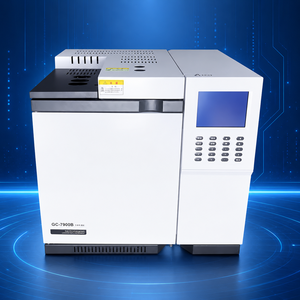
Golden Standard Precision: Utilizes physical gas separation columns combined with Thermal Conductivity Detectors (TCD) and Flame Ionization Detectors (FID). Offers sub-ppm sensitivity across all 7 fault gases. Ideal for laboratory units like the GC-790B and automated online monitoring systems.
Photoacoustic Spectroscopy (PAS)
Carrier Gas-Free Operation: Employs tunable infrared lasers to excite gas molecules within a closed cell, measuring acoustic pulses generated by thermal expansion. Eliminates the need for consumable carrier gas bottles, drastically reducing maintenance overhead for remote substations.
Solid-State & NDIR Sensors
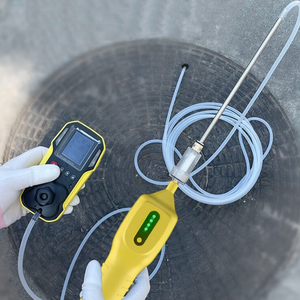
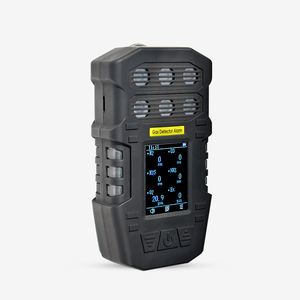
Targeted Multi-Gas Detection: Uses semiconductor metal-oxide (MOS) or Non-Dispersive Infrared (NDIR) sensors to track key indicators like H2, CO, and moisture. Provides highly compact, cost-efficient solution for portable handheld meters and distribution-class assets.
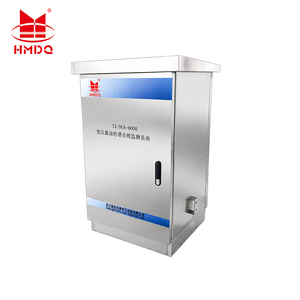
Hardware acquisition is only the first step in effective transformer asset preservation. The raw gas concentrations (ppm) extracted by equipment like the HM-DGA-6000 must be interpreted using standard mathematical diagnostics to identify the underlying failure mode accurately.
1. Duval Triangle Method (Triangle 1)
Duval Triangle 1 relies on the relative percentages of three hydrocarbon gases: Methane ($CH_4$), Ethylene ($C_2H_4$), and Acetylene ($C_2H_2$). By plotting these relative percentages on a triangular grid, technicians can pinpoint the exact fault region:
PD (Partial Discharge): Cold plasma discharges in gas-filled voids or paper laminations ($%CH_4 \approx 98\%$).
T1 (Thermal Fault < 300°C): Overheating of core laminations or poor cooling flow.
T2 (Thermal Fault 300°C - 700°C): Localized hotspots in windings or contacts.
T3 (Thermal Fault > 700°C): Severe overheating, heavy carbonization of paper insulation.
D1 (Discharge of Low Energy): Sparking or breakdown of oil gaps between turns.
D2 (Discharge of High Energy): Power-frequency flashover, severe arcing with localized oil vaporization.
DT (Mix of Thermal and Electrical Faults): Combined thermal hotspots and localized sparking.
2. IEC 60599 & Rogers Gas Ratio Method
Gas ratios eliminate absolute volume ambiguities caused by oil degassing or oil volume variances. The three critical diagnostic ratios are defined as:
• Ratio 1 (C2H2 / C2H4): Distinguishes low-energy partial discharges from severe arcing faults.
• Ratio 2 (CH4 / H2): Evaluates whether partial discharge or low-temperature thermal cracking dominates.
• Ratio 3 (C2H4 / C2H6): Determines the precise temperature threshold of thermal hotspots (< 300°C vs > 700°C).
Procurement Trends & Future Market Outlook (2026–2035)
The global market for Dissolved Gas Analysis hardware is undergoing a structural paradigm shift, accelerated by renewable energy integration, aging electrical infrastructure in Western economies, and rapid grid expansions in developing regions.
Offline to Continuous Online Transition
Utilities are moving away from manual annual oil sampling toward continuous real-time online monitoring. Sourcing multi-channel online DGA systems allows automated alerts to trigger prior to asset failure, minimizing un-planned outages.
Smart Grid IoT & IEC 61850 Integration
Modern DGA equipment standardizes on Modbus RTU/TCP, DNP3, and IEC 61850 digital substation protocols. Edge-computing microprocessors within the analyzer perform real-time Duval calculations and push data directly to SCADA systems.
China Wholesale OEM Manufacturing Dynamics
China has established complete domestic supply chains for high-precision optical sensors, chromatographic separation columns, micro-pumps, and flame-proof enclosures. B2B buyers gain access to international compliance at scalable pricing.
Building on over 128 years of electrical machinery engineering heritage, our manufacturing partner ecosystem enforces world-class quality systems for power diagnostics, high-voltage testing, and hazardous area instruments.
ISO 9001 Certified Facilities
Every DGA instrument undergoes rigorous factory acceptance testing (FAT), thermal chamber burn-in, gas calibration verification, and pressure-tightness validation prior to international dispatch.
Hazardous Area & Ex-Proof Certified
Instrumentation built for installation in explosive atmospheres carries ATEX, IECEx, and SGS Baseefa compliance for Ex d, Ex ec, and Ex p hazardous area classifications in oil refineries and chemical plants.
Drop-in Replacement Flexibility
Direct mechanical and electrical backward compatibility ensures new online monitors seamlessly retro-fit onto existing transformer valves, sampling ports, and power supply architectures.
Q1: What is the primary difference between offline laboratory gas chromatography and continuous online DGA monitors?
Offline laboratory gas chromatography (such as the GC-790B) involves taking physical oil samples from the field in glass syringes, transporting them to a lab, and running headspace gas extraction. This provides complete 7-to-9 gas analytical precision. Continuous online monitors are mounted permanently on the transformer valve, continuously extracting oil or gas through membranes, providing real-time data logs and immediate alarm triggers when gas generation rates spike.
Q2: How frequently should transformer oil be sampled for Dissolved Gas Analysis?
Under IEEE C57.104 and IEC 60599 standards, critical transmission transformers should undergo routine lab DGA sampling every 6 to 12 months. However, if gas concentration thresholds exceed Condition 1 or if gas generation rates surpass 0.5 ppm/day (especially for Acetylene), sampling frequency must increase to monthly or weekly—or an online monitor should be installed immediately.
Q3: How do Chinese wholesale manufacturers handle gas calibration standards and accuracy verification?
Leading Chinese OEM suppliers calibrate all DGA instruments using certified multi-component gas mixtures traceable to NIST or national metrology institutes. Calibration gases contain precise ratios of H2, CH4, C2H6, C2H4, C2H2, CO, and CO2 in nitrogen or air matrix. System repeatability is typically maintained within ±5% FS or ±1 ppm.
Q4: Can these gas analyzers be used for alternative insulating liquids like synthetic or natural esters?
Yes. While standard diagnostic interpretation limits (like Duval Triangles) were originally developed for mineral oil, modified Duval Triangles (Triangle 4 & 5) and specialized ester calibration curves are implemented in high-end DGA analyzers to monitor natural (vegetable) and synthetic ester fluids accurately.
Q5: What is the average lead time, Minimum Order Quantity (MOQ), and warranty period for B2B wholesale orders?
Standard wholesale MOQ starts at 1 unit for complex online monitors or GC analyzers, and 5 to 10 units for portable multi-gas detectors. Production lead times range between 2 to 4 weeks depending on OEM customization (custom enclosures, protocol drivers, language localization). Standard factory warranty spans 12 to 24 months with extended maintenance contracts available.
Q6: What maintenance is required for online Gas Chromatography (GC) based analyzers vs Photoacoustic (PAS) analyzers?
GC-based online monitors require periodic replacement of carrier gas cylinders (typically high-purity Helium or Argon) every 12 to 24 months. PAS-based analyzers do not require carrier gas, making them low-maintenance; however, infrared optical filters and microphones should be inspected every 3 to 5 years during routine substation turnarounds.
Q7: How do multi-gas detectors like the SF6 Comprehensive Gas Analyzer support GIS (Gas Insulated Switchgear) maintenance?
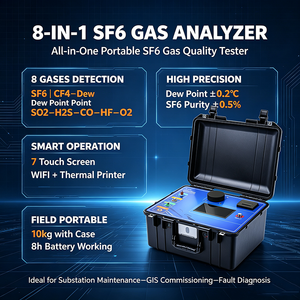
GIS switchgear uses Sulfur Hexafluoride (SF6) gas for arc quenching. Analyzers equipped with chilled mirror sensors measure dew point (moisture content), SF6 purity percentage, and toxic decomposition products (SO2, HF) caused by internal arcing. Monitoring these decomposition products prevents rapid corrosion of internal GIS contacts.
Q8: How can B2B buyers request custom OEM branding, custom firmware protocols, or localized live chat support?
B2B purchasers can click the integrated catalog buttons across this sourcing page to launch direct live chat communications with engineering representatives. Factory-direct customization includes silk-screen logo printing, Modbus register mapping, GUI language translation, and integrated firmware customization.