




Explore our top-tier export range of high voltage wound rotor induction machinery, synchronous motor-condenser assemblies, and high-torque industrial power systems tailored for global mining, power generation, and heavy manufacturing.
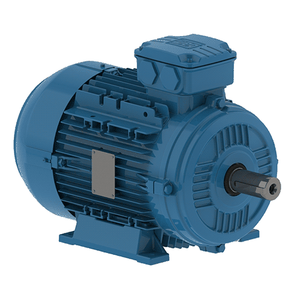
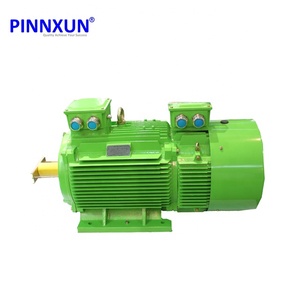
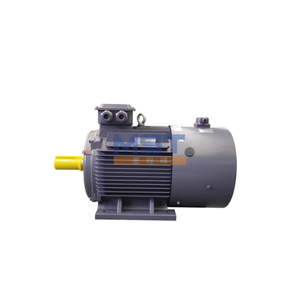
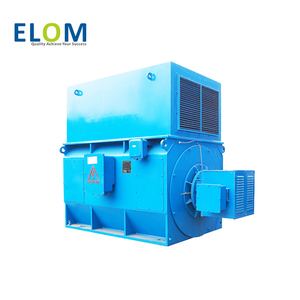
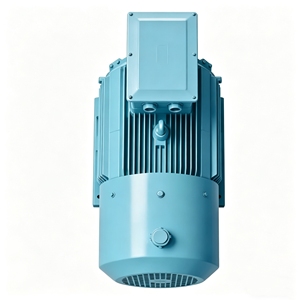
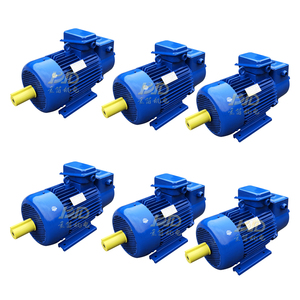
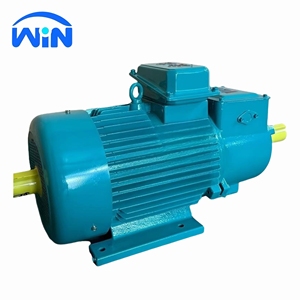
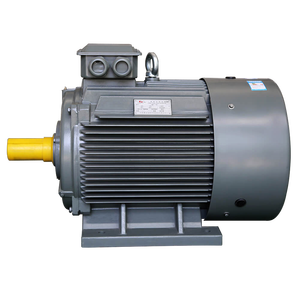
In high-voltage electrical machine manufacturing and global B2B equipment procurement, real operational reliability depends directly on deep engineering heritage, rigorous material validation, and advanced manufacturing standards. Leveraging over 128 years of rotating electrical machinery engineering lineage (inherited from legacy UK pioneers like TDC Parsons Peebles), our manufacturing and export ecosystem supplies high capacity power condensers, synchronous condensers, and heavy-duty wound rotor induction motors engineered to withstand severe industrial duty cycles.
Whether servicing ultra-heavy mining drives, power generation grids, marine rotary converters, or chemical processing plants, our OEM and ODM manufacturing facilities combine traditional craftsmanship with state-of-the-art Vacuum Pressure Impregnation (VPI) insulation technology and digital testing suites.
Global Industrial Compliance Standards: Certified under ISO 9001 Quality Management Systems, ISO 14001 Environmental Standards, AEMT Technical Specifications, and SGS Baseefa ATEX/IECEx Hazardous Area Directives.



Fully accredited for explosion-proof environments including Ex ec, Ex p, and Ex e certified motors for offshore platforms, petrochemical refineries, and dust-hazardous mining sites.
Custom shaft centerlines, foot dimensions, and terminal placement designed to match legacy installed bases, eliminating costly civil concrete work and pipeline modifications.
Every high capacity power condenser unit undergoes back-to-back load testing, core flux inspection, partial discharge verification, and acoustic spectral vibration analysis before export.
Modern electrical infrastructure faces unprecedented dynamic challenges due to the rapid integration of non-synchronous renewable power generation (such as solar photovoltaics and wind power generation) alongside large-scale inductive industrial loads (arc furnaces, heavy induction motors, and large grinding mills). As conventional thermal plants retire, power distribution networks suffer from significant losses in physical rotational inertia and reactive power buffer capacity.
High capacity power condensers—comprising both heavy static power factor correction capacitor banks and rotating synchronous condensers—serve as the critical backbone for voltage stabilizing, transient voltage sag suppression, and power factor optimization in heavy industrial facilities and utility grid interconnects.
Unlike static capacitor systems, a rotating high capacity synchronous power condenser functions as an over-excited synchronous machine operating without a mechanical prime mover drive. By continuously modulating its rotor excitation field current via an automatic voltage regulator (AVR), the machine dynamically generates (over-excited mode) or absorbs (under-excited mode) reactive power (MVAR) in real time.
Furthermore, because of its heavy rotating mass, a high-capacity power condenser delivers crucial physical inertia ($H$-constant) to the grid. During major system disturbances or rapid frequency drops ($\text{RoCoF}$), the stored kinetic energy of the heavy rotor automatically injects instant physical power into the grid, preventing catastrophic tripping of sensitive industrial machinery.
When selecting VAR compensation equipment for heavy industrial procurement, global engineering buyers must evaluate operational capabilities across different dynamic compensation technologies:
| Performance Criterion | High Capacity Power Condenser (Rotating) | Static VAR Compensator (SVC) | STATCOM (IGBT Power Converter) |
|---|---|---|---|
| Physical Rotational Inertia ($H$) | High (Inherent Kinetic Energy) | Zero | Zero (Synthetic Inertia Only) |
| Short Circuit Ratio (SCR) Support | Directly Increases Grid Strength | No Contribution | No Contribution |
| Fault Current Overload Capacity | 200% - 300% for 5-10 Seconds | Limited by Thyristor Ratings | Strictly Current-Limited (110%-120%) |
| Voltage Support During Deep Sags | Proportional to Field Excitation | Output drops quadratically with $V^2$ | Linear drop with Voltage ($V$) |
| Maintenance & Operational Lifespan | 30–40+ Years (Robust Mechanical Core) | 15–20 Years (Electronic Decay) | 10–15 Years (Capacitor/IGBT Wear) |
In heavy industrial drives—such as cement ball mills, mine hoists, and municipal water pumping stations—heavy wound rotor induction motors (such as the YR, YZR, and YE2 series highlighted in our catalog) play a dual role. By connecting external resistance tanks or modern energy-recovery slip-ring drives (DFIG configuration) to the rotor circuit, plant engineers achieve controlled low-starting currents ($1.0 \times \text{FLC}$) while optimizing total facility power factor, preventing utility tariff penalties.
As global supply chains realign around energy transition mandates and total lifecycle efficiency, international procurement managers must adapt their purchasing strategies for heavy power equipment.
Global power utility contracts increasingly mandate minimum physical inertia contributions for industrial microgrids and renewable parks. Sourcing managers are shifting from purely static inverter banks toward hybrid power condenser stations that pair STATCOMs with high-capacity synchronous condensers for maximum transient resilience.
While initial capital expenditure (CAPEX) remains critical, B2B enterprise procurement tenders now weigh operational expenditure (OPEX) at over 60% of evaluation scoring. Low-loss copper winding designs, premium low-loss silicon steel core laminations (IE3/IE4 standard), and CACA/CACW enclosed cooling loops yield massive financial savings over a 30-year operational life.
Unscheduled downtime in major process industries costs up to $50,000 per hour. B2B importers are prioritizing Chinese original equipment manufacturers capable of reverse-engineering legacy European and American frames (such as legacy WEG, Parsons Peebles, or General Electric units) for fast 100% mechanical drop-in installation without site modification.
Driven by digitalization, material science advances, and environmental regulations, the engineering design of high capacity power condensers and heavy AC motor systems is evolving across four main axes:
Modern high voltage machines utilize advanced mica tape systems impregnated with solventless epoxy resin under deep vacuum and high hydraulic pressure. This process guarantees 100% void-free insulation structures capable of handling high electrical stress, thermal spikes up to Class H ($180^\circ\text{C}$), and high surge withstand capabilities during sudden short-circuit events.
High-value power condensers exported today feature built-in smart sensor suites. Embedded Class Pt100 RTDs monitor stator core and bearing temperatures, tri-axial accelerometers track vibration spectra in real-time, and high-frequency current transformers (HFCT) track partial discharge activity inside terminal boxes, transmitting predictive analytics directly to centralized SCADA systems.
Thermal management dictates machine lifespan. Modern manufacturers utilize custom Air-to-Air heat exchangers (CACA / IC611) for harsh outdoor desert environments, or Air-to-Water exchangers (CACW / IC81W) for enclosed indoor spaces and marine platforms, ensuring low acoustic noise emission (<80 dBA) and peak operational efficiency.
Answers to essential technical and commercial questions raised by global EPC contractors, plant directors, and international machinery importers.
Static power condenser banks consist of stationary capacitor cells that supply fixed or stepped reactive power (MVAR). However, their reactive output drops quadratically during voltage dips. In contrast, a rotating synchronous condenser is an electromagnetic heavy machine that provides dynamic continuous VAR compensation, dynamically supports grid voltage during severe sags, delivers high short-circuit power, and contributes physical rotational inertia ($H$) to maintain system frequency stability.
Ex-certified heavy machinery undergoes independent third-party assessment by notified bodies such as SGS Baseefa. Flameproof enclosures (Ex d), pressurized frames (Ex p), and non-sparking structures (Ex ec) are engineered with certified flame paths, sealed terminal boxes, anti-static fans, and IP66 sealing to ensure zero ignition risk in explosive gas or dust environments.
Prior to export packaging, machines undergo comprehensive Factory Acceptance Testing adhering to IEC 60034 standards. Tests include Winding Resistance Measurement, Insulation Resistance & Polarization Index (PI), High Voltage Dielectric Withstand (Hi-Pot), Core Flux Magnetization inspection, No-Load & Blocked Rotor Loss Tests, Vibration Fourier Analysis, and full Thermal Run-Up Verification.
Importers simply need to provide the original machine nameplate data, dimensional outline drawing, and shaft extension measurements. Our engineering team utilizes 3D CAD modeling to duplicate the exact mechanical footprint, bolt hole locations, shaft height, and terminal box orientation while upgrading internal electrical active materials to modern IE3/IE4 efficiency classes.
All export equipment is vacuum-sealed with heavy industrial desiccant bags inside moisture-proof foil barrier wrap, mounted on heavy structural steel or fumigated hardwood skids, and secured inside reinforced wooden crates built to ISPM-15 export standards. Shaft locks prevent bearing damage caused by ocean micro-vibrations during transit.
Industrial power grids penalize facilities operating with low power factor (typically below 0.90 or 0.95). Installing high-capacity wound rotor induction motors with slip-ring power factor optimization or dedicated synchronous power condensers improves facility power factor close to unity (0.98–1.0), eliminating utility penalty surcharges and reducing overall thermal $I^2R$ losses across plant transformers and distribution cabling.
Consult with our senior application engineers to receive custom dimensional drawings, electrical load characteristics, and factory-direct export quotations for high-capacity power condensers and high-voltage motor systems.