





Engineered for extreme electromagnetic environments, continuous online thermal monitoring, and critical rotating machinery inspection.
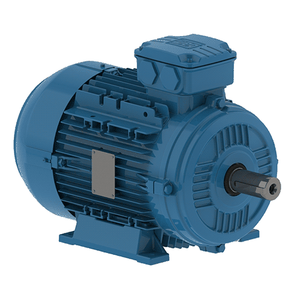
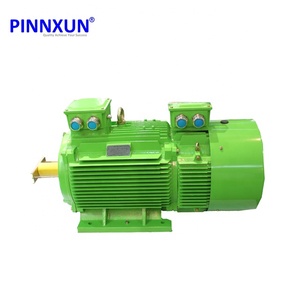
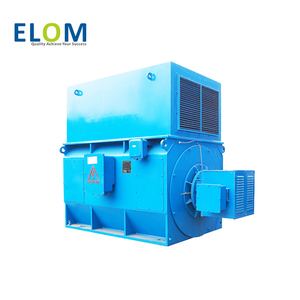
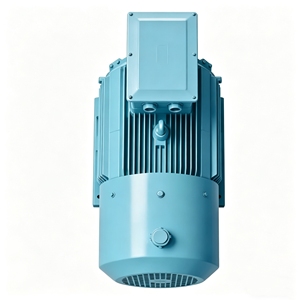
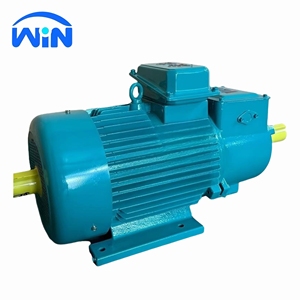
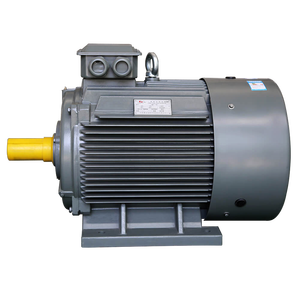
As an industry-leading China Wholesale Thermal Imaging Inspection Supplier & Exporter, our manufacturing foundation draws upon over 128 years of European precision rotating machine heritage combined with advanced Chinese high-capacity production scales. We provide high-end thermal cameras, online radiometric thermal sensors, and high-voltage rotating electrical machinery designed for seamlessly integrated predictive maintenance.
Our production bays adhere strictly to ISO 9001 quality management, ATEX, IECEx, and SGS Baseefa certification standards. Every thermal inspection housing and motor frame undergoes rigorous pressure, thermal-shock, and explosion-proof containment testing.
We operate full-scale direct load testing, back-to-back load testing, and core flux testing rigs up to 200 MVA capacity. Every thermal sensor array is calibrated dynamically under peak operating temperatures to verify radiometric precision.
We engineer customized drop-in replacement motors, thermal monitoring retrofits, and slipring assemblies that match existing footprints identically—eliminating civil modification costs and drastically reducing plant downtime.
In modern high-voltage electrical distribution, heavy manufacturing, petrochemical refining, and mining operations, undetected thermal anomalies are the leading cause of catastrophic asset failure. Unplanned downtime in critical rotating machinery, such as high-voltage wound rotor induction motors, slipring generators, and transformers, costs industrial enterprises millions of dollars annually.
Continuous radiometry and high-resolution thermal imaging inspection offer non-invasive, real-time insight into the physical health of operating assets. By converting infrared radiation emitted by equipment into detailed temperature profiles, optical inspection systems allow engineers to identify localized resistive heating, phase imbalance, friction anomalies, bearing degradation, and insulation breakdowns long before mechanical failure occurs.
At the core of professional industrial thermal inspection systems is the uncooled Vanadium Oxide (VOx) or Amorphous Silicon (a-Si) focal plane array (FPA) microbolometer. Unlike qualitative thermal cameras that merely produce visual heat maps, quantitative continuous radiometric inspection systems calculate exact physical surface temperatures per pixel.
To assist industrial asset procurement teams in evaluating inspection solutions, the table below provides a comprehensive comparison of diagnostic methodologies across critical equipment parameters:
| Evaluation Parameter | Manual Visual Inspection | Handheld Spot IR Thermometer | Continuous Radiometric IR Inspection |
|---|---|---|---|
| Detection Speed | Slow (Requires machine shutdown) | Moderate (Single spot measurement) | Instantaneous (24/7 Real-Time Matrix) |
| Data Resolution | Zero Thermal Data | 1 Point (Average Spot Temperature) | Up to 640×512 (327,680 Data Points/Frame) |
| Early Fault Detection | Very Low (Fails after physical wear) | Low-Moderate (Requires manual alignment) | Very High (Detects 0.1°C delta anomalies early) |
| Hazardous Area (ATEX) Safety | Requires personnel exposure | Requires hot work permit | Permanently enclosed Ex d / Ex p safe monitoring |
| SCADA / Industrial IoT Integration | None | None | Native MQTT, Modbus TCP, OPC UA Support |
| Estimated ROI & Downtime Reduction | Baseline | 15% - 25% Reduction | 65% - 85% Reduction in Unplanned Downtime |
Deploying high-frequency optical and thermal sensors directly adjacent to 3.3kV, 6kV, or 10kV high-voltage wound rotor induction motors requires specialized structural and electrical isolation. Industrial thermal inspection equipment supplied by top-tier Chinese wholesale exporters must incorporate EMI/RFI shielding gaskets, galvanic isolation power modules, and heavy-duty IP67/NEMA 4X powder-coated aluminum or 316L stainless steel enclosures.
Furthermore, in explosive atmospheres such as oil refineries, grain elevators, and chemical processing plants, inspection housings must be certified under ATEX/IECEx standards (Ex d IIC T6 Gb / Ex tD A21 IP66). These enclosures ensure that any internal optical component electrical spark cannot ignite ambient gases or combustible dust mixtures.
As global manufacturing shifts towards Industry 4.0 automation and AI-enabled predictive maintenance, purchasing directors and EPC contractors must align their sourcing strategies with emerging technological vectors. The key procurement trends shaping the market through 2030 include:
Future thermal inspection systems are transitioning from passive image streaming to edge-computing hardware equipped with deep-learning vision models. Integrated AI algorithms automatically establish dynamic thermal baselines based on motor load, ambient temperature, and humidity—triggering automated alerts upon detecting micro-scale anomalous heating trends without human intervention.
Procurement specifications are overwhelmingly prioritizing dual-spectrum sensors that align high-definition visible light imagery with radiometric LWIR thermal arrays pixel-by-pixel. This bi-spectral optical fusion allows maintenance technicians to overlay thermal hot spots directly over exact physical component labels, vastly improving maintenance efficiency.
Leading wholesale suppliers are integrating ultrasonic acoustic sensors alongside thermal imagers. By correlating early ultrasonic air-discharge / partial discharge sounds with localized thermal heating spikes, industrial plants achieve 99.9% diagnostic confidence in electrical switchgear and transformer monitoring.
The legacy requirement for heavy copper video cabling is being rapidly replaced by high-reliability WirelessHART, 5G Industrial Private Networks, and Wi-Fi 6 thermal cameras. Sourcing battery-operated or energy-harvesting thermal inspection nodes drastically lowers deployment costs across vast industrial plants.
The global industrial thermal imaging market has undergone a paradigm shift over the past decade. Historically dominated by expensive European and North American manufacturers, China’s industrial tech sector has established unprecedented manufacturing scalability, optical micro-machining perfection, and component-level innovation.
By leveraging robust supply chains in China, international buyers benefit from highly competitive wholesale pricing, rapid custom OEM/ODM engineering turns, and full compliance with international electrical standards (IEC, IEEE, NEMA, CE, RoHS).
Below are authoritative responses to common technical, commercial, and operational queries raised by global industrial buyers, system integrators, and plant managers.
ROI is primarily achieved by preventing catastrophic equipment failure and unplanned production halts. A single motor stator failure or transformer explosion in a cement plant, steel mill, or refinery can cost upwards of $250,000 to $1,000,000 per day in lost output. By identifying resistive connections, phase imbalances, or bearing lubrication breakdown during routine operation, repairs can be scheduled during planned maintenance windows—delivering full system ROI typically within 3 to 6 months of installation.
Buyers should specify: (1) Detector Resolution (minimum 384×288, recommended 640×512); (2) Thermal Sensitivity (NETD < 35mK); (3) Temperature Measurement Range (standard -20°C to +550°C, high-temp options to +1500°C); (4) Accuracy (±2°C or ±2% of reading); (5) Optical Lens Field of View (FOV) suited to stand-off distance; (6) Ingress & Explosion Certification (IP67, ATEX/IECEx Zone 1 or Zone 2 rating); and (7) Supported Communications Protocols (Modbus TCP, Ethernet/IP, RTSP, MQTT).
Yes. Our continuous thermal monitoring cameras and optical sensors feature native industrial protocol stacks. Temperature data, region-of-interest (ROI) max/min values, and alarm state bits can be directly streamed via Modbus TCP, OPC UA, or Ethernet/IP into Allen-Bradley, Siemens, ABB, or Schneider Electric PLCs. Standard video streams are simultaneously broadcast via RTSP for master control room displays.
We offer flexible MOQ options starting at 1 unit for complex high-voltage custom motors or explosion-proof thermal monitoring systems, and 10+ units for standard industrial cameras. Standard production lead time is 2 to 4 weeks depending on customized optical configurations and ATEX enclosure certification requirements. Full OEM/ODM services include custom branding, specialized mounting bracket engineering, private-label diagnostic software, and custom firmware integration.
Industrial-grade thermal cameras utilize internal TEC (Thermoelectric Cooling) or temperature-compensated sensor calibration curves that dynamically correct for internal housing warmth. Furthermore, advanced diagnostic software includes background reflection correction algorithms, allowing operators to input ambient temperature, distance, and relative humidity parameters to ensure radiometric accuracy even under intense outdoor sunlight in electrical substations.
Every machine and thermal sensor array undergoes rigorous Factory Acceptance Testing (FAT) in our specialized test facilities. FAT documentation includes calibrated blackbody thermal accuracy verification, insulation resistance testing, high-voltage withstand testing, vibration spectrum analysis, and full-load temperature rise reports. Full third-party inspection (SGS, BV, TUV) is available upon client request before sea/air shipment.
Request customized engineering drawings, factory-direct wholesale pricing schedules, or technical data sheets for our complete line of industrial thermal imaging inspection cameras and high-voltage rotating electrical equipment.