





Explore our custom OEM high voltage induction & wound rotor motor series paired with precision soft start acceleration technology.
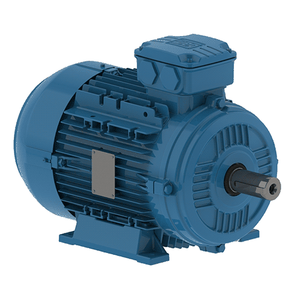
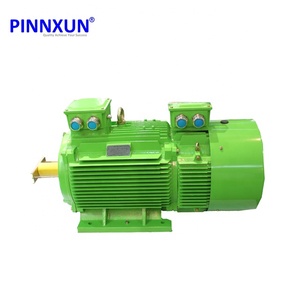
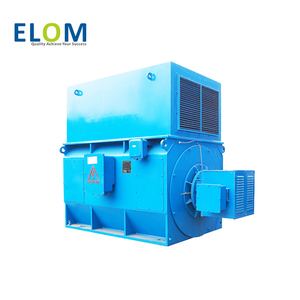
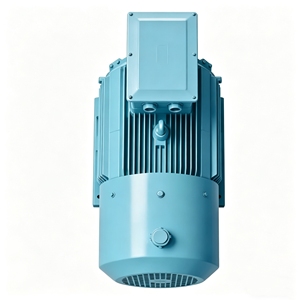
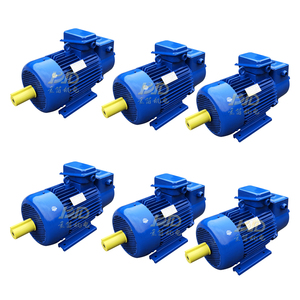
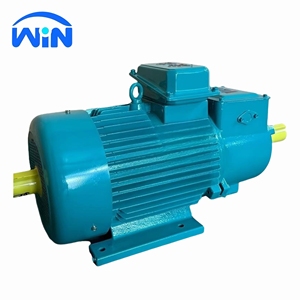
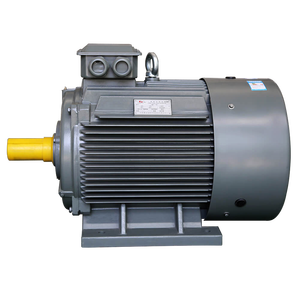
In modern heavy industries—such as mining processing, petrochemical refining, power generation, water transmission, and marine propulsion—high-voltage induction and synchronous motors serve as the foundational drivers of critical infrastructure. However, starting medium and high voltage AC motors (ranging from 2.3kV to 13.8kV) directly across the line (DOL) exposes electrical distribution systems and mechanical powertrains to extreme stress. Direct-on-line starting generates inrush currents up to 600%–800% of full load current (FLC), inducing severe line voltage sags, overheating stator windings, and causing destructive mechanical torque surges across gearboxes, couplings, and pump impellers.
As a premier Custom OEM High Voltage Soft Starters Manufacturer & Exporter, our engineering architecture bridges over 128 years of rotating electrical equipment heritage (tracing through TDC Parsons Peebles engineering standards) with advanced digital power electronics. Solid-state high voltage soft starters utilize anti-parallel Silicon Controlled Rectifiers (SCR thyristor stacks) connected in series per phase to seamlessly control line voltage via precise phase-angle firing algorithms. By smoothly ramping up terminal voltage during startup, high voltage soft starters restrict peak inrush currents to a controlled 1.5×–3.5× FLC, eliminating voltage transients on the supply bus while ensuring controlled, jerk-free mechanical acceleration.
Restricts peak starting current spikes from 800% down to a user-selectable 150%–300% FLC, preserving transformer capacity and preventing upstream trip events.
Smooth torque ramp control prevents water hammer in high-pressure pipelines, avoids belt slippage on conveyors, and protects heavy gearboxes from shearing stresses.
Employs high-grade optical fiber transmission between the low-voltage microprocessing control unit and high-voltage SCR gate triggers, delivering 50kV dielectric isolation safety.
Selecting the appropriate high-voltage motor starting topology requires balancing initial capital expenditure (CAPEX), operating expenditure (OPEX), system reliability, footprint constraints, and grid harmonic compliance. Below is a comparative engineering breakdown evaluating Direct-On-Line (DOL), Auto-Transformer, Variable Frequency Drive (VFD), and High Voltage Solid-State Soft Starters.
| Evaluation Vector | Direct-On-Line (DOL) | Auto-Transformer | High Voltage VFD | HV Solid-State Soft Starter |
|---|---|---|---|---|
| Inrush Current (% FLC) | 600% – 800% | 400% – 600% | 100% – 110% | 150% – 350% (Adjustable) |
| Mechanical Stress | Severe / Destructive Surge | Stepped / Jerky Transitions | Zero / Smooth Acceleration | Zero / Continuously Ramped |
| Harmonic Distortion (THD) | None | Negligible | Requires Heavy Filtering (3–5%) | Transient Only During Ramp (<1% Run) |
| Operational Efficiency | 99% | 98% | 95% – 97% (Heat Losses) | 99.5% (Via Vacuum Bypass) |
| Enclosure Footprint | Minimal | Very Large (Oil/Air Cores) | Extremely Large (Multi-Cabinet) | Compact Modular Cabinet |
| Relative CAPEX Cost | Baseline (1.0x) | 2.5x – 3.5x | 8.0x – 12.0x | 2.8x – 4.0x (Optimal ROI) |
While Variable Frequency Drives excel in continuous variable speed control, their exorbitant cost, bulky physical footprint, high thermal dissipation, and harmful harmonic pollution make them economically impractical for fixed-speed applications. High Voltage Solid-State Soft Starters offer the optimal balance: delivering smooth torque control and low starting current at a fraction of the cost, while switching to a vacuum bypass contactor at top speed for 99.5% operational efficiency.
Industrial procurement directives for rotating equipment and motor controls are undergoing a fundamental transformation driven by decarbonization targets, industrial IoT integration, and strict grid code requirements. Enterprise procurement officers and plant chief engineers should align their procurement strategies with five key macro trends:
Brownfield industrial sites require replacement starters that fit exact existing footprint dimensions, busbar alignments, and control wiring protocols without incurring civil redesign costs.
Modern soft starters incorporate edge computing, transmitting continuous thyristor junction temperatures, insulation resistance trends, and phase balance metrics to centralized cloud SCADA systems.
Oil refineries and chemical plants increasingly demand pressurized Ex p and non-sparking Ex ec compliant high voltage soft starter enclosures certified for Zone 1 and Zone 2 explosive atmospheres.
Additionally, the transition toward weak power grids—caused by high penetrations of renewable wind and solar energy—means utility operators strictly enforce IEEE 519 voltage distortion and voltage sag limits. Our custom OEM high voltage soft starters are engineered with fast-switching digital DSP controllers that dynamically adjust voltage ramp profiles based on live grid impedance feedback, preserving power quality across remote microgrids.
Drawing upon over 128 years of heavy rotating equipment and high-voltage power engineering expertise (referencing the rigorous manufacturing standards established across UK and international facilities), our enterprise stands as a global leader in bespoke motor control systems. We do not offer off-the-shelf, standardized cabinets; every unit is custom-engineered to match the exact moment of inertia ($GD^2$), thermal withstand curve, and load torque characteristics of your driven machine.
Every High Voltage Soft Starter panel undergoes rigorous full-power string testing prior to export deployment.
Manufactured under world-class quality assurance systems, ensuring full traceability of SCR components, isolation transformers, and vacuum contactors.
Validated in state-of-the-art testing bays under simulated high voltage load conditions, high ambient temperature baking, and 50kV impulse withstand tests.
From initial site survey and engineering drop-in design to on-site commissioning and 24/7 technical lifecycle support across 6 continents.
Below are technical answers to common questions raised by electrical engineering consultants, EPC contractors, and procurement directors when specifying medium and high voltage soft starting equipment.
We manufacture custom OEM soft starters for line voltages from 2.3kV, 3.3kV, 6.6kV, 10kV, up to 13.8kV AC, supporting induction and synchronous motor power ratings from 200kW up to 20MW per starter unit.
Fiber-optic cables transmit triggering pulses between the low-voltage microcomputer control card and high-voltage SCR thyristor gate drivers. This completely isolates low-voltage control circuits from high-voltage transients, offering up to 50kV dielectric isolation safety.
Once the motor reaches full operating speed, the internal vacuum bypass contactor automatically closes, transferring full load current away from the SCR stacks. This reduces operating thermal losses to nearly zero, extending SCR component life and ensuring 99.5% system efficiency.
Yes. As a dedicated OEM manufacturer, we design bespoke enclosure dimensions, entry/exit bus duct positions, protection relay integration, and communications protocols (Modbus, Profinet, Ethernet/IP) to mirror your exact physical space and electrical interface specifications.
No. Phase-angle firing thyristor switching occurs only during the brief startup acceleration ramp (typically 5 to 60 seconds). Once the bypass contactor pulls in, the soft starter is removed from the active electrical circuit, generating zero harmonics during steady-state run operations.
Standard protections include phase loss, phase imbalance, overcurrent, thermal overload, SCR short/open circuit detection, under-voltage/over-voltage protection, motor stall protection, grounding fault detection, and real-time winding temperature monitoring (PT100/RTD inputs).
Standard custom engineered high voltage soft starters generally carry a lead time of 6 to 10 weeks depending on voltage rating, enclosure protection class (IP54/IP65/ATEX), and specific client brand preferences for vacuum contactors and protective relays.
All exported units are supplied with comprehensive Factory Acceptance Test (FAT) reports, ISO 9001 compliance certificates, CE declarations, IEC 60947-4-2 standards compliance, and optional third-party witness inspection certificates (SGS, TÜV, Lloyd’s Register).
Need precise motor starting current calculations, specialized ATEX hazardous enclosure designs, or drop-in replacement specifications for your facility? Contact our senior application engineering team today.