






1. Executive Summary & Technical OEM Architecture
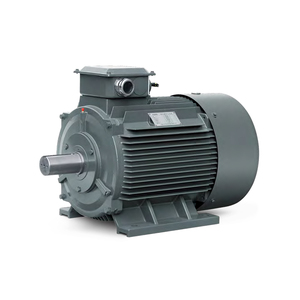
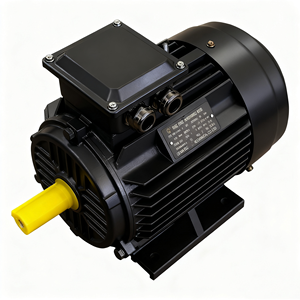
In modern process industries—spanning petrochemical refining, heavy mining extraction, power generation, power utility transmission, and maritime propulsion—the drive for continuous operation demands total reliability from rotating machinery. As a premium Custom OEM Large AC Motors Manufacturer & Factory, our manufacturing philosophy is rooted in foundational electromagnetic design, precise thermal modeling, and custom structural engineering. We deliver tailored high-voltage (HV) and low-voltage (LV) AC electric motors engineered to withstand severe mechanical strain, toxic atmospheric conditions, and intense transient power fluctuations.
Standard off-the-shelf electric motors frequently fail in high-demand environments due to rigid mounting limits, inadequate winding insulation, poor thermal dissipation, and susceptibility to electrical harmonics. Our OEM capability eliminates these points of failure through bespoke electromagnetic slot designs, custom VPI (Vacuum Pressure Impregnation) insulation systems, flexible mechanical shaft designs, and fully customized cooling configurations including TEFC (IC411), CACA (IC611), and CACW (IC81W).
2. Deep-Dive OEM Engineering Capabilities
Custom manufacturing of large AC motors requires strict compliance with international mechanical and electrical standards, including IEC 60034, NEMA MG1, IEEE 841, and ISO 10816 for vibration control. Our facility provides tailored engineering options designed around your specific operating environment:
Stator & Rotor Electromagnetic Design
We use premium cold-rolled non-oriented silicon steel laminations with ultra-low core loss (<1.1 W/kg at 1.5T). Windings utilize 99.99% pure electrolytic copper insulated with Class H/F mica tape, providing high dielectric strength under VFD pulse-width modulation stress.
Hazardous Area Certification
Fully compliant with ATEX, IECEx, and SGS Baseefa guidelines. We engineer non-sparking Ex ec, pressurized Ex p, and flameproof Ex d enclosures for Zone 1 and Zone 2 hazardous gas and combustible dust environments.
100% Drop-In Interchangeability
Engineered to match existing footprint parameters of legacy machines (such as historic Parsons Peebles, Siemens, ABB, or GE units). Shaft center heights, mounting bolt hole layouts, and conduit box orientations are replicated exactly to prevent costly site redesigns.
By balancing slot fill factors with thermal dissipation channels, our heavy-duty motors maintain thermal margins far below rated insulation limits (Class F temperature rise limited to Class B limits of 80°K). This engineering headroom extends motor operating lifespans significantly, even when exposed to 110% continuous overloads or high ambient temperatures (+55°C).
3. Technical Comparison: Motor Topologies & Performance Analysis
Selecting the optimal motor architecture depends on supply voltage, speed control needs, duty cycle, and total energy consumption goals. The evaluation matrix below highlights the core performance parameters of modern custom large AC drive topologies:
| Motor Topology | Power Range | Efficiency Class | Starting Current Ratio | Primary Industry Applications |
|---|---|---|---|---|
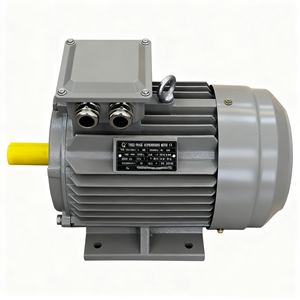
| Asynchronous Induction (YE3 / YE4) | 0.75 kW - 5,000 kW | IE3 / IE4 Premium | 5.5 - 7.5x FLC | Centrifugal Pumps, Heavy Blowers, Conveyors, Crushers |
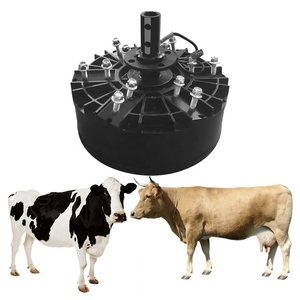
| Permanent Magnet Synchronous (PMSM) | 10 kW - 8,000 kW | IE5 Super Premium | 1.0 - 2.0x FLC (via VFD) | Direct Drive Fans, Extruders, Mining Mills, HVAC HVLS |
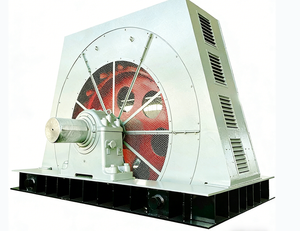
| High Voltage Synchronous (CACA / CACW) | 250 kW - 20,000 kW | 97.5% - 98.8% Peak | 1.0 - 3.0x FLC | Gas Compressors, Water Utility Mains, Power Generation |
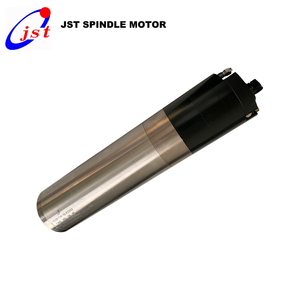
| High Speed ATC Motor Spindles | 0.5 kW - 50 kW | High Frequency Optimized | VFD Controlled | Precision CNC Machining, Aerospace Milling, Robotics |
4. Global Industrial Procurement Trends in Large AC Motors
Purchasing decisions for large electrical machinery are shifting rapidly from upfront capital expenditure (CAPEX) evaluation toward comprehensive lifetime operational expenditure (OPEX) analysis. Enterprise procurement teams now prioritize three main industry trends when contracting OEM factories:
A. Transition to Super-Premium IE4 & IE5 Permanent Magnet Topologies
Energy costs represent over 90% of a large electric motor’s total life-cycle expense over a 20-year operational timeline. Transitioning from standard induction motors to Permanent Magnet Synchronous Motors (PMSM) reduces continuous rotor copper losses to zero. This delivers efficiency gains between 2% and 6%, translating to hundreds of thousands of dollars in direct power cost savings annually per machine.
B. Smart IIoT Condition Monitoring & Sensor Integration
Modern OEM motor specifications increasingly require integrated sensor arrays directly embedded within stator slots and bearing housings. Our factory offers factory-fitted dual Pt100 RTDs per phase, tri-axial piezoelectric vibration sensors, wireless telemetry nodes, and partial discharge monitoring couplers. This real-time data feeds directly into industrial SCADA and predictive maintenance platforms, eliminating unscheduled downtime.
C. Grid Code Compliance & Low Starting Current Demands
Weak regional electrical grids and offshore platforms demand strict control over starting current spikes (Inrush Current). OEM customization allows for optimized slot geometries, deep-bar rotor designs, and direct integration with specialized soft-starters or medium-voltage Variable Frequency Drives (VFDs) to limit starting current to as low as 1.0x to 2.5x Full Load Current (FLC).
5. Product Development & Future Technology Trends
As industrial automation accelerates, motor design is advancing through several key innovations:
- Advanced Insulation Nanocomposites: Incorporation of organoclay and titanium dioxide nanoparticles into VPI resins to prevent corona discharge degradation in high-voltage VFD-driven applications (>6.6kV).
- Additive Manufacturing for Cooling Fins: Utilizing 3D-printed internal cooling jackets and optimized external fin structures to increase surface heat exchange efficiency by up to 35%.
- Rare-Earth Heavy Free Magnetics: Development of permanent magnet rotors utilizing Ferrite-FeCo hybrids and optimized Synchronous Reluctance (SynRM) designs to minimize reliance on volatile neodymium and dysprosium supply chains.