



Direct export and custom OEM/ODM re-engineering solutions for heavy industry, cranes, prime movers, and power generation
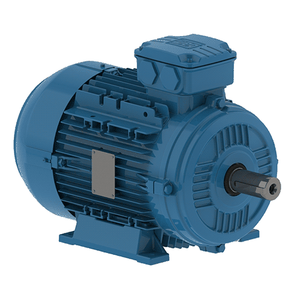
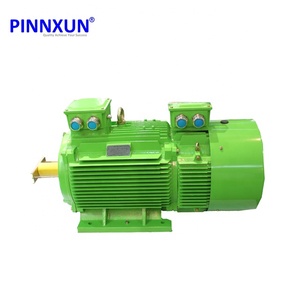
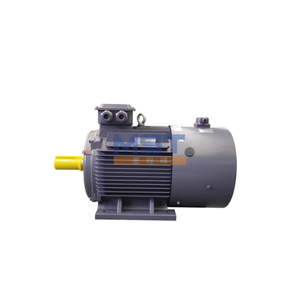
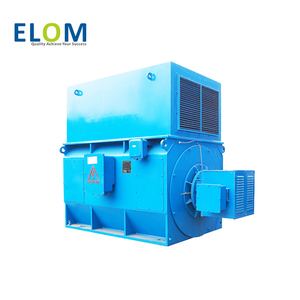
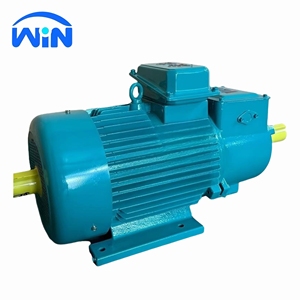
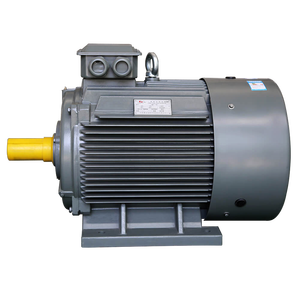
In heavy industrial processing plants, power stations, petrochemical complexes, and marine propulsion environments, medium-voltage (MV) and high-voltage (HV) squirrel cage induction motors represent the prime electromechanical drive assets. Operating continuously under aggressive thermal cycling, heavy mechanical radial/axial vibration, and direct-on-line (DOL) electrical transients, the rotor cage assembly undergoes progressive structural degradation. Broken rotor bars, cracked end-ring braze joints, and localized magnetic core laminations shorting represent critical failure modes that jeopardize operational uptime.
As a premier global supplier and specialized OEM/ODM Rotor Bar Repair Factory & Exporter, our engineering philosophy adheres strictly to the highest principles of mechanical integrity, metallurgical precision, and electrical efficiency. Restoring high-power electrical machines requires a comprehensive understanding of electro-dynamic torque pulsation, thermal expansion coefficient mismatches between copper alloy conductors and magnetic steel cores, and advanced dynamic balancing standards.
Squirrel cage induction motor rotors operate under severe thermomechanical stress regimes. Unlike stator windings, which are embedded in rigid epoxy insulation systems, rotor bars expand axially and radially during operation. Failure analysis across thousands of industrial overhauls indicates six dominant root causes for rotor cage destruction:
During heavy DOL starts, rotor bar temperatures escalate rapidly within seconds. Copper exhibits a thermal expansion coefficient (~16.5 × 10⁻⁶/K) substantially higher than electrical rotor laminations (~12.0 × 10⁻⁶/K). This differential expansion creates severe axial shearing stress at the rotor slot exit points.
High starting current transients—frequently reaching 6× to 8× Full Load Current (FLC)—generate intense electromagnetic forces acting radially on the rotor bars within the core slots. Loose slot fits cause bar movement, leading to insulation abrasion and mechanical fretting fatigue.
The joint connecting individual rotor bars to the short-circuiting end ring represents the highest mechanical stress concentration point. Inadequate silver brazing coverage, localized porosity, or thermal fatigue leads to micro-cracking, resistance heating spikes, and eventual bar severance.
When a single rotor bar breaks, current redistributes unevenly into adjacent bars, escalating local thermal loading by up to 50%. This cascading overload accelerates secondary bar fractures, severe core lamination burning, stator winding abrasion due to rotor distortion, and ultimate catastrophic catastrophic motor tripping.
As a leading exporter and specialized manufacturer, our factory executes complete rotor re-barring utilizing superior metallurgical specifications tailored to heavy-duty industrial drive applications. We engineer drop-in replacement rotor cages designed to surpass original OEM thermal and mechanical operational margins.
Rotor Bar Material Selection & Conductivity Standards:
Precision Machining & Slot Tolerances: OEM rotor bars are drawn or CNC-milled to tight dimensional tolerances (±0.02 mm). Slot liners and swaging keys are custom-fitted to ensure zero radial movement inside the magnetic lamination stack, preventing high-frequency vibration during dynamic acceleration.
The integrity of the rotor cage relies almost entirely on the metallurgical bond between the rotor bars and the short-circuit end rings. Our workshop utilizes automated high-frequency induction brazing with silver-based brazing alloys (AWS BAg-7 / Ag56Cu22Zn17Sn), ensuring complete capillary penetration without thermal degradation of adjacent lamination steels.
Induction brazing offers distinct technical advantages over manual flame brazing:
Our manufacturing and repair procedures conform to international IEC, NEMA, IEEE, and ISO engineering quality benchmarks.



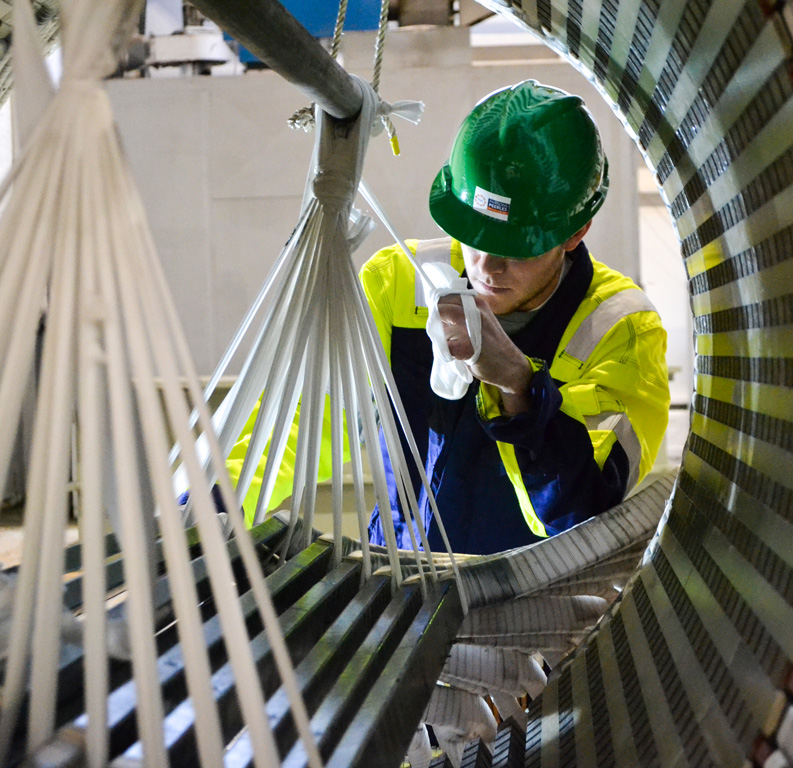
Rotor bar replacement is incomplete without evaluating the surrounding magnetic core structure. Overheated or broken rotor bars frequently burn adjacent stator/rotor laminations, creating localized shorted paths that induce severe iron losses and magnetic unbalance.
Core Flux Diagnostic Testing: Prior to re-barring, the rotor core undergoes low-flux and high-flux ring testing. Thermal imaging cameras detect hot spots caused by lamination short circuits. Damaged lamination packs are separated, re-insulated with inorganic varnish, or replaced with precision laser-cut silicon steel punchings.
Vacuum Pressure Impregnation (VPI): Following cage assembly, the entire rotor structure is subjected to Vacuum Pressure Impregnation utilizing high-grade Class H thermal resin. VPI locks all bar components inside the core slots, voids residual air pockets, increases thermal dissipation pathways, and provides total resistance against moisture, dust, and chemical ingress in hazardous duty environments.
Precision Dynamic Balancing (ISO 1940-1 Grade G1.0): High-power rotors operating up to 3,600 RPM require stringent dynamic balancing. Utilizing computerized two-plane dynamic balancing equipment, rotors are balanced to ISO 1940-1 Grade G1.0 or tighter, ensuring vibration levels remain well below 0.8 mm/s RMS across the entire speed envelope.
UK-based heritage engineering combined with state-of-the-art OEM manufacturing and repair facilities
Custom OEM/ODM motor engineering up to 13.8kV, certified for hazardous Ex ec, Ex p, and safe area industrial applications.
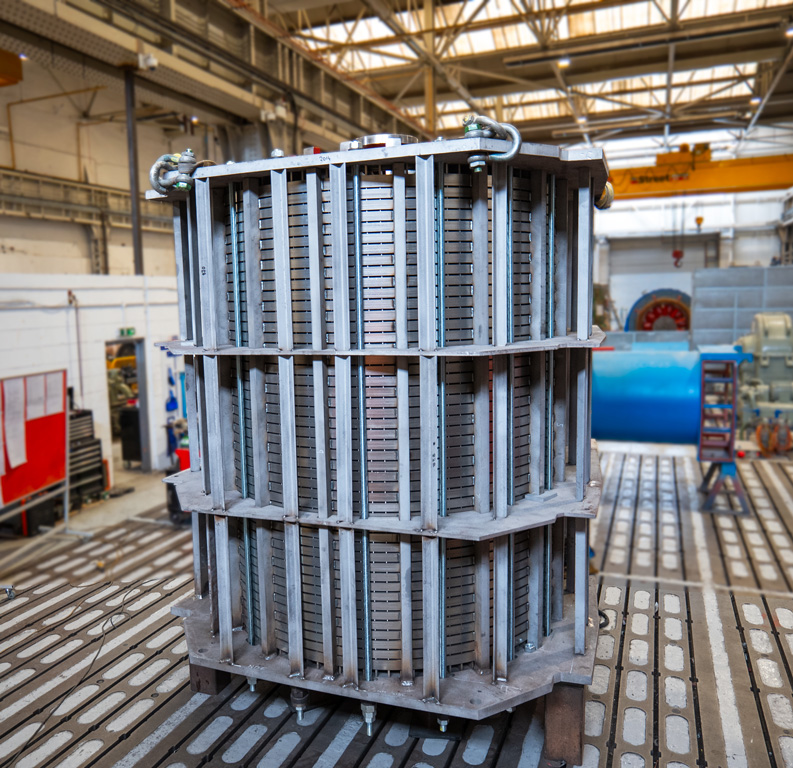
Full overhaul, complete re-winding, core flux testing, and heavy-duty rotor bar reconstruction for prime movers and turbine generators.
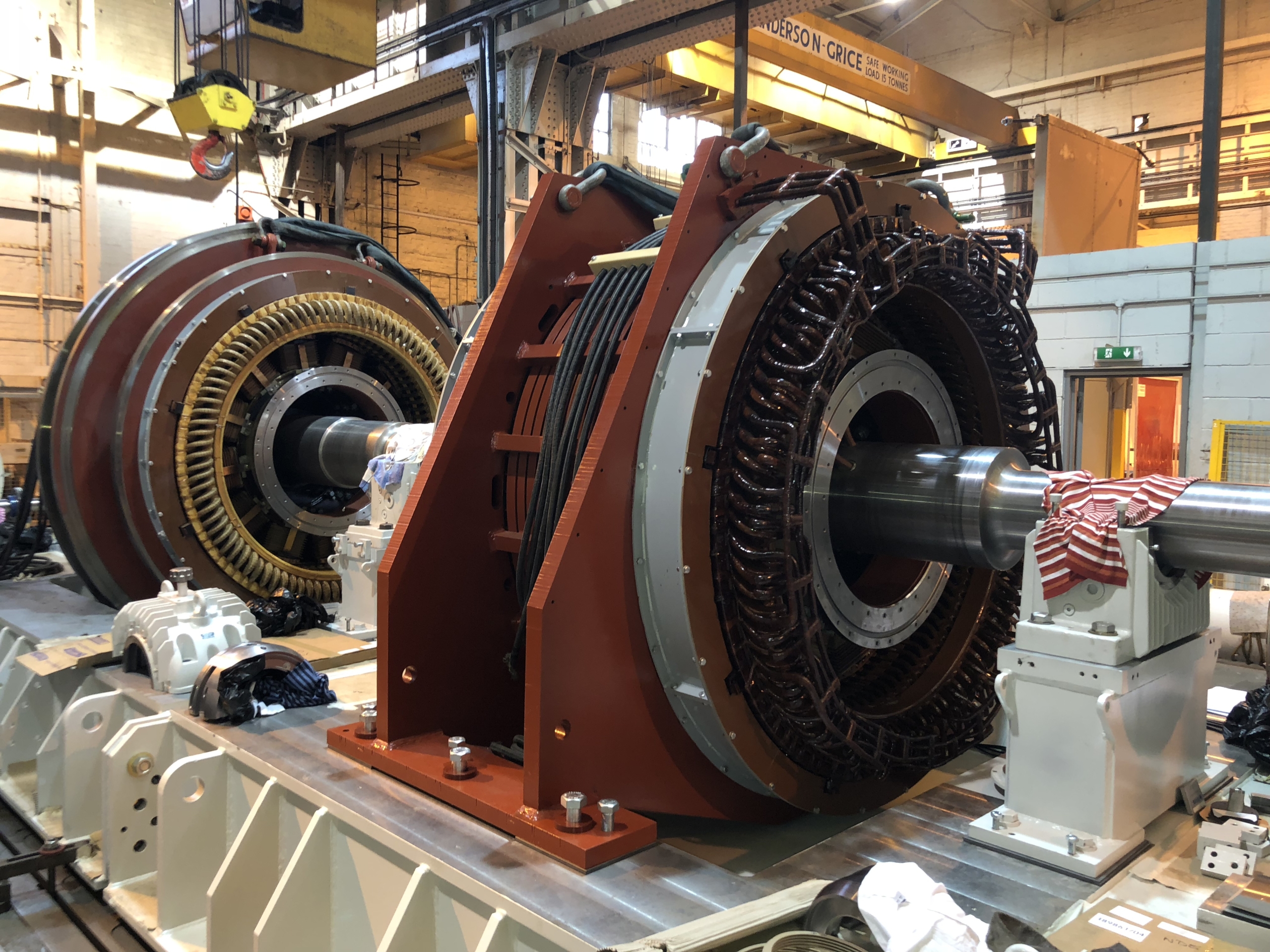
Over 200 MVA installed global capacity. Robust rotating power conversion systems built for defense, industrial, and shore power applications.
As global heavy industry accelerates decarbonization efforts and mandates higher asset reliability, procurement strategies for rotating electrical equipment are undergoing fundamental structural shifts. Plant managers and procurement directors are moving away from reactive component replacement toward strategic lifecycle enhancement.
Procuring a complete new high-voltage motor incurs immense carbon expenditure in steel forging, copper smelting, and logistics. OEM rotor re-barring and stator refurbishment retains up to 80% of embodied carbon while delivering IE3/IE4 efficiency levels at 40-60% of replacement capital cost.
Modern ODM rotor re-barring now incorporates embedded wireless vibration sensors, surface temperature RTDs, and magnetic flux monitoring tags within the rotor body. Procurement specifications increasingly demand real-time telemetry compatibility for predictive maintenance systems.
To prevent costly site civil work and piping modifications, global asset owners are specifying 100% drop-in mechanical interchangeability. OEM engineering guarantees replacement rotors and motors align identically with existing bedplates, shaft couplings, and terminal box locations.
Backing our international export operations is over 128 years of engineering heritage (established in 1896). Operating from world-class UK manufacturing bases in Edinburgh and Birmingham, our engineering legacy encompasses over 12,141 high-voltage machines manufactured and deployed globally across oil & gas, power generation, water utilities, metals, and defense sectors.
Core Enterprise Advantages:
Addressing critical technical, metallurgical, and commercial inquiries for industrial procurement teams
Broken rotor bars produce characteristic sideband frequencies around the fundamental supply frequency ($f_{sb} = (1 \pm 2s)f_1$). We recommend Motor Current Signature Analysis (MCSA), vibration spectrum analysis (pole-pass frequency modulation), and offline high-frequency rotor flux scans during planned maintenance outages.
Fabricated copper bar cages provide significantly lower electrical resistance, reducing rotor I²R thermal losses and improving motor operating efficiency by 1.5% to 3.0%. Copper bars also offer superior fatigue resistance under frequent DOL start cycles compared to cast aluminum.
Standard OEM workshop re-barring requires 2 to 4 weeks depending on rotor frame size and raw material availability. Emergency fast-track rehabilitation programs can execute core repairs, bar drawing, silver brazing, VPI, and dynamic balancing in as few as 7 to 10 working days.
Yes. All hazardous area repairs conducted in our certified workshop adhere strictly to IEC/EN 60079-19 standards. Motors receive full compliance documentation, updated ATEX/IECEx nameplates, and SGS Baseefa-backed overhaul certification.
We utilize 3D laser scanning and precision coordinate measuring machines (CMM) to record all physical dimensions—including shaft extension length, keyway dimensions, hold-down bolt centers, center height, and terminal box coordinates—ensuring 100% mechanical interchangeability.
All rotors are dynamically balanced on computerized dual-plane balancing machines in accordance with ISO 1940-1 Grade G1.0 standards for high-speed or critical machinery, ensuring residual unbalance is virtually eliminated.
Partner with a trusted global exporter and engineering specialist for rotor bar repair, motor refurbishment, and drop-in custom manufacturing. Our engineering team is standing by to evaluate your machine specifications.
Get a Quote