






Executive Overview: Strategic Sourcing of High Voltage Switchgear
In an era defined by global energy transition, industrial electrification, and grid modernization, high voltage (HV) and medium voltage (MV) switchgear units serve as critical backbones for electrical distribution security. A single uncoordinated insulation breakdown or arc-fault failure inside a distribution substation can result in catastrophic operational downtime costing upward of tens of thousands of dollars per hour, alongside severe life-safety hazards.
This comprehensive engineering whitepaper addresses the fundamental procurement intent of EPC contractors, utility engineers, heavy-industrial plant managers, and equipment buyers seeking qualified High Voltage Switchgear Factories & Suppliers. By evaluating manufacturing capabilities, dielectric withstand integrity, internal arc containment ratings (IAC), and low-carbon alternative technologies (such as SF6-free eco-gas and clean air vacuum switchgear), this guide provides actionable intelligence for capital equipment evaluation.
Information Gain Note: E-E-A-T Sourcing Metric
When evaluating global OEM/ODM high voltage switchgear suppliers, total cost of ownership (TCO) extends beyond the ex-works unit price. Technical procurement teams must evaluate dielectric insulation aging curves, routine impulse withstand test records, partial discharge (PD) micro-volt thresholds, and localized service continuity guarantees.
Top 10 High Voltage Switchgear Factories & Global Suppliers Benchmark
Selecting an optimal manufacturing partner requires balancing technical customizability, manufacturing turnaround speed, rigorous quality control certifications (ISO 9001, ISO 14001, ISO 45001), and compliance with global standards such as IEC 62271-200, IEEE C37.20.2, and GB/T 3906. Below is an authoritative technical benchmark of the leading global manufacturers and Specialized OEM factories.
| Manufacturer / Supplier Tier | Core Voltage Ranges | Primary Insulation Tech | Key Customization Strengths | Target Application Sectors |
|---|---|---|---|---|
| Tier 1 Global OEM Multinationals (ABB, Siemens, Schneider, Eaton) | 12kV - 550kV | GIS / AIS / Dry Air Vacuum | Standardized modular units, global utility integration. | National Transmission Networks, Ultra-high Voltage Grid. |
| Tier 1 Custom Industrial OEM Factories (TDC Parsons Peebles / Specialized Manufacturing Facilities) | 7.2kV - 40.5kV | Metal-Clad Vacuum (KYN28), Compact RMU (HXGN), Low Voltage MNS | 100% bespoke engineering, drop-in replacement units, retrofits, heavy industrial customization. | Power Plants, Mining, Heavy Metals, Marine, Petrochemical, Utilities. |
| Specialized MV/HV Switchgear Assemblies (Regional Industrial OEM Manufacturers) | 12kV - 24kV | AIS Withdrawable (KYN28A-12), SF6-Free RMU | High cost-efficiency, rapid production cycles, OEM/ODM switchboard assembly. | Commercial Substations, Renewable Wind/Solar Parks, Industrial Infrastructure. |
In-Depth Analysis of Top Manufacturing Categories
1. Metal-Clad Removable Switchgear Factories (KYN28 Series)
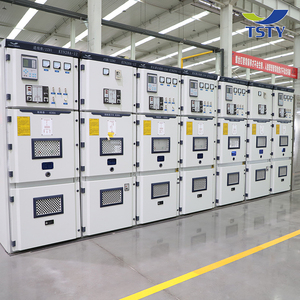
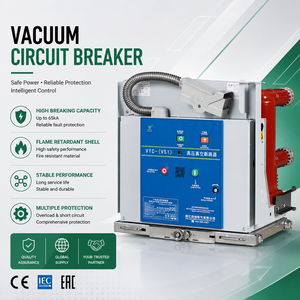
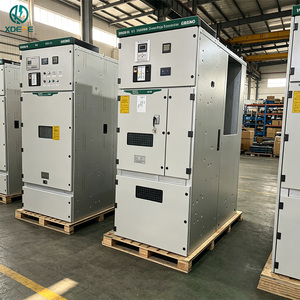
Specializing in 12kV to 24kV indoor power distribution. Utilizing withdrawable vacuum circuit breakers (VCB) such as the VS1 series, these cabinets feature five distinct metal-partitioned compartments (busbar, breaker, cable, relay instrument, and pressure relief channel) to completely isolate failure propagation.
2. Compact Modular Ring Main Unit (RMU) Manufacturers
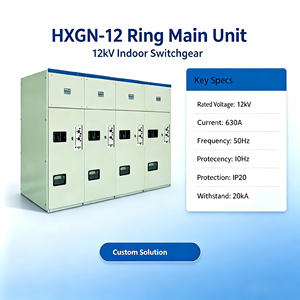
Focused on urban secondary distribution networks, solar PV collecting stations, and compact substations (HXGN series). Engineered with gas-insulated or solid-insulated hermetically sealed tanks, providing maintenance-free operation in harsh environment conditions up to IP65.
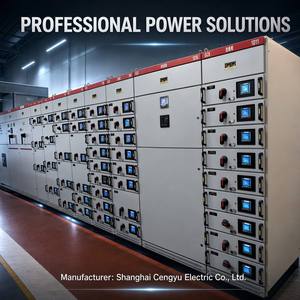
3. High-Current Industrial Switchboard Plants (GGD, MNS Series)
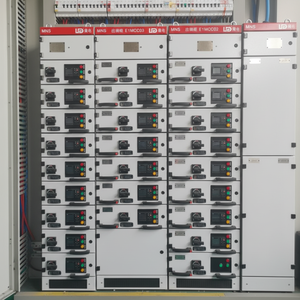
Dedicated to heavy-duty industrial processing plants requiring continuous high current withstand (up to 6300A). Designed with withdrawable low-voltage and medium-voltage power distribution architecture to facilitate rapid maintenance without shutdown of neighboring units.
Technical Deep-Dive: AIS vs. GIS vs. SF6-Free Innovations
Understanding the core dielectric medium and interrupter technology is central to specifying high voltage switchgear assemblies for specific installation environments.
1. Air-Insulated Metal-Clad Switchgear (AIS)
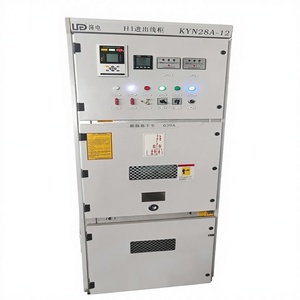
Air-insulated switchgear, such as the industry-standard KYN28A-12 and KYN28-24, utilizes atmospheric air combined with specialized epoxy resin insulating busbar sleeves and phase barriers as the main dielectric insulation medium.
- Key Technical Advantage: Exceptional ease of visual inspection, direct access for thermal imaging maintenance, low operational lifecycle cost, and simplified component replacement.
- Interruption Medium: Vacuum Circuit Breakers (VCB) with rapid arc quenching performance (< 50ms breaking speed).
- Typical Applications: Primary industrial substations, commercial power distribution, mining, and manufacturing facilities.
2. Gas-Insulated Switchgear (GIS) & Compact RMU Units
Gas-insulated units seal high-voltage live conductors and switching devices inside a stainless steel enclosure filled with sulfur hexafluoride (SF6) gas or synthetic eco-gas. This drastically reduces the required phase-to-phase and phase-to-ground dielectric clearance distance.
- Key Technical Advantage: Footprint reduction up to 70% compared to equivalent AIS switchgear; completely immune to ambient dust, moisture, corrosive marine salt haze, and high-altitude air breakdown effects.
- Protection Class: Hermetically sealed tanks rated up to IP67.
3. SF6-Free Eco-Gas & Dry Air Solid Insulation (Future-Proof Sourcing)
Under stringent environmental regulations (such as EU F-gas Phase-Down mandates and global ESG decarbonization targets), switchgear manufacturers have developed fluoronitrile gas mixtures and purified Dry Air insulated switchgear coupled with solid epoxy resin vacuum encapsulation. This eliminates greenhouse gas liabilities while preserving compact physical dimensions.
Future Procurement & Technological Trends in High Voltage Switchgear
The high voltage switchgear sector is undergoing a massive technological shift driven by grid edge intelligence, digital substations, and extreme environmental resilience.
Smart IoT Condition Monitoring
Modern high voltage switchgear panels are no longer passive mechanical boxes. Leading factories embed wireless SAW (Surface Acoustic Wave) contact temperature sensors, online Partial Discharge (PD) UHF sensors, and circuit breaker mechanical wear monitoring sensors. This enables predictive, condition-based maintenance (CBM) rather than scheduled downtime.
Arc-Flash Safety & Internal Arc Containment (IAC)
Worker safety standards demand strict compliance with IEC 62271-200 IAC AFLR ratings (front, lateral, and rear arc fault accessibility tests up to 31.5kA / 1 second). Advanced panels incorporate top-mounted automatic blast-relief flaps and fast optical arc detection relays that trigger circuit breaker clearance within 5 milliseconds.
Modularization & Drop-in Retrofitting
With aging industrial power grids in North America and Europe, replacing an entire multi-panel switchgear lineup causes unacceptable plant shutdowns. Factories offering custom dimensional matching—creating 100% drop-in replacement withdrawable VCB trucks and panel structures—are securing dominant market share.
Manufacturing Quality Control & Verification Protocol
To ensure reliable continuous operation under severe electrical stress, high voltage switchgear manufacturing must adhere to rigorous quality verification protocols. As part of our engineering legacy (leveraging over 128 years of precision electrical machine design and high voltage testing expertise), qualified switchgear production lines implement comprehensive testing regimes:
- Power Frequency Voltage Withstand Test (Routine Test): Testing primary insulation dielectric strength at applied voltages up to 42kV or 95kV for 1 minute in accordance with IEC standards.
- Lightning Impulse Voltage Withstand Test (Type Test): Verifying BIL (Basic Impulse Insulation Level) ratings up to 75kV or 125kV to withstand atmospheric switching surges and lightning strikes.
- Temperature Rise Testing: Verifying continuous current carrying capacity (e.g., 1250A, 2500A, 3150A, 6300A) without exceeding permissible terminal or busbar temperature limits under rated ambient conditions.
- Mechanical Endurance & Interlocking Checks: Exercising VCB motorized mechanisms, earthing switches, and key interlocks through at least 2,000 to 10,000 operation cycles to prevent human error during switching operations.
Frequently Asked Questions (FAQ) for High Voltage Switchgear Procurement
KYN28A-12 is a metal-clad, indoor withdrawable switchgear panel primary designed for main power distribution systems (up to 31.5kA short-circuit breaking capacity). It houses a removable vacuum circuit breaker (VCB) trolley on a handcart. HXGN-12 is a metal-enclosed Ring Main Unit (RMU) using load break switches (LBS) or compact VCBs, primarily used in secondary loop distribution networks where compact footprint and ring-network flexibility are required.
The Ingress Protection rating dictates environmental seal integrity. IP42 provides solid particle protection (>1mm) and drip-proof protection suitable for clean indoor substation control rooms. IP55 offers dust-protected and water-jet protection suitable for industrial plant floors. IP65 or hermetically sealed tanks (found in specialized RMU and GIS units) offer complete dust tightness and protection against heavy washdowns or harsh outdoor ambient pollution.
B2B buyers should provide a Single Line Diagram (SLD), specified system nominal/highest voltage (e.g. 11kV / 12kV or 13.8kV / 24kV), rated busbar current (e.g. 1250A to 3150A), short-circuit withstand rating (e.g. 25kA/3s or 31.5kA/3s), control voltage supply (220VDC / 110VDC / 230VAC), instrument transformer accuracy classes, and CT/PT transformation ratios.
Standard FAT includes power frequency voltage withstand tests on main circuits, auxiliary control wiring insulation dielectric tests, resistance measurement of main circuit busbars, mechanical operation and interlocking tests, and verification of instrument transformer polarity and protection relay secondary injection response.