Evaluating Industrial Motor Control Architecture: A Strategic Procurement Analysis
Modern industrial automation depends directly on the reliability, energy efficiency, and transient load resilience of high-capacity rotating electrical machines and their corresponding control systems. In continuous-process heavy industries—such as mining, power generation, cement milling, marine propulsion, and petrochemical refining—unplanned electrical downtime can trigger severe financial losses, reaching tens of thousands of dollars per hour. Choosing the right industrial motor controls suppliers & exporters is no longer merely a commercial purchasing decision; it is a mission-critical risk-management strategy.
This technical whitepaper investigates the global supply landscape for industrial motor controls, medium-voltage (MV) and high-voltage (HV) variable speed drives (VSD), liquid resistance starters (LRS), and slip-ring wound rotor induction motors (YR/YZR series). Grounded in Google’s Search Quality Rater Guidelines (E-E-A-T) and structured around intent mining for industrial plant directors, electrical engineers, and EPC contractors, this analysis presents actionable insights and technical comparison matrices to streamline your B2B sourcing workflow.
Core Information Gain Insight: Selecting a motor control ecosystem requires matching peak locked-rotor torque dynamics (LRT) with system thermal capacity. For wound rotor motors (ranging from 380V to 10kV up to 3200kW+), liquid resistance controllers dynamically reduce inrush starting currents down to 1.1–1.5× Full Load Current (FLC), drastically preserving grid voltage stability compared to conventional Direct-On-Line (DOL) starters.
Technological Comparison of Primary Motor Starting & Control Schemes
Engineers must evaluate the trade-offs between starting torque capability, line-side harmonic distortion, capital expenditure (CAPEX), and maintenance overhead (OPEX). The following comparative matrix outlines the operational parameters of primary starting control methods utilized in heavy industry:
Control Topology
Starting Current (% FLC)
Starting Torque (% FLT)
Harmonic Distortion (THD)
Typical Voltage Rating
Primary Industrial Applications
Direct-On-Line (DOL)
600% – 800%
150% – 200%
Negligible
380V – 690V
Small pumps, low-inertia fans, conveyors
Solid-State Soft Starter
300% – 450%
40% – 100% (Adjustable)
Low during ramp-up
380V – 13.8kV
Pumps, compressors, blowers, clean grids
Variable Frequency Drive (VFD)
100% – 120%
150% – 200%
Requires filtering (IEEE 519)
380V – 11kV
Variable speed fans, continuous process lines
Rotor Liquid Resistance (LRS)
110% – 150%
Up to 250% (High Torque)
Zero harmonics generated
380V – 10kV (Slip Ring)
Ball mills, crushers, heavy hoist cranes, YR motors
2026 Industry Rankings
Top 10 Industrial Motor Controls Suppliers & Exporters
Evaluated based on global export volumes, compliance certifications (ATEX, IECEx, ISO 9001), engineering customization flexibility, and fault-tolerant hardware reliability.
01
TDC Parsons Peebles
UK Engineering & Manufacturing Specialist
With over 128 years of elite manufacturing heritage, TDC Parsons Peebles specializes in custom High Voltage (HV) motors, generators, and rotary frequency converters up to 200 MVA. Engineered in Edinburgh and Birmingham, UK, their drop-in replacement solutions offer 100% electrical and mechanical interchangeability without civil foundation re-engineering.
Key Focus: Ex ec/Ex p Explosive Areas, Custom HV Control Integration
02
WEG Industries
Global Power Equipment Giant
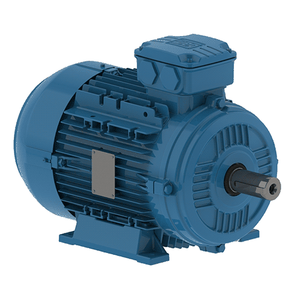
WEG is a global leader in electric motors and industrial motor control gear. Famous for its W22 series high-efficiency induction motors and CFW series VFDs, WEG produces fully integrated drive packages for heavy industrial applications including fan drives, mining hoists, and wastewater pumps.
Key Focus: IE3/IE4 Standard Induction Motors & Soft Starters
03
Siemens AG
Automation & Drive Technology Leader
Siemens dominates the industrial drive landscape with its SINAMICS frequency converter family and SIRIUS controlgear. Offering end-to-end integration into TIA Portal (Totally Integrated Automation), Siemens delivers advanced digital-twin monitoring for complex multiaxial motor systems.
Key Focus: Smart Motor Control Centers (iMCC) & PLC Automation
04
ABB Ltd.
Electrification & Motion Pioneer
ABB offers a world-renowned lineup of low-voltage and medium-voltage drives, including the ACS880 series. Their direct torque control (DTC) technology provides precise motor speed and torque regulation without encoder feedback, setting the benchmark for heavy hoist machinery.
Key Focus: Direct Torque Control (DTC) & MV Drives
05
Schneider Electric
Energy Management & Control Innovator
Schneider Electric’s Altivar variable speed drives and TeSys motor starters are core components of global industrial power grids. Their EcoStruxure platform enables predictive cloud diagnostics and real-time thermal monitoring across distributed motor centers.
Danfoss VLT and VACON drive systems excel in energy optimization and robust heat dissipation design. Widely exported for HVAC, water processing, and heavy marine propulsion systems, Danfoss drives are noted for high harmonic mitigation built into compact enclosures.
Key Focus: Low Harmonic VFDs & Decentralized Motor Drives
07
Eaton Corporation
Power Management & Protection Specialist
Eaton engineers high-durability PowerXL starters, contactors, and enclosed motor control centers (MCC). Built for severe industrial conditions, Eaton’s solutions emphasize arc-flash safety, personnel protection, and modular field servicing.
Key Focus: Arc-Resistant MCC & Heavy Industrial Circuit Protection
08
Yaskawa Electric
High-Precision Motion & Inverter Authority
Japan’s Yaskawa Electric is renowned for its GA700 and A1000 industrial AC drives. Featuring matrix inverter topology and exceptional MTBF (Mean Time Between Failures) ratings, Yaskawa is a primary exporter for high-precision manufacturing systems.
Allen-Bradley PowerFlex AC drives and E300 electronic overload relays dominate North American and international export markets. Integrated seamlessly with Logix control platforms, Rockwell provides comprehensive motor asset health analytics.
Key Focus: PowerFlex Medium Voltage Drives & Smart Overload Relays
10
Fuji Electric
Energy & Power Electronics Authority
Fuji Electric delivers high-performance FRENIC series VFDs and industrial contactors designed for extreme ambient temperatures and heavy-duty overload conditions in mining, crane hoists, and metal processing facilities.
Key Focus: High-Overload AC Drives & Heavy Metallurgical Controllers
Strategic Outlook 2026–2035
Future Procurement Trends in Industrial Motor Controls & High-Voltage Motors
As global manufacturing shifts toward decarbonization, continuous operational efficiency, and Industrial Internet of Things (IIoT) connectivity, enterprise procurement teams must align purchasing specifications with emerging technology trends. Based on field engineering data and global supply chain analyses, four core trends are shaping the future of motor control procurement:
1. Transition to Smart Motor Control Centers (iMCC) with AI Diagnostics
Traditional analogue relays are being rapidly replaced by smart micro-processor-driven protection units. Modern iMCCs incorporate high-frequency vibration sensors, stator winding temperature telemetry (PT100/RTC), and predictive insulation degradation tracking. Procurement managers now prioritize suppliers offering natively integrated Ethernet/IP, PROFINET, or Modbus TCP protocols to feed digital-twin operational models.
The adoption of Silicon Carbide (SiC) MOSFETs in Medium Voltage (MV) drives allows higher switching frequencies with significantly reduced switching losses (up to 40% thermal reduction). This trend enables smaller drive cabinet footprints, eliminates bulky output filters, and delivers near-pure sinusoidal waveforms to AC induction and wound rotor motors, drastically extending motor insulation life.
Global regulatory frameworks (such as EU Ecodesign directives and NEMA Premium standards) are driving strict minimum energy performance requirements (MEPS). Procurement strategies are leaning toward pairing ultra-high-efficiency IE4/IE5 synchronous reluctance or permanent magnet motors with active front-end (AFE) regenerative VFDs that return braking energy directly back to the facility grid.
4. Demand for Interoperable Drop-In Replacement Units for Legacy Infrastructure
Heavy industries operating 30 to 50-year-old high-voltage motors (e.g., legacy 3.3kV, 6kV, or 11kV installations) face prohibitive costs when modernizing civil foundations. Consequently, exporters offering 100% mechanically interchangeable replacement motors—custom-engineered to match original shaft heights, footprint dimensions, and terminal box locations—are capturing substantial market share.
Technical Engineering Deep-Dive
Mastering Heavy-Start Applications: YR & YZR Slip Ring Motor Control Dynamics
While standard squirrel-cage induction motors dominate general industrial machinery, heavy-duty applications requiring continuous full-load starting torques—such as cement ball mills, mining jaw crushers, portal hoists, and bridge cranes—rely on Wound Rotor Induction Motors (Slip Ring Motors, YR/YZR Series) paired with external rotor controls.
Operational Physics of Rotor Resistance Control
Unlike squirrel-cage motors where the rotor circuit is permanently short-circuited by end-rings, a wound rotor motor has three-phase windings brought out to insulated slip rings. By inserting external variable resistance into the rotor circuit during acceleration, the motor's slip is altered, shifting the maximum torque point (Breakdown Torque) directly to zero speed (Start-up).
Advantages of Rotor Resistance Control:
Maximum Locked-Rotor Torque: Achieves 200%–250% Full Load Torque at startup without excessive line drop.
Low Inrush Current: Keeps grid starting current down to 1.1–1.5× FLC, preventing trips on weak industrial grids.
Thermal Dissipation Shift: Heat generated during high-inertia starting is dissipated inside external resistor tanks rather than within the motor rotor core.
Liquid Resistance Starters (LRS) vs. Stepped Resistors:
Stepped Contactors: Causes mechanical torque spikes at each resistance step cut-out, accelerating gearbox wear.
Liquid Resistance Starters (LRS): Uses a servo-motor moving electrode system in an electrolyte solution, providing completely stepless, stepless acceleration.
Short-Circuiting Mechanism: Once top speed is reached, internal rotor contactors short out slip rings to run at maximum efficiency.
Manufacturing Authority & Heritage
TDC Parsons Peebles: 128+ Years of UK Engineering Excellence
Operating under ISO 9001 quality frameworks in Rosyth and Birmingham, UK, TDC Parsons Peebles is a trusted premier manufacturer and repair specialist for high-voltage rotating electrical equipment, industrial generators, and rotary frequency converters.
Custom Drop-In Engineering
100% mechanically and electrically interchangeable replacement motors designed to match existing legacy dimensions exactly, eliminating costly civil modifications.
Hazardous Area Certification
ATEX and IECEx approved solutions certified by SGS Baseefa for Ex ec, Ex p, and Ex e hazardous gas and dust industrial environments.
Full-Load HV Test Bays
Comprehensive high-voltage testing bay capabilities, including Direct Load, No Load, Core Flux, and Back-to-Back testing up to 200 MVA output capacities.
What is the primary difference between a VFD and a Liquid Resistance Starter (LRS) for wound rotor motors?
A Variable Frequency Drive (VFD) controls motor speed across the entire operating range by altering supply voltage and frequency to the stator. In contrast, a Liquid Resistance Starter (LRS) is connected to the rotor slip rings of a wound rotor induction motor specifically for controlled, high-torque startup. Once full operating speed is reached, the LRS is bypassed by short-circuiting the slip rings. LRS systems generate zero line-side electrical harmonics and offer higher starting torque per ampere of grid current at a significantly lower capital cost for heavy MV/HV machinery.
How do I select the proper enclosure IP rating for severe industrial environments?
For indoor, clean industrial environments, IP23 screen-protected enclosures are often sufficient. However, for harsh industrial processing, outdoor duty, or dust-laden mining plants, IP55 or IP66 totally enclosed fan-cooled (TEFC) or CACA (TETV) air-to-air cooled enclosures are required to prevent ingress of moisture, abrasive dust, and chemical contaminants.
Why are ATEX and IECEx certifications mandatory for hazardous area motor controls?
In industries such as oil & gas, chemical manufacturing, and flour milling, explosive gas atmospheres or combustible dust clouds may be present. ATEX (Europe) and IECEx (International) certifications guarantee that electrical equipment—including motor control enclosures, terminal boxes, and internal windings—will not produce sparks, arcs, or surface temperatures capable of igniting the surrounding atmosphere under normal or fault conditions (certified under Ex d, Ex p, or Ex ec protection concepts).
What parameters are required to request a quote for a high-voltage drop-in replacement motor?
To engineer an exact drop-in replacement motor, manufacturers require: (1) Rated Power output in kW/HP, (2) Supply Voltage and Frequency (e.g., 6.6kV 50Hz), (3) Rated Speed and Pole count, (4) Original Frame Size & Mounting arrangement (e.g., foot-mounted IM B3), (5) Shaft height, shaft diameter, and keyway dimensions, (6) Distance between foot fixing holes (AB/AC dimensions), and (7) Operating duty cycle (S1 to S8) and ambient temperature constraints.
Optimize Your Industrial Motor & Control Architecture Today
Whether replacing a legacy 10kV slip-ring induction motor or specifying high-efficiency motor starter panels for modern industrial automation, our engineering specialists provide full support from design to installation.