






High Torque Electric Motors: Fundamentals, Rotor Topologies, and Mechanical Dynamics
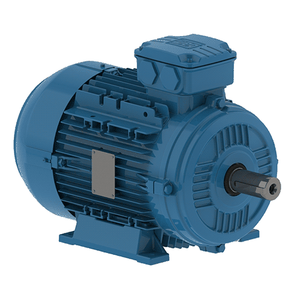
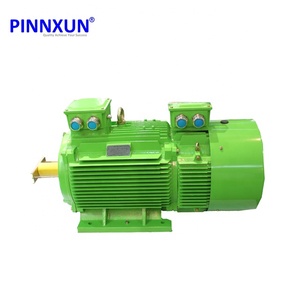
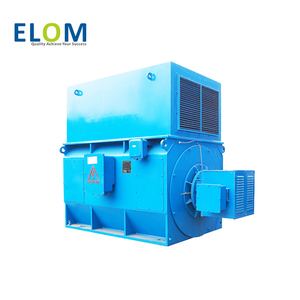
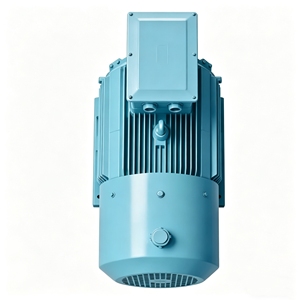
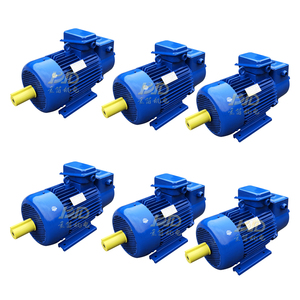
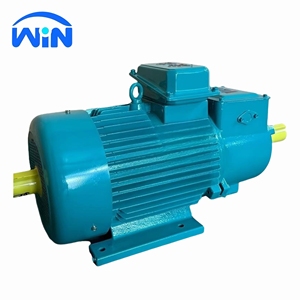
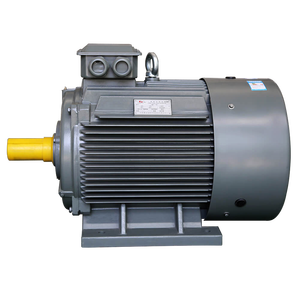
In modern industrial manufacturing, heavy extraction, marine hoisting, and bulk material processing, high torque electric motors serve as the indispensable muscular core of heavy equipment. Unlike standard general-purpose induction motors designed for steady-state low-inertia loads, high torque motors—specifically Wound Rotor Induction Motors (WRIM / YR / YZR series) and heavy-duty High Voltage AC Asynchronous Motors—are engineered to deliver massive starting torque ($T_{LRT}$) while constraining peak current spikes ($I_{start}$) on electrical supply grids.
The primary engineering challenge in high-load industrial machinery (such as ball mills, jaw crushers, portal hoists, bridge cranes, and mine winders) lies in overcoming enormous static friction and rotational inertia at startup. When a standard squirrel-cage motor starts directly across the line (DOL), it draws starting currents up to 600% to 800% of full load current ($FLC$), generating significant resistive heating ($I^2R$ losses) without producing a proportional amount of torque per ampere. High torque wound rotor motors solve this dynamic by providing external slip ring connections to the rotor circuit, enabling precise control over the rotor resistance profile.
Slip Ring & Rotor Circuit Dynamics
By connecting external variable liquid resistance starters (LRS) or resistor banks across the rotor slip rings, engineers shift the peak breakdown torque point ($T_{max}$) directly to zero speed ($N = 0$). This achieves up to 250% to 300% starting torque while restricting starting current to under 150% FLC, preserving power quality across plant transformers.
V/f & Inverter Duty Insulation
Modern high-torque motor configurations integrate Class H corona-resistant insulation systems with VPI (Vacuum Pressure Impregnation) treatment. This guarantees structural dielectric resistance against high transient voltage spikes ($dV/dt$) induced by modern medium-voltage Variable Frequency Drives (MV-VFDs).
Thermal Management (CACA & CACW)
Severe duty high-torque operation requires robust thermal dissipation. Utilizing IC611 (CACA - Totally Enclosed Air-to-Air Cooled) or IC81W (CACW - Totally Enclosed Air-to-Water Cooled) heat exchangers prevents thermal degradation of stator windings during extended low-speed, high-torque duty cycles.