





Explore our top-tier catalog of heavy-duty, automotive, marine, brushless, and high-voltage AC/DC alternators precision-engineered for maximum operating efficiency and extreme environment resistance.
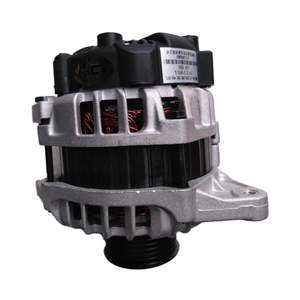
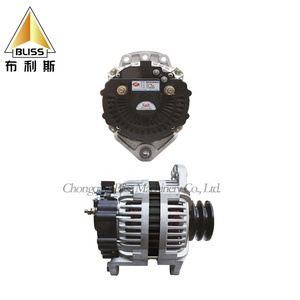
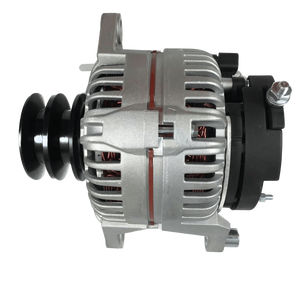
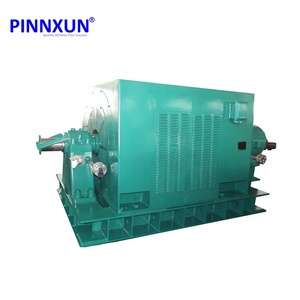
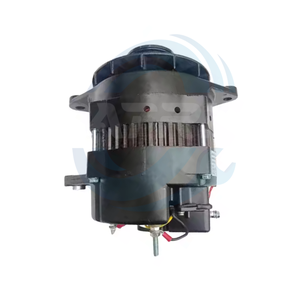
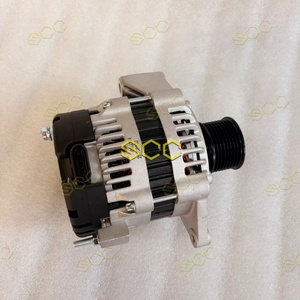
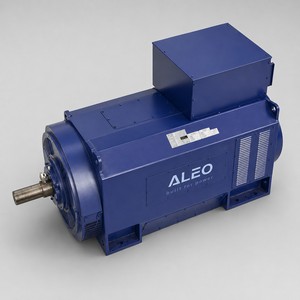
Combining over a century of British rotating machinery heritage with state-of-the-art testing infrastructure and custom design capabilities for mission-critical power systems across the globe.
Our high-voltage alternators and motors are rigorously tested and certified for explosive environments, including Ex ec, Ex p, and Ex e specifications. Validated by SGS Baseefa, our units meet international safety standards for off-shore platforms, chemical plants, and heavy refining operations.
Avoid catastrophic retrofit costs and civil modification downtime. We specialize in custom-engineered replacement alternators designed to match legacy footprint dimensions, shaft coordinates, terminal locations, and electrical parameters down to millimeter precision.
Our UK testing facilities feature comprehensive load testing equipment capable of conducting No-Load Tests, Direct Load Testing, Back-to-Back Synchronous Machine Testing, and Core Flux Analysis up to 13.8kV. Every machine is supplied with full factory acceptance test certification.
An authoritative engineering breakdown on insulation integrity, automatic voltage regulation (AVR), harmonic distortion suppression, and structural durability in modern high-voltage power generation systems.
In high-voltage alternators operating above 1,000V AC (spanning 3.3kV, 6.6kV, 11kV, and emerging 800V DC architectures), dielectric stress across stator windings represents the single primary vector of mechanical breakdown. Unlike low-voltage alternators where enamel film insulation suffices, high-voltage alternators require multi-layer mica tape insulation backed by full-immersion Vacuum Pressure Impregnation (VPI) processes utilizing solventless epoxy resins.
The VPI process evacuates air and moisture micro-voids within the stator slots before forcing high-grade resin under pressure into the winding structure. This achieves a void-free dielectric barrier capable of resisting continuous partial discharge (PD), thermal expansion cycles, and extreme mechanical shear forces encountered during sudden short-circuit transients. Class H and Class F thermal insulation matrices ensure continuous operation at temperature rises exceeding 125°C ambient without thermal degradation.
Modern industrial power generation demands virtually zero slip-ring maintenance and exceptional dynamic response. High-voltage alternators leverage main-rotor mounted brushless excitation systems driven by an auxiliary Permanent Magnet Generator (PMG) or auxiliary stator windings. The PMG supplies isolated, ripple-free power to the digital Automatic Voltage Regulator (AVR), insulating the excitation circuit from main-stator voltage fluctuations and non-linear load harmonics.
Advanced closed-loop digital AVRs maintain steady-state voltage regulation within ±0.25% to ±0.5% across no-load to full-load spectrums. Furthermore, under heavy motor-starting transient loads, the PMG-backed AVR delivers a minimum of 300% short-circuit current capability for up to 10 seconds, forcing rapid flux recovery and maintaining grid stability.
| Engineering Parameter | Standard Low Voltage (<1kV) | High Voltage Industrial (3.3kV - 11kV) | 800V Next-Gen EV Platform |
|---|---|---|---|
| Insulation Class | Class F (Dip & Bake) | Class H / VPI Epoxy Mica System | Class H+ Ultra-Thin Polyimide |
| Voltage Regulation Accuracy | ±1.0% to ±1.5% | ±0.25% to ±0.5% (Digital AVR) | Closed-loop Inverter Synchronized |
| Total Harmonic Distortion (THD) | < 5.0% | < 1.8% Clean Sine Wave | Filter Integrated (< 1.5%) |
| Enclosure Protection | IP21 / IP23 Open Drip-Proof | IP54 / IP55 / Ex p Purged | IP67 / IP6K9K Liquid Sealed |
| Cooling Configuration | Shaft Mounted Air Fan | CACA (Air-Air) / CACW (Water-Air) | Direct Stator Glycol Liquid-Cooled |
Non-linear industrial loads—such as variable speed drives (VFDs), uninterruptible power supplies (UPS), and heavy thyristor rectifiers—inject higher-order harmonics back into the alternator stator. Unmitigated 3rd, 5th, and 7th harmonics cause rotor overheating, eddy current losses, and severe sine-wave distortion.
High-performance high-voltage alternators incorporate precision 2/3rd pitch stator windings. This specific winding geometry fundamentally eliminates the 3rd harmonic component (and its odd multiples) from the phase voltage waveform, guaranteeing a Total Harmonic Distortion (THD) of less than 2% across balanced linear and non-linear operating conditions. Damper cages embedded within the rotor pole faces provide additional damping against transient unbalanced loads, protecting the core from torsional resonance.
Strategic market movement analysis for procurement directors, plant engineers, and OEM specifiers navigating the transition toward high-voltage efficiency and decarbonized power infrastructure.
The automotive, commercial trucking, and marine propulsion sectors are rapidly transitioning from legacy 12V/24V and 400V platforms toward 800V high-voltage architectures. Operating at elevated voltages significantly reduces current density requirements, allowing engineers to decrease copper wiring mass, lower I²R thermal losses, and dramatically accelerate charging and power delivery cycles. Procurement strategies are now heavily prioritizing dual AC/DC high-voltage generators capable of seamless integration with SiC (Silicon Carbide) power electronics.
Environmental regulations (IMO Tier III, EPA Tier 4 Final, and EU Stage V) are driving industrial facilities away from single-source diesel generation toward hybrid power microgrids. Modern high-voltage alternators must accommodate variable-speed prime movers, synthetic fuels, green hydrogen blends, and hydro-turbines. Procurement trends demonstrate a sharp surge in demand for slipring and salient-pole synchronous alternators equipped with flexible excitation parameters to preserve grid frequency stability under erratic fuel input profiles.
B2B buyers are shifting focus from initial procurement price toward long-term Total Cost of Ownership (TCO). High-efficiency alternators with 96%+ ratings cut fuel consumption substantially over a 20-year lifespan, yielding payback periods of less than 24 months. Advanced buyers insist on units featuring continuous online vibration sensors, RTD stator temperature probes, and predictive condition monitoring interfaces to mitigate unscheduled plant outages.
Supply chain volatility has exposed the risks of off-the-shelf commoditized machinery with long lead times and non-standard mounting dimensions. Industrial procurement managers are forging direct partnerships with original equipment manufacturers capable of delivering reverse-engineered, bespoke drop-in replacement units. Having an alternator built directly to matching mechanical footprint dimensions eliminates structural redesigns and cuts plant downtime by up to 70%.
Detailed technical answers to common queries regarding high-voltage alternator selection, hazardous area compliance, installation, and custom engineering.
Partner with industry-leading rotating machine experts. Contact our engineering team today for technical consultation, drop-in replacement evaluations, or custom high-voltage alternator manufacturing specifications.