






State-of-the-Art High Voltage Insulation Testing: Preserving Stator Winding Dielectric Health
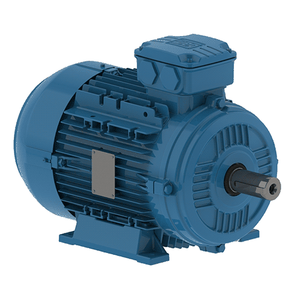
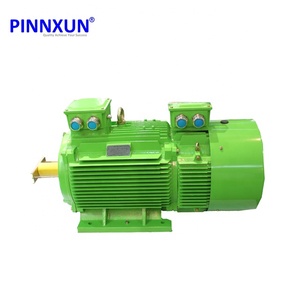
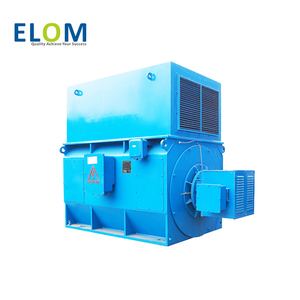
In heavy power generation, oil and gas extraction, marine propulsion, and heavy chemical refining, high-voltage rotating electrical assets—including medium-voltage (3.3kV to 6.6kV) and high-voltage (10kV to 13.8kV) induction motors, salient pole synchronous generators, and rotary frequency converters—serve as the foundational backbone of continuous industrial operations. The single most common point of critical failure in these machines is not mechanical bearing failure, but dielectric breakdown of the stator winding insulation system.
Over years of continuous operation, electrical insulation materials suffer multi-stress degradation caused by thermal aging, mechanical vibration, electrical surge transients, and environmental contamination (moisture, conductive dust, or chemical vapors). Without rigorous diagnostic baseline evaluation and periodic non-destructive high-voltage insulation testing, micro-voids form within the mica tape groundwall insulation matrix. These micro-voids initiate Partial Discharge (PD), accelerating localized breakdown and ultimately causing catastrophic phase-to-ground or phase-to-phase short circuits that result in millions of dollars in uncontained downtime and lost output.
Primary Core Testing Methodologies & Diagnostic Physics
Securing maximum asset operational longevity requires an integrated diagnostic workflow adhering strictly to international standards such as IEEE Std 43-2013, IEC 60034-27, and IEEE Std 286. Leading high voltage insulation testing suppliers and exporters provide specialized diagnostic equipment and factory acceptance testing protocols categorized into five fundamental diagnostic pillars:
1. Insulation Resistance (IR) & Polarization Index (PI)
Applied direct current (typically 2.5kV to 10kV DC) measures total leakage current over a 10-minute period. The Polarization Index ($PI = R_{10min} / R_{1min}$) evaluates the alignment of dipoles within the dielectric resin. A PI lower than 2.0 indicates severe moisture absorption, thermal degradation, or surface contamination.
2. Dielectric Dissipation Factor (Tan Delta $\delta$)
Tan Delta testing measures the phase angle shift between applied high-voltage AC current and resulting capacitive current. A rising slope (Tan Delta Tip-Up) between $0.2 \times V_N$ and $1.0 \times V_N$ directly quantifies the presence of void ionization and conductive losses within the groundwall insulation matrix.
3. Offline & Online Partial Discharge (PD)
Utilizing high-frequency capacitive couplers and electromagnetic sensors, PD testing detects pico-Coulomb ($pC$) pulse spikes generated by localized electrical discharges in micro-voids. Phase-Resolved Partial Discharge (PRPD) patterns distinguish internal void discharge from surface tracking and slot discharge.
4. Very Low Frequency (VLF) & AC Hi-Pot Withstand
VLF testing ($0.1 \text{ Hz}$) stress-tests stator windings at elevated field strengths ($2U_N + 1 \text{ kV}$) without requiring massive power inputs. It validates overall dielectric margin after rewinding, repair, or long-term dry storage preservation.
5. Core Flux & Ring Test Interlaminar Insulation
Evaluates the magnetic core structure of stator laminations using high flux excitation or low-flux digital electromagnetic wave detectors (EL CID). Identifies shorted lamination packets that cause localized hotspots, core burning, and secondary insulation failure.
High Voltage Diagnostic Matrix: Technical Comparison
| Diagnostic Test Method | Applied Voltage Type | Primary Measured Parameter | Detected Defect Mechanics | Standard Reference |
|---|---|---|---|---|
| Insulation Resistance (IR / PI) | Direct Current (DC) 500V - 10kV | Megohms ($M\Omega$) / Current Ratio | Moisture ingress, conductive dirt, oil contamination | IEEE Std 43-2013 |
| Tan Delta ($\tan \delta$) & Tip-Up | Power Frequency AC ($0.2U_N - 1.2U_N$) | Dissipation Factor ($\%$ or $\times 10^{-3}$) | Global insulation aging, thermal resin degradation, micro-voids | IEC 60034-27-3 |
| Partial Discharge (PD) Analysis | High Voltage AC / Continuous Online | Apparent Charge ($pC$) & Pulse Rate | Internal Delamination, slot slotting abrasion, end-winding tracking | IEC 60034-27-1 / 2 |
| AC High Potential (Hi-Pot) | 50/60 Hz AC ($2U_N + 1\text{kV}$) | Leakage Current / Withstand Capability | Critical groundwall weakness, physical dielectric puncturing | IEEE Std 95 / IEC 60034-1 |
| Stator Core Flux Test | Low/High AC Flux Magnetization | Fault Current / Temperature Rise ($\Delta T$) | Interlaminar lamination shorts, surface burrs, hot spots | IEEE Std 56 / EASA AR100 |