



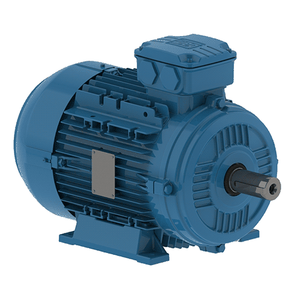
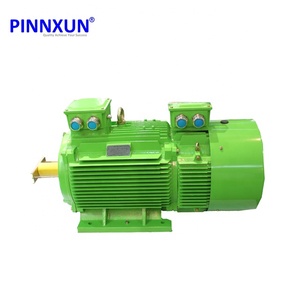

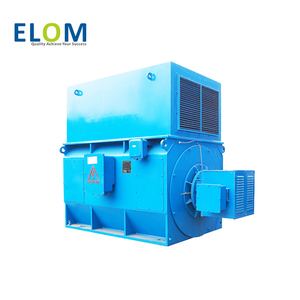
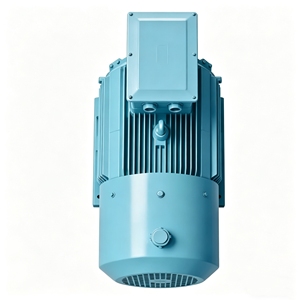
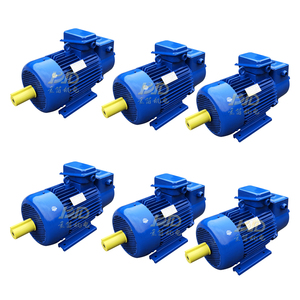
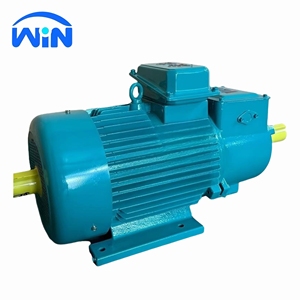
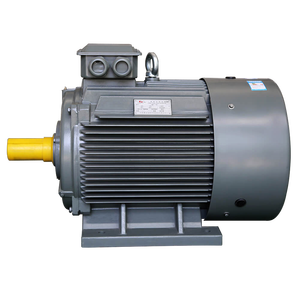
In modern heavy industries—ranging from oil & gas platforms, power generation stations, mining facilities, and chemical processing plants to marine propulsion units—high voltage (HV) induction motors operating at 3.3 kV, 6.6 kV, 10 kV, and 11 kV constitute the critical heartbeat of continuous operation. As industrial assets reach their 20-to-40-year operation thresholds, plant asset managers encounter a pivotal strategic decision: complete capital replacement versus precision electro-mechanical retrofitting.
As a globally recognized high voltage motor retrofitting factory and exporter with lineage tracing back to TDC Parsons Peebles (established 1896), our engineering methodology proves that retrofitting delivers an average 40% to 65% Total Cost of Ownership (TCO) reduction compared to procurement of brand-new OEM machines. Beyond immediate CAPEX savings, retrofitting bypasses complex, highly expensive civil infrastructure modifications. Replacing a legacy high-voltage motor often requires re-engineering foundation skid plates, re-aligning high-pressure piping, replacing explosion-proof terminal boxes, and modifying intake/exhaust air ducts. A precision drop-in retrofit engineered by our UK and international workshops guarantees exact dimensional compatibility, original shaft center height matching, and identical bolt-hole centerline footprints while integrating modern Class H insulation systems and IE3/IE4 thermal efficiencies.
| Evaluation Parameter | Full OEM Motor Replacement | Factory Precision Motor Retrofit | Strategic Advantage |
|---|---|---|---|
| Capital Outlay (CAPEX) | 100% Baseline (High Procurement Cost) | 35% - 55% of New Motor CAPEX | Direct Financial Savings & Faster ROI |
| Site Civil & Structural Costs | Significant (Bedplate, Piping & Duct Redesign) | Zero (100% Drop-In Interchangeability) | Eliminates Auxiliary Civil Expenses |
| Production Downtime Lead-Time | 26 to 52 Weeks (Global Supply Chain Delays) | 6 to 14 Weeks (Targeted Stator/Rotor Upgrade) | 70% Reduction in Operational Downtime |
| Insulation Thermal Class | Class F (Standard Thermal Margin) | Vacuum Pressure Impregnation (VPI) Class H | Higher Overload Capacity & Extended Life |
| Hazardous Area Compliance | Requires Full System Re-Certification | Re-certified to ATEX / IECEx (Ex ec, Ex p, Ex d) | Turnkey Regulatory Assurance |
The global industrial sector is undergoing a massive transformation driven by decarbonization mandates, energy conservation policies (ISO 5001), and stringent reliability metrics. According to recent industrial market analyses, procurement directors across Europe, the Americas, the Middle East, and Asia-Pacific are pivoting away from generic replacement toward targeted electro-mechanical upgrades. Key trends shaping procurement over the next decade include:
Legacy fixed-speed high voltage motors across power plants and water utilities consume excessive energy. Modern retrofitting converts direct-on-line (DOL) legacy stators into VFD-compatible windings engineered with inverter-duty insulated wire and reinforced corona shield tape to withstand steep transient dV/dt voltage spikes.
Future-focused procurement mandates embedded telemetry. Retrofitted stators are equipped with embedded RTDs (Resistance Temperature Detectors), tri-axial vibration accelerometers, magnetic flux probes, and online Partial Discharge sensors, enabling predictive, AI-driven maintenance scheduling.
Petrochemical and offshore rig operators require legacy motors operating in potentially explosive atmospheres (Ex d, Ex p, Ex ec) to be retrofitted up to contemporary IEC 60079 safety thresholds without invalidating historical equipment footprint certifications.
The technology behind high voltage motor retrofitting has advanced significantly past traditional rewinding. Today, modern core lamination technology, high-grade resin chemistry, and computer-aided fluid dynamics (CFD) allow retrofitted units to outperform their original OEM factory specifications. Key technological pillars include:
Our state-of-the-art VPI autoclaves utilize solventless Class H epoxy resins that penetrate deep into the micaceous insulation tape of high voltage stator coils. This eliminates air voids, prevents partial discharge degradation, maximizes dielectric strength, and delivers superior resistance to moisture, chemical attack, and thermal stress under 10 kV+ operating conditions.
Core inter-lamination breakdown causes localized hot spots, leading to catastrophic stator failure. Utilizing high-frequency core flux testing and thermal imaging, our engineers identify core short circuits, strip damaged iron lamination sheets, re-coat with C-5 insulation, and re-stack the stator core to restore flux distribution to nominal baseline levels.
For heavy-starting applications such as crushers, ball mills, and mine hoists, YR and YZR wound rotor motors undergo slip-ring rebuilding, short-circuiting ring re-brazing, and dynamic balancing (ISO 1940 Grade G1.0). Copper alloy rotor bars are replaced to handle extreme thermal expansion and high starting torque demands.
Upgrading cooling configurations from open-drip-proof (ODP) or screen-protected designs to Totally Enclosed Air-to-Air Cooled (CACA / IC611) or Totally Enclosed Air-to-Water Cooled (CACW / IC81W) protects windings from hazardous offshore ambient dust, salt spray, and extreme desert temperatures.
Building upon over 128 years of elite British engineering heritage—incorporating historical manufacturing knowledge from TDC Parsons Peebles, Peebles Electrical Machines, and Cleveland Ohio Electric Products—our factory serves as a premier international hub for high voltage motor retrofitting, manufacturing, and global export.
Every retrofitted machine complies strictly with ISO 9001 quality management protocols. Our specialized hazardous area rewind processes are certified by SGS Baseefa for Ex ec, Ex p, Ex e, and Ex d explosion-proof compliance.
Our Edinburgh and Birmingham facilities house dedicated high-voltage test bays capable of running full-load, direct-load, no-load, and back-to-back testing on motors up to 11 kV, providing validated digital test certificates prior to global dispatch.
We export retrofitted high-voltage machinery to over 80 countries. Our export logistics team manages seaworthy export packaging, containerized freight, customs clearance, and on-site engineering commissioning worldwide.
Our engineering team performs precision 3D laser spatial scanning of your existing physical motor on-site or in our workshop. We reverse-engineer the precise shaft height, hold-down bolt pattern, coupling distances, and terminal box orientation. We then fabricate custom sub-baseplates or custom-machined end-shields to ensure the retrofitted motor drops directly onto your existing bedplate without civil modifications.
Yes. Through advanced stator slot fill optimization, re-engineering core slot geometry, and applying modern thin-film micaceous VPI insulation materials, we can frequently increase stator winding insulation voltage ratings from 3.3 kV up to 6.6 kV or 10 kV while retaining the original frame casting.
A fully retrofitted high-voltage motor—equipped with a newly VPI-impregnated Class H stator, re-balanced rotor, upgraded bearings, and refurbished cooling system—delivers an operational design life equivalent to a new machine: typically 20 to 25 years under standard maintenance protocols.
For motors operating in ATEX or IECEx hazardous zones, our repair and retrofit processes adhere to IEC 60079-19 standards. Equipment is delivered with comprehensive overhaul compliance documentation issued under our SGS Baseefa quality management audit framework.
While manufacturing a brand-new high voltage OEM motor often requires 30 to 52 weeks, a comprehensive factory retrofit typically requires only 6 to 14 weeks depending on core laminations and winding requirements, cutting critical operational downtime by up to 70%.
We specialize in YR and YZR series wound rotor (slip ring) induction motors. We upgrade the slip-ring assemblies with heavy-duty bronzed rings, carbon brush holders, and reinforced rotor windings engineered specifically to handle extreme starting inrush currents and high thermal shocks.
Partner with our senior engineering team to analyze your rotating equipment fleet, calculate exact retrofit TCO savings, and receive drop-in replacement technical proposals.