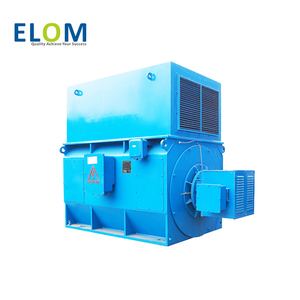
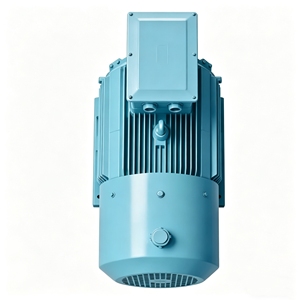
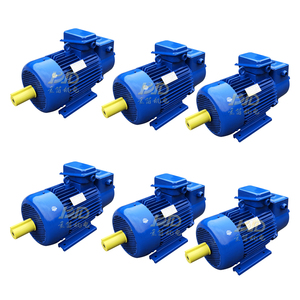
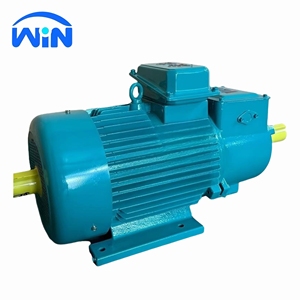
Top Trusted Mine Hoist Motors Factories & Exporter
High-Torque Heavy Duty Wound Rotor & Slip Ring AC Induction Motors engineered for Extreme Mining & Industrial Crane Operations
Heavy-Duty Shaft & Hoist Motor Catalog
Explore our field-proven high-voltage and low-voltage wound rotor AC induction motors, purpose-built for underground hoist systems, portal cranes, and heavy metallurgical drives.
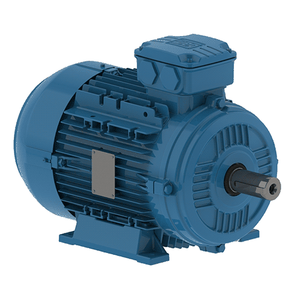
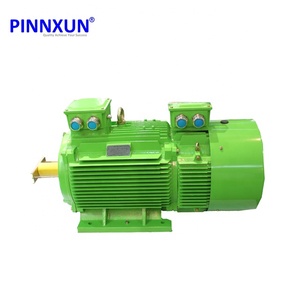
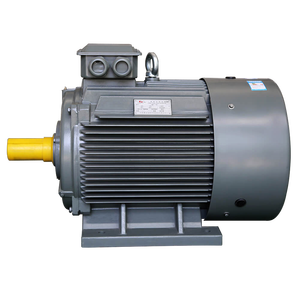
15kW Industrial High-Efficiency 3-Phase Asynchronous Motor
1. Engineering Fundamentals & Torque Mechanics of Modern Mine Hoist Motors
Mine hoist motors represent the most critical single point of kinetic infrastructure in both underground shaft mining and heavy open-pit mineral extraction. Unlike standard continuous-duty industrial fans or centrifugal pump drives, mine hoist motors operating on friction winders (Koepe hoists) or drum hoists undergo severe cyclic loading, extreme acceleration dynamics, frequent forward/reverse plugging, and massive peak mechanical overloads.
In deep shaft operations—often exceeding depths of 1,500 meters—a hoist drive motor must deliver up to 250% to 300% rated breakdown torque at zero speed to overcome the immense static friction and suspended cable inertia. Achieving this operational resilience demands specialized electromagnetics, primarily fulfilled by Wound Rotor Induction Motors (WRIM) / Slip Ring Motors (such as the YR and YZR series) and specialized high-voltage synchronous or squirrel-cage induction architectures driven by medium-voltage variable frequency drives (VFDs).
Key Engineering Takeaway: Mine hoist motors must balance high thermal inertia with low rotor rotational inertia ($GD^2$). Minimizing the rotor moment of inertia reduces the parasitic kinetic energy required during rapid acceleration/deceleration phases, directly increasing energy efficiency and shortening hoist cycle times.
Wound Rotor vs. Squirrel-Cage in Mine Shaft Duty
While squirrel-cage induction motors have dominated general manufacturing sectors due to their simplicity, wound rotor slip-ring motors remain indispensable for heavy-duty mine hoists, winches, and portal cranes across major global mining basins. By inserting external liquid resistance starters (LRS) or grid resistors into the rotor circuit via heavy-duty copper slip rings and electro-graphitic brushes, plant electrical engineers can achieve:
Near-Unity Starting Torque at Low Inrush Current: Full locked-rotor torque (2.5x nominal) can be developed with starting currents restricted to under 1.5x full load current (FLC), preventing severe voltage sags on weak mining substation grids.
Superior Thermal Capacity during Heavy Inching & Rope Inspection: Low-speed creep duty during shaft inspections normally causes catastrophic overheating in standard squirrel-cage rotors; slip-ring motors dissipate up to 90% of rotor slip energy externally into the liquid resistor tank.
Building on over 128 years of engineering heritage (established in 1896), our core manufacturing facilities—originating from premier UK industrial engineering sites in Edinburgh and Birmingham alongside world-wide OEM production nodes—have produced over 12,141 high-voltage electrical machines deployed across hazardous underground mines, offshore oil fields, and marine terminal cranes worldwide.
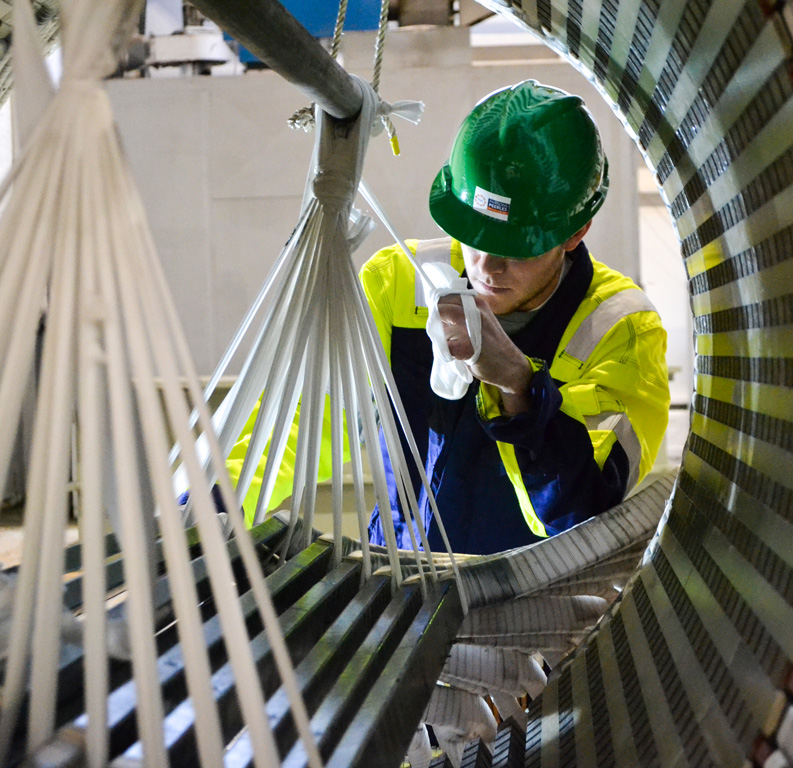
VPI Vacuum Pressure Impregnation Stator Assembly
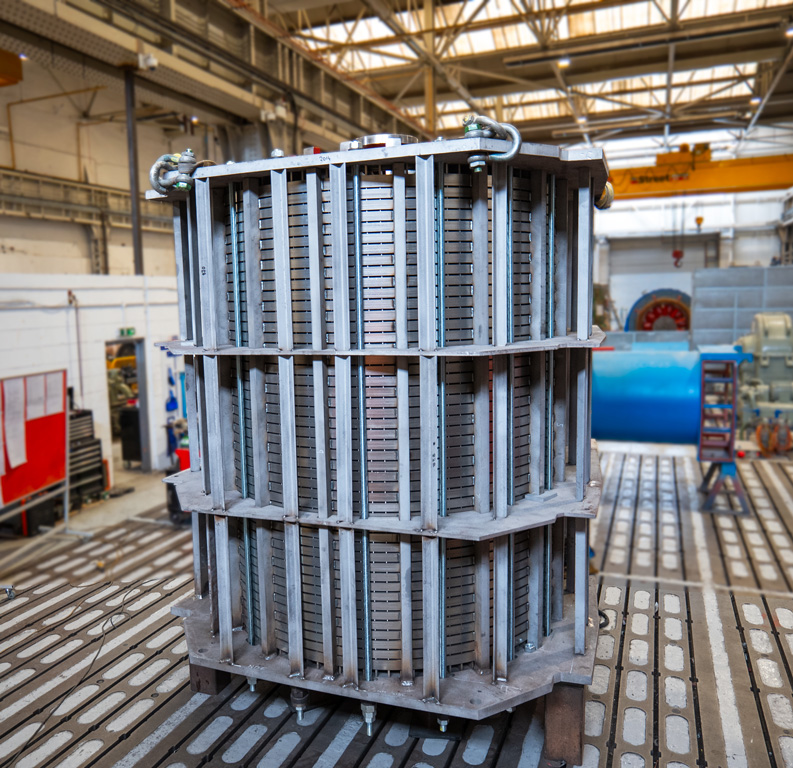
Dynamic Rotor Balancing & Precision Machining
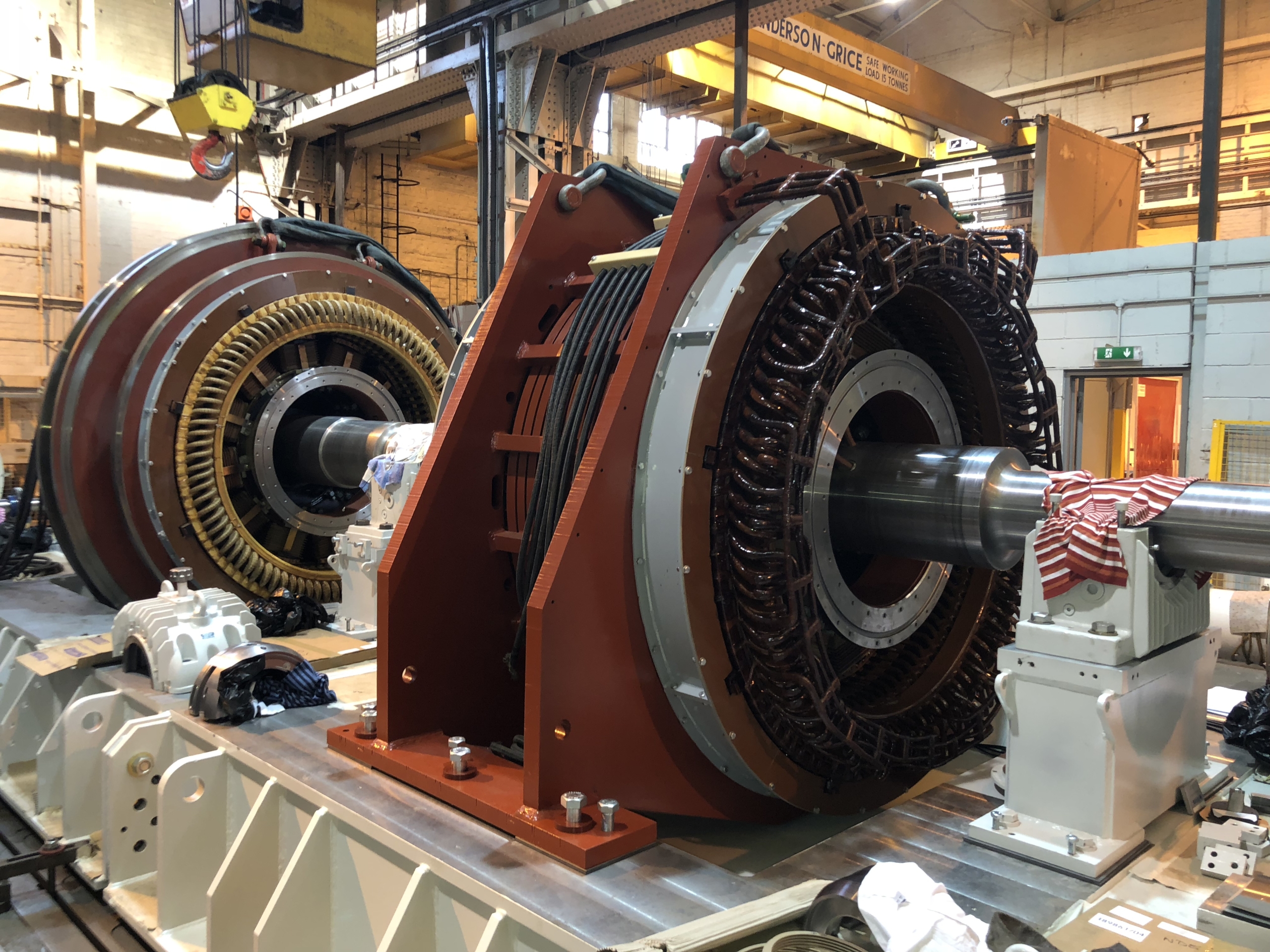
HV Load & Back-to-Back Factory Acceptance Testing
Advanced Insulation Systems & Mechanical Integrity
Mine shaft environments are exceptionally hostile, characterized by high humidity, conductive coal or metallic dust, corrosive ambient water, and continuous ambient vibrations. To deliver uninterrupted 24/7/365 shaft operation, our mine hoist motor manufacturing strictly adheres to advanced thermal and electrical standards:
Class H Insulation with Class F Thermal Rise Margins: Utilizing mica glass tapes impregnated with solventless epoxy resin under full Vacuum Pressure Impregnation (VPI) cycles. This guarantees a void-free corona-resistant winding structure rated for 10kV line voltages.
Hazardous Area Explosion-Proof Certifications: Certified for Ex ec (Non-Sparking), Ex p (Purged/Pressurized), and Ex e (Increased Safety) hazardous locations, verified by internationally recognized notified bodies including SGS Baseefa, ATEX, and IECEx.
100% Mechanical & Electrical Drop-in Interchangeability: Specialized in replicating exact shaft heights, foot bolt centers, flange dimensions, and terminal box orientations of legacy operational motors (such as vintage Parsons Peebles, WEG, ABB, Siemens, or GE units), enabling zero-civil-modification site replacements during planned turnarounds.
Global Quality & Compliance Accreditations
3. Global Procurement Trends in Heavy Mining Drives (2025 Horizon)
As global mining operations transition toward deeper ore bodies to supply critical electrification minerals (copper, nickel, lithium, cobalt, and gold), shaft hoisting systems are experiencing an unprecedented technology shift. Procurement directors and EPC contracting managers must align their capital equipment choices with several emerging global procurement trends:
1. Shift to High-Voltage Direct-Drive & MV VFD Slip-Ring Hybrids
Traditional low-voltage resistor starting is rapidly upgrading toward Medium Voltage (3.3kV, 6kV, 10kV) slip-ring motors controlled by Liquid Resistance Starters combined with rotor short-circuit contactors. Alternatively, mines are procuring MV VFD-driven wound rotor motors to achieve infinite torque control without harmonic grid contamination.
2. Total Cost of Ownership (TCO) & Energy Efficiency Mandates
With industrial power tariffs climbing globally, energy accounts for up to 65% of a hoist motor's lifecycle cost. Modern buyers demand IE2/IE3 equivalent operating efficiencies, high power factors, low-loss electromagnetic steel laminations (35H230 grades), and optimized copper slot fill ratios.
Unplanned shaft shutdown costs can exceed $100,000 per hour in Tier-1 underground mines. Procurement specs now mandate factory-installed PT100 RTDs in stator slots and bearings, tri-axial vibration transmitters, wireless slip-ring spark monitors, and online Partial Discharge (PD) sensors.
4. Technical Evolution in Mine Hoist Motor Engineering
Modern electrical motor engineering has made significant breakthroughs in structural mechanics, thermal exchange, and slip ring assembly durability. Key technological advancements integrated into our manufacturing processes include:
A. Advanced Enclosure & Cooling Topology (CACA vs. CACW)
Selecting the optimal cooling configuration is vital for long-term dielectric stability:
CACA (Totally Enclosed Air-to-Air Cooled - IC611): Internal warm air is circulated through a top-mounted heat exchanger by an internal fan while external ambient air is forced through cooling tubes by an external blower. Ideal for dry, dusty surface installations where process water is unavailable.
CACW (Totally Enclosed Air-to-Water Cooled - IC81W): Heat is transferred from internal air to a closed-loop water circuit. CACW offers superior cooling efficiency, resulting in a substantially smaller motor footprint for a given kW rating and quiet acoustic operation under 80 dBA.
B. Precision Heavy-Duty Slip Ring & Brushgear Systems
Historical weakness in slip-ring motors centered around brush wear and copper dust contamination. Modern designs utilize continuous-rated electro-graphitic carbon brushes with spring-loaded constant pressure retainers, integrated dust extraction channels, and optional automatic motorized brush-lifting mechanisms that short-circuit the slip rings once full operational speed is reached.
Engineering Innovation: High-speed shaft hoists operating above 1000 RPM incorporate spiral-grooved stainless steel or bronze slip rings to prevent gas-cushioning of brushes, ensuring steady electrical contact during high dynamic peak torque loads.
5. Why Global Mining Majors Trust Our Motor Manufacturing
Full-Scale HV Test Bay Capabilities
Every single high-voltage mine hoist motor undergoes strict testing before dispatch, including full-voltage no-load test runs, dynamic rotor balancing according to ISO 1940 Grade G1.0, core flux testing, locked-rotor torque testing, and back-to-back load testing under thermal equilibrium.
Custom Mechanical Footprint Matching
Faced with an urgent requirement to replace an obsolete 30-year-old motor? Our engineering team utilizes 3D laser scanning and FEA structural modeling to produce 100% physically identical replacement units that drop precisely onto existing concrete foundations and couple to existing brake disks.
Hazardous & Harsh Mine Safety Certified
Engineered to operate in underground coal mines containing firedamp (methane) and coal dust. Built with explosion-proof terminal boxes, heavy steel or cast-iron frames, IP55/IP66 ingress protection, and anti-corrosive epoxy coating systems withstand pH 3 to 11 mine water exposure.
Global Rapid Response & Spare Parts Support
We maintain comprehensive spare parts inventory including pre-formed stator coils, carbon brushes, brush holders, slip ring assemblies, bearing shells, and RTD modules. Worldwide field service engineers are available for onsite commissioning and emergency repair assistance.
6. Frequently Asked Questions (FAQ) for Mine Hoist Motor Procurement
Q1: How do I correctly select between a YR series wound rotor motor and a standard squirrel-cage motor for my mine hoist?
Selection depends primarily on your power supply capacity and control method. If your mine substation cannot support starting current surges of 5 to 7 times nominal FLC, or if you operate a resistor-regulated speed control hoist, a YR series wound rotor motor is mandatory. It yields full locked-rotor torque with starting currents under 1.5x FLC. For modern greenfield sites equipped with high-capacity Medium Voltage VFDs, squirrel-cage or direct-drive synchronous motors may also be evaluated.
Q2: What stator voltage specifications are supported for high-voltage mine hoist drives?
We manufacture and supply standard low voltages (380V, 400V, 415V, 660V, 690V) as well as full High Voltage ratings (3kV, 3.3kV, 6kV, 6.6kV, 10kV, and 11kV) at both 50Hz and 60Hz. Custom voltages (such as 4.16kV or 2.3kV) can be precisely wound to match specific mine site power systems.
Q3: Can your factory manufacture drop-in replacements for obsolete hoist motor brands?
Yes. We specialize in engineering 100% mechanically and electrically interchangeable drop-in replacement motors. By replicating the exact mounting footprint, shaft height, shaft extension diameter, keyway dimensions, and electrical performance parameters, your site installation requires zero modification to foundation bolts, soleplates, or gearbox couplings.
Q4: What maintenance protocols are recommended for slip ring assembly longevity in mine shaft duties?
Routine inspection should focus on measuring carbon brush wear, maintaining brush spring pressure between 200–250 g/cm², vacuuming accumulated conductive carbon dust from the enclosure, and measuring insulation resistance (Megger test) of both stator and rotor windings. Installing motorized brush-lifting mechanisms significantly reduces brush and slip ring wear by short-circuiting the rotor after starting acceleration completes.
Q5: What certifications are provided with exported mine hoist motors?
All export motors are accompanied by full Factory Acceptance Test (FAT) certificates, dynamic balancing certificates, ISO 9001 compliance documentation, VPI insulation test reports, and (where applicable) ATEX / IECEx / SGS Baseefa explosion-proof certificates for hazardous underground mining environments.
Consult with our senior rotating equipment application engineers to receive custom technical drawings, torque-speed curve analyses, and direct factory pricing within 24 hours.