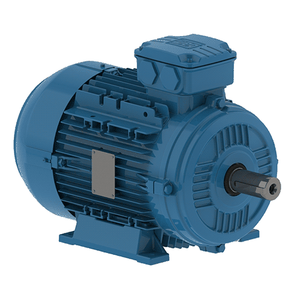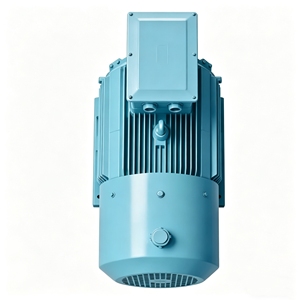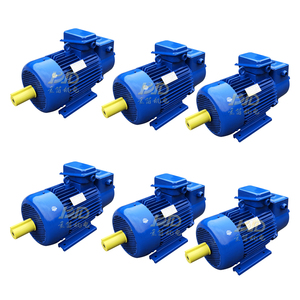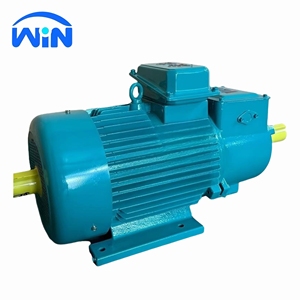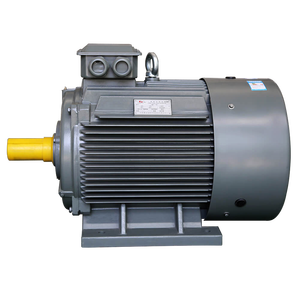





Select from our OEM-grade synchronous and asynchronous motors, wound rotors, and custom permanent magnet generator units.
In the modern power generation landscape, energy density, thermal optimization, and operational efficiency govern capital investment decisions across wind turbine OEM plants, hydroelectric power stations, marine propulsion systems, and decentralized industrial microgrids. Traditional electrically excited synchronous generators (EESG) and induction generators—while historically significant—are increasingly constrained by rotor excitation losses, complex slip-ring maintenance overheads, and non-linear partial-load efficiency curves.
Permanent Magnet Synchronous Generators (PMSG) eliminate external DC rotor excitation by utilizing ultra-high coercivity permanent magnets—most notably Neodymium-Iron-Boron (NdFeB) and Samarium-Cobalt (SmCo) alloys—embedded directly within or mounted onto the rotor structure. This architecture achieves continuous electrical efficiencies exceeding 97.5%, eliminates rotor copper losses ($I^2R$), and radically simplifies structural housing footprints.
To assist global procurement directors, mechanical engineering teams, and EPC contractors in navigating the complex PMG manufacturing landscape, this whitepaper evaluates top-tier factory capabilities, custom stator winding strategies, thermal demagnetization risks, and full-scale grid integration compliance.
Utilizing N45SH to N52SH grade NdFeB magnets capable of operating continuously up to 150°C without irreversible flux degradation or demagnetization events.
Precision stator slot skewing, fractional-slot concentrated windings (FSCW), and tailored rotor magnet pole shaping reduce cogging torque below 0.8% of nominal rating.
Vacuum Pressure Impregnation (VPI) with solvent-free epoxy resins ensures high dielectric strength, superior corona resistance, and extreme chemical durability in hazardous environments.
When selecting a Permanent Magnet Generator manufacturer, understanding the electromagnetic orientation is paramount. Suppliers generally specialize in two distinct mechanical configurations: Radial Flux Permanent Magnet Generators (RFPMG) and Axial Flux Permanent Magnet Generators (AFPMG).
| Performance Metrics | Radial Flux PMG (RFPMG) | Axial Flux PMG (AFPMG) | Wound Rotor Induction (Legacy) |
|---|---|---|---|
| Torque Density (Nm/kg) | 15 - 30 Nm/kg | 35 - 75 Nm/kg (Ultra High) | 5 - 12 Nm/kg |
| Full Load Efficiency | 96.5% - 98.2% | 97.0% - 98.5% | 92.0% - 94.5% |
| Rotor Loss ($I^2R$) | 0% (No Excitation Current) | 0% (No Excitation Current) | Significant (Slip Rings & Windings) |
| Axial Length / Footprint | Standard Cylinder Aspect Ratio | Pancake Type (Ultra-Short) | Long Radial Footprint |
| Direct Drive Capability | Excellent (Low-Speed High-Torque) | Exceptional for Low RPM | Requires Heavy Gearbox Step-Up |
| Maintenance Profile | Bearing Lubrication Only | Bearing Lubrication Only | Brush Replacement, Ring Turning |
In radial flux designs, magnetic flux flows radially perpendicular to the axis of rotation. RFPMG remains the industrial dominant standard due to established automated manufacturing processes, straightforward thermal dissipation channels via outer casing cooling fins or CACA/CACW air-to-water heat exchangers, and proven long-term mechanical stiffness under intense centrifugal stress.
Axial flux machines feature magnetic flux aligned parallel to the shaft axis. The pancake-shaped rotor/stator geometry yields unmatched torque density and axial space saving. AFPMG factories are increasingly prioritized for wind turbines, electric aircraft, marine podded thrusters, and mobile military microgrids where volumetric limits are tight.
As corporate sustainability directives intersect with grid modernizations, B2B procurement teams must look beyond short-term machine cost ($/kW) and evaluate total lifetime cost of ownership (TCO). Procurement intelligence indicates five core macro trends reshaping PMG factory capabilities worldwide:
Volatile rare earth pricing and supply chain concentrations have forced leading PMG suppliers to pioneer Dy-free (Dysprosium-free) and Tb-free (Terbium-free) NdFeB magnet grades. Grain Boundary Diffusion (GBD) technology allows magnet manufacturers to inject minimal dysprosium specifically at magnet grain boundaries, retaining high coercivity ($H_{cj}$) at elevated temperatures while cutting raw material risks by up to 80%.
Gearbox failures remain the highest downtime contributor in wind turbines and marine hydrokinetic power plant operations. Top-tier factories are rapidly expanding heavy-crane facilities to produce multi-megawatt low-speed direct-drive PMGs (operating at 10 to 150 RPM). Eliminating the mechanical gearbox reduces scheduled oil flushes, eliminates mechanical vibration harmonics, and lowers operating expenses by 35% over a 25-year operational lifecycle.
Standard 3-phase output configurations are being superseded in critical marine defense and offshore power assets by multi-phase star/delta topologies. Dual 3-phase ($30^\circ$ phase shift) or 9-phase winding layouts offer fault-tolerant operation: should one inverter leg or phase group short-circuit, the generator continues operating at reduced capacity without severe torque ripple or structural excitation.
To achieve higher continuous current densities ($A/mm^2$) without exceeding winding insulation limits (Class H 180°C or Class C 200°C), modern PMG factories are incorporating direct-in-slot liquid cooling, hollow copper conductors, and integral water-glycol jackets within stator frames. This drastically shrinks the physical generator envelope while ensuring magnetic core stability under continuous heavy overloads.
When selecting a reliable PMG factory or rotating machine overhaul partner, technical heritage and certified testing infrastructure are critical indicators of supplier reliability. Grounded in over 128 years of British electrical engineering excellence, TDC Parsons Peebles represents a gold-standard legacy in heavy rotating equipment manufacture, rewinding, and custom engineering.
Reverse-engineering legacy motors and generators to deliver identical foot-to-shaft dimensions, terminal box locations, and center heights—eliminating expensive civil or mounting plate modifications.
Equipped with state-of-the-art testing facilities capable of conducting full-load, back-to-back, core flux, and partial discharge testing on machines up to 20 MVA and 13.8kV.
Certified by SGS Baseefa for the design, manufacture, and repair of hazardous area electrical machines (Ex d, Ex p, Ex ec, Ex e) for offshore oil & gas and chemical processing plants.
From initial electromagnetic core sizing to high-speed dynamic balancing, precision rotor magnet band wrapping, and automated VPI dipping, our facility guarantees that every Permanent Magnet Generator delivered meets IEEE 115, IEC 60034-1, and NEMA MG-1 strict quality parameters.
Partner with an industry-leading rotating machine manufacturer. Our senior electromagnetic application engineers are available to review your project specifications, CAD parameters, and custom power generation requirements.
Inquire Now