





Explore our range of heavy-duty industrial AC motors and wound rotor induction machinery engineered to rigorous ISO 9001 and ATEX standards, fully tested via advanced stator core flux and back-to-back load methodologies.
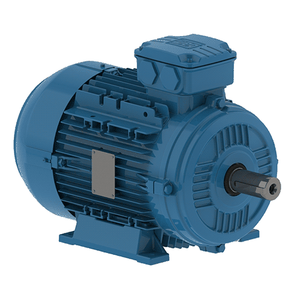
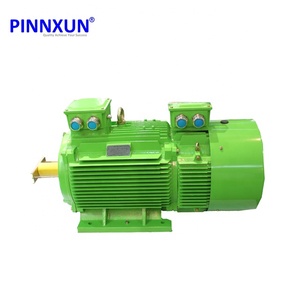
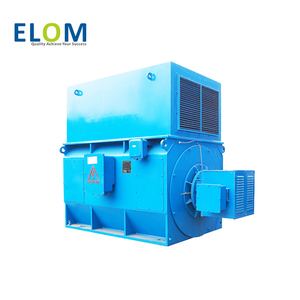
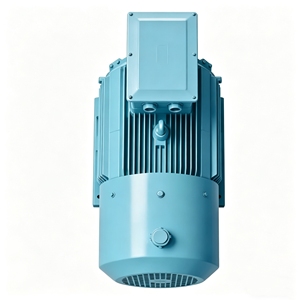
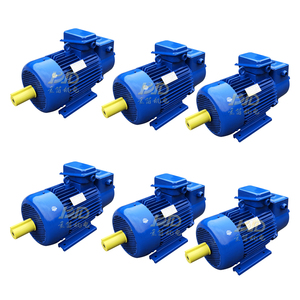
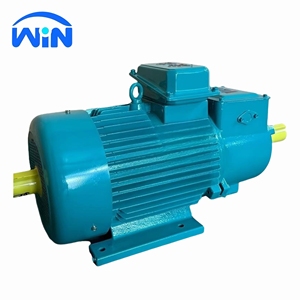
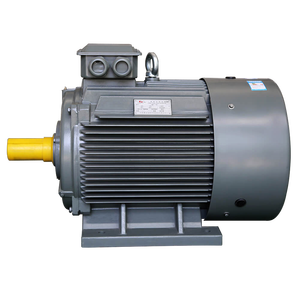
In high voltage (HV) asynchronous induction motors, synchronous generators, and industrial rotating machinery, the stator core is constructed from thousands of thin, insulated electrical steel laminations. The primary function of these laminated structures is to constrain magnetic flux paths while minimizing eddy current losses ($P_e \propto f^2 B_m^2 t^2$). However, over extended operating cycles under extreme mechanical vibration, thermal cycling, and electrodynamic stresses, the thin varnish or oxide coating between individual laminations can degrade or short-circuit. When adjacent laminations short together, localized closed loops are created, leading to massive eddy current heating—a condition commonly referred to as a "core hot spot."
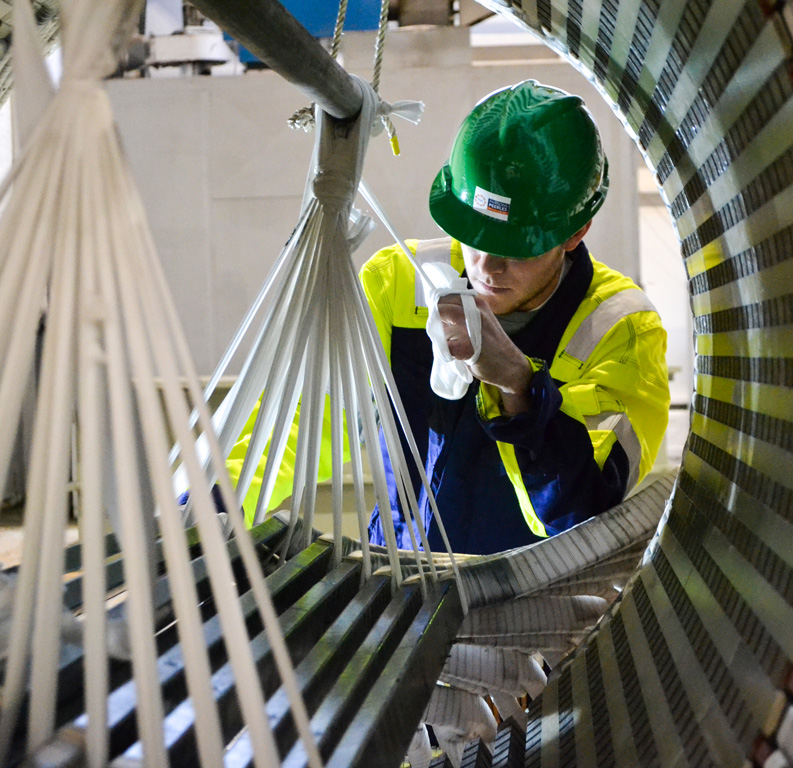
Stator Core Flux Testing—historically executed via the High-Flux Ring Test (Loop Test) and refined in modern practice through Electromagnetic Core Imperfection Detection (El-CID)—evaluates the electromagnetic efficiency and insulation integrity of the core lamination pack. During high-flux ring testing, an auxiliary excitation winding is wrapped around the stator frame to induce a toroidal magnetic flux within the yoke, typically rated between 1.0 Tesla and 1.5 Tesla (rated operational flux density). Infrared thermography cameras monitor the core bore for abnormal thermal differentials ($\Delta T > 5^\circ\text{C}$ to $10^\circ\text{C}$ above ambient core temperature), revealing hidden shorted lamination clusters with absolute clarity.
Industrial procurement teams and plant asset managers must understand the technical nuances between high-flux ring excitation testing and low-flux digital diagnostic techniques when evaluating core testing manufacturers and exporters. Both methodologies possess unique analytical strengths depending on the machine’s rating, site accessibility, and maintenance window.
Mechanism: Requires high kVA power sources to energize heavy excitation cables wrapped through the stator bore, driving the core to full operating magnetic flux density.
Diagnostic Output: Direct thermal imaging identifies surface and subsurface interlaminar shorts in real-time. Extremely reliable for post-repair validation and core restacking quality control.
Mechanism: Operates at approximately 4% of rated magnetic flux using low-voltage excitation. Uses a Chattock potentiometer pickup coil to measure fault current magnetic fields along core slots.
Diagnostic Output: Highly portable, requiring minimal supply power. Excellent for field inspection of large hydro-generators and turbogenerators where rotor removal is restricted.
Mechanism: Top-tier manufacturers utilize low-flux screening for preliminary field diagnostics followed by high-flux thermal verification before and after mechanical core grinding or restacking.
Diagnostic Output: Provides comprehensive quantitative core loss ($W/kg$) measurement and 100% spatial fault mapping.
Carrying the historic legacy of TDC Parsons Peebles (founded in 1896), our manufacturing and repair centers in Rosyth, Edinburgh, and Birmingham UK represent the pinnacle of rotating electrical engineering. Over more than a century, we have manufactured and serviced over 12,141 specialized heavy machines for power generation, marine propulsion, mining, oil & gas, and heavy metallurgical industries worldwide.
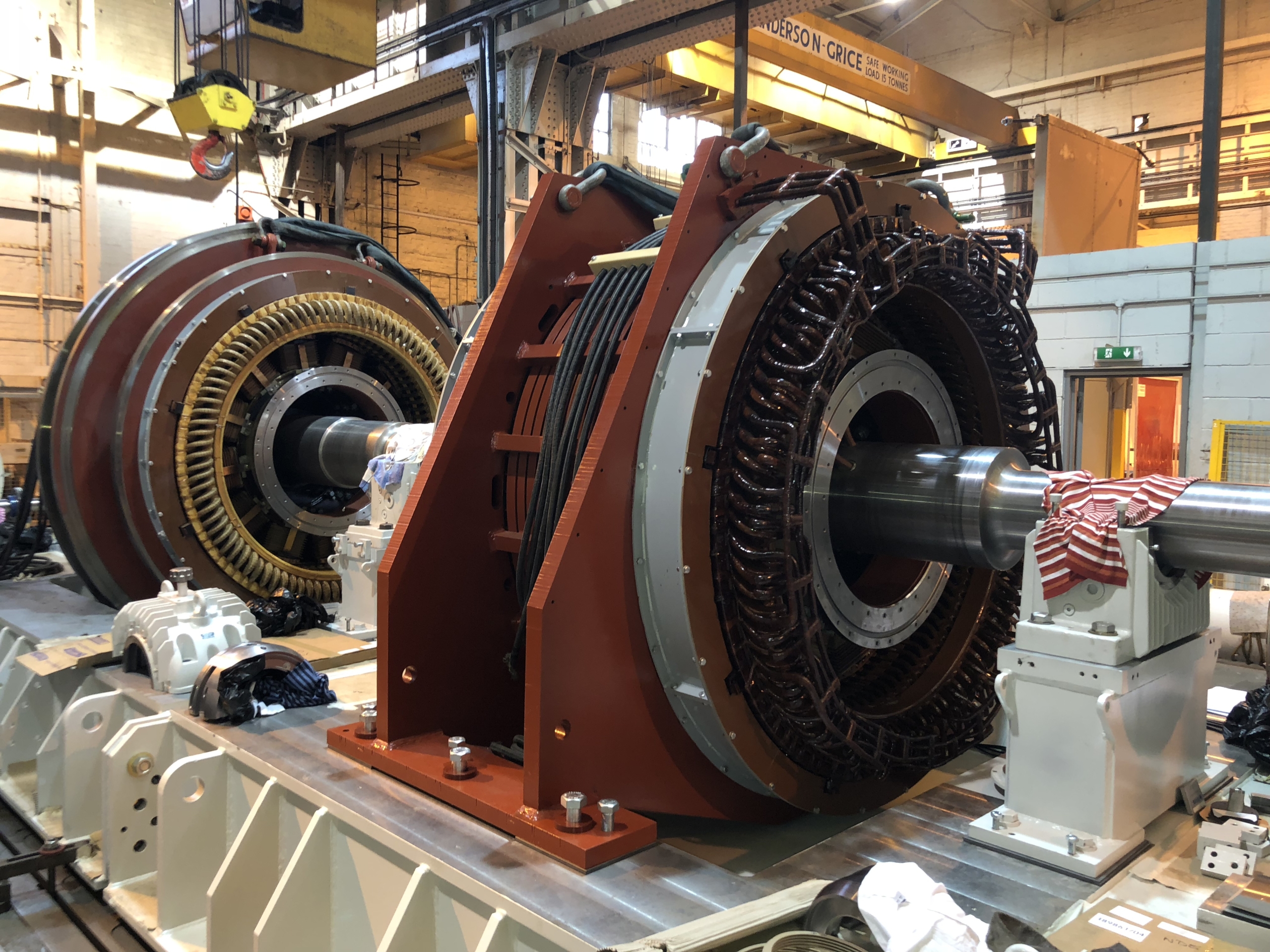
Our core flux testing and lamination diagnostics facility is fully integrated with high-voltage testing bays capable of running full load direct tests, back-to-back dynamic testing, and no-load magnetization verification up to 200 MVA. Every motor and generator leaving our plant is verified to exceed ISO 9001 quality specifications and Baseefa ATEX/IECEx explosion-proof compliance for hazardous area applications (Ex ec, Ex p, Ex e).



The global market for heavy electrical machinery is experiencing significant technological transformations driven by decarbonization, high-efficiency requirements (IE3/IE4/IE5), and digital twin predictive maintenance.
Modern core flux testing manufacturers are replacing manual thermal spot meters with calibrated 640x480 pixel uncooled focal plane array radiometric thermal cameras. Automated image mapping software synchronizes thermal camera feeds with core rotating geometry to produce 3D temperature heatmaps, identifying sub-surface interlaminar insulation degradation long before surface scorching becomes visible.
Next-generation El-CID systems feature multi-channel Digital Signal Processors capable of filtering out ambient electromagnetic noise in high-voltage substations and power plants. Automated robotic crawlers scan core slots at constant velocities, removing human measurement error and providing digitized phase-quadrature current graphs directly into asset management platforms.
As global energy efficiency standards tighten, exporters are utilizing high-grade, cold-rolled grain-oriented (CRGO) and non-grain-oriented (CRNGO) silicon steel sheets coated with C-5 and C-6 inorganic varnish. Stator core flux testing is now routinely used to verify that re-stacked core packs do not suffer from stress-induced core loss degradation during mechanical clamping.
Global procurement of heavy rotating equipment and diagnostic services is transitioning from traditional lowest-initial-cost sourcing to sophisticated Total Cost of Ownership (TCO) and Lifecycle Reliability models. International procurement specialists should prioritize the following key trends when selecting stator core flux testing partners and machine exporters:
Industrial operators no longer wait for catastrophic core failures. Procurement tenders now mandate standardized baseline stator core flux test reports (including $W/kg$ core loss data and infrared thermograms) prior to accepting new or refurbished high-voltage motors from exporters.
Leading buyers strictly audit vendor workshop capabilities. Qualified vendors must possess certified high-capacity power supplies (up to several MVA), automated core excitation systems, and documented ISO/IEC compliance for hazardous area electric motor repair.
Export contracts increasingly demand remote mobilization capabilities. Top manufacturers maintain rapid-response field engineering teams equipped with portable El-CID and ring test excitation units capable of performing on-site core evaluation during emergency outages.
Expert technical answers regarding stator core flux testing specifications, testing standards, core loss thresholds, and exporter evaluations.
For standard high-flux ring tests, the core is typically excited to 1.0 Tesla (10,000 Gauss) up to the machine's normal operational flux density (typically 1.2 to 1.4 Tesla). Exciting the core at this level ensures realistic electromagnetic saturation and thermal dissipation conditions across the lamination stack, allowing infrared thermography to accurately pinpoint interlaminar insulation faults.
According to IEEE Standard 56, IEEE 433, and industry best practices, any localized core area exhibiting a temperature rise of 5°C to 10°C above the average stator core temperature requires investigation. Hot spot differentials exceeding 10°C indicate severe interlaminar shorting and require immediate mechanical separation, chemical etching, localized mica insulation insertion, or core lamination restacking.
Excitation voltage ($V$) is calculated using the transformer equation: $V = 4.44 \times f \times N \times A_{core} \times B_m$, where $f$ is frequency (Hz), $N$ is the number of turns of excitation cable wrapped through the bore, $A_{core}$ is the effective magnetic cross-sectional area of the stator yoke ($\text{m}^2$), and $B_m$ is the desired flux density (Tesla). Exporters calculate this precisely to ensure power sources are correctly matched during factory testing.
Full high-flux ring tests require complete rotor removal to install excitation windings and allow unimpeded infrared thermographic access to the stator core bore. However, low-flux El-CID testing can sometimes be performed with the rotor in place if sufficient air-gap clearance exists for specialized robotic probes, making it a valuable tool for preliminary site assessments.
Core loss measurements (expressed in Watts per kilogram of core steel) directly indicate the total hysteresis and eddy current losses of the lamination pack. Unusually high core losses lead to reduced operating efficiency, elevated operating temperatures, increased electricity costs, and shortened motor operating life. Testing ensures compliance with promised efficiency classes (IE2, IE3, IE4).
Consult with our UK-certified rotating equipment engineers. We provide comprehensive core flux diagnostics, custom motor manufacturing, and worldwide export support tailored to your project requirements.