





Explore our tier-one diagnostic systems engineered for substation maintenance, EMC compliance, surge protective device (SPD) evaluation, and high-voltage insulation testing.
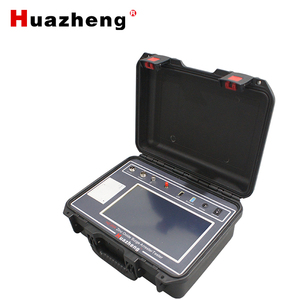
Advanced field diagnostic unit for measuring zinc oxide arrester full current, resistive leakage current, and fundamental/harmonic current components on live grid assets.
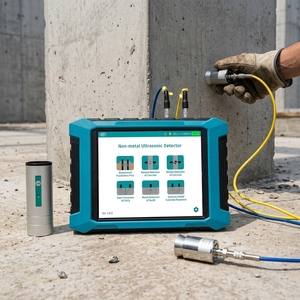
Non-destructive test apparatus utilizing high-energy acoustic pulse velocities to measure structural concrete strength, crack depth, and material integrity.
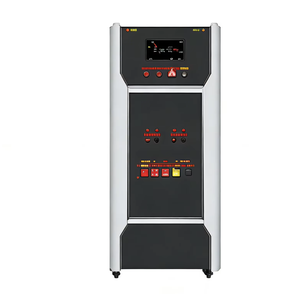
Heavy-duty surge generator supporting 10kV voltage output with standard 1.2/50μs voltage wave and 8/20μs current wave combination for component immunity testing.
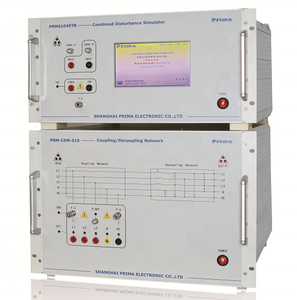
Fully compliant EMC surge system meeting IEC 61000-4-5, IEC 61000-4-4, and IEC 61000-4-2 standards for electronics safety qualification and transient surge immunity.
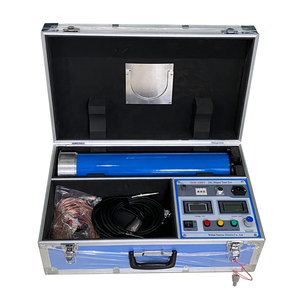
Ultralight direct-current high voltage tester engineered for zinc oxide arresters, power cable withstand verification, and generator insulation leakage diagnostics.
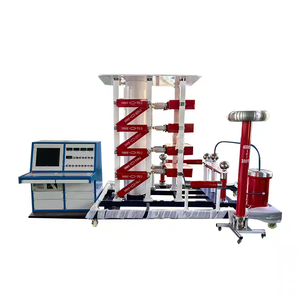
Ultra-high voltage Marx impulse voltage generator engineered to simulate direct lightning strikes and switching surges on power transformers, insulators, and breakers.
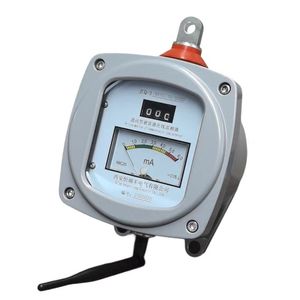
Wireless online testing instrument capable of synchronous voltage reference sampling and field leakage current acquisition without requiring long signal cables.
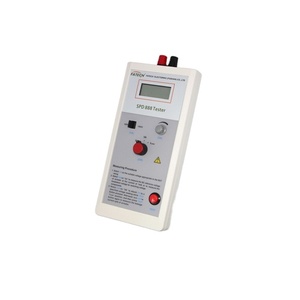
Dedicated test bench designed for measuring varistor voltage (U1mA), leakage current (Iid), and gas discharge tube spark-over voltage on low-voltage surge protective devices.
Electrical power distribution grids, telecommunication lines, and industrial electronics are continually exposed to high-energy transient overvoltages. These surges originate from direct lightning strikes, atmospheric electrostatic discharges, and grid switching events (such as capacitor bank switching or inductive load disconnection). To ensure system reliability and operational safety, modern equipment manufacturers must subject components to rigorous high-voltage impulse simulation. As a premier Surge Testing Equipment Supplier, our mission is to provide precision diagnostic tools that accurately recreate extreme transient phenomena under controlled laboratory and field conditions.
Surge impulse testing evaluates the withstand voltage capacity and insulation integrity of protective devices (such as metal oxide varistors and gas discharge tubes) and electrical machinery. Standard surge waveforms defined by the International Electrotechnical Commission (IEC) and the Institute of Electrical and Electronics Engineers (IEEE) specify precise rise times and decay durations to replicate actual environmental transients:
Zinc oxide surge arresters form the primary line of defense for electrical substations. Over years of service, continuous thermal stress, moisture ingress, and repeated surge operations degrade the internal varistor elements. Advanced diagnostic equipment, such as the HuaZheng HZ-20A and wireless leakage current meters, measure the complex total leakage current ($I_x$), isolating the fundamental resistive leakage current ($I_{rp}$) from capacitive components ($I_{cp}$).
Increases in third-harmonic resistive current components ($I_{3r}$) serve as an early indicator of varistor degradation. Detecting these micro-ampere changes prior to thermal runaway prevents catastrophic substation failures, transformer flashovers, and unscheduled grid downtime.
Our surge impulse testing systems incorporate key engineering innovations designed to maximize measurement precision and operator safety.
Replaces legacy mechanical spark gaps with high-voltage solid-state switches. Achieves phase angle synchronization from 0° to 360° with sub-degree repeatability, essential for precise AC mains injection.
Features zero-voltage start logic, automatic high-voltage capacitor discharge circuits, external emergency power-off loop connectors, and optical isolation barrier interfaces to safeguard test engineers.
High-speed digital storage oscilloscopes (1GS/s sampling) automatically calculate peak voltage ($V_p$), peak current ($I_p$), front time ($T_1$), tail time ($T_2$), and residual voltage ratio with instant report generation.
Selecting the appropriate surge generator requires aligning equipment specifications with target industry standards. The table below outlines core technical parameters across typical application tiers:
| Testing Class | Applicable Standards | Peak Voltage Range | Waveform Configurations | Primary Industrial Application |
|---|---|---|---|---|
| EMC Component Level | IEC 61000-4-5, EN 61000-4-5 | 0.2 kV – 10 kV | 1.2/50 μs (Voltage), 8/20 μs (Current) | Consumer Electronics, Industrial Automation, Smart Meters |
| Low-Voltage SPD Diagnostic | IEC 61643-11, UL 1449 | 0.1 kV – 20 kV | Combination Wave, 8/20 μs, 10/350 μs (Simulated) | Surge Arresters, DIN-rail SPDs, Varistor Production QC |
| High Voltage Substation | DL/T 474.5, IEC 60099-4 | 0 – 120 kV DC / 200 kV Impulse | DC Leakage Current, Standard Lightning Impulse | Substation Preventive Maintenance, ZnO Arrester Field Tests |
| Ultra-HV Transformer Lab | IEC 60060-1, IEEE Std 4 | 200 kV – 800 kV (Expandable) | Full Lightning Wave, Chopped Wave, Switching Surge | Power Transformers, High-Voltage Cables, Bushings, Switchgear |
As global power infrastructures transition toward smart grids, renewable energy integration, and high-voltage direct current (HVDC) transmission lines, the requirements for surge testing equipment are evolving rapidly. Procurement managers and test lab directors must evaluate several emerging technology trends when acquiring next-generation equipment:
Field testing in live substations poses electromagnetic interference and physical safety challenges. Modern surge testing devices utilize optical fiber cables and Bluetooth/Wi-Fi wireless synchronization protocols. Wireless voltage sampling units transmit reference signals over long distances without high-voltage coupling risks. Integrated cloud platforms allow automated data upload, cross-station historical leakage current trend analysis, and remote firmware calibration checks.
Legacy high-voltage impulse generators required massive fixed testing halls due to bulky oil-filled capacitors and heavy step-up transformers. Advancement in high-frequency switching power supplies and SF6 gas or resin insulation technology has enabled ultra-compact, trailer-mounted or portable test sets. Utilities now routinely deploy 120kV DC Hipot and 200kV portable impulse units directly to off-shore wind farm substations and remote industrial sites.
Procurement teams increasingly favor modular testing systems that combine multiple Electromagnetic Compatibility (EMC) test capabilities into a single enclosure. Instead of purchasing standalone surge generators, electrical fast transient (EFT) testers, and electrostatic discharge (ESD) simulators separately, modern modular architectures allow engineers to swap plug-in pulse-forming networks (PFN) to satisfy IEC 61000-4-2, 61000-4-4, and 61000-4-5 standards simultaneously.
AI algorithms are being integrated into diagnostic software to analyze impulse breakdown waveforms in real time. Machine learning models trained on millions of discharge curves can instantly distinguish between true insulation puncture breakdown, surface flashover, and internal corona discharge. This automated diagnostic capability reduces human error and accelerates quality control verification in high-volume SPD manufacturing lines.
With over 128 years of engineering excellence rooted in high-voltage rotating electrical machines, generators, and heavy-duty impulse testing systems, our enterprise delivers unparalleled technical expertise to global industries. Operating under stringent ISO 9001 Quality Assurance Systems and backed by international certifications (including SGS Baseefa for ATEX/IECEx compliant high-voltage operations), we ensure every testing instrument delivers absolute measurement reliability.
100% of our surge testing equipment undergoes factory calibration, high-potential withstand testing, and waveform integrity verification against primary standards before dispatch.
Our engineering team designs custom pulse-forming networks, internal impedance networks, and automated coupling-decoupling networks (CDNs) tailored to unique OEM testing criteria.
We provide comprehensive technical support, annual recalibration services, on-site commissioning, and engineering training for high-voltage testing personnel worldwide.
Technical answers to common questions asked by procurement officers, lab managers, and electrical safety engineers.
Contact our application engineering team today for custom surge generator configurations, IEC compliance advice, or quotation requests.
Inquire Now