




Top Trusted Wind Turbine Generators Manufacturers & Supplier

Global OEM Engineering Whitepaper: High-Voltage Wound Rotor, Doubly-Fed Induction (DFIG) & Heavy-Duty Rotary Machine Manufacturing Solutions

Industrial Wind Generators & Heavy Duty Induction Machinery

Precision-engineered electrical rotating equipment certified under ISO 9001 and ATEX/IECEx standards. Designed for prime movers, renewable wind energy, marine power, and industrial utility applications.

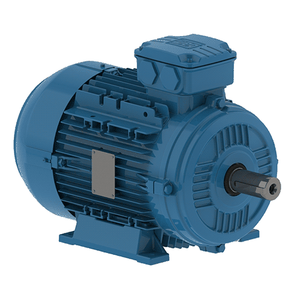
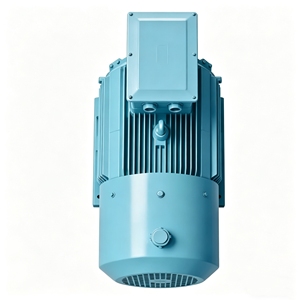
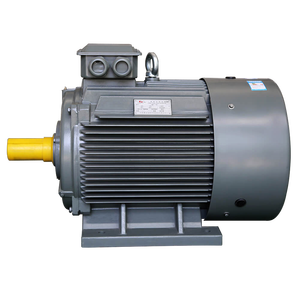
Electric Motor Weg Industrial Fan 15000 Watt 15Kw Induction Motor
WEG Heavy Duty Series

Electric Motor Weg Industrial Fan 15000 Watt 15Kw 3 Phase Asynchronous Weg Induction Motor

  • Power Output: 15 kW / 15,000 W
  • Phase & Type: 3-Phase Asynchronous
  • Application: Industrial Fans & Auxiliaries
  • Protection: IP55 / TEFC Standard
Contact Us
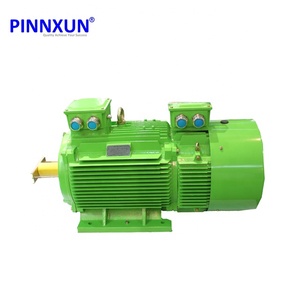
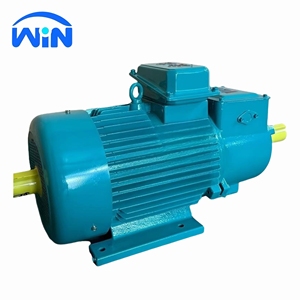
YR Wound Rotor Three Phase Induction Motor for Prime Mover
YR Slip Ring Series

YR Wound Rotor Three Phase Induction Motor for Prime Mover & Hydro Systems

  • Rotor Type: Wound Rotor / Slip Ring
  • Starting Torque: High Lock-Rotor Ratio
  • Duty Cycle: Continuous S1 Duty
  • Enclosure: IC411 / Cast Iron Frame
Contact Us
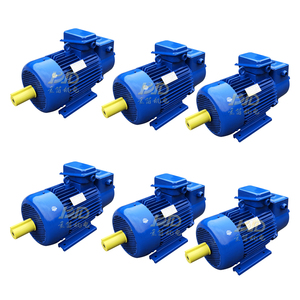
Ye2-1600l-4 15kw Induction Wound Rotor Motor Generator
YE2 High Efficiency

Ye2-1600l-4 15kw Induction Wound Rotor Industrial Power Machine Generator Unit

  • Model Code: YE2-1600L-4
  • Rated Voltage: 380V / 400V / 415V
  • Poles / RPM: 4 Pole / 1470 RPM
  • Efficiency Class: IE2 Premium Standard
Contact Us
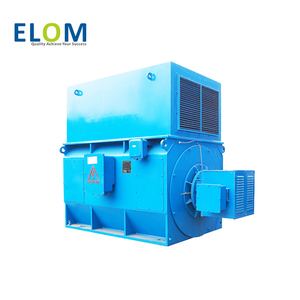
YR 3200KW High Torque Wound Rotor Induction Motor IP23
High Voltage Utility

YR 3200KW High Torque Wound Rotor Induction Motor IP23 Wind & Power Generation

  • Capacity: 3200 kW (3.2 MW)
  • Protection Rating: IP23 Drip-Proof
  • Cooling Method: IC01 Natural Ventilation
  • Insulation: Class H (VPI Process)
Contact Us
380V 3kV 6kV 10kV Three Phase Asynchronous Motor
Multi-Voltage Heavy Duty

380V/3kV/6kV/10kV Three Phase Asynchronous Motor 5.5kW-3150kW Wound Rotor Motors

  • Voltage Range: 380V up to 10 kV
  • Power Range: 5.5 kW - 3150 kW
  • Grid Frequency: 50 Hz / 60 Hz Universal
  • Stator Winding: 100% Electrolytic Copper
Contact Us
High quality Wound Rotor Motor Crane slip Ring AC Motor YZR
YZR Metallurgical & Wind

High-quality Wound Rotor Motor Slip Ring AC Motor, 380V, 440V, 660V YZR Class

  • Series Code: YZR Crane & Slip Ring
  • Operating Voltage: 380V / 440V / 660V
  • Insulation Rating: Class H Superior
  • Interchange: OEM Drop-In Compatible
Contact Us
YZR Wound Rotor Induction AC Motor Multiple Power Specifications
Severe Duty Industrial

YZR Wound Rotor Induction AC Motor Multiple Power Specifications for Heavy Energy Systems

  • Overload Rating: 250% Peak Starting
  • Bearing Type: SKF / NSK Heavy Roller
  • Thermal Sensor: Pt100 RTD Embedded
  • Certifications: CE, ISO9001, ATEX Ex
Contact Us
IE2 280 Series 4 Pole 1500 Rpm 75 kw 100 hp Wound Rotor Motor
IE2 280 Industrial Series

IE2 280 Series 4 Pole 1500 Rpm 75 kW 100 HP Wound Rotor Induction Generator Motor

  • Rating: 75 kW / 100 HP
  • Speed & Frequency: 1500 RPM / 50Hz
  • Frame Size: 280M/L Cast Steel
  • Wiring Config: Delta / Star Adaptable
Contact Us
12,141+
Machines Manufactured
200MVA
Rotary Power Capacity Installed
128+
Years Engineering Heritage
100%
OEM Drop-In Interchangeable

Industrial Whitepaper: Engineering Architecture of Modern Wind Turbine Generators

The global energy transformation requires unprecedented reliability, electrical efficiency, and grid-code compliance from utility-scale wind power generation infrastructure. Selecting qualified wind turbine generator manufacturers and suppliers is no longer merely a commercial procurement task; it is a critical electromechanical engineering decision that impacts project Levelized Cost of Energy (LCOE), thermal longevity, and operational availability across 25 to 30-year lifecycle horizons.

This technical whitepaper provides EPC contractors, plant operators, electrical design engineers, and procurement directors with an in-depth analysis of modern generator topology—covering Doubly-Fed Induction Generators (DFIG), High-Voltage Wound Rotor Induction Machines (WRIG), Salient Pole Synchronous Generators, and Permanent Magnet Synchronous Generators (PMSG). By analyzing electromagnetic flux utilization, Vacuum Pressure Impregnation (VPI) dielectric insulation, thermal dissipation dynamics, and rotor-side harmonic management, this document establishes clear benchmarks for vendor evaluation and equipment specification.

Core Engineering Takeaway: Modern grid codes (such as IEEE 519, IEC 61400-21, and ENTSO-E requirements) demand high fault-ride-through (FRT) tolerance and dynamic reactive power support. Advanced wound rotor induction generators operating with customized slip-ring power electronics allow variable-speed operation across wider aerodynamic wind profiles while minimizing stress on mechanical gearboxes.

1. Electromechanical Topologies in Wind Power Generation

Wind energy conversion systems utilize distinct electrical generator architectures depending on power scale (kW to MW class), environmental deployment (onshore vs. harsh marine offshore C5-M environments), and speed-control strategies. Understanding these core topologies is essential when auditing manufacturer manufacturing capability:

Doubly-Fed Induction (DFIG / WRIG)

Features a wound rotor connected to an external partial-scale power converter via slip rings. Offers ±30% speed variation around synchronous speed, optimal efficiency, and reduced power electronics costs.

Permanent Magnet Synchronous (PMSG)

Eliminates external rotor excitation and slip rings using rare-earth NdFeB permanent magnets. Ideal for direct-drive low-speed configurations, yielding high power density and minimal mechanical maintenance.

Squirrel-Cage Induction (SCIG)

Robust, low-cost robust rotor structure operating at fixed or dual-speed via pole-changing windings. Requires full-scale power converter or soft-starter with capacitor banks for reactive compensation.

2. Material Science & Insulation Integrity in High Voltage Machines

Electrical failure in high-voltage wind turbine generators is predominantly driven by stator coil insulation degradation caused by thermal cycling, partial discharge (PD), moisture ingress, and mechanical vibration. Premier suppliers implement class-leading insulation technologies:

Vacuum Pressure Impregnation (VPI): Complete stator assemblies undergo multi-stage vacuum pressure cycles utilizing solvent-less epoxy resins. This process eliminates microscopic air voids within the mica tape insulation layers, resulting in partial discharge levels lower than 10 pC at 1.25 times rated line voltage.

Thermal Class H/F Systems: Coils are engineered using high-grade glass-backed mica tape rated for Class H (180°C) thermal limits, while operating at Class F (155°C) or Class B (130°C) temperature rises. This intentional thermal margin extends winding operational lifespan exponentially under severe ambient fluctuations.

Stator Core Lamination Optimization: Utilizing low-loss, high-permeability cold-rolled non-oriented silicon steel (CRNGO) laminations coated with C-5 insulation paint minimizes eddy current losses, suppressing core temperature rise and improving total generator efficiency beyond 97.5%.

Generator Parameter Standard Utility Grade TDC Parsons Peebles / Industrial OEM Operational Benefit
Insulation Class Class F (155°C) Class H (180°C) VPI Sealed Prevents thermal breakdown under peak overload
Vibration Rating ISO 10816-3 Grade A (< 2.3 mm/s) Precision Balanced Grade B (< 1.0 mm/s) Dramatically extends bearing & slip ring lifespan
Protection Class IP23 / IP54 IP55 / IP56 / Ex ec hazardous certified Prevents moisture, dust, and corrosive salt-fog ingress
Efficiency Benchmark 94.5% - 96.0% 96.8% - 98.2% (IE2/IE3/IE4 compliant) Maximizes kilowatt-hour electrical output per knot of wind
Drop-In Flexibility Standardized ISO dimensions only 100% Mechanical & Electrical Interchange Direct replacement without civil foundation modification

Future Sourcing & Procurement Trends for Industrial Wind Turbine Generators (2026–2035)

As the global wind capacity scales toward terawatt-level deployment, energy developers and industrial equipment buyers are experiencing significant shifts in procurement criteria. Price-per-kilowatt is no longer the single deciding factor; long-term serviceability, supply chain transparency, modular repairability, and drops-in interchangeability dominate purchasing strategies.

Trend 1: Modular Drop-In Replacement Engineering

Thousands of wind turbines and heavy industrial power systems installed in the early 2000s are reaching mid-life refits or end-of-warranty replacement cycles. Sourcing brand-new legacy machines from original equipment manufacturers (OEMs) who have discontinued older product lines is a major industry challenge. Leading modern manufacturers specialize in reverse-engineered drop-in replacement generators—matching exact shaft heights, foot bolt patterns, terminal box placements, and electrical impedance characteristics to drop directly onto existing bedplates without structural modifications.

Trend 2: Integrated Condition Monitoring & Predictive Maintenance Smart Diagnostics

Next-generation wind turbine generators are supplied with integrated sensor arrays embedded directly into critical electromechanical zones during manufacturing:

  • Duplex Pt100 RTD Sensors: Embedded in stator slot channels (two per phase) and bearing housings for real-time thermal monitoring.
  • Tri-Axial Accelerometers: Installed on drive-end (DE) and non-drive-end (NDE) bearing plates to catch inner/outer race spalling before mechanical seizure occurs.
  • Online Partial Discharge (PD) Couplers: Capacitive couplers installed in terminal boxes to monitor dielectric tape breakdown without stopping machine operation.

Trend 3: Environmental Protection for Harsh Offshore & Coastal Environments

Offshore wind farm expansion requires generators certified under extreme atmospheric corrosion categories (ISO 12944 C5-M). Top-tier manufacturers employ multi-layer polyurethane coating systems, stainless steel fasteners, internal anti-condensation space heaters, and closed-loop heat exchangers (CACA / CACW - Air-to-Air or Air-to-Water cooling) to isolate internal windings from aggressive ambient salt spray.

Comprehensive Sourcing & Technical Procurement FAQ

What is the main operational difference between Wound Rotor (YR) and Squirrel Cage (Y2/YE2) generators?

Wound Rotor Induction Generators (YR/YZR series) feature rotor windings connected to slip rings, allowing external resistance or power electronic converters (DFIG mode) to control rotor current, speed, and starting torque. Squirrel Cage machines (YE2/YE3) have a fixed aluminum or copper bar rotor, offering simpler construction but limited variable speed control without a 100% rated stator converter.

How do slip ring generators handle high starting torque and grid voltage fluctuations?

By introducing external rotor resistance during startup, slip ring wound rotor generators can produce up to 250% full-load torque while drawing starting currents as low as 1.5 to 2.5 times full load current (FLC). This dramatically reduces voltage sag on weak industrial grids and turbine step-up transformers.

What testing protocols should be demanded from a certified generator manufacturer?

Procurement managers should require comprehensive Factory Acceptance Testing (FAT) documentation, including: No-Load Characteristic Curves, Full-Load Direct/Back-to-Back Heat Run Tests, Stator Core Flux Tests, Dielectric Withstand (Hi-Pot) Testing, Partial Discharge Measurements, and Precision Dynamic Balancing reports per ISO 1940-1 Grade G1.0/G2.5.

Why is VPI (Vacuum Pressure Impregnation) essential for wind generator longevity?

VPI ensures that 100% of microscopic void spaces within copper windings and insulation tape are filled with high-grade resin. This prevents internal partial discharge erosion, provides superior heat transfer from copper to core iron, and locks windings against mechanical stress under turbulent wind load changes.

Can legacy generators from obsolete brands be replaced without changing site civil foundations?

Yes. Specialized heavy manufacturing suppliers like TDC Parsons Peebles design exact "drop-in replacement" generators. Engineers duplicate original frame footprints, shaft dimensions, center heights, and electrical impedances, allowing seamless swap-outs with zero modification to bedplates or couplings.

What hazardous area certifications are required for hazardous oil/gas offshore turbine platforms?

For explosive gas atmospheres, generators must comply with ATEX/IECEx standards: Ex ec (Non-sparking for Zone 2), Ex p (Purged and Pressurized for Zone 1 or 2), or Ex d (Flameproof). Third-party certifications from recognized bodies such as SGS Baseefa are mandatory for global regulatory compliance.

128+ Years of Rotating Electrical Machine Engineering

TDC Parsons Peebles (combining the rich heritages of Parsons Peebles, TDC Aberdeen, Fox Air, Cruickshanks, and Antares) stands as a premier global specialist in the manufacture, design, repair, and engineering optimization of heavy rotating electrical machinery.

From our state-of-the-art facilities in the United Kingdom, our expert engineering team manufactures high voltage motors, wind turbine generator systems, and rotary frequency converters operating worldwide in power generation, marine, renewables, oil & gas, and heavy industry.

With a historic manufacturing record exceeding 12,141 high-capacity machines and over 200 MVA of rotary power systems installed globally, we deliver uncompromised quality, OEM drop-in precision, and dedicated global field engineering support.

Global Accreditations & Quality Management

Our manufacturing operations strictly adhere to international quality, environmental, and hazardous safety frameworks audited by accredited global registrars.

ISO 9001 Quality Management Certification
AEMT Member Association of Electrical and Mechanical Trades
SGS Baseefa ATEX IECEx Hazardous Area Accreditation
Achilles Power & Industrial Network Certification

Request Engineering Specifications & Sourcing Quotes

Need custom wind turbine generator manufacturing, drop-in replacement engineering, or technical consultation for high-voltage rotating electrical machinery? Speak directly with our senior application engineers.