



Engineered for direct drop-in replacement, heavy-duty starting torque, and full CE/IEEE 1068 compliance. Select a motor model below to request technical catalogs and CAD schematics.
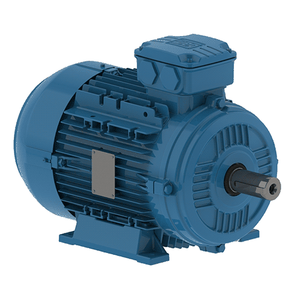
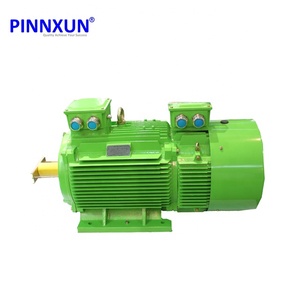
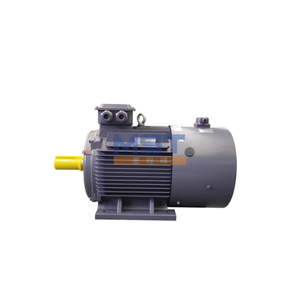
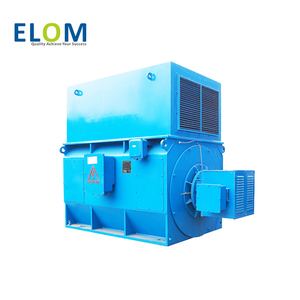
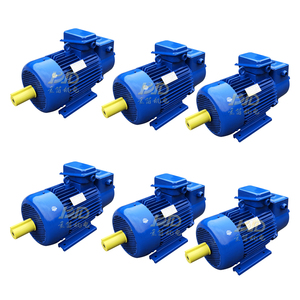
In the dense, highly regulated industrial and municipal ecosystem of Greater Boston—spanning from the biopharmaceutical manufacturing corridors of Cambridge and Waltham to maritime operations along Boston Harbor, the MWRA Deer Island Wastewater Treatment Plant, and ISO New England district energy facilities—unplanned high-voltage motor outages present catastrophic financial and operational liabilities. Among the primary failure modes in heavy-duty squirrel-cage induction motors and wound-rotor induction machines (such as the WEG, YR, and YZR series), rotor bar fatigue, joint cracking, and bar-to-end-ring separation account for up to 38% of non-stator mechanical failures.
As a premier European-engineered, CE-certified rotor bar repair manufacturer and specialist service supplier extending global capabilities to the Boston market, our organization leverages over 128 years of rotating electrical machinery lineage (originating from TDC Parsons Peebles engineering standards). We address the complex electrodynamic, thermal, and mechanical stresses that cause rotor bar failure through state-of-the-art re-barring, oxygen-free copper profiling, silver-copper alloy induction brazing, and Vacuum Pressure Impregnation (VPI).
To understand the necessity of specialized rotor bar repair, plant engineers in the Boston sector must examine the microscopic and electrodynamic forces active during high-inertia Across-the-Line (Direct-On-Line) starting. During acceleration, full voltage starting currents ($6\times$ to $8\times$ Full Load Current) generate immense transient forces within the rotor slots:
Forces proportional to the square of the starting current ($F \propto I^2$) push the rotor bars downward into the slot roots at 120 Hz (or 100 Hz in 50Hz networks). If slot liners degrade or wedge pressure drops, vibration induces fret corrosion and mechanical bar notch failures.
During starting, rotor bar temperatures rise exponentially faster than the laminated rotor core. The resulting axial elongation causes extreme shear stress at the braze joint between the rotor bar overhang and the short-circuit end ring.
High rotor frequency during initial lock-rotor conditions ($60\text{ Hz}$) forces current to the top edge of the rotor bar. This uneven current density creates intense localized thermal gradients across the depth of the bar profile.
When a single bar fractures or develops a high-resistance braze crack, adjacent bars absorb the diverted current, initiating a cascading thermal breakdown. Left unchecked, broken rotor bar segments lift axially under centrifugal force, striking the stator core end-turns and converting a manageable rotor overhaul into an catastrophic stator rewinding failure exceeding $250,000 in direct damages and millions in lost production.
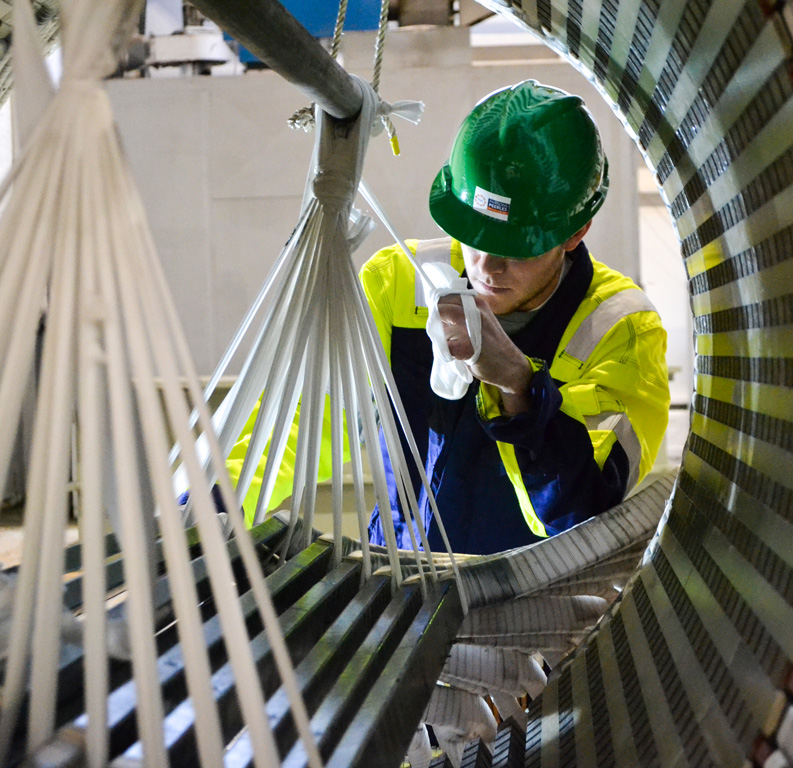
Our CE-certified manufacturing and repair workflow replaces compromised die-cast aluminum or fatigued copper cages with precision-machined C11000 Electrolytic Tough Pitch (ETP) or C10200 Oxygen-Free Copper bars.
Every repair follows rigorous metallurgical standards:
Evaluating the optimal restoration pathway requires understanding the physical, electrical, and thermal properties of rotor cage construction options available to Boston engineering managers:
| Engineering Parameter | Die-Cast Aluminum Cage | Standard TIG Weld Repair | CE Certified Fabricated Copper Re-Barring |
|---|---|---|---|
| Electrical Conductivity (% IACS) | 55% - 61% | 72% - 80% (Non-uniform) | 100% - 101% (C11000 ETP Copper) |
| Thermal Expansion Coeff. ($10^{-6}/\text{K}$) | 23.0 (High joint strain) | 16.5 (Uneven weld stress) | 16.5 (Matched to core dynamics) |
| Joint Shear Strength | Baseline Cast Joint | 120 - 180 MPa | > 350 MPa (AWS BAg-7 Silver Braze) |
| Thermal Cycling Fatigue Life | Low (< 2,000 DOL Starts) | Medium (< 4,000 DOL Starts) | Severe-Duty (> 25,000 DOL Starts) |
| VPI Resin Penetration Rate | N/A | Surface Coating Only | 100% Slot Deep-Impregnation (Class H) |
| Dynamic Balance ISO 21940 Grade | G 6.3 Standard | G 2.5 Field Restored | G 1.0 Ultra-Precision Laboratory Grade |
Our CE-certified rotor bar repair and high-power motor solutions cater specifically to the unique regional infrastructure demands of the Greater Boston area and the wider New England grid network:
Locations: Cambridge (Kendall Square), Waltham, Lexington.
Critical Demand: Continuous HVAC, direct-drive chillers, and zero-vibration process motors. A rotor bar crack induces 120Hz sideband vibrations that disrupt sensitive optical cleanroom manufacturing equipment. Our G1.0 balancing eliminates harmonics.
Locations: Conley Terminal, Boston Harbor, Fore River Shipyard.
Critical Demand: Heavy YZR crane slip-ring motors and portal hoist prime movers operating in corrosive salt-air environments. Repairs utilize marine-grade anti-corrosive insulation and silver-brazed copper end-rings.
Locations: MWRA Deer Island Facility, Nut Island Headworks.
Critical Demand: High-voltage multi-megawatt wastewater pump motors (3kV - 10kV). Re-barring with non-hydroscopic Class H epoxy resin guarantees long-term moisture barrier protection during surge flooding cycles.
Under Massachusetts’ stringent Clean Energy and Climate Plan (CECP) and ISO New England's grid modernization initiatives, industrial facilities are pushed to maximize electromechanical efficiency while reducing carbon emissions.
Replacing die-cast aluminum rotors with premium fabricated copper bar rotors during an overhauling cycle reduces rotor $I^2R$ copper losses by up to 40%. This efficiency upgrade yields a measurable drop in operating energy consumption, enabling Boston industrial facilities to earn local utility rebates (e.g., Mass Save incentive programs) while extending machine life by 15–20 years.
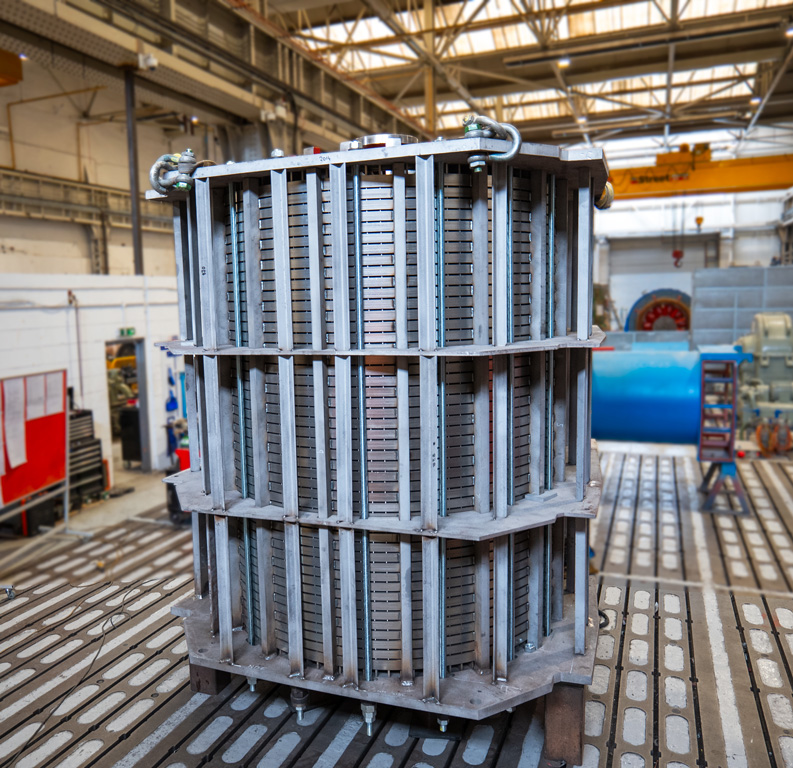
Our engineering facility carries the combined heritage of TDC Parsons Peebles, backed by over 128 years of continuous electrical machinery manufacturing. Our key engineering credentials include:
Over 12,141+ high-voltage machines manufactured and deployed worldwide across power generation, oil & gas, defense, and heavy manufacturing sectors.
Fully accredited for hazardous area motor repairs, including Ex ec, Ex p, and Ex e flameproof and non-sparking enclosures certified by SGS Baseefa.
State-of-the-art test bays capable of No-Load Testing, Direct Load Testing, Back-to-Back Testing up to 13.8kV, and Core Flux Leakage Analysis.
Addressing the primary technical inquiries raised by Boston municipal authorities, plant maintenance leads, and mechanical contractors:
Connect directly with our senior electromechanical engineering team to review CAD drawings, discuss emergency turnaround options, and access complete product specifications.