





Modern electrical power grids, electrified transport networks, and automated manufacturing facilities face unprecedented threats from transient overvoltage phenomena. Lightning strikes, switching operations within high-voltage substations, and inductive load disconnections induce catastrophic voltage spikes capable of breaching insulation systems, destroying sensitive microelectronics, and causing unbudgeted grid outages. To mitigate these risks, primary power apparatus—including Metal Oxide Varistors (MOVs), zinc oxide (ZnO) surge arresters, power transformers, and surge protective devices (SPDs)—must undergo rigorous validation testing using calibrated surge testing equipment certified to international and localized regulatory benchmarks.
For engineering leadership, procurement directors, and substation maintenance teams operating across the Japanese archipelago, selecting qualified equipment suppliers demands strict adherence to both European (CE conformity) and Japanese Industrial Standards (JIS). As a premier global equipment manufacturer with over a century of cumulative high-voltage engineering excellence, our factory delivers CE-marked, high-accuracy surge testing solutions tailored specifically to the unique operational, environmental, and regulatory requirements of the Japanese industrial sector.
Japan presents one of the world's most complex and demanding electrical engineering environments. Operating a bifurcated national power grid—where Eastern Japan (including Tokyo, Tohoku, and Hokkaido) runs on 50 Hz while Western Japan (including Osaka, Nagoya, and Kansai) operates on 60 Hz—requires diagnostic equipment with absolute frequency insensitivity and pristine signal isolation. Furthermore, Japan's mountainous geography, frequent typhoon seasons, and seismic activity necessitate resilient, field-portable, and wireless high-voltage test sets capable of performing continuous preventative diagnostics.
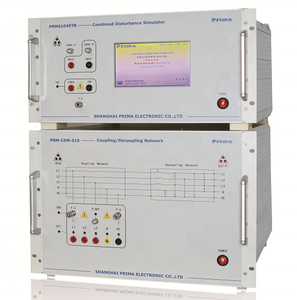
Overhead catenary lines (25 kV AC) along JR East and JR West lines experience violent switching transients. Our 10kV Combination Surge Generators (PSOB-S10T1) validate onboard signal relays and substation SPDs under stringent JIS E 4014 railway standards.
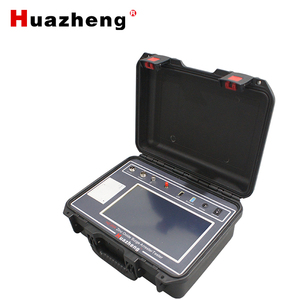
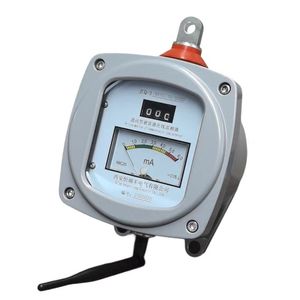
Leading Japanese electric power companies (TEPCO, KEPCO, Chubu Electric) deploy our Wireless Surge Arrester Testers and HZ-20A Leakage Current Meters to measure resistive leakage current ($I_r$) on live 66kV to 500kV ZnO arresters without de-energizing sub-stations.
In Kyushu's "Silicon Island" and Kumamoto fab clusters, microscopic voltage sags or microsecond surges ruin multi-million dollar semiconductor runs. Our multi-functional IEC 61000-4-5 surge systems ensure 99.9999% uptime for power supplies.
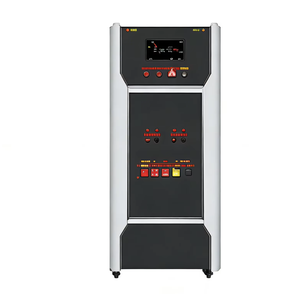
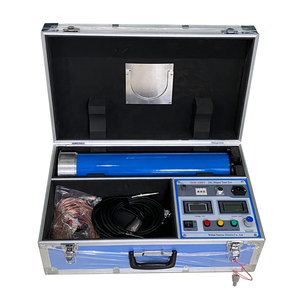
Offshore wind farms in Akita and Niigata require 120kV Portable DC Hipot Test Sets to perform field insulation resistance and DC withstand tests on cable terminations and zinc oxide arrester stacks prior to grid connection.
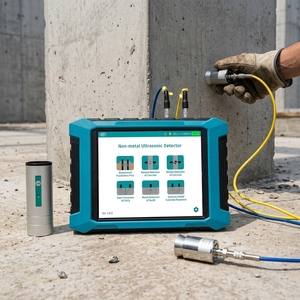
Japan's aging concrete civil infrastructure (bridges, tunnels, hydro dams) requires Non-Destructive Ultrasonic Pulse Velocity Test Apparatus to detect internal void structures, micro-cracks, and structural delamination post-seismic events.
The table below outlines the operational parameters, standard mappings, and target engineering domain for our flagship surge testing series supplied to Japanese enterprise clients:
| Equipment Model / Series | Primary Test Parameter | Waveform / Output Range | Standard Compliance | Key Application in Japan |
|---|---|---|---|---|
| PSOB-S10T1 Surge Generator | Impulse Immunity & Interference Level | 1.2/50 μs (10 kV), 8/20 μs (5 kA) | IEC 61000-4-5, JIS C 61000-4-5 | Industrial Automation & Telecom EMC Labs |
| HZ-20A Portable Arrester Tester | ZnO Leakage Current & Harmonic Analysis | 0 - 20 mA Current, 3rd Harmonic $I_r$ | IEC 60099-4, IEEE C62.11 | Live Substation Preventive Maintenance |
| 120kV DC Hipot Test Set | DC High Voltage Withstand & Leakage | 0 - 120 kV DC, 2 - 5 mA Output | CE, IEC 60060-1, JIS C 4580 | Power Cable & HV Arrester Field Hipot |
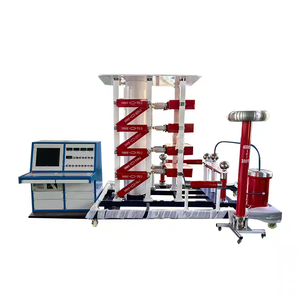
| 800kV Pulse HV Generator | High-Energy Lightning Impulse Withstand | Up to 800 kV, 1.2/50 μs Impulse | IEC 60060-2, GB/T 16927.1 | High Voltage Transformer & Bushing Manufacturing |
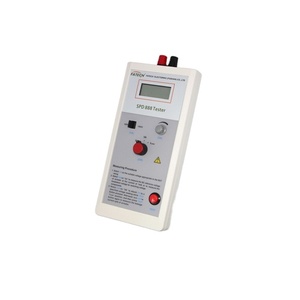
| Digital Wireless SPD Tester | Varistor Breakdown & Leakage Voltage | 0 - 2000 V DC Breakdown Voltage | IEC 61643-11, JIS C 5381-11 | Building Surge Protection & Panel Testing |
| Ultrasonic Pulse Velocity Apparatus | Concrete Crack Depth & Void Velocity | 10 - 500 kHz Sound Velocity Range | ASTM C597, JIS A 1155 | Civil Structure & Substation Foundation NDT |
The Japanese power measurement and industrial testing market is experiencing a profound paradigm shift driven by demographic changes, grid modernization, and stringent safety protocols. Key trends shaping procurement include:
With an aging workforce in utility sectors, Japanese network operators are replacing cumbersome manual test setups with handheld, wireless digital leakage current analyzers. Wireless synchronization eliminates high-voltage potential hazards for technicians while expediting routine preventive maintenance at 500kV sub-stations.
While Japanese engineers traditionally specified domestic JIS standards, multinational joint ventures and imported renewable energy infrastructure (such as European wind turbines and inverter systems) require dual compliance: CE Mark + JIS C 61000-4-5. Suppliers offering CE-certified equipment with proven JIS compatibility gain a distinct market advantage.
Japan's national masterplan to connect regional island grids via subsea HVDC lines (e.g., Hokkaido-Honshu interconnector) has driven demand for ultra-compact, high-capacity DC Hipot units (120kV to 800kV). These units must demonstrate extraordinary ripple suppression (≤ 0.5%) under extreme weather environments.
Modern Japanese procurement specs demand digital test instruments equipped with Bluetooth, RS485, or USB data export capabilities. Real-time fast Fourier transform (FFT) analysis isolating the 3rd harmonic resistive current ($I_{r3}$) allows maintenance engineers to predict varistor degradation months before catastrophic flashover occurs.
Rooted in over 128 years of combined electrical machine manufacturing, precision winding, and high-voltage testing engineering, our manufacturing facilities embody the rigorous quality assurance protocols expected by Japanese corporate buyers. Our manufacturing setup combines European structural design principles with state-of-the-art digital calibration laboratories.
Our production facilities operate under ISO 9001 Quality Management Systems, with specialized manufacturing zones certified by SGS Baseefa for hazardous area equipment (ATEX / IECEx).
Every impulse generator, hipot set, and surge tester undergoes 100% factory acceptance testing (FAT), including full-load withstand, continuous temperature rise, and wave distortion validation prior to export.
We maintain streamlined export channels to major Japanese ports (Yokohama, Tokyo, Kobe, Osaka) with complete English/Japanese documentation, CE declarations of conformity, and calibration certificates.
Whether supplying off-the-shelf portable surge testers or custom-engineered 800kV impulse voltage test halls, our engineering team provides complete end-to-end support—from initial electromagnetic insulation design to post-delivery calibration and remote diagnostic support.
Address common procurement, technical, and regulatory questions regarding importing and operating our surge testing equipment in Japan:
Partner with an established high-voltage equipment manufacturer. Speak directly with our senior testing engineers to discuss your specific voltage parameters, waveform requirements, or factory acceptance testing protocols.
Inquire Now