




Precision-engineered high-voltage induction machines, wound rotor motors, and crane slip ring units tested to ISO 9001 and IEC/ATEX standards for European market deployment.
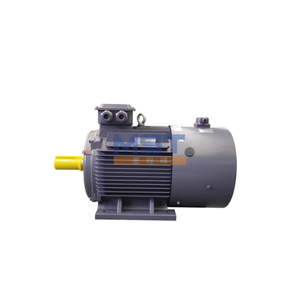
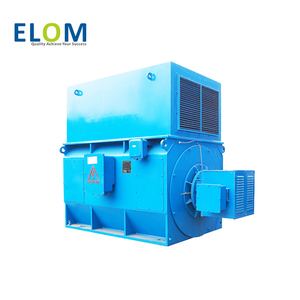
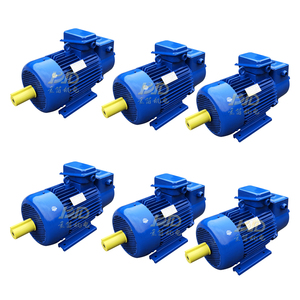
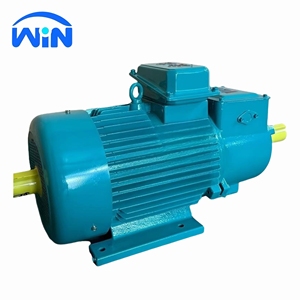
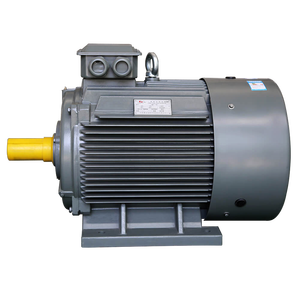
High-voltage electric motors, generators, and rotary frequency converters serve as the electro-mechanical heart of modern industrial infrastructure. Within heavy process operations across Greece—ranging from the lignite-fired power plants and hydroelectric stations of the Public Power Corporation (PPC S.A.) to the petrochemical refineries of Hellenic Petroleum in Aspropyrgos and Elefsina, as well as the maritime gantry cranes of Piraeus Port—unplanned machinery outage incurs devastating financial losses. Among the primary failure mechanisms in large rotating electrical machinery, degradation of the stator core laminated structure represents one of the most critical and catastrophic threats.
As a premier Core Flux Testing Manufacturer & Exporter supplying Greece and the Mediterranean basin, our engineering division provides specialized diagnostic excitation systems, high-flux ring testing equipment, and low-flux electromagnetic imperfection detectors (EL CID). This technical whitepaper explores the physics of stator core interlaminar insulation breakdown, evaluates diagnostic testing protocols compliant with IEEE 56, IEEE 43, and IEC 60034-23, and outlines strategic maintenance frameworks designed to maximize operational lifespan for industrial rotating assets in Greece.
Identifies localized eddy current loops causing core melting ($\Delta T > 5^\circ\text{C}$ to $15^\circ\text{C}$ threshold) before catastrophic stator burnout occurs.
Measures varnish degradation between silicon steel sheets (0.35mm–0.50mm) caused by thermal aging and mechanical fretting.
Dual testing capability: High-flux loop excitation at 1.0–1.5 Tesla thermal imaging or low-flux excitation at 4% rated flux density.
The magnetic core of an AC induction motor or synchronous generator is constructed from thousands of thin, insulated electrical silicon steel laminations (typically 0.35 mm to 0.50 mm in thickness). Lamination stacking minimizes eddy current (Foucault current) losses induced by the rotating magnetic field. Each lamination is coated with an inorganic or organic dielectric insulation layer (C-3, C-5, or C-6 class varnish according to ASTM A976 standards).
During extended machine operation, stator laminations are subjected to severe combined stresses:
When lamination varnish fails, adjacent steel laminations become electrically short-circuited. Under the main axial magnetic flux, these shorted circuits form closed conductive loops. Because the magnetic flux enclosed by the short circuit is substantial, large eddy currents circulate within the local contact area. This gives rise to rapid localized ohmic heating ($\mathbf{P = I^2 R}$), generating extreme thermal "hot spots". If left unaddressed, core hot spots can easily exceed 200°C, melting lamination steel, destroying slot liner ground wall insulation, and resulting in catastrophic phase-to-ground stator winding breakdown.
The High-Flux Ring Test (often designated as the Stator Core Excitation Test or Loop Test) remains the global definitive benchmark for verifying magnetic core integrity during overhaul, manufacturing, and rewinding procedures. The test involves wrapping a temporary excitation winding through the stator bore and around the outer frame casing.
By applying a single-phase AC voltage source to the excitation coil, a circumferential magnetic flux is induced in the stator back-iron core. The test is conducted at or near the rated operational magnetic flux density—typically 1.0 Tesla to 1.5 Tesla (representing 80% to 100% of rated operating flux).
As the core is energized for 30 to 60 minutes, high-resolution infrared thermography cameras continuously scan the internal stator bore surface. Shorted lamination areas display immediate thermal differential anomalies.
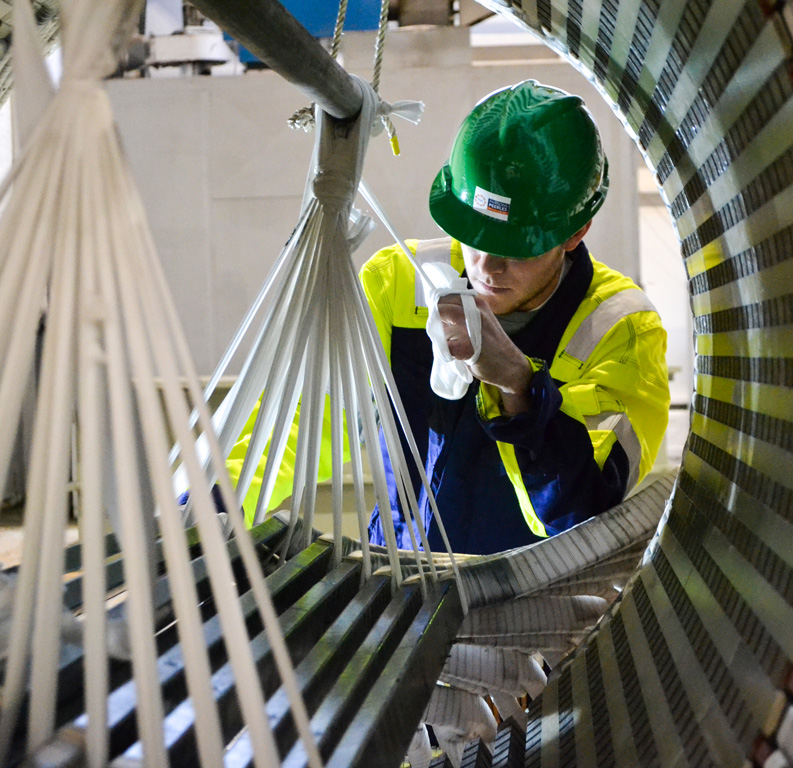
Plant asset managers in Greece frequently evaluate whether to implement Full High-Flux Ring Testing or Electromagnetic Core Imperfection Detection (EL CID). Our manufacturing engineers design and supply hardware capable of executing both testing protocols, depending on field accessibility and power availability.
| Diagnostic Parameter | High-Flux Loop (Ring) Test | EL CID (Low-Flux Test) |
|---|---|---|
| Operating Flux Density | 1.0 T to 1.5 T (80% – 100% Rated Flux) | 0.04 T to 0.10 T (approx. 4% Rated Flux) |
| Required Power Input | Very High (Hundreds of kVA / High Current) | Low (Standard Single-Phase 110V/230V, < 3 kVA) |
| Fault Detection Mechanism | Infrared Thermal Hot Spot Mapping ($\Delta T$) | Pickup Coil measuring Fault Current Phase Shift ($\text{mA}$) |
| Rotor Removal Requirement | Mandatory (Complete Rotor Extraction) | Mandatory for full bore access |
| Sensitivity to Deep Faults | Excellent (Measures full iron mass response) | High on slot tooth surfaces; lower in deep core slots |
| Primary Application | Manufacturing, Post-Rewind, Major Workshop Overhauls | In-situ Power Station Outages & Annual Preventive Maintenance |
To accurately perform a high-flux ring test on site in Greece, engineers must calculate the exact number of excitation turns ($N$) and required supply voltage ($V_{rms}$) to achieve the target flux density ($B$), avoiding unwanted saturation of excitation cables:
$$V_{rms} = 4.44 \cdot f \cdot N \cdot B \cdot A_{net}$$
Where:
If the excitation voltage or turn count is miscalculated, the core may either fail to reach the threshold necessary to excite interlaminar shorts, or experience core saturation resulting in excessive supply current draw and cable tripping.
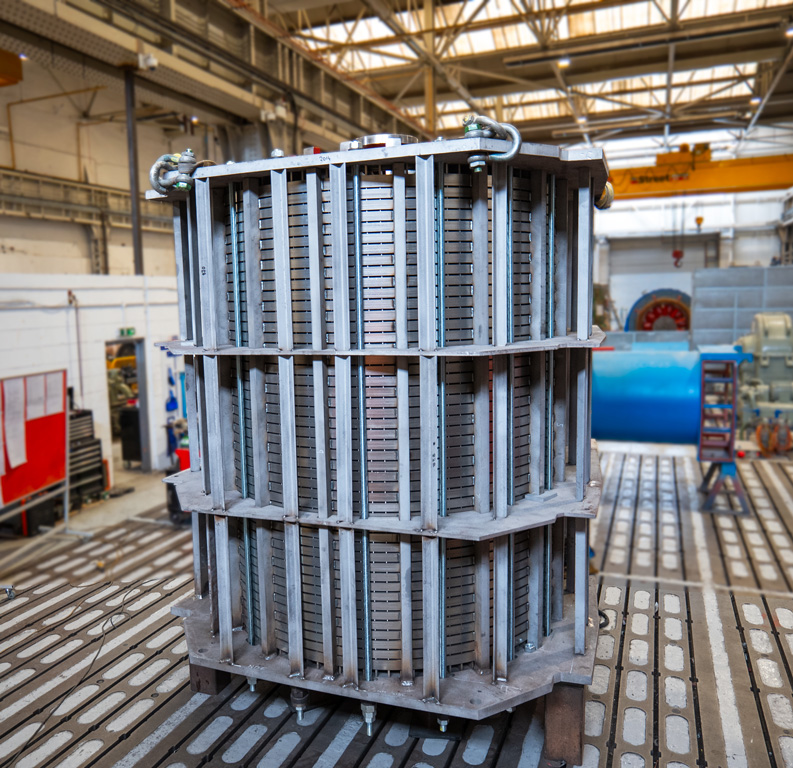
During high-flux thermal diagnostic monitoring, core temperatures are recorded across the bore surfaces. Based on IEEE 56 guidelines and OEM empirical data, hot spot evaluations follow strict classification criteria:
As Greece accelerates its transition toward modern, energy-efficient manufacturing, grid stability, and maritime logistics, the reliability of heavy rotating equipment is paramount. Our core flux testing systems and high-voltage motors are deployed across key regional hubs in Greece:
Serving shipyards, container terminal gantry cranes, and vessel maintenance docks with heavy-duty YZR crane slip ring motors and rotary frequency converters (50Hz to 60Hz shore power).
Supplying core flux diagnostic rigs and high-voltage induction generator repairs for hydro facilities and thermal power stations in Ptolemaida, Kozani, and Amyntaio.
Providing ATEX Ex ec / Ex p certified hazardous area high-voltage motors to refineries in Elefsina, Aspropyrgos, and Corinth, supported by site core integrity verification.
Supporting heavy mining operations, nickel smelting, and aluminum plants in Antikyra and Larco with robust 3.3kV-10kV YR series wound rotor induction motors.
Traced back to 1896, TDC Parsons Peebles combines over a century of British engineering expertise with modern global manufacturing standards. Operating state-of-the-art facilities in Edinburgh and Birmingham, UK, we specialize in high-voltage motors, generators, and custom rotary frequency converters up to 200 MVA installed capacity.
Our long-standing heritage in manufacturing electrical rotating equipment enables us to supply drop-in replacement motors for legacy machinery brands worldwide. Every machine built or repaired in our facilities undergoes rigorous quality testing, including high-voltage insulation diagnostics, back-to-back load testing, and comprehensive stator core flux analysis.
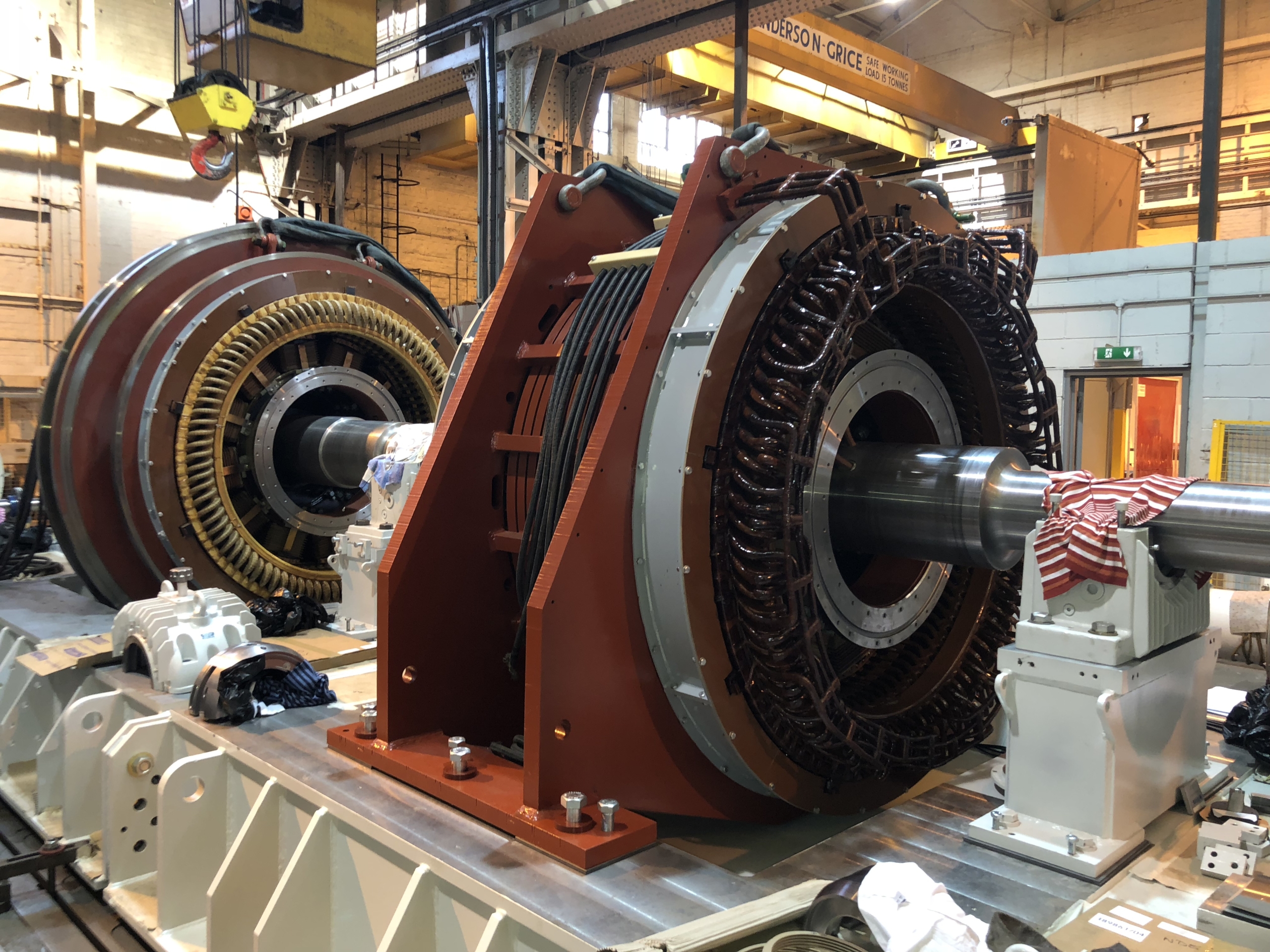
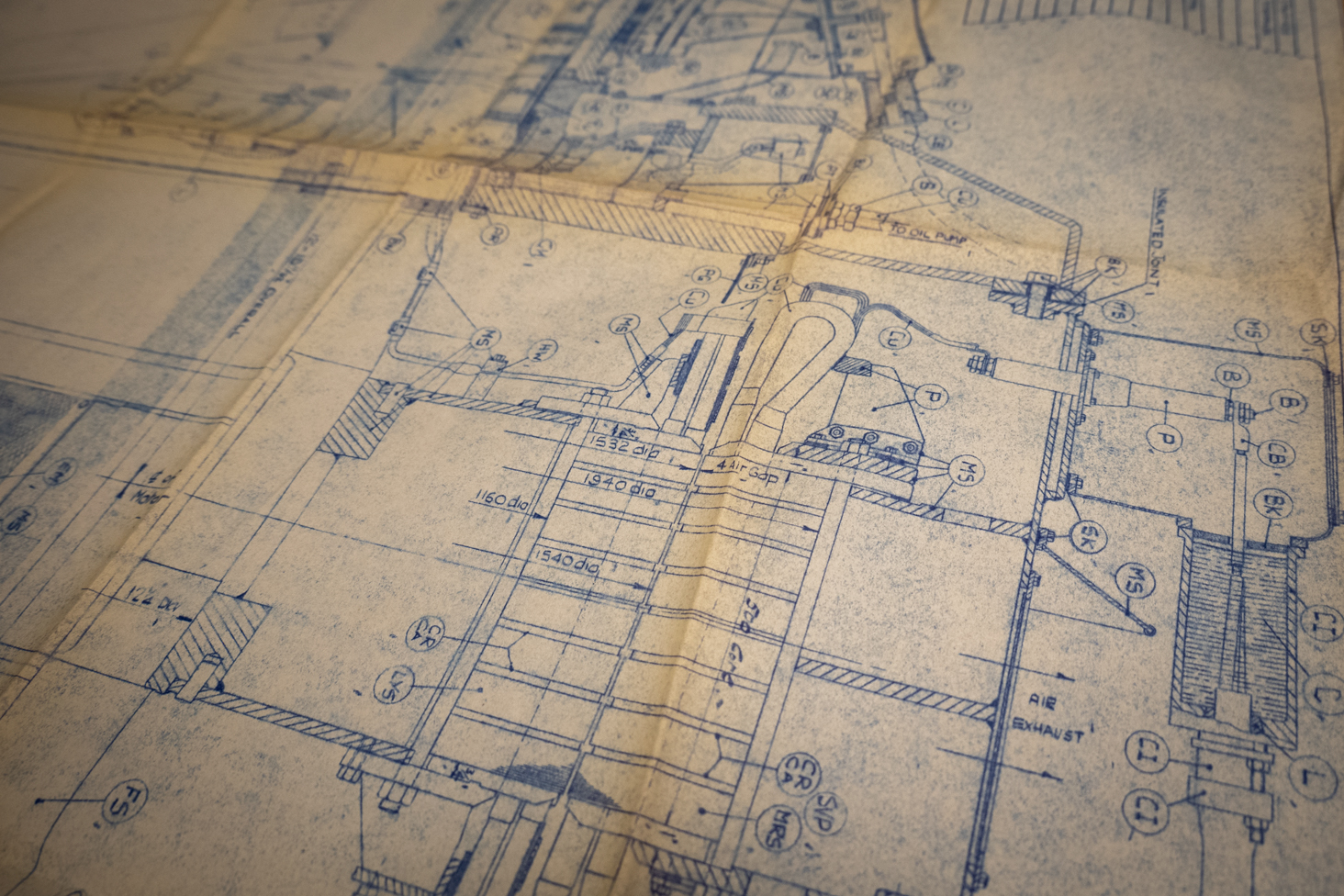
Complete drop-in replacement stator core and winding design for 30+ year old high-voltage motors, ensuring 100% mechanical and electrical interchangeability without footprint alteration.
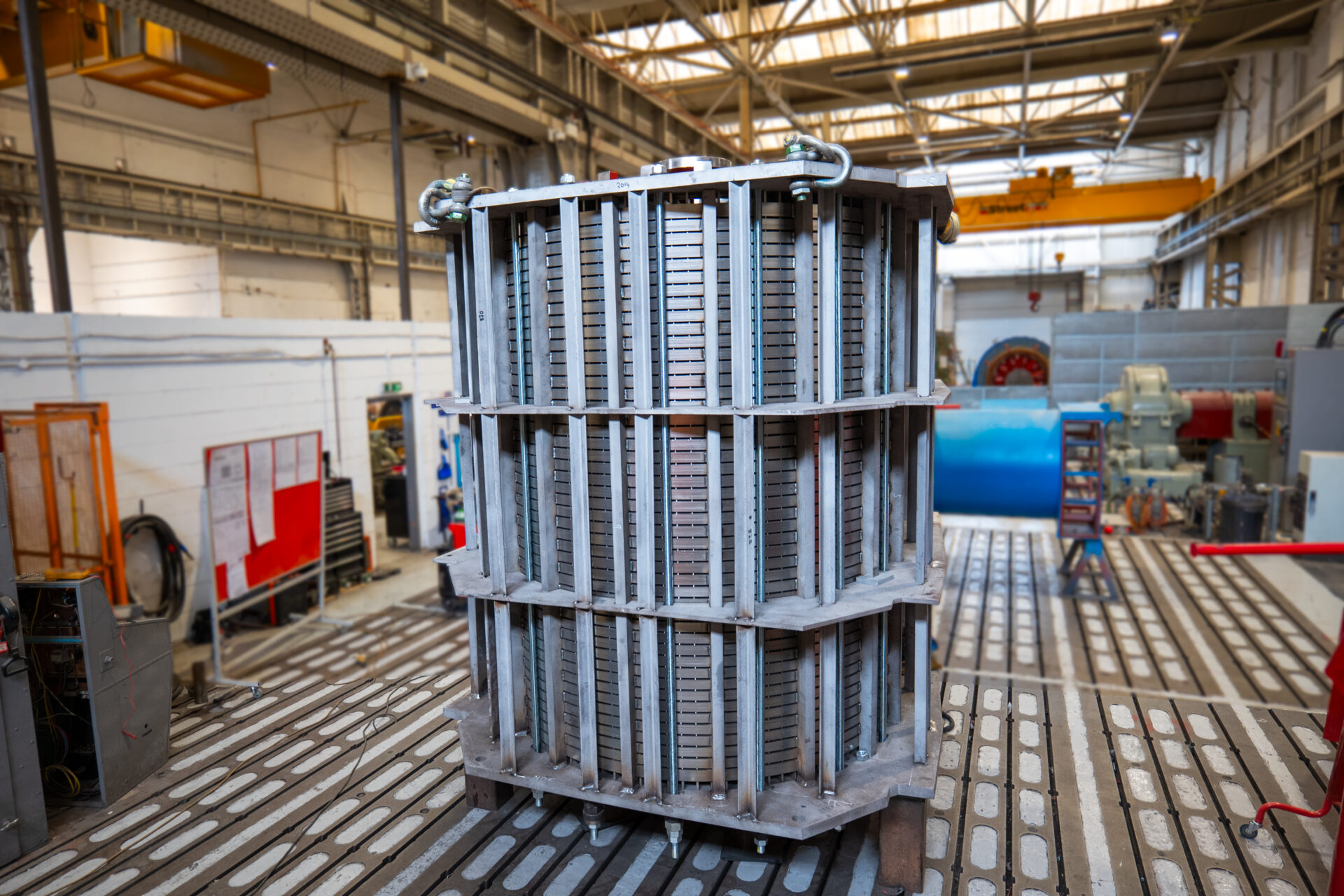
Full stator core re-lamination, interlaminar varnish recoating, and core flux thermal validation for a major European industrial utility generator.
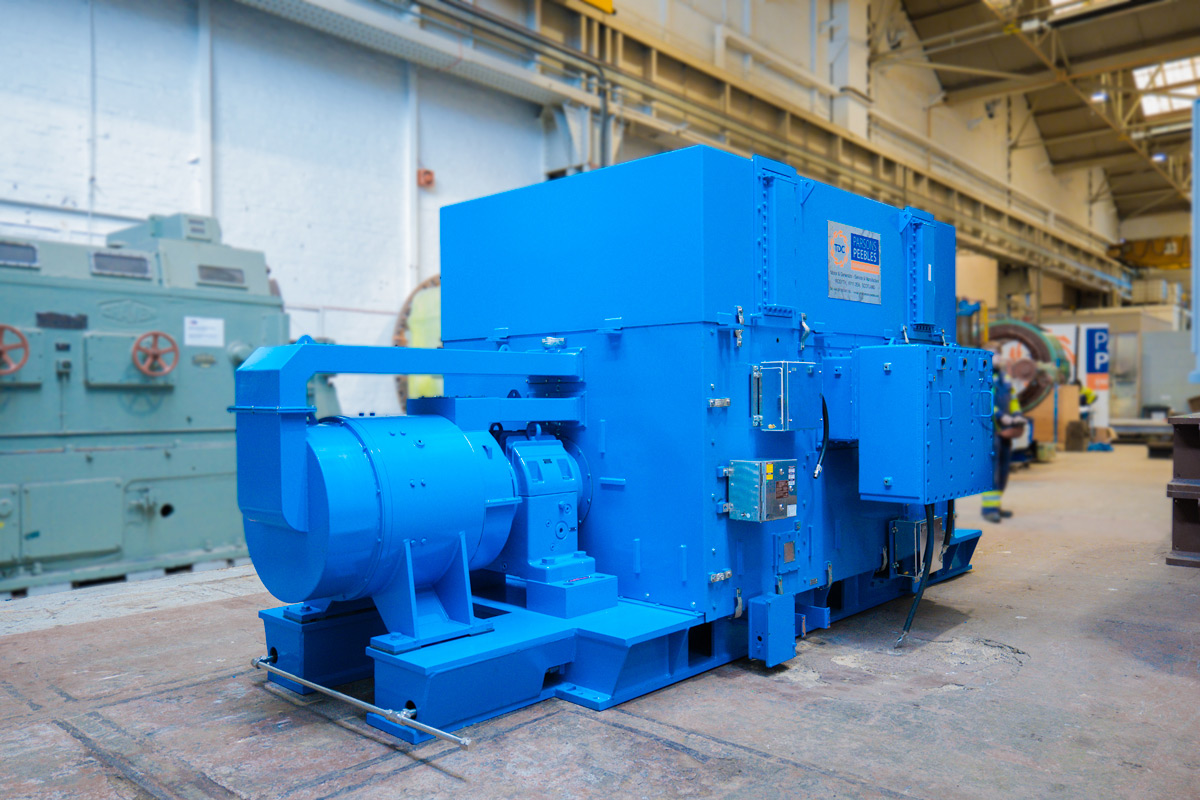
Complete refurbishment and insulation upgrade of a high-voltage induction generator, boosting power output efficiency and extending service life by another 25 years.
Rewinding a motor stator without inspecting the core laminated iron can result in immediate premature failure of the new winding. If hidden core hot spots exist due to interlaminar insulation damage, the thermal energy generated at the fault point will quickly degrade the new slot insulation, causing a repeat motor blowout within months. Core flux testing identifies and verifies core health before expensive winding materials are installed.
Yes. Our engineering field service teams can mobilize portable core flux testing systems directly to power stations, refineries, shipyards, and manufacturing sites throughout Greece (Athens, Piraeus, Thessaloniki, Patras, Kozani, etc.). We provide both High-Flux Loop excitation and low-flux EL CID testing with comprehensive analytical reporting compliant with European standards.
Our high-voltage motors designed for refinery, chemical, and gas processing installations are fully certified under ATEX Directives and IECEx schemes by recognized notified bodies such as SGS Baseefa. We provide Ex ec (Increased Safety / Non-sparking), Ex p (Pressurised Enclosure), and Ex d (Flameproof) high-voltage units suitable for Zone 1 and Zone 2 hazardous areas in Greece.
Replacing legacy electric motors (such as obsolete WEG, Siemens, Alstom, or Peebles frames) often presents mechanical installation challenges due to non-standard shaft heights, bolt hole centers, or terminal box locations. TDC Parsons Peebles designs custom drop-in replacement motors engineered to match your exact existing civil foundation bolt centers, shaft extension dimensions, and cable entry points, eliminating costly site structural redesign.
Consult with our senior rotating equipment application engineers to schedule on-site core flux testing in Greece, request technical data sheets, or obtain drop-in motor replacement quotes.