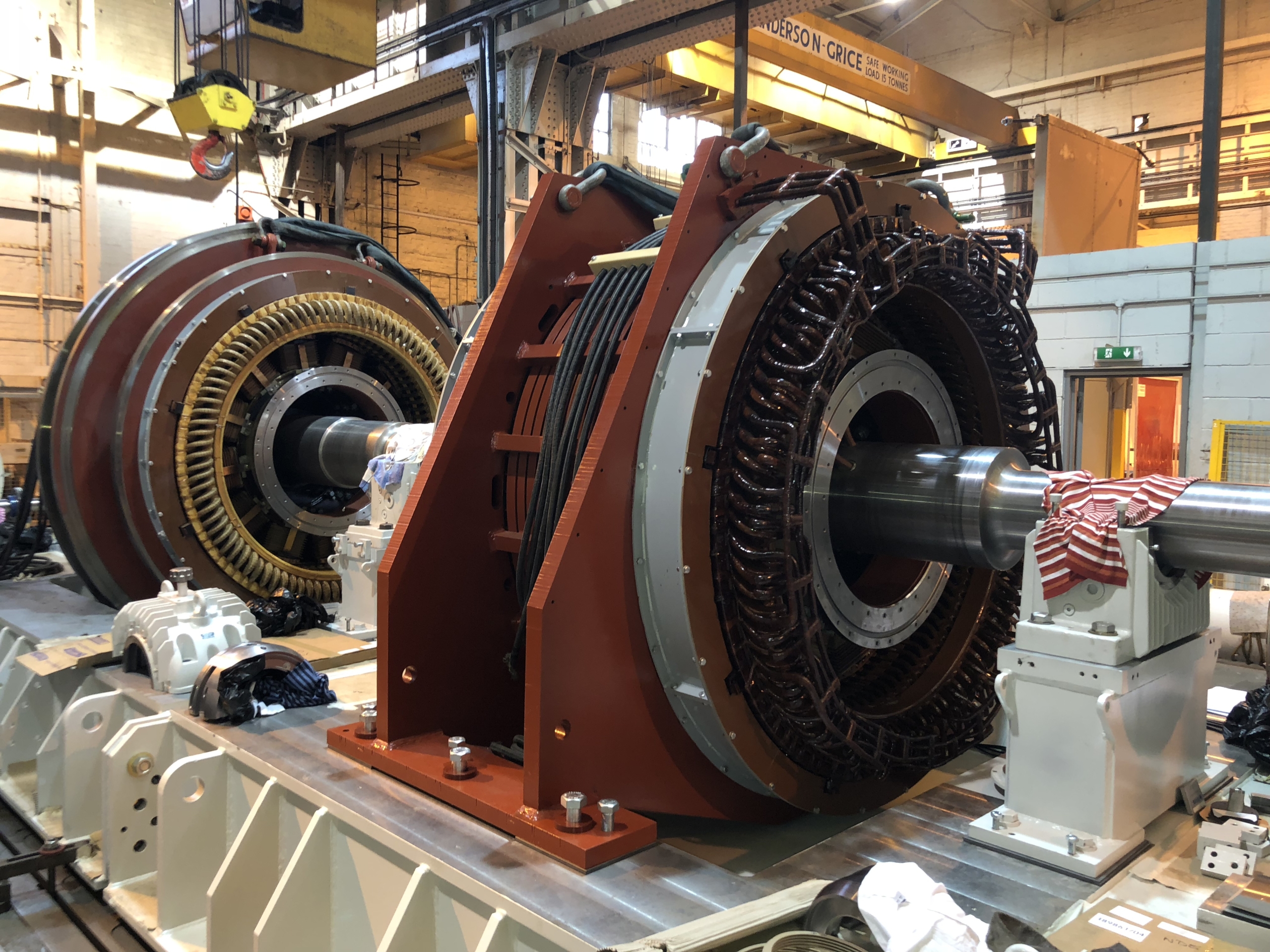





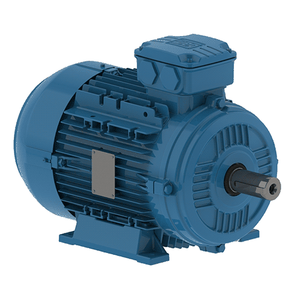
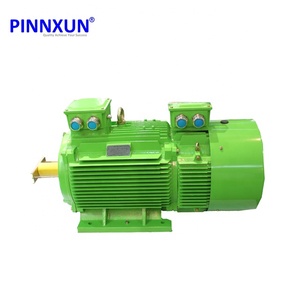
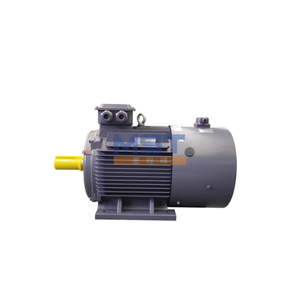
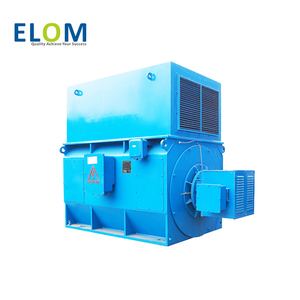
High-voltage three-phase asynchronous motors, wound rotor slip ring units, and heavy-duty industrial drives engineered for seamless deployment in Malaysian manufacturing and infrastructure sectors.
An authoritative technical guide on interlaminar core insulation inspection, eddy-current thermal hotspot detection, and life-extension strategies for electric motors and power generators in Southeast Asia.
In the rapidly expanding industrial corridor of Greater Kuala Lumpur, encompassing Shah Alam, Klang, Petaling Jaya, and Subang, high-voltage rotating electrical machines serve as the foundational muscle of infrastructure. From high-capacity water pumping stations managed by local utilities to heavy processing units in oil & gas terminals, chemical refining, cement production, and power generation, medium voltage (MV) and high voltage (HV) electric motors and generators operate under continuous thermal and electrical stresses.
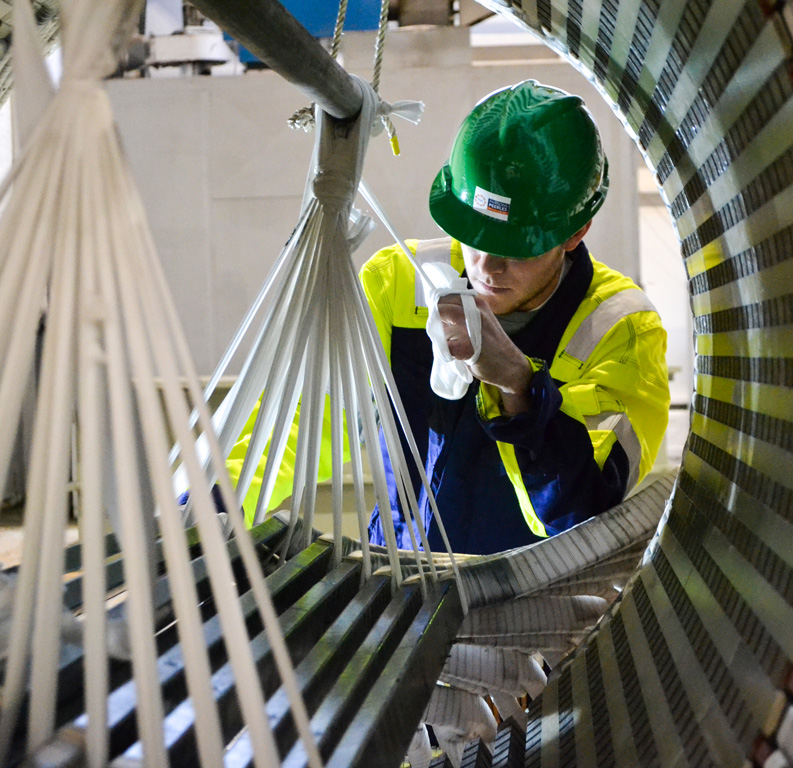
Over extended operational lifecycles, one of the most insidious degradation mechanisms within large AC synchronous and induction machines is the failure of stator core interlaminar insulation. Stator cores are constructed from thousands of thin, insulated electrical steel laminations stacked tightly together to minimize Foucault eddy-current losses. When mechanically stressed, thermally cycled, or contaminated by foreign particulate matter or localized friction during stator coil failure, the ultra-thin varnish insulation between adjacent laminations can break down. This results in localized short circuits between laminations, creating severe eddy-current loops. Under full electromagnetic excitation, these micro-shorts lead to intense thermal hotspots that can rapidly melt structural core iron, destroy surrounding slot insulation, and precipitate catastrophic high-voltage stator burnouts.
To eliminate unscheduled operational downtime and avoid multi-million-ringgit capital expenditures in motor replacements, enterprise asset managers across the Kuala Lumpur metropolitan area are turning to non-destructive **Core Flux Testing** (also termed Ring Flux Testing or EL CID Electromagnetic Fault Diagnostics). As a premier global supplier, exporter, and technical specialist with over 128 years of rotating electrical machinery heritage, our organization provides state-of-the-art Core Flux Testing equipment, field diagnostic services, and drop-in replacement stators engineered to meet the stringent demands of the Malaysian climate and industrial grid standards.
Unlike conventional insulation resistance (IR) or surge testing which only evaluates the copper winding insulation system, Core Flux Testing specifically evaluates the structural magnetic iron framework. Detecting a 100-millivolt interlaminar defect prior to rewind prevents core burning and preserves original stator core efficiency (IE2/IE3 standards) following machine refurbishment.
Core flux testing relies on Faraday's Law of Electromagnetic Induction to establish a circumferential magnetic flux path around the stator yoke, simulating or operating near nominal operating flux density. Engineers deployed to facilities throughout Kuala Lumpur utilize two primary testing paradigms based on site accessibility, power availability, and safety requirements:
| Diagnostic Parameter | Traditional High-Flux Ring Test (Rated Flux) | Low-Flux Electromagnetic Test (EL CID System) |
|---|---|---|
| Operating Flux Density ($B$) | 80% to 105% of rated magnetic flux (typically 1.0 to 1.5 Tesla) | 4% to 10% of rated magnetic flux (typically 0.05 to 0.1 Tesla) |
| Power Requirement | High MVA power supply required; heavy high-voltage excitation cables | Standard single-phase 230V / 415V supply; low current requirement |
| Detection Instrument | Calibrated Infrared Thermal Imaging (FLIR Thermography Camera) | Chattock Coil Pick-up & Digital Signal Analyzer (Phase & Fault Amperes) |
| Defect Identification Mode | Direct physical heating ($\Delta T > 5^\circ\text{C}$ to $10^\circ\text{C}$ indicates inter-laminar shorting) | Quadrature fault current measurement ($I_q \ge 100\text{mA}$ alerts interlaminar breakdown) |
| Safety & Core Thermal Risk | High thermal risk; unmonitored testing can rapidly burn lamination teeth | Completely non-destructive; zero thermal stress during diagnostic scan |
| Ideal Application in KL | Major workshop overhaul prior to full stator lamination restacking | Onsite routine maintenance in restricted space (offshore rigs, urban pump stations) |
In the traditional High-Flux Ring Test, flexible high-power excitation cables are wound axially through the stator bore and around the outer frame casing. An AC voltage source is applied to generate a toroidal magnetic flux through the stator core yoke. The required excitation voltage $V$ and turns number $N$ are calculated using the transformer equation:
$$V = 4.44 \cdot f \cdot N \cdot B \cdot A_{\text{core}}$$
Where $f$ is the system frequency (50 Hz across Malaysia), $B$ is target flux density in Tesla, and $A_{\text{core}}$ is the net cross-sectional iron area of the stator yoke. As the core energizes to approximately 1.4 Tesla, any interlaminar insulation failure completes an electrical circuit, inducing localized loop currents. The resulting resistive heating ($I^2 R$) is monitored using high-resolution thermal imaging cameras. A localized temperature rise exceeding $5^\circ\text{C}$ relative to the background core temperature flags a verified insulation defect requiring immediate mechanical etching, mica plate isolation, or partial re-lamination.
For site locations across Kuala Lumpur where heavy MVA power sources are unavailable or access is tightly constrained, Low-Flux testing excites the stator core to roughly 4% of rated flux. A precision robotic trolley or manual probe containing a Chattock coil is traversed along the stator slots. By measuring the phase-shifted magnetic magnetic field components generated by fault currents, the analyzer isolates interlaminar currents as small as 100 milliamperes, pinpointing defects buried deep within slot walls or core keybars.
Tailored high-voltage diagnostic and electrical machine supply solutions engineered for Malaysia's unique tropical environment and key industrial verticals.
Serving PETRONAS-approved platforms and marine terminals operating offshore Terengganu, Kemaman, and Port Klang. Core flux testing verifies Ex p (pressurized) and Ex ec (increased safety) hazardous area high-voltage motors up to 10kV, protecting assets against humid, salt-laden marine atmospheres.
Supporting Air Selangor and regional water management authorities operating massive raw water intake pumps and sewage treatment drives across the Klang River Basin. Core flux testing identifies core degradation caused by continuous damp operational environments and high vibration harmonics.
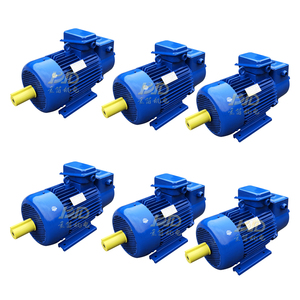
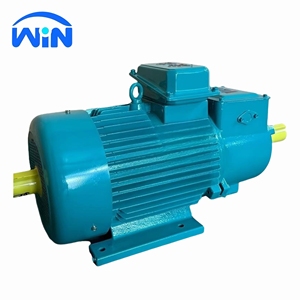
Extensive support for heavy cement plants, steel rebar rolling mills, and palm oil refineries in Rawang, Port Klang, and Nilai. We provide YZR series slip-ring crane motors and wound-rotor induction prime movers capable of withstanding heavy dust loading and extreme starting torques.
Combining historic British heavy electrical engineering standards with rapid global export logistics to deliver uncompromised quality to the Kuala Lumpur market.
With roots dating back to 1896 (incorporating TDC Parsons Peebles engineering standards), our facilities have designed, built, and tested over 12,141 rotating electrical machines. For complex industrial setups in Malaysia where civil modifications are prohibitively expensive, we specialize in **100% mechanically and electrically interchangeable drop-in replacement motors**.
If core flux testing reveals irreparable thermal damage to an existing stator core, our engineering team manufactures replacement lamination packs using high-grade silicon electrical steel, vacuum pressure impregnated (VPI) with Class H insulation systems. Every exported machine undergoes rigorous factory acceptance testing (FAT), including full-load, no-load, and core flux validation prior to sea or air freight shipment to Port Klang or KLIA.



Answers to common technical, procurement, and logistical queries raised by Malaysian industrial buyers, electrical consultants, and plant managers.
The primary objective is to verify the integrity of the lamination varnish insulation across the stator core. Over time, factors such as moisture ingress from KL’s high humidity, mechanical vibration, thermal expansion, or previous winding failures damage the thin oxide or varnish layer separating individual electrical steel laminations. Shorted laminations form low-resistance loops that induce heavy localized eddy currents under normal magnetic flux. Identifying these hotspots before rewinding prevents catastrophic thermal melt-down of the stator core iron during operational re-commissioning.
We maintain a streamlined supply chain dedicated to the Southeast Asian market, with direct air freight options to Kuala Lumpur International Airport (KLIA) for critical core testing kits and spare parts, as well as expedited sea freight routes to Port Klang for large medium/high-voltage motors and rotary converters. Our technical engineering team provides comprehensive export documentation, custom tariff compliance (HS Code alignment), and remote or onsite commissioning support for Malaysian operators.
Both options are available. Low-Flux testing (such as EL CID diagnostics) is specifically designed for rapid onsite deployment without stripping the machine down completely, making it ideal for routine predictive maintenance during scheduled plant turnarounds in Shah Alam or Port Klang. However, if a severe core fault is detected or if a complete rewind and re-lamination restack is required, the stator can be serviced in a certified high-voltage repair workshop equipped with full MVA High-Flux ring testing power supplies.
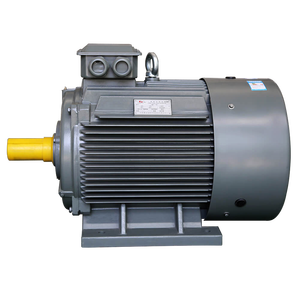
Yes. All our exported electrical machinery, including high-voltage squirrel cage induction motors, wound rotor slip ring motors, and salient pole generators, are custom-engineered to match Malaysia’s standard grid frequency of 50Hz and standard industrial operating voltages (415V low voltage; 3.3kV, 6.6kV, and 11kV medium/high voltage). Units are designed for continuous duty (S1) under tropical ambient conditions up to 40°C or higher with IP55/IP56 ingress protection ratings.
During a full 100% rated flux ring test monitored by infrared thermography, the general core temperature should remain uniform. Any localized point on the core surface that exhibits a temperature rise exceeding 5°C to 10°C over the average core body temperature is classified as a hot spot fault. Hotspots exceeding a 15°C differential indicate severe interlaminar breakdown requiring aggressive intervention, such as chemical etching, grinding away smearing, inserting mica insulation sheets, or restacking the damaged lamination section.
YZR series wound rotor slip ring induction motors are explicitly engineered for applications demanding high starting torque with low starting current, such as heavy bridge cranes, portal hoists, cement mills, and mine winders. By connecting external resistance tanks to the rotor via slip rings, plant operators in Malaysia can smoothly accelerate heavy inertial loads without subjecting the local distribution grid to severe voltage dips.
You can request immediate assistance by clicking the "Get Catalog" button located next to any product item on this page, or by initiating a live technical chat with our export coordination engineering team. We supply full technical datasheets, dimensional outline drawings, flux testing specification manuals, and competitive CIF Port Klang / DDP Kuala Lumpur commercial quotes within 24 to 48 business hours.
Contact our global export engineers to request technical catalogs, schedule core flux diagnostics, or procure drop-in replacement motors tailored for the Kuala Lumpur and broader Malaysian industrial market.