




In Australia's demanding industrial sector—spanning the severe dust conditions of Western Australia's Pilbara region, the intense thermal loads of Queensland’s coal basins, and continuous-process petrochemical operations in Victoria—rotational electrical assets operate under extreme stress. As legacy electromechanical infrastructure reaches design life limits, industrial operators face a critical strategic decision: complete capital replacement of aging High Voltage (HV) induction motors or engineered custom OEM High Voltage motor retrofitting.
Direct "like-for-like" replacement with modern off-the-shelf motors frequently introduces severe spatial, mechanical, and electrical integration friction. Modern NEMA and IEC motor frames feature significantly smaller physical footprints, altered shaft heights, non-matching hold-down bolt patterns, and revised terminal box positions. Modifying concrete foundations, civil structural steelwork, high-voltage cable trays, and fluid piping to accommodate generic replacement motors inflates downtime costs by up to 300%. Custom OEM retrofitting eliminates civil rework by re-engineering high-voltage stators, rotors, and enclosures within original dimensional envelopes while incorporating contemporary insulation, thermal management, and magnetic materials.
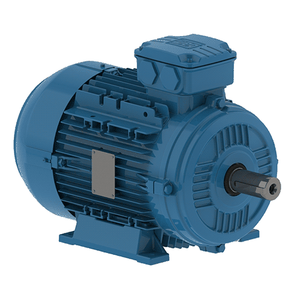
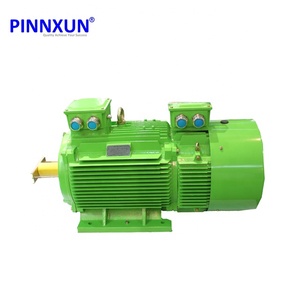
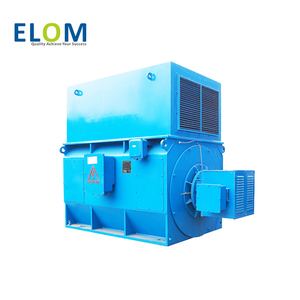
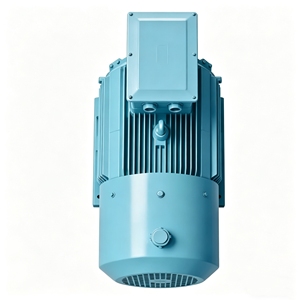
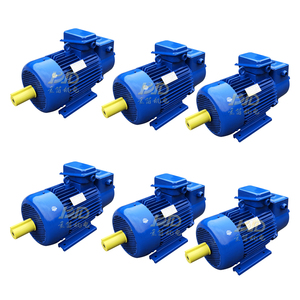
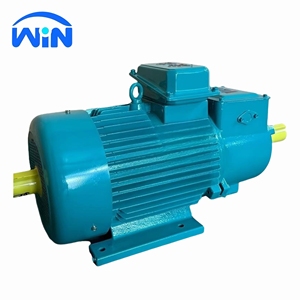
Our engineering facility specialises in bespoke OEM modifications, drop-in replacement retrofits, and high-torque wound rotor upgrades tailored specifically to Australian grid standards (415V, 3.3kV, 6.6kV, 11kV) and ambient operational limits up to 50°C. Below are 8 core rotating machine configurations available for custom OEM engineering and localized retrofitting:
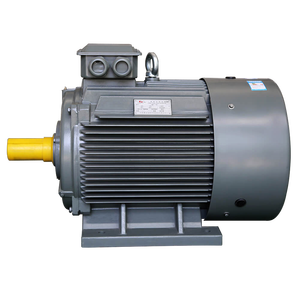
Asset managers must evaluate long-term Total Cost of Ownership (TCO), operational risks, and installation timelines. The table below outlines how custom OEM retrofitting provides superior value for high-voltage assets operating in Australia:
| Evaluation Factor | Custom OEM HV Retrofit | Generic New Motor Replacement | Standard Rewind / Overhaul |
|---|---|---|---|
| Civil & Steel Modifications | Zero (Exact Drop-in Fit) | High (Foundation re-drilling/grouting) | Zero (Original unit retained) |
| Mechanical Alignment | Direct shaft & foot matches | Requires transition skid plates | Direct shaft & foot matches |
| Insulation Class & Life | Class H VPI Resin (30+ Year Rating) | Class F (Standard OEM Spec) | Varies by shop capability |
| Thermal Ambient Capacity | Re-engineered for 50°C Pilbara heat | Standard 40°C derating applies | Limited by existing cooling core |
| Hazardous Area Compliance | Fully re-certified Ex ec, Ex p, Ex d | New certificate requiring site audit | May void original Ex rating |
| Lead Time to Site | 6 - 10 Weeks | 26 - 40 Weeks (Imported Frames) | 2 - 4 Weeks (Temporary Patch) |
Operating electrical machinery across Australia involves enduring some of the most unforgiving ambient conditions on earth. Our custom high-voltage motor retrofits are specifically tailored for key national industrial hubs:
In Western Australia's iron ore corridor, ambient temperatures routinely exceed 48°C, and microscopic hematite iron dust penetrates standard seals. Retrofits incorporate IP66 heavy-duty labyrinth sealing systems, forced air CACA (IC611) heat exchangers, and high-breakdown-torque stator designs to handle severe conveyor belt start-up loads without thermal tripping.
Refining processes expose equipment to caustic vapors and continuous moisture. Retrofit engineering upgrades standard cast housings to high-grade spheroidal graphite iron, applies multi-layer epoxy-phenolic paint systems, and seals terminal boxes with Ex d flameproof or Ex p pressurized purging mechanisms certified under AS/NZS 60079 standards.
Major urban water utilities operating massive vertical 3.3kV and 6.6kV raw water intake pumps require retrofits that support high thrust loads. We install custom spherical roller thrust bearings, integrated oil-lubricated sumps, and anti-reverse ratchets while modernising electrical performance for Variable Speed Drive (VSD) compatibility.
Australian mining operations are transitioning away from diesel-powered mechanical drives toward fully electrified infrastructure powered by solar PV and wind microgrids. Retrofitting legacy fixed-speed HV motors with VFD-rated, corona-resistant inverter-duty insulation (Class H VPI) enables variable speed control, reducing overall energy consumption by up to 35% while dampening power grid harmonics.
Regulatory scrutiny by state safety regulators (such as WorkSafe WA and Resources Safety & Health Queensland) requires hazardous area assets to maintain stringent certification. Re-engineering older motors allows operators to upgrade non-compliant equipment to current Ex ec (Increased Safety) or Ex p (Pressurised) standards without replacing legacy baseplates.
Rising regional summer temperatures in outback Australia force standard imported 40°C rated motors to be severely derated, causing unexpected thermal trips. OEM retrofitting re-calculates active stator copper volume and integrates optimized axial cooling channels, permitting full nameplate power delivery at 50°C ambient without insulation degradation.
Achieving a seamless drop-in replacement requires rigorous electromechanical reverse engineering and precision manufacturing. Our engineering protocol ensures 100% mechanical and electrical interchangeability:
On-site high-resolution 3D spatial scanning captures critical mounting dimensions: shaft diameter, keyway width, foot-to-shaft height (centreline), hold-down bolt centres, and terminal box spatial envelopes to an accuracy of ±0.1mm.
Using finite element analysis (FEA), our electrical engineers redesign the stator magnetic core with high-permeability silicon steel laminations, optimizing flux density and reducing core losses while tailoring starting current to local transformer capacities.
Stator windings are insulated using micaceous tape systems and processed under multi-stage Vacuum Pressure Impregnation (VPI) with resin formulations designed to resist high humidity, thermal cycling, and partial discharge under VFD operation.
Prior to dispatch, retrofitted machines undergo comprehensive full-voltage testing, dynamic balancing to ISO 21940 Grade G1.0, core flux testing, partial discharge analysis, and thermal rise measurement in our UK testing facilities.
Tracing our engineering origins back to 1896, TDC Parsons Peebles represents a legacy of electrical machine design and manufacturing excellence. Our heritage encompasses famous industrial brand names including Parsons Peebles, Peebles Electrical Machines, Bruce Peebles, and Electric Products (Cleveland, Ohio).
We possess an extensive original drawing archive covering over 13,000 legacy machines installed globally. This unmatched proprietary knowledge enables us to precise-engineer OEM retrofits and exact drop-in replacement motors for legacy installations where original drawings no longer exist on site.
Direct access to historical design records, electrical winding cards, and mechanical casting patterns for thousands of legacy industrial motors and generators.
Equipped with state-of-the-art testing bays capable of full-load, no-load, back-to-back, and core flux testing up to 13.8kV and megawatt power scales.
Fully accredited under ISO 9001 quality management, ISO 14001 environmental safety, AEMT membership, and SGS Baseefa ATEX / IECEx / AS/NZS hazardous area certifications.
Consult with our high-voltage application engineers today. Reduce project downtime, bypass costly civil modifications, and secure reliable high-voltage performance for Australian mining and industrial applications.