





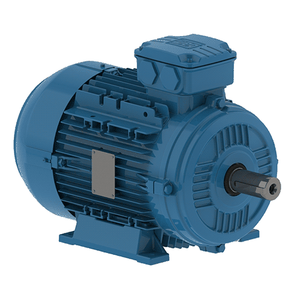
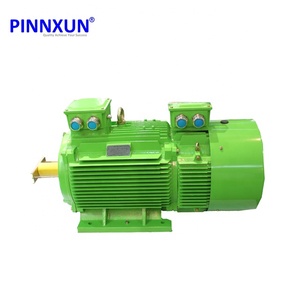
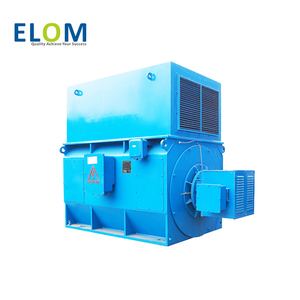
Romania represents one of Eastern Europe's most dynamic heavy industrial hubs. Driven by comprehensive national decarbonization initiatives, regional grid modernization by Transelectrica, and aggressive expansion across energy-intensive sectors, the demand for high-reliability rotating electrical equipment has surged dramatically. Romanian industrial facilities—ranging from the historical oil and gas refineries in Prahova County (Ploiești) to the expanding metallurgical complexes in Galați, maritime logistics hubs in Constanța, and hydro-power plants along the Danube River—require ultra-robust power generation and electromechanical drive architectures.
As the European Union imposes strict eco-design benchmarks (IEC 60034-30-1) and system resilience requirements, industrial operators across Romania are transitioning away from obsolete, thermally inefficient motors. However, replacing legacy infrastructure presents severe engineering challenges. Old Romanian plants frequently feature custom mounting footprints, high line-voltage fluctuations, and extremely harsh starting loads that standard off-the-shelf squirrel cage motors cannot support without causing catastrophic voltage sags across local distribution grids.
Offshore gas developments and renewable landing stations in Constanța demand ATEX/IECEx certified explosion-proof (Ex ec, Ex p) high-voltage generators and pumps designed for saline ambient conditions.
Open-cast mining in Oltenia and cement plants in Bicaz require YR/YZR slip ring motors capable of generating up to 280% rated starting torque under massive mechanical inertia.
Modernization of medium-head hydro turbines along the Olt and Siret rivers requires custom-wound high-voltage induction generators with specialized CACA/CACW cooling systems.
Selecting the optimal power generation system or electric prime mover is not merely a catalog selection; it demands a deep understanding of local environmental factors, operational duty cycles, and mechanical coupling specifications. Below are primary field applications engineered for Romanian operating environments:
The Port of Constanța handles millions of tons of containerized cargo, grain, and heavy bulk freight annually. Heavy gantry cranes, portal hoists, and ship-to-shore unloaders experience intense intermittent duty cycles (S3/S4 duty). Standard motors overheat under continuous braking and accelerating forces.
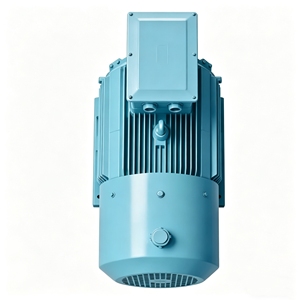
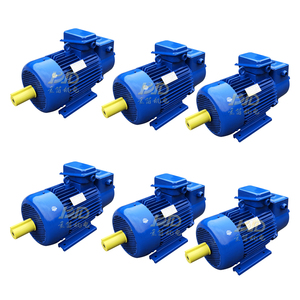
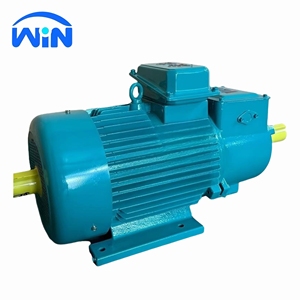
Recommended Solution: YZR Series Crane & Metallurgical Slip Ring Motors rated at 380V, 440V, or 660V with Class H insulation. Featuring high mechanical strength, forced cooling options, and heavy-duty brush gear, these units provide precise speed regulation through external rotor resistance, ensuring zero load-drop risk during critical lifting operations.
Rolling mills, ball mills, and blast furnace exhaust blowers operate under severe shock loads, high ambient temperatures, and dust-laden atmospheres. Grid stability in localized steelworks can fluctuate up to ±10% voltage variation.
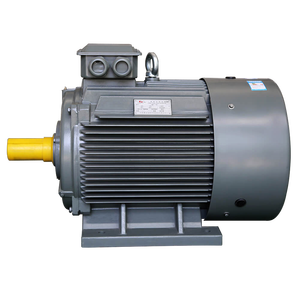
Recommended Solution: YR 3200kW High-Torque IP23/IP54 Wound Rotor Induction Motors operating at 6kV or 10kV line voltages. The heavy cast-iron or fabricated steel frame resists structural resonance, while the rotor slip-ring configuration absorbs mechanical shock loads without transferring damaging current spikes back into the main substation breaker.
Processing volatile hydrocarbons requires absolute safety compliance to eliminate thermal ignition risks. Pumping stations operating continuous heavy crude transfers demand non-sparking, pressurized electrical drive units.
Recommended Solution: High-Voltage Ex p / Ex ec Explosion-Proof Motors designed with vacuum pressure impregnated (VPI) Class F insulation. Engineering customized drop-in replacement dimensions allows plant engineers to replace legacy Romanian-built UMEC or electro-machine units without torching existing steel foundations or altering piping connections.
To assist plant maintenance directors and electrical engineers in Bucharest, Cluj-Napoca, and Timișoara in selecting the proper motor topology, the following comparative engineering matrix outlines critical performance differences under weak grid conditions:
| Performance Characteristic | YR/YZR Wound Rotor (Slip Ring) Motor | Standard Squirrel Cage (VFD Driven) | Direct-On-Line (DOL) Squirrel Cage |
|---|---|---|---|
| Starting Torque Ratio | Up to 250% - 280% Full Load Torque | 150% - 200% (VFD Dependent) | 110% - 150% Full Load Torque |
| Starting Inrush Current | Extremely Low (1.2× - 1.5× FLC with LRS) | Controlled via Inverter | Severe Inrush (6.0× - 8.0× FLC) |
| Thermal Stress during Start | Dissipated externally in starting resistors | Heat localized inside stator/rotor bars | High thermal stress inside rotor cage |
| Grid Harmonics Impact | Zero THD injected into electrical grid | Requires expensive active harmonic filters | Zero THD, but severe voltage dip |
| Capex vs. Opex Efficiency | Low initial capital cost, extreme reliability | High VFD electronics cost & cooling needs | Lowest initial cost, high maintenance/penalties |
| Romanian Industry Suitability | Ideal for Crushing, Mining, Cranes, Heavy Fans | Ideal for variable flow centrifugal pumps | Light industrial, low starting inertia pumps |
Building high-voltage rotating electrical machinery demands decades of specialized manufacturing knowledge, specialized insulation chemistry, and advanced high-power test beds. Drawing upon an engineering lineage spanning over 128 years (incorporating legacy British engineering standards of Parsons Peebles), our manufacturing facilities deliver world-class electromechanical assets engineered explicitly for heavy industrial endurance.
Every industrial motor and generator undergoes strict Quality Assurance protocols. Certified by international testing bodies, our hazardous area designs comply with all EU Directives and CE markings required in Romania.
We eliminate costly civil engineering rework. By reverse-engineering shaft centerlines, foot-hole dimensions, and terminal box locations, our custom replacement motors match legacy Romanian machines 100% physically and electrically.
Equipped with high-voltage test systems up to 13.8kV and up to 200 MVA total system capacity, machines undergo extensive core-flux testing, dynamic balancing, vibration analysis, and full-load temperature rise validation prior to dispatch.
Based on direct search queries and technical inquiries from procurement engineering teams across Romania, we have compiled comprehensive answers to critical technical questions:
Whether you require a high-torque YR slip ring replacement motor, an ATEX-certified high-voltage generator, or complete technical parameters consultation, our senior electromechanical engineering team is ready to assist.
Get a Quote