


Engineered for extreme duty cycles, high altitude derating compliance, RETIE standards, and smooth line-starting capability in rugged Colombian operational environments.
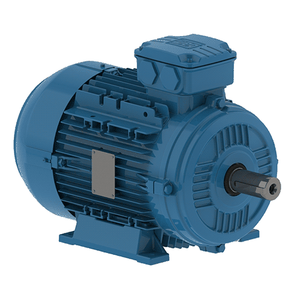
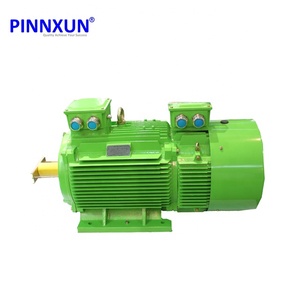
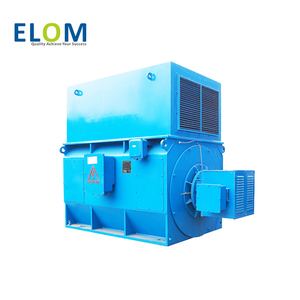
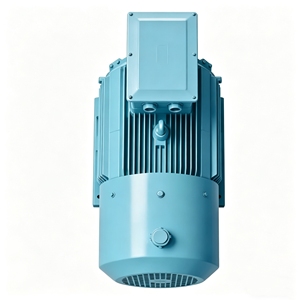
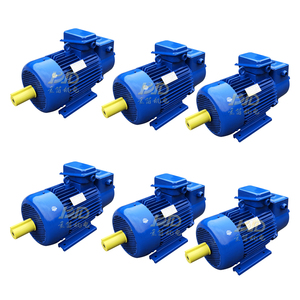
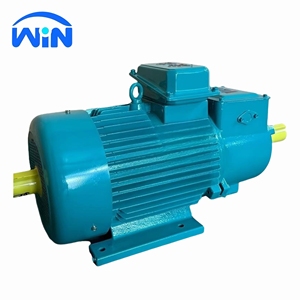
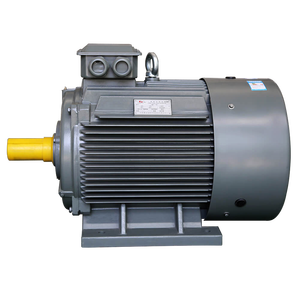
Colombia’s industrial landscape is undergoing a massive structural transformation. Driven by heavy investments in mining expansion across the Andean cordilleras, small to medium hydroelectric power projects (PCHs - Pequeñas Centrales de Generación Hydroeléctrica), sugar mill co-generation plants in the Cauca Valley (Valle del Cauca), and cement manufacturing complexes in Antioquia and Cundinamarca, the country requires exceptionally robust rotating electrical machines.
In these heavy-duty sectors, standard squirrel-cage induction motors and basic synchronous generators frequently fail due to extreme starting loads, severe line-voltage dips on regional grids, and harsh environmental stress. This whitepaper analyzes the engineering necessity of Slipring Generators (Wound Rotor Induction Generators - WRIG) and Wound Rotor Induction Motors (WRIM) manufactured specifically for exportation into the Colombian market.
As premier international manufacturers and exporters, our engineering teams build rotating equipment that addresses the unique geographic, electrical, and regulatory requirements governed by Colombia's Ministry of Mines and Energy, specifically adhering to the RETIE (Reglamento Técnico de Instalaciones Eléctricas) safety standards and NTC/IEC international frameworks.
One of the most critical engineering oversights made by generic machine exporters to South America is ignoring high-altitude atmospheric physics. Major industrial hubs in Colombia operate at extreme elevations above sea level:
According to IEC 60034-1 guidelines, standard electrical generators and motors rated for operation below 1,000 meters experience severe thermal derating at higher elevations. Air density drops significantly, reducing the mass flow rate of cooling air across internal rotor ducts and external cooling fins.
| Elevation (Meters Above Sea Level) | Air Density Ratio (ρ/ρ₀) | Standard Thermal Derating Factor | TDC Parsons Peebles Custom Altitude Upgrade |
|---|---|---|---|
| 1,000 m (Standard Baseline) | 1.00 | 100% Rated Power | Class F Insulation (105K rise limit) |
| 1,500 m (Medellín Industrial Region) | 0.86 | 95% Rated Power | Enlarged Internal Fan & VPI Class F Insulation |
| 2,200 m (Manizales Mining Sites) | 0.78 | 89% Rated Power | Over-sized Stator Core + Class H VPI Resin |
| 2,640 m (Bogotá Industrial Parks) | 0.74 | 85% Rated Power | CACA / CACW Heat Exchanger Redesign |
| 3,500+ m (Andean Mining Pit Crusher Drives) | 0.66 | 76% Rated Power | Forced Ventilation (IC86W) + Altitude Surge Protection |
To neutralize these effects, our slipring generators exported to Colombia utilize Class H Vacuum Pressure Impregnation (VPI) utilizing specialized epoxy-resin systems. We increase magnetic core stacking lengths to maintain flux density without triggering premature core saturation or dielectric insulation breakdown under reduced air breakdown voltage (Paschen’s Law).
The fundamental operational superiority of a Slipring Generator (Wound Rotor Induction Generator) lies in its three-phase rotor winding connected to heavy-duty collector rings (slip rings). Unlike permanent magnet synchronous generators (PMSG) or fixed squirrel-cage units, slipring machines allow dynamic manipulation of rotor slip ($s$) and torque parameters.
Rotor & Brushgear Assembly Mechanics:
Our slipring assemblies feature centrifugally cast bronze or high-grade copper-nickel alloy collector rings, mounted on high-dielectric mica insulated sleeves. The brushgear employs self-lubricating, low-wear electro-graphite brushes fitted with constant-force helical spring holders. This prevents contact chatter and micro-arcing during thermal expansion swings common in unconditioned Andean plant enclosures.
Pairing our slipring machines with Liquid Resistance Starters (LRS) or motorized step-resistance panels allows starting current to be clamped to $\le 1.2 \times I_{rated}$ while delivering up to $250\%$ rated breakaway torque.
When connected to variable regional Colombian grids (CODENSA, EPM, CELSIA networks), the slip ring rotor circuit buffers transient line faults, preventing turbine trip-outs in decentralized hydro power stations.
Precision skewing of stator/rotor slots combined with short-pitch lap windings eliminates 5th and 7th harmonic voltage distortions, satisfying strict RETIE power quality mandates.
To ensure maximum ROI and reliability, our slipring generators and heavy wound-rotor motors are tailored for Colombia's core economic sectors:
Heavy ball mills, SAG mills, and jaw crushers in Colombian gold, copper, and coal mines demand enormous inertia overrides during startup. A standard motor will draw 600% to 800% inrush current, causing catastrophic voltage sags across remote mining sites. Our YR and YZR series wound-rotor motors permit gradual liquid resistance insertion, enabling smooth mill acceleration from dead-stop under 100% full load without tripping local sub-station breakers.
In sugar mills across Cali, Palmira, and Buga, cane crushers and bagasse co-generation plants operate under heavy moisture and acidic steam exposure. Our slipring machines feature IP55 enclosed collector ring compartments with anti-condensation space heaters and tropicalized phase-separators to resist bagasse dust ingress and high ambient humidity.
Colombia’s mountainous topography makes it ideal for small hydro plants (1 MW to 15 MW). Wound Rotor Induction Generators (WRIG) installed in run-of-the-river hydro schemes allow controlled variable speed operation, capturing peak hydraulic efficiency across fluctuating rainy and dry seasons (El Niño / La Niña cycles).
Kiln drives and raw material grinding mills operating in Cundinamarca and Boyacá rely on our high-torque slipring motors for continuous 24/7 duty. Reinforced roller bearings (SKF/FAG) with automatic relubrication nipples guarantee 100,000+ L10h bearing life even under intense radial shaft loads.
Building upon over 128 years of rotating electrical machinery heritage through our UK manufacturing lineage (TDC Parsons Peebles / Luzader Motors lineage), our export department offers unmatched manufacturing depth:
We engineer exact mechanical footprint duplicates for legacy WEG, Siemens, ABB, AEG, and General Electric slipring machines. Shaft height, mounting bolt centers, and terminal box locations match existing foundations zero site modifications required.
Every exported unit undergoes rigorous FAT testing in accordance with IEC 60034, including No-Load Loss Testing, Full Load Temperature Rise Tests, Core Flux Testing, Tan Delta Dielectric Analysis, and Dynamic Balancing to ISO 1940 Grade G1.0.
All documentation, nameplates, and safety interlocks are manufactured to strictly satisfy RETIE requirements in Colombia, facilitating rapid customs clearance at the ports of Barranquilla, Buenaventura, or Cartagena.
Direct engineering answers regarding imports, technical specifications, and maintenance in Colombia.
Speak directly with our rotating equipment engineering team. We provide custom technical proposals, altitude derating calculations, CAD dimension drawings, and competitive export quotations within 24 hours.