



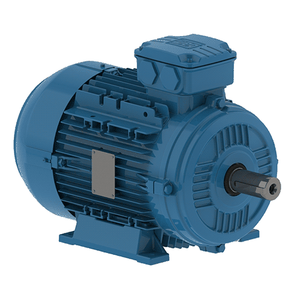
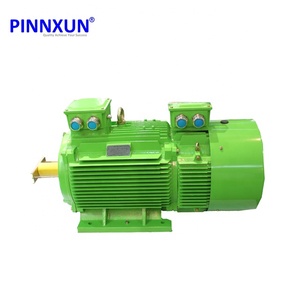
Below are premier industrial three-phase induction motors, wound rotor slip ring motors, and heavy asynchronous equipment manufactured to rigorous international standards and available for direct export to Ireland’s expanding energy and process sectors.
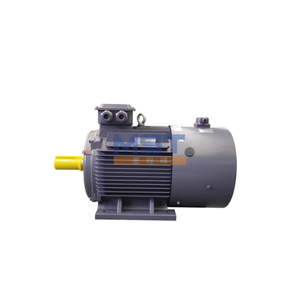
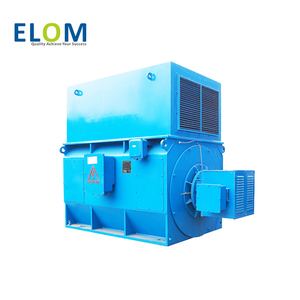
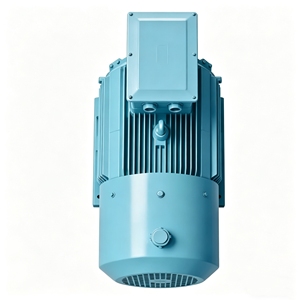
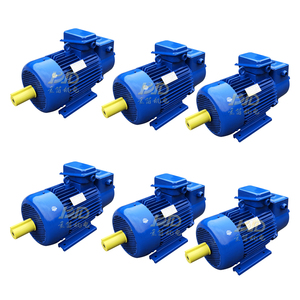
In high-voltage (HV) rotating electrical machines, generators, and large AC induction motors, the stator core magnetic integrity serves as the bedrock of overall electro-mechanical performance. Over extended operational cycles—subjected to continuous thermal expansion, mechanical vibration, and electromagnetic stress—the ultra-thin varnish insulation separating individual silicon steel laminations can degrade. When lamination insulation breaks down, eddy currents flow across adjacent plates, producing severe localized overheating known as core hot spots.
Left undetected, hot spots cause rapid catastrophic breakdown of the primary slot insulation, leading to phase-to-ground or phase-to-phase faults, unscheduled plant trips, and multi-million-euro operational outages. Factory-level and field-level Stator Core Flux Testing is the paramount non-destructive diagnostic procedure utilized by top exporters and specialized factories serving heavy industries in Ireland.
Excites the stator core to rated operational flux density (typically 1.0 to 1.5 Tesla) using a temporary high-voltage excitation winding. Combined with high-resolution infrared thermal imaging, it reveals hot spots caused by lamination short circuits under actual working magnetic saturation levels.
Electromagnetic Core Imperfection Detection operates at approximately 4% of rated flux density using a light excitation coil. It measures fault currents using a pickup coil (Chattock coil) along stator tooth slots, offering high sensitivity without requiring massive power supplies.
Quantifies specific iron losses in Watts per kilogram (W/kg). Essential after motor rewinding or thermal burnout cleaning cycles to confirm that lamination baking procedures have not compromised core efficiency ratings.
| Testing Metric / Parameter | High Flux Ring Test (IEEE 56 / Core Loss) | Low Flux El CID Method | Factory Quality Gate Requirement |
|---|---|---|---|
| Excitation Level | 1.0 - 1.5 Tesla (Operational Saturation) | 0.04 Tesla (4% Rated Flux) | Mandatory 1.0T baseline for new MV/HV stators |
| Power & Setup Requirement | High kVA utility connection + Heavy Cables | Low Voltage Single Phase (110V/230V) | Full factory witness capability required |
| Detection Mechanism | FLIR Thermographic Imaging (ΔT > 5-10°C) | Electromagnetic Pickup Coil (mA fault current) | Dual validation on high-criticality assets |
| Lamination Repair Verification | Immediate visual & thermal validation | Digital fault waveform mapping | Zero hot-spot tolerance across active length |
Ireland’s industrial sector is undergoing a massive transformation driven by rapid infrastructure expansion, heavy pharmaceutical manufacturing, and the integration of immense renewable capacity into the national grid. Factory-certified stator core flux testing and high-voltage wound rotor motors play a vital operational role across key Irish regions:
With non-synchronous wind energy providing a vast portion of Ireland's electricity, grid operator EirGrid requires dynamic reactive power and inertia support (DS3 programme). Stator core flux testing ensures synchronous condensers and hydro generators along the River Shannon and coastal nodes operate continuously without thermal lamination failure under sudden grid frequency swings.
The hyperscale data center hubs around Grange Castle, Dublin, and Kildare rely on massive multi-megawatt backup generator sets and continuous heavy HVAC induction motors. Core flux testing during factory acceptance testing (FAT) guarantees maximum operational reliability for 24/7 mission-critical uptime.
Ringaskiddy in County Cork represents one of the world's dense clusters of pharmaceutical production. High-voltage explosion-proof (Ex p, Ex ec) motors driving compressors, pumps, and cleanroom air systems must maintain flawless insulation integrity. Exported motors tested via full-flux methods provide certified spark-free and low-vibration performance.
Irish enterprise buyers, utility operators, and engineering procurement contractors (EPCs) are aligning procurement strategies with stringent climate targets and energy sustainability directives:
Climate Action Plan & Industrial Decarbonization: Ireland’s statutory requirement to achieve a 51% reduction in emissions by 2030 demands peak energy efficiency across electric motor systems. Old, inefficient standard motors are being systematically replaced by IE2, IE3, and IE4 high-efficiency wound rotor and asynchronous motors. Factory core flux testing verifies that replacement stators deliver minimum core loss metrics (W/kg), directly contributing to lower power usage effectiveness (PUE) and reduced industrial electricity overheads.
Life Extension of Legacy Assets: Due to long lead times for new power plant turbines and heavy industrial equipment, Irish power plants and cement works (e.g., in Irish Midlands and Munster) are prioritizing complete core refurbishments over total equipment scrapping. UK and European export factories capable of performing full stator core stripping, re-lamination, and ring-flux testing offer an economical, circular-economy solution.
When sourcing high-voltage motors, slip-ring induction equipment, or core diagnostic services for Irish projects, engineering buyers require verified manufacturing heritage, stringent accreditations, and seamless export logistics.
Founded in 1896, our legacy encompasses over 12,141 high-voltage machines manufactured across specialized UK centers in Rosyth, Edinburgh, and Birmingham. Proven track record across marine, power, and process industries.
Fully compliant with ISO 9001 quality systems and SGS Baseefa ATEX / IECEx standards for Ex ec, Ex p, and Ex e hazardous area motor production. Complete safety guarantee for offshore and petrochemical operations.
Custom mechanical design engineering ensures replacement motors duplicate legacy footprint dimensions, shaft heights, terminal box arrangements, and electrical parameters—eliminating expensive civil modifications on site.
Established supply chain pipelines servicing direct freight routes to Port of Dublin, Port of Cork, and Belfast, with streamlined customs compliance for seamless project schedule execution.
Whether you are retrofitting a hydroelectric power plant in Munster, building a modern pharmaceutical facility in Cork, or upgrading heavy port infrastructure in Dublin, our factory engineering team provides world-class stator core flux testing, custom wound rotor induction motors, and complete rotating equipment solutions tailored to Irish industrial specifications.