





Precision Gas Chromatography, SF6 Decomposition Testers & Portable Dissolved Oxygen Monitors for High-Voltage Asset Management
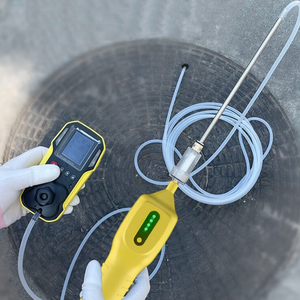
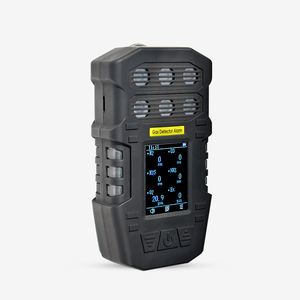
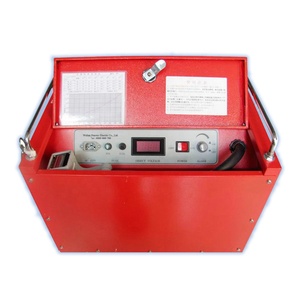
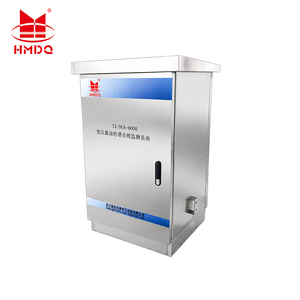
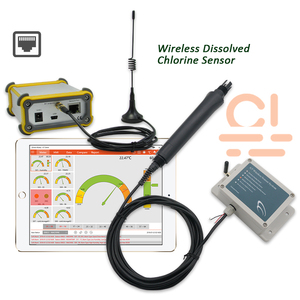
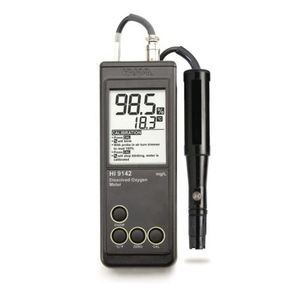
Dissolved Gas Analysis (DGA) represents the cornerstone of predictive maintenance for fluid-filled power transformers, reactors, and switchgear assets across the Finnish national grid (Fingrid), regional municipal utilities (such as Helen and Caruna), and heavy energy-intensive industries including paper mills, bio-refineries, and offshore wind power substations. As Finland rapidly transitions toward 100% clean energy and integrates massive intermittent renewable energy inputs, high-voltage equipment faces elevated electrical stress, rapid thermal cycling, and harmonic loads. Selecting a reliable factory and exporter for DGA monitoring systems is a critical strategic decision for engineering directors and asset health specialists.
Under electrical and thermal stress, transformer mineral insulating oils and cellulosic paper insulation undergo thermal decomposition. The molecular breakdown of hydrocarbon chains produces characteristic fault gases dissolved in the oil matrix. Quantifying gas concentration shifts ($ppm/day$) enables early identification of incipient internal faults weeks or months before catastrophic insulation breakdown occurs.
Hydrogen ($H_2$): Generated primarily during low-energy partial discharge (PD) events and electrolysis of water under corona discharge.
Methane ($CH_4$) & Ethane ($C_2H_6$): Key markers for low to medium-temperature thermal decomposition ($<300^\circ\text{C}$).
Ethylene ($C_2H_4$): Signifies high-temperature oil overheating ($>700^\circ\text{C}$), commonly caused by overheating in core laminations or bad tap-changer contacts.
Acetylene ($C_2H_2$): The ultimate red flag gas indicating high-energy arcing, electrical discharge, or inter-turn short circuits. Requires ultra-sensitive $\le 0.1 \text{ ppm}$ detection limits.
Carbon Monoxide ($CO$) & Carbon Dioxide ($CO_2$): Direct indicator of solid cellulosic paper degradation. $CO_2/CO$ ratios $<3$ indicate severe thermal decomposition of paper insulation.
| Fault Classification | Dominant Gas Species | Primary Gas Ratios (IEC 60599) | Diagnostic Duval Triangle Zone |
|---|---|---|---|
| Partial Discharge (PD) | $H_2$, $CH_4$ | $C_2H_2 / C_2H_4 \approx 0$, $CH_4 / H_2 < 0.1$ | PD Zone |
| Thermal Fault $T < 300^\circ\text{C}$ | $CH_4$, $C_2H_6$ | $C_2H_2 / C_2H_4 \approx 0$, $CH_4 / H_2 > 1$ | T1 Zone |
| Thermal Fault $T > 700^\circ\text{C}$ | $C_2H_4$, $C_2H_6$ | $C_2H_2 / C_2H_4 < 0.1$, $C_2H_4 / C_2H_6 > 3$ | T3 Zone |
| High Energy Arcing (D2) | $C_2H_2$, $H_2$, $C_2H_4$ | $0.6 < C_2H_2 / C_2H_4 < 3.0$ | D2 Zone |
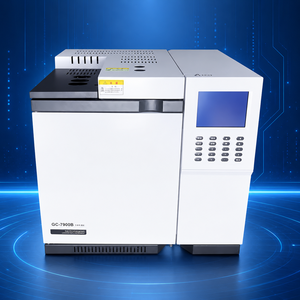
Modern power grid management in Finland relies on a dual-track diagnostic strategy: offline laboratory gas chromatography (GC) according to ASTM D3612 combined with continuous online multi-gas monitoring systems. Industrial buyers must understand the distinction between laboratory-grade benchtop gas chromatographs (like the GC-790B) and field-deployable online sensors (like the HM-DGA-6000).
Laboratory GC systems utilize high-resolution Thermal Conductivity Detectors (TCD) and Flame Ionization Detectors (FID) paired with nickel catalyst methanizers to achieve sub-ppm precision across all 7 key fault gases plus dissolved oxygen and nitrogen. Conversely, online units utilize Photoacoustic Spectroscopy (PAS) or solid-state Non-Dispersive Infrared (NDIR) sensors to track gas accumulation trends in real-time, feeding telemetry via IEC 61850 protocol to local SCADA networks.
Engineered for Cold Climates, High-Moisture Environments, and Demanding Nordic Power Infrastructure
In northern regional substations where ambient winter temperatures plunge to $-40^\circ\text{C}$, standard oil sampling and online DGA sensors fail due to fluid viscosity spikes and optical window icing. Exporters supplying to Finland must provide DGA enclosures featuring internal thermostatic heating, double-shielded insulated sampling lines, and high-vacuum oil extraction pumps capable of degassing high-viscosity mineral oils without creating gas bubble artifacts.
Offshore wind turbine step-up transformers and coastal converter stations in cities like Vaasa and Pori operate under corrosive salt-mist atmospheres and extreme dynamic vibration loads. Portable and online DGA monitors supplied to these facilities must adhere to IP66 / NEMA 4X stainless steel enclosure ratings, pass rigorous vibration testing (IEC 60068-2-6), and feature integrated dissolved water ($H_2O$) sensors to monitor sea-water intrusion risks.
Finland’s world-leading forest industry operates continuous, high-load process transformers where unannounced power outages cause multi-million Euro production losses. DGA units deployed in bio-refineries are optimized to handle ester-based bio-degradable insulating fluids (synthetic and natural esters) which display different gas solubility coefficients (Ostwald coefficients) compared to traditional mineral oil.
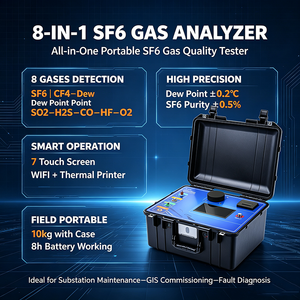
In accordance with Finland’s strict EU F-Gas compliance regulations, transmission operators are actively replacing $SF_6$ with green alternative gas mixtures ($C_4\text{-FN}$ / $C_5\text{-FK}$). Advanced multi-gas analyzers (such as the Chilled Mirror SF6 Comprehensive Analyzer) provide dual capability: measuring $SF_6$ decomposition products ($SO_2, H_2S$) and moisture dew point down to $-60^\circ\text{C}$ mirror temperature.
Procurement teams evaluating DGA exporters for Finnish projects must align their supplier selection with several key technological shifts accelerating across the Nordic region:
1. Native IEC 61850 Substation Protocol Integration: Standard analog 4-20mA outputs are no longer sufficient for Finnish digital substations. Top DGA exporters must offer direct Ethernet/Fiber-optic interfaces supporting IEC 61850 GOOSE messaging and MMS server profiles to seamlessly communicate with digital twin asset management software.
2. Carrier Gas-Free Online Chromatography: Traditional GC requires external hydrogen or helium carrier gas cylinders, creating heavy maintenance overhead for remote substations. Advanced exporters are supplying Photoacoustic Spectroscopy (PAS) or carrier gas-free micro-GC units that utilize internal air-scrubbing loops, dramatically reducing operating expenditure.
3. Carrier-Grade Cybersecurity (IEC 62443): With power grids classified as critical national infrastructure, DGA field monitors must feature hardware-level encryption, secure firmware updates, and robust protection against cyber intrusion.
Technical Answers to Common Questions Regarding DGA Import, Calibration, and Operation
128+ Years of Combined Electromechanical Heritage, ISO 9001 Certification & Custom OEM/ODM Capabilities
Rooted in century-old high-voltage engineering excellence, our manufacturing facilities combine traditional craft mastery with cutting-edge analytical gas detection technologies.
Every DGA unit undergoes rigorous multi-stage testing in our accredited laboratory, certified under ISO 9001 quality management and Baseefa/SGS hazardous area standards.
Our gas chromatographs achieve industry-leading resolution down to 0.1 ppm for $C_2H_2$, giving grid operators early warning capabilities for critical insulation faults.
We provide full custom engineering, including bespoke mounting frames, custom SCADA communications protocols, and private-label manufacturing for global industrial partners.
Backed by a worldwide technical support network offering fast spare-parts dispatch, remote diagnostic calibration, and comprehensive engineer training modules.
From portable multi-gas detectors to comprehensive online transformer monitoring cabinets, we deliver end-to-end solutions tailored to Nordic power grid standards.
Need specialized Dissolved Gas Analysis systems tailored for Finnish sub-zero power grid installations, ester oil transformers, or industrial plants? Contact our senior engineering team today.
Get Catalog