




Direct OEM Supply & Calibration Solutions for Ghanaian Electrical Utilities, Mines & Industrial Sub-Stations
Ghana’s rapid industrialization—driven by major infrastructure projects under the National Electrification Scheme (NES), expansion in the Ashanti gold belt (Obuasi, Tarkwa, Ahafo), and heavy industrial urbanization around Tema and Sekondi-Takoradi—has placed unprecedented demands on the nation’s electrical grid. Operating under the administrative oversight of the Electricity Company of Ghana (ECG), Ghana Grid Company (GRIDCo), and the Volta River Authority (VRA), the regional transmission network faces severe environmental and operational stress.
West Africa experiences some of the highest lightning flash densities in sub-Saharan Africa. During tropical convective storms and seasonal transitions, atmospheric discharges generate steep-fronted transient overvoltages capable of destroying high-voltage transformers, switchgear insulation, and control electronics. Furthermore, the dry, dust-laden winds of the annual Harmattan season cause severe salt-and-dust accumulation on outdoor insulators, leading to tracking, partial discharge, and insulation breakdown.
To prevent catastrophic grid failure and unplanned industrial downtime, top Ghanaian utility engineers, electrical contractors, and mine maintenance managers are turning to Chinese high-voltage surge testing apparatus manufacturers. China’s advanced surge testing technology provides unmatched information gain, diagnostic precision, and cost-to-performance ratios. This whitepaper serves as an authoritative guide for Ghanaian electrical procurement officers seeking to integrate factory-direct, highly reliable Chinese surge testing systems into their preventive maintenance protocols.
Surge testing equipment cannot be evaluated as generic benchtop hardware; it must be optimized for the specific environmental and electrical topologies of Ghana.
Long-distance 161kV and 330kV interconnectors connecting the Akosombo Hydroelectric Power Station to the northern grid via Kumasi encounter frequent atmospheric lightning strikes. Field personnel deploy Portable DC Hipot Testers (120kV) and Wireless Surge Arrester Testers to measure 3rd harmonic resistive leakage currents without de-energizing critical lines.
Heavy machinery, crushers, and variable speed drives in deep underground and open-pit gold mines inject severe switching surges into 11kV/33kV internal distribution networks. IEC 61000-4-5 Surge Generators allow mine electrical engineers to perform inline immunity audits on PLC controllers and protective relays to guarantee zero operational interruption.
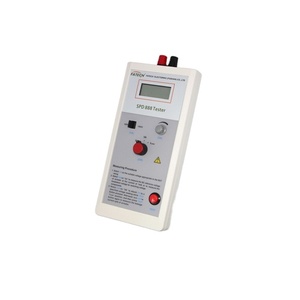
In coastal Tema and Takoradi, industrial port cranes and commercial solar PV microgrids are subjected to high humidity and saline atmospheres. SPD Parameter Testers and Ultrasonic Pulse Velocity Apparatus verify both electrical surge protective device integrity and the structural soundness of substation civil foundations.
To comply with Ghana Standards Authority (GSA) guidelines and international electrotechnical mandates, Chinese surge testing equipment incorporates full compliance with rigorous IEC, IEEE, and GB standards.
| Equipment Category | Primary Test Parameter | International Standard | Ghanaian Field Application |
|---|---|---|---|
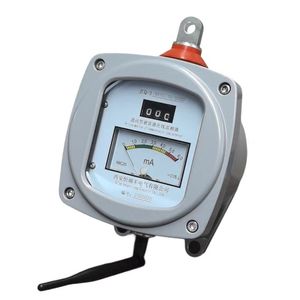
| Wireless Surge Arrester Tester | Resistive Leakage Current (0-20mA), 3rd Harmonic Analysis | IEC 60099-4 / IEEE C62.11 | Live-line substation maintenance on Zinc Oxide (ZnO) arresters. |
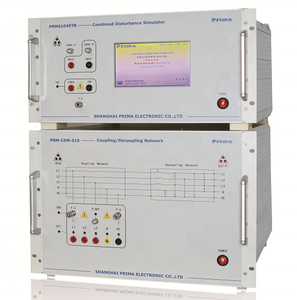
| Lightning Surge Generator | 1.2/50µs Combination Voltage, 8/20µs Current Impulse (up to 10kV) | IEC 61000-4-5 / EN 61000-4-5 | EMC compliance verification for imported meter units & protection panels. |
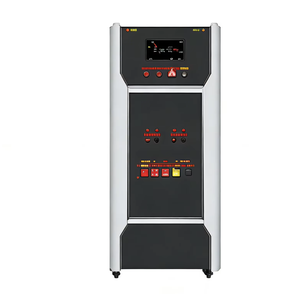
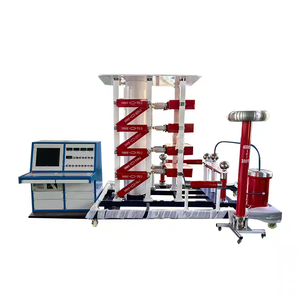
| Ultra HV Impulse Generator | 200kV–800kV Full Wave / Chopped Waveform Generation | IEC 60060-1 / IEC 60060-2 | Factory acceptance testing (FAT) for high-voltage transformers & bushings. |
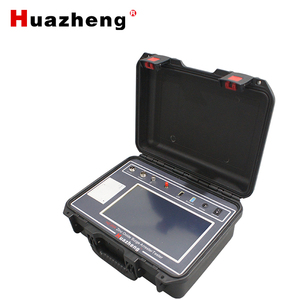
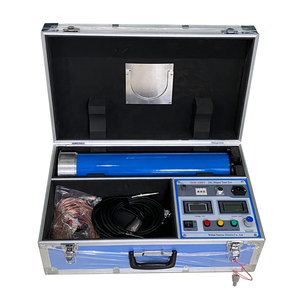
| Portable DC Hipot Tester | 0–120kV DC Voltage Leakage & Voltage Withstand | IEC 60270 / IEEE 400.1 | Field dielectric verification for XLPE underground cables & arresters. |
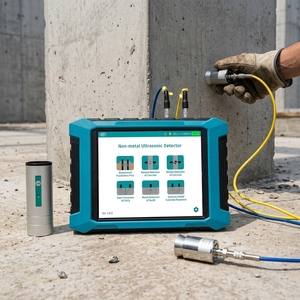
| Ultrasonic Pulse NDT Meter | Concrete Ultrasonic Pulse Velocity (UPV), Elastic Modulus | ASTM C597 / BS 1881-203 | Structural assessment of transformer concrete pads & gantry pylons. |
Understanding why specific surge diagnostic methodologies excel in the Ghanaian environment requires evaluating the underlying physics of electrical transient phenomena and solid-state insulation breakdown.
Metal Oxide Varistors (MOVs) inside gapless surge arresters exhibit highly non-linear current-voltage characteristics. Under normal power-frequency voltages, an MOV acts as an insulator, allowing only a small capacitive leakage current (typically a few hundred microamps) to flow to ground. However, under repeated atmospheric lightning surges or thermal stress caused by Ghana's high ambient temperatures (often exceeding 38°C in northern regions), the grain boundaries of the zinc oxide ceramic matrix degrade.
This thermal and electrical degradation manifests as an increase in the resistive component of the leakage current, while the capacitive component remains relatively unchanged. Advanced Chinese instruments like the HZ-20A Wireless Arrester Tester utilize digital Fourier transform (DFT) algorithms combined with wireless voltage reference sampling. By separating the total leakage current into fundamental and 3rd harmonic resistive components, field engineers can detect arrester degradation months before an explosive thermal runaway failure occurs on a 161kV feeder.
Simulating natural lightning in a controlled environment requires precise pulse-shaping circuits. The standard lightning impulse voltage waveform is specified as a 1.2/50µs wave (front time of 1.2 microseconds, time-to-half value of 50 microseconds). This represents the rapid voltage rise of a direct stroke. Conversely, the 8/20µs current wave simulates the high-energy discharge current flowing through surge protective devices.
Modern Chinese impulse test systems utilize multi-stage Marx generator configurations equipped with high-speed digital storage oscilloscopes (DSOs), automatic wave-shaping inductors, and precision damped capacitive voltage dividers. This guarantees waveform fidelity even when testing high-capacitance loads in transformer manufacturing plants located in Accra and Kumasi.
Leading Chinese surge testing manufacturers operate state-of-the-art ISO 9001, ISO 14001, and ISO 45001 accredited production complexes spanning tens of thousands of square meters. By integrating decades of high-voltage engineering expertise with modern automated assembly, these factories deliver key operational advantages for West African partners:
Test sets can be customized for tropical ambient operation (up to 55°C internal heat dissipation), dual-voltage power supplies (110V/220V wide input ranges), and ruggedized IP67 field transport cases designed for off-road transit across remote Ghanaian terrain.
Every single instrument undergoes rigorous Factory Acceptance Testing (FAT) with calibration certificates traceable to CNAS (China National Accreditation Service for Conformity Assessment) and ILAC-MRA international metrology standards.
Importing high-voltage testing equipment into Ghana requires adherence to specific customs, metrological, and port clearance procedures to ensure seamless delivery to your site or warehouse in Accra, Kumasi, or Takoradi.
In Ghana's high-humidity and high-ambient temperature environment, zinc oxide arresters experience accelerated thermal aging. Live-line testing with wireless devices like the HZ-20A enables maintenance teams to detect internal moisture ingress and varistor degradation without shutting down power to critical industrial grids or residential districts.
Chinese surge test equipment is manufactured in strict accordance with IEC 61000-4-5 and IEC 60060 standards, which mirror the technical requirements adopted by the Ghana Standards Authority (GSA) and the West African Power Pool (WAPP). They support 50Hz nominal grid frequencies and are built to handle wide voltage variations.
Standard portable instruments (such as SPD testers and 120kV Hipot sets) are kept in stock and can be dispatched via air freight to Kotoka International Airport (Accra) within 5 to 7 days. Heavy high-voltage impulse generators (200kV–800kV) shipped via ocean container freight to Tema Port typically take 30 to 40 days, including custom export packaging.
Yes. Premium export-grade units feature dust-sealed IP67 heavy-duty transit cases, membrane keypad interfaces, and coated internal PCBs (conformal coating) that resist microscopic silica dust accumulation and humidity extremes typical of northern Ghana during Harmattan.
Leading Chinese OEM factories provide comprehensive remote video commissioning, detailed English software interfaces, step-by-step operation manuals, and standard 1-to-3 year extended warranties. Replacement modules and calibration procedures can be performed locally or supported via express international spare-part dispatches.
Contact our senior engineering export team today for factory-direct price quotes, technical datasheets, or custom surge generator configuration advice tailored for the Ghanaian market.