




Engineered for extreme low-to-medium wind regimes, high ambient humidity, and tough industrial duty across Indonesia's power generation & industrial sectors.
As Southeast Asia's largest economy, Indonesia has set an ambitious target under its National Energy General Plan (RUKN) and the Just Energy Transition Partnership (JETP) to achieve 31% renewable energy share by 2050, aiming for Net Zero Emissions by 2060. While solar power and geothermal have historically dominated regional renewable investments, Indonesia’s vast archipelagic geography—spanning over 17,000 islands across 5,000 kilometers—presents a compelling case for utility-scale onshore and nearshore wind energy installations.
However, deploying wind turbine generators (WTGs) across Indonesian provinces such as South Sulawesi (e.g., Sidrap and Jeneponto projects), East Nusa Tenggara (NTT), Maluku, and coastal Java introduces severe engineering challenges. These include low-to-medium wind speed regimes (IEC Class III winds averaging 6.0 to 7.5 m/s), high ambient humidity exceeding 90%, saline tropical marine atmospheres, volcanic airborne particulates, and highly fragmented, weak island microgrids operated by PT PLN (Persero). Securing reliable energy conversion requires wind turbine generator technology specifically adapted for extreme tropicalization, low start-up wind threshold, robust Fault Ride-Through (FRT) capabilities, and stringent Total Harmonic Distortion (THD) compliance.
Tailoring Generator Electromagnetics & Mechanical Enclosures to Regional Environmental Demands
Unlike North Sea or Northern China wind sites characterized by Class I/II winds (>8.5 m/s), Indonesian wind profiles feature predominantly low-to-medium velocities (5.5 – 7.5 m/s). Our Doubly-Fed Induction Generators (DFIG) and Permanent Magnet Synchronous Generators (PMSG) incorporate ultra-low inertia rotors, optimized pole-pitch electromagnetic configurations, and high-efficiency sub-synchronous slip operation. This allows maximum aerodynamic energy extraction even at low cut-in speeds (2.5 m/s), delivering superior capacity factors for regional projects.
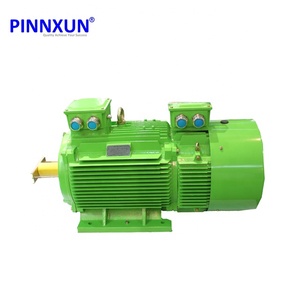
Coastal and off-grid island wind turbines in Indonesia face constant exposure to high salt spray concentrations, extreme relative humidity (85-98%), and mold growth. Our wind turbine generators and wound-rotor induction motors undergo Class H/F Vacuum Pressure Impregnation (VPI) with specialized anti-fungal epoxy resins. External housing structural frames are finished with C5-M high-durability polyurethane multi-layer paint systems, preventing galvanic corrosion, slip ring oxidation, and insulation resistance degradation over 25+ years of operational life.
Connecting utility-scale wind farms into isolated island grids (such as the Sulawesi-Selatan-Barat system or small NTT microgrids) poses severe voltage stability risks due to low grid inertia. Our high-torque wound rotor induction generators and DFIG system solutions feature advanced Low-Voltage Ride-Through (LVRT) and High-Voltage Ride-Through (HVRT) capability. Integrated dynamic reactive power support ensures rapid VAR injection during grid faults, satisfying PLN’s stringent Aturan Jaringan (Grid Code) without tripping downstream substation protection systems.
Selecting the Optimal Topology for Indonesian Site-Specific Wind Turbines and Industrial Drives
| Generator / Motor Technology | Wind Speed Regime Suitability | Grid Code Compliance (PLN LVRT) | Maintenance Cycle & Tropicalization | Recommended Indonesian Application |
|---|---|---|---|---|
| Doubly-Fed Induction Generator (DFIG / YR Series) | Class III (Low/Medium: 6.0–7.5 m/s) | Excellent (Partial converter rating + Crowbar circuit) | Annual slip ring inspection; Class H VPI insulation protected against tropical moisture. | Utility-scale onshore wind farms in South Sulawesi, Sidrap, Jeneponto & Java Coast. |
| Direct-Drive Permanent Magnet Generator (PMSG) | Class III & Nearshore Offshore | Superior (Full scale back-to-back frequency converter) | Minimal maintenance (Gearless option); Enclosed IP65 sealed against saline air. | Island microgrids, coastal wind turbines, offshore projects in Sunda Strait & Timor Sea. |
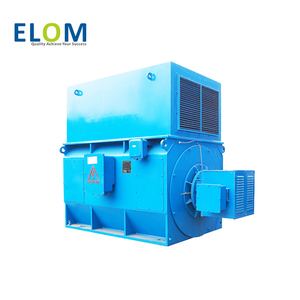
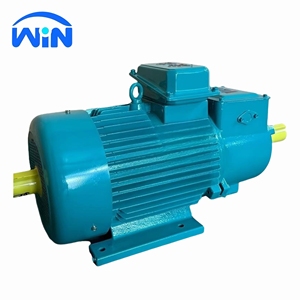
| High-Torque Wound Rotor Motor (YR / YZR Series) | Heavy Industrial Drive / Crane Prime Mover | High starting torque with low starting current (1.5x FLC) | Heavy-duty brushes; IP23 / IP54 options; high thermal stress capacity. | Port cranes, mining hoists, metallurgical plants, and wind farm auxiliary lifting systems. |
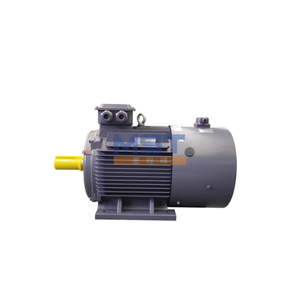
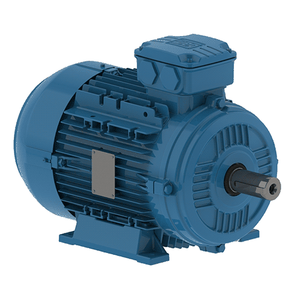
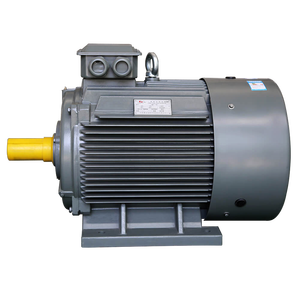
| 3-Phase Asynchronous Induction Motor (YE2 / WEG Type) | Standard Continuous Industrial Duty | Direct On Line (DOL) or VFD Compatible | High efficiency (IE2/IE3 standard); long bearing lubricant lifespan under 45°C ambient. | Wind turbine cooling fans, yaw/pitch hydraulic power units, water pumping stations. |
Combining 128+ Years of Parsons Peebles Engineering Heritage with China’s World-Class Supply Chain Scale
Building high-reliability rotating equipment for critical wind energy and heavy industrial infrastructure requires proven engineering mastery. Drawing upon over a century of British electrical machine design heritage (tracing back to TDC Parsons Peebles founded in 1896) integrated with China's state-of-the-art mega-scale manufacturing hubs, our factory delivers unparalleled quality, technical authority, and cost competitiveness.
Every generator and heavy-duty motor manufactured in our facilities adheres to stringent international standards including ISO 9001 quality management systems, ISO 14001 environmental management, and SGS Baseefa ATEX/IECEx hazardous area explosion-proof certifications (Ex ec, Ex p, Ex e).
Our factory houses advanced electrical testing bays capable of full-voltage back-to-back load testing, high-voltage dielectric insulation withstand tests (up to 13.8kV), core flux loss testing, dynamic rotor balancing according to ISO 1940 Grade G1.0, and acoustic vibration analysis prior to shipping.
Facing obsolete generator models or legacy motors needing replacement in operating wind farms or industrial plants? Our reverse engineering experts craft 100% mechanically and electrically interchangeable drop-in replacement units—matching exact shaft heights, foot bolt patterns, flange dimensions, and terminal box locations to eliminate costly civil redesign.
Addressing Essential Questions for Indonesian IPPs, EPC Contractors, and Industrial Equipment Importers